Quick answer: Totoro is best understood as a benevolent forest spirit whose meaning comes from comfort, imagination, seasonal wonder, and childhood resilience rather than a literal monster mythology. This guide is written as an independent, spoiler-aware fan guide for viewers who want the meaning, character context, and best next links without wading through forum theories or copied summaries.
If you are building a first-watch or rewatch path, keep our Studio Ghibli movies in order guide open as a companion. Totoro Explained: What My Neighbor Totoro’s Forest Spirit Really Means sits inside a much wider Ghibli pattern: ordinary people cross into emotionally heightened worlds, and the ending usually resolves a feeling rather than tying every detail into a neat plot diagram.
What Totoro is really about
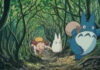
Totoro has become a global icon because he is both specific and open. He feels like an ancient creature of the camphor tree, a child’s imaginary friend, and the embodiment of a countryside that responds when children are lonely or afraid.
The important thing is not to reduce Totoro to a single trivia answer. Ghibli stories often work like memories: a place, a creature, a spell, or a parting image carries several meanings at once. That is why fans keep searching for explanations years after watching My Neighbor Totoro. A good interpretation should explain the scene, but it should also preserve the emotional mystery that makes the film linger.
Spoiler-light context before the deeper reading
My Neighbor Totoro is built around illness, relocation, waiting, and play. The fantasy elements do not erase the family’s anxiety; they make the world feel alive enough for Mei and Satsuki to endure it.
- Totoro appears when children are emotionally open to wonder.
- The forest is treated as neighbor, shelter, and mystery.
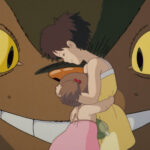
- The Catbus extends the same child-centered logic of magical help.
- The film avoids villainy so everyday fear can be felt more honestly.
The deeper interpretation
Totoro does not need a complicated species chart to matter. His size, silence, and softness make him a guardian image: not a pet, not a god in a formal sense, but something older than the children’s worries.
The famous bus stop scene works because Totoro and Satsuki share ordinary waiting. The magical and mundane stand side by side under rain, which is one of the purest expressions of Ghibli’s worldview.
The seed-growing sequence turns hope into a dreamlike ritual. Whether literal or imagined, it lets the children feel that care can produce life even when their mother’s illness is outside their control.
Why fans keep asking about it
Fans keep asking what Totoro “is” because the movie refuses to over-define him. That restraint is the point. Totoro is a presence you believe in the way children believe in rustling trees, secret paths, and the possibility that the world is kinder than it looks.
Part of the ongoing appeal is that Ghibli rarely gives viewers a lecture. The films trust children, adults, and repeat viewers to notice different layers. A younger viewer may remember the creature design or the adventure; an adult may notice grief, burnout, environmental loss, loneliness, or the ache of growing up. That multi-level design is exactly why character and ending guides can be useful without flattening the film.
How to watch this part on a rewatch
On a rewatch, notice how often the film pauses for wind, dust, insects, and trees. Totoro belongs to that attention span.
Questions to ask while rewatching
- What does Totoro reveal about fear, courage, or identity?
- Which details are shown visually instead of explained in dialogue?
- How does the music change the emotional meaning of the scene?
- What does the film leave unresolved, and is that ambiguity part of the point?
FAQ
Is Totoro a forest spirit?
Yes, that is the cleanest reading: a benevolent spirit associated with the forest and camphor tree.
Is Totoro imaginary?
The film leaves room for imagination, but it presents Totoro with sincere magical reality rather than treating him as a delusion.
Is the dark Totoro theory true?
No. Popular grim theories are fan inventions that clash with the film’s tone, production context, and emotional design.
Image note: Featured imagery on this page uses official Studio Ghibli stills from ghibli.jp, whose work pages include the usage notice 「※画像は常識の範囲でご自由にお使いください。」
For searchers comparing multiple guides, the practical takeaway is this: start with the emotional function of the scene or character, then add production context and fan interpretation only after the basic story role is clear. That order keeps the reading useful for first-time viewers and still satisfying for long-time fans returning after a rewatch.
Totoro as comfort, not a puzzle to solve
Totoro is most useful when read less as a riddle and more as a presence. The film never stops to define exactly what he is because Satsuki and Mei do not need a taxonomy of spirits. They need reassurance while their mother is ill, their father is distracted, and their new rural home feels both exciting and strange. Totoro gives the children a way to experience the forest as alive, protective, and responsive without turning that experience into a lecture.
This is also why the movie’s quiet scenes matter as much as the famous magical ones. The soot sprites, the enormous camphor tree, the rainy bus stop, and the night garden sequence all teach the viewer to notice small shifts in atmosphere. Miyazaki lets wonder arrive slowly. Totoro’s meaning comes from that attention: childhood can make fear larger, but it can also make comfort larger when the world offers a sign that you are not alone.
Why the forest spirit feels so memorable
Totoro stays memorable because he is powerful without being busy. He does not explain the plot, fight a villain, or hand the girls an easy cure for their mother. Instead, he embodies a kind of patient, grounded protection. That restraint is the reason the film still works for adults: it respects the fear beneath the children’s adventure while keeping the surface gentle enough for family viewing.
Image source: official Studio Ghibli stills published through ghibli.jp.