Quick answer: No-Face is a lonely, absorbent spirit who becomes monstrous when the bathhouse teaches him that attention, consumption, and gold are substitutes for connection. This guide is written as an independent, spoiler-aware fan guide for viewers who want the meaning, character context, and best next links without wading through forum theories or copied summaries.
If you are building a first-watch or rewatch path, keep our Studio Ghibli movies in order guide open as a companion. No-Face Explained: Why Spirited Away’s Lonely Spirit Becomes a Monster sits inside a much wider Ghibli pattern: ordinary people cross into emotionally heightened worlds, and the ending usually resolves a feeling rather than tying every detail into a neat plot diagram.
What No-Face is really about
No-Face is frightening because he is not evil in a simple villain sense. He mirrors the place around him. In the bathhouse, where greed and status dominate, he learns to offer gold, swallow voices, and demand more. Around Chihiro, he becomes quieter, needier, and more human.
The important thing is not to reduce No-Face to a single trivia answer. Ghibli stories often work like memories: a place, a creature, a spell, or a parting image carries several meanings at once. That is why fans keep searching for explanations years after watching Spirited Away. A good interpretation should explain the scene, but it should also preserve the emotional mystery that makes the film linger.
Spoiler-light context before the deeper reading
No-Face first appears outside, separated from the community. Chihiro’s small act of letting him in gives him access to a world he does not understand.
- He reflects the emotional atmosphere around him.
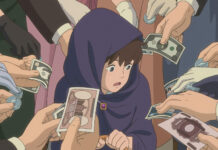
- His fake gold exposes the bathhouse workers’ greed.
- Eating others gives him voices but not a stable self.
- Zeniba’s cottage offers a healthier form of belonging.
The deeper interpretation
No-Face becomes a monster through imitation. He sees that gold gets attention, so he makes gold. He sees that eating creates power, so he eats. The tragedy is that none of it gives him what he actually wants.
Chihiro does not defeat No-Face by being stronger. She refuses the economy he has entered. She will not take the gold, and she treats him as a troubled being rather than a customer or a beast.
His calm ending with Zeniba matters because it gives him work, quiet, and companionship without spectacle. The cure for No-Face is not punishment; it is a community where he does not need to perform appetite to be noticed.
Why fans keep asking about it
No-Face remains one of Ghibli’s most searched characters because almost everyone recognizes some part of him: loneliness, social mimicry, craving, shame after excess, and the hope of becoming gentle again.
Part of the ongoing appeal is that Ghibli rarely gives viewers a lecture. The films trust children, adults, and repeat viewers to notice different layers. A younger viewer may remember the creature design or the adventure; an adult may notice grief, burnout, environmental loss, loneliness, or the ache of growing up. That multi-level design is exactly why character and ending guides can be useful without flattening the film.
How to watch this part on a rewatch
On a rewatch, track who looks at No-Face and why. The character changes depending on whether he is treated as a person, a wallet, a threat, or a guest.
Questions to ask while rewatching
- What does No-Face reveal about fear, courage, or identity?
- Which details are shown visually instead of explained in dialogue?
- How does the music change the emotional meaning of the scene?
- What does the film leave unresolved, and is that ambiguity part of the point?
FAQ
What does No-Face symbolize?
He can symbolize loneliness, consumer appetite, social emptiness, and the way environments shape identity.
Why does No-Face like Chihiro?
She notices him without wanting anything from him, which makes her different from most bathhouse workers.
Is No-Face evil?
No. He is dangerous in the bathhouse, but the film frames him as lost and influenceable rather than inherently evil.
Image note: Featured imagery on this page uses official Studio Ghibli stills from ghibli.jp, whose work pages include the usage notice 「※画像は常識の範囲でご自由にお使いください。」
For searchers comparing multiple guides, the practical takeaway is this: start with the emotional function of the scene or character, then add production context and fan interpretation only after the basic story role is clear. That order keeps the reading useful for first-time viewers and still satisfying for long-time fans returning after a rewatch.
The quick reading: No-Face mirrors the room he is in
The simplest way to understand No-Face is that he does not arrive with a fixed personality. He absorbs the emotional rules of the place around him. Outside the bathhouse, he is quiet, watchful, and almost childlike. Inside the bathhouse, where workers are exhausted, customers are greedy, and gold seems to solve everything, he becomes enormous, needy, and dangerous. That is why his monster form feels less like a traditional villain and more like a warning about the environment Chihiro has stepped into.
This also explains why Chihiro is able to help him without defeating him in a fight. She does not flatter him, fear him for his money, or try to exploit him. She treats him as someone confused and unwell, then removes him from the place that made his worst impulses louder. Once he leaves the bathhouse, the story lets him shrink back into something calmer. For new viewers, that makes No-Face one of the clearest examples of Spirited Away’s bigger theme: identity is fragile when everyone around you is telling you what to want.
Why No-Face still connects with adult viewers
No-Face works because he is frightening and sympathetic at the same time. He is loneliness, appetite, social anxiety, and imitation turned into a character. Many viewers recognise the pattern: enter a competitive room, copy the wrong values, overperform, then feel emptier afterward. Spirited Away never reduces him to one neat symbol, which is why he stays interesting on rewatches.