Quick answer: the ending of Kiki’s Delivery Service is not about Kiki “unlocking” a magic upgrade. It is about her recovering trust in herself. She loses her ability to fly and to understand Jiji when anxiety, burnout and self-doubt interrupt something that used to feel natural. She gets flying back when she stops trying to perform perfectly and acts from urgent care for Tombo.
What happens at the end?
By the final act, Kiki has hit the lowest point of her first year away from home. She cannot fly properly, she cannot hear Jiji as a speaking companion, and the delivery business that once gave her independence now feels like proof that she is failing. The airship accident changes the shape of the problem. Tombo is in real danger, and Kiki no longer has time to analyse whether she is talented enough, special enough, or “a real witch” enough.
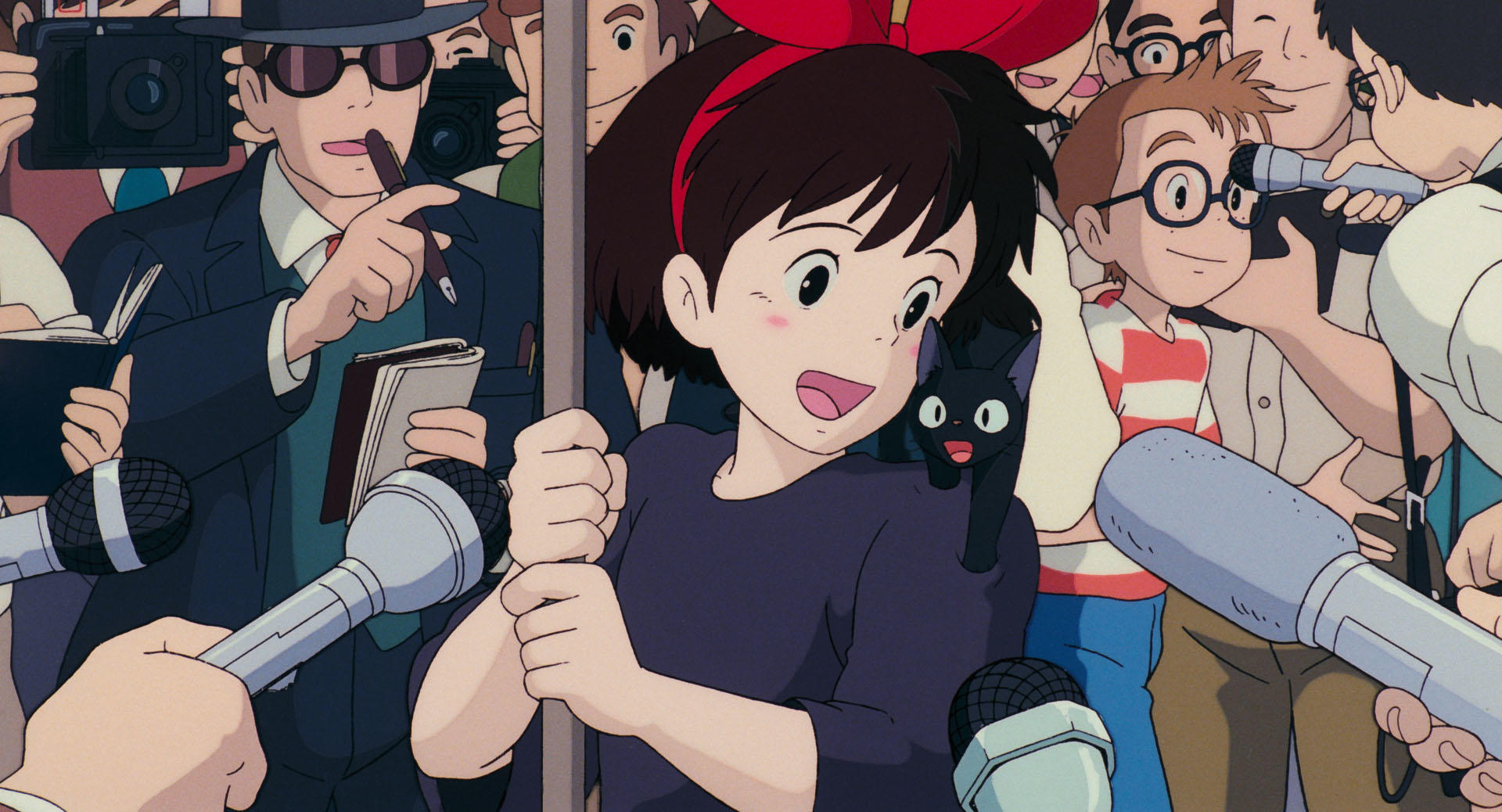
She borrows a street sweeper’s broom, forces herself into the air, and saves Tombo in front of the town. The moment is thrilling, but it is not framed as a neat return to the exact girl who arrived at the beginning. Kiki is still growing. The difference is that she has learned she can struggle without being finished.
Why does Kiki lose her powers?
The film never gives a mechanical rulebook answer, and that is the point. Kiki’s magic is tied to rhythm, confidence, attention and identity. At first, flying is part of how she understands herself. She is young, proud, nervous and excited, but she still believes that her witch identity will carry her through the unfamiliar city.
Then ordinary life starts pressing in. Customers can be unkind. Work is tiring. Friendship is confusing. Tombo’s enthusiasm feels flattering one minute and overwhelming the next. Ursula’s artistic block later gives the clearest explanation: creative and personal gifts can vanish when you start forcing them too hard. Sometimes you need rest, experience and a different relationship with the gift before it comes back.
That makes Kiki’s power loss feel less like punishment and more like burnout. She is not less magical. She is exhausted, isolated and measuring herself too harshly.
Does Kiki ever understand Jiji again?
The Japanese ending is more ambiguous and, for many viewers, more emotionally honest than a simple “everything goes back to normal” reading. Jiji still meows rather than returning fully to his earlier human-like speech. That does not mean Kiki failed. It suggests that growing up changes the way she relates to childhood comforts.
Jiji begins as Kiki’s constant translator of fear, sarcasm and private worry. When he becomes more catlike, Kiki is pushed to stand on her own in the human world. She gains friends, work, judgement and courage that do not depend on Jiji narrating everything beside her. The loss is bittersweet, but it is not bleak.
What does Kiki actually get back?
She gets back flight, but more importantly she gets back motion. The ending shows her re-entering the world after a period of paralysis. She can work again, write home with more confidence, and belong to the town in a way she did not at the start.
Her rescue of Tombo matters because it is imperfect. The borrowed broom is awkward. The crowd is watching. She is terrified. Yet she acts anyway. That is a stronger coming-of-age lesson than discovering a hidden superpower. Kiki learns that confidence is not the absence of doubt. It is the ability to move while doubt is still there.
Why Tombo matters in the ending
Tombo is not just a boy to be rescued. He represents a different relationship with flying. For Kiki, flight is inherited, practical and tied to responsibility. For Tombo, it is wonder, engineering, obsession and play. Their friendship is awkward because he loves the thing that has become stressful for her.
When Kiki saves him, the film gently reconnects those two versions of flight. Flying can be work, but it can also be joy. It can carry responsibility without becoming a prison. That is why the final scene feels lighter than the middle of the film, even though not every question is tied up.
Is the ending happy or sad?
It is happy, but not childish. The sadness is part of why it works. Kiki does not return to the exact innocence she had before leaving home. She has lost some simplicity, gained self-knowledge, and discovered that independence includes lonely stretches. The city is no longer a fantasy backdrop. It is a real place full of customers, neighbours, friends and expectations.
That is also why Kiki’s Delivery Service is such a strong recommendation for new viewers working through a Studio Ghibli watch order. It is gentle enough for families, but emotionally precise enough for adults who recognise the feeling of losing touch with something they used to be good at.
How the ending fits Miyazaki’s wider themes
Hayao Miyazaki often treats work, skill and identity as things that are built through practice rather than destiny. Kiki’s witchcraft is magical, but the problem she faces is ordinary: how do you keep going when your talent stops feeling effortless?
The answer is not hustle. Ursula tells her to stop trying so directly. Osono gives her practical kindness without making a speech about it. The town eventually sees Kiki not as a strange outsider, but as someone who belongs because she has shown up repeatedly. The ending gathers those ideas into one public act of courage.
Common questions about the ending
Did Kiki lose her powers because she fell in love?
No. Her feelings around Tombo may be part of her confusion, but the film points more strongly toward burnout, self-consciousness and growing up. Romance is not the cause of the magic loss.
Is Jiji’s silence permanent?
The film leaves room for interpretation. The cleaner reading is that Jiji’s changed voice marks Kiki’s growth. Their bond remains, but Kiki no longer needs him in the same way.
What is the main message?
The message is that losing confidence does not erase who you are. Rest, friendship, purpose and lived experience can help you return to your gifts in a more mature way.
Image credit: Official stills from Studio Ghibli’s Kiki’s Delivery Service works page, used under the studio’s common-sense image-use notice. This article is an independent fan guide and is not affiliated with Studio Ghibli.