Princess Mononoke quick facts
- Original Japanese title: Mononoke-hime
- Japanese release: 12 July 1997
- Writer and director: Hayao Miyazaki
- Music: Joe Hisaishi
- Studio: Studio Ghibli
- Running time: about 133 minutes
- Setting: a mythic version of medieval Japan shaped by forests, ironmaking, firearms and competing communities
- Best for: older teens and adults who want epic fantasy, environmental conflict and moral complexity
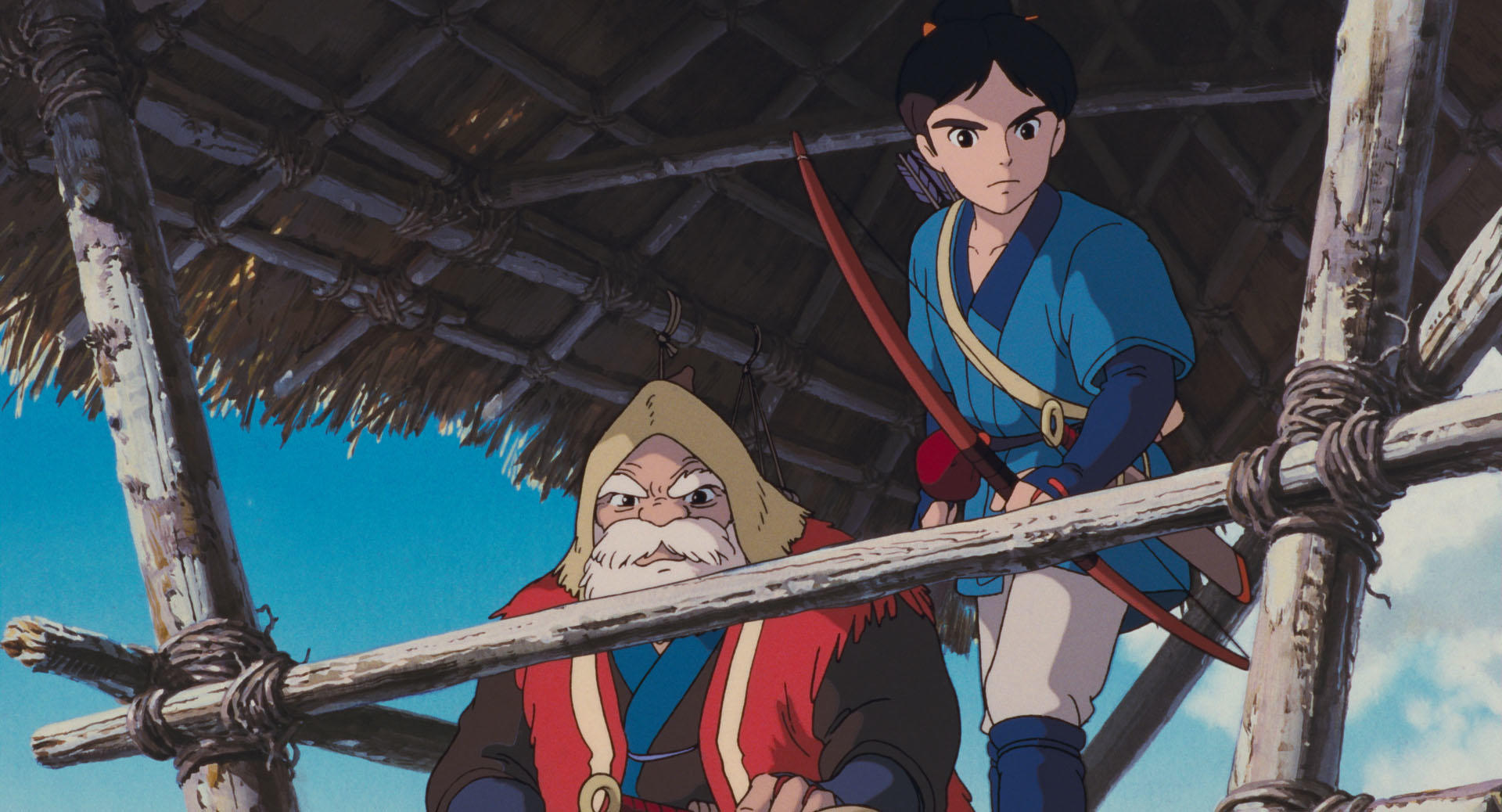
Spoiler-free answer: Princess Mononoke follows Ashitaka, a young warrior cursed by a god consumed by hatred. Seeking a cure, he enters a conflict between an industrial settlement led by Lady Eboshi and a sacred forest defended by animal gods and San, a human girl raised by wolves. The film is violent, beautiful and deliberately unwilling to divide everyone into heroes and villains.
Spoiler-free overview
This is Studio Ghibli at its most mythic and politically complicated. The forest is ancient and alive, but it is not a harmless sanctuary. Iron Town damages the land, but it is also a refuge and source of independence for people excluded elsewhere. San’s anger is justified, while her desire to destroy the human settlement would continue the same cycle of violence. Lady Eboshi is generous to her community and ruthless toward the forest. Ashitaka’s challenge is not to remain neutral. It is to act without letting hatred decide who deserves to live.
The film is often called an environmental story, but that description is only the beginning. It also explores disability, labour, exile, weapons, leadership, animal suffering and the cost of turning a need for survival into permission for total war. Its most famous moral instruction, to see with eyes unclouded by hate, does not mean ignoring harm. It means looking closely enough to recognise harm and humanity at the same time.
New Ghibli viewers can watch it without knowing any other film, although its sustained intensity makes it a stronger first pick for fantasy fans than for families seeking a gentle introduction. For a softer starting point, try My Neighbor Totoro or Kiki’s Delivery Service. For another ecological epic with a compassionate lead, continue with Nausicaä of the Valley of the Wind.
Storyline: what happens in Princess Mononoke?
The story begins when a boar god, transformed into a writhing demon by pain and hatred, attacks Ashitaka’s Emishi village. Ashitaka kills it to protect his people, but the creature touches his arm and leaves a spreading curse. The village wise woman explains that he must leave, face his fate and search west for the source of the boar’s rage. He departs permanently, carrying the burden without telling himself that the killing was clean simply because it was necessary.
On the journey, the curse gives Ashitaka terrifying strength when anger rises. He encounters samurai attacking villagers and discovers that his arm can turn defence into brutal destruction. The wandering monk Jigo tells him about a forest whose god can give life and take it away. Ashitaka heads toward that forest, hoping the Deer God may understand or remove his wound.
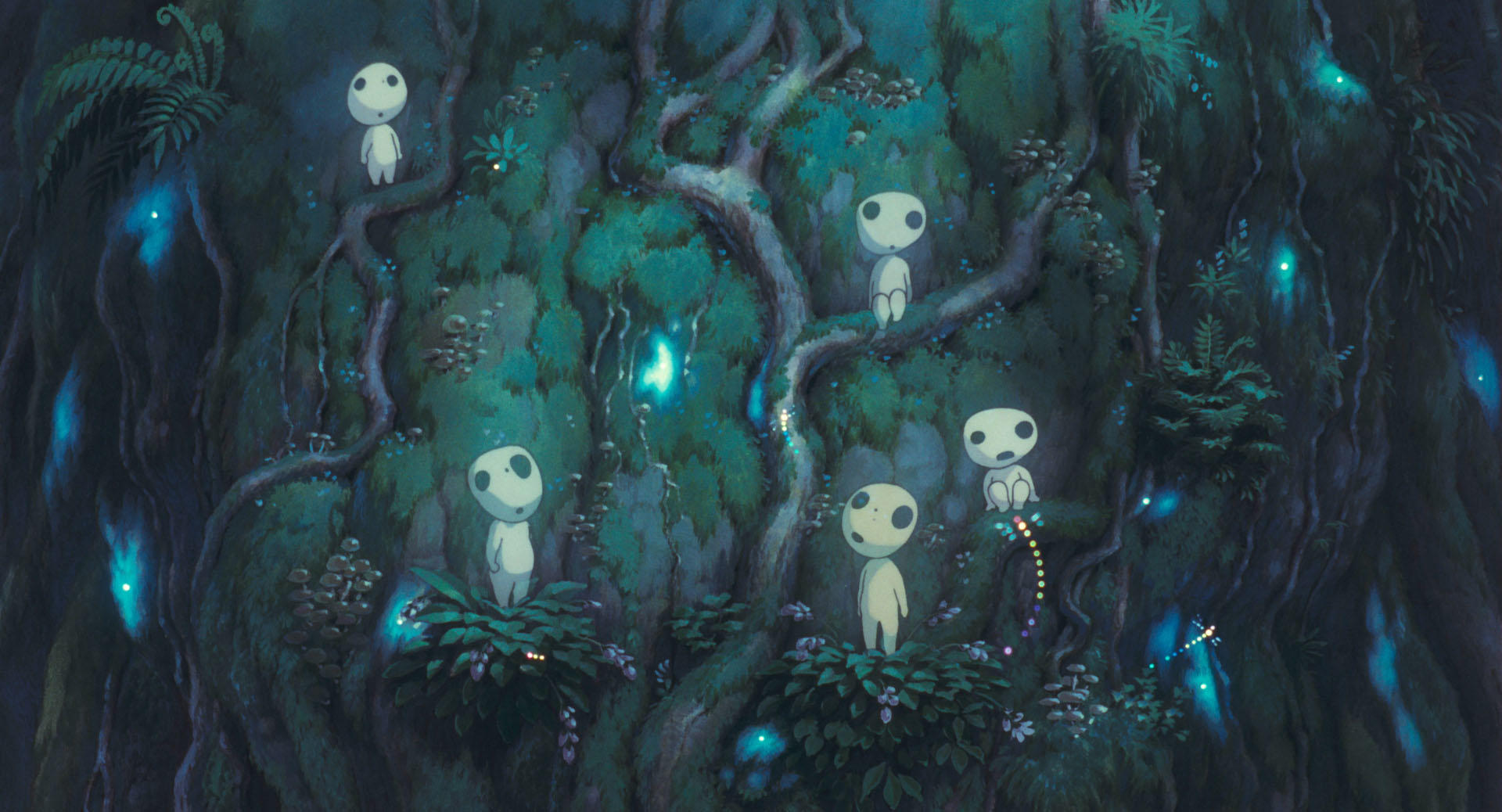
Near Iron Town, Ashitaka finds survivors of an attack by wolves and helps carry wounded men home through the forest. He briefly sees San tending the injured wolf goddess Moro. San is human, but she identifies with the wolves who raised her and rejects the society that abandoned her. The kodama, small tree spirits, reveal that the forest is healthy and inhabited by powers older than the people crossing it.
Iron Town is protected and organised by Lady Eboshi. Its furnaces turn sand into iron, and its firearms have changed the balance of power. Eboshi employs former sex workers and treats them with unusual respect and independence. She also houses and cares for people with leprosy, who manufacture guns for the settlement. The town’s solidarity is real. So is the deforestation, killing and escalating violence that support it.
Eboshi shows Ashitaka the wounded boar god Nago’s role in their history: her gun destroyed his body and helped turn his pain into the demon that reached Ashitaka’s village. She does not regret defending her people. Before the argument can settle, San attacks Iron Town to kill Eboshi. Ashitaka intervenes between them, is shot, and carries San out while badly wounded. His cursed arm opens the town gate with impossible force, demonstrating that hatred grants power while consuming the person who uses it.
San takes Ashitaka to the sacred pool of the Forest Spirit. The god appears as a deer-like creature by day and a vast Night-Walker after sunset. It heals Ashitaka’s gunshot wound but leaves the curse. The distinction matters: survival is granted, not a simple escape from responsibility. Ashitaka remains involved in the conflict and must decide what to do with the strength and pain he carries.
The boar clan, led by the old and nearly blind Okkoto, prepares a final assault on the humans. Hunters working with Jigo plan to follow the wounded animals to the Forest Spirit. Eboshi joins the hunt because an imperial promise rewards the god’s head. San tries to help the boars, but the battle becomes a massacre. Okkoto’s grief and rage begin to corrupt him, and San is pulled toward the same demonic transformation.
Moro uses her remaining strength to free San, while Ashitaka struggles to stop the cycle from consuming everyone. At the sacred pool, Eboshi shoots the Forest Spirit and severs its head. The Night-Walker’s body expands across the landscape searching for what was taken, releasing a black substance that kills plants, animals and people it touches. Jigo and his hunters flee with the head as Iron Town burns under a separate attack.
Ashitaka and San recover the head and return it together. At sunrise, the Forest Spirit falls across the land in a wave of destruction and renewal. Vegetation begins to return, and Ashitaka’s curse disappears, although a scar remains. The ending refuses a magical reset. The old forest has changed, the gods who died do not return, and the damage cannot be denied.
San says she cannot forgive humans. Ashitaka accepts that and chooses to help rebuild Iron Town while visiting her in the forest. Lady Eboshi, injured and chastened, promises to build a better town. Their future is not reconciliation completed. It is coexistence attempted after catastrophe, with each person responsible for what they build next.
Main characters and relationships
Ashitaka
Ashitaka is powerful, but the film defines him through attention and restraint. His exile strips away the security of belonging to one side. Because the curse magnifies anger, every violent choice has a visible moral and physical cost. His wish to see clearly is not passivity: he rescues people, blocks attacks and challenges leaders while refusing to declare an entire community disposable.
San
San, the “Princess Mononoke” of the English title, was raised by Moro and identifies as a wolf. Her ferocity comes from love, abandonment and direct knowledge of what human expansion does to the forest. Ashitaka does not cure her anger or persuade her to become comfortably human. Their bond works because he respects her loyalty even when they choose different homes.
Lady Eboshi
Eboshi is the film’s sharpest contradiction. She gives marginalised people work, dignity and protection, and she intends to destroy the forest gods who obstruct Iron Town’s growth. Her care does not erase the devastation she causes. Her harm does not make her care false. The film asks viewers to hold both truths without using either as an excuse.
Moro
Moro is the intelligent, bitter wolf goddess who raised San. She understands human speech and strategy, but she is also dying in a war her family cannot win by strength alone. Her relationship with San is protective without being sentimental. Moro knows San is human and loves her as a daughter anyway.
The Forest Spirit
The Forest Spirit gives and takes life without behaving like a human judge. It heals a wound, ends a life and transforms at night into the towering Night-Walker. The god is not a mascot for gentle nature. Its scale and indifference remind every faction that the living world exceeds their plans.
Jigo and Okkoto
Jigo is charming, practical and willing to turn sacred life into a political prize. Okkoto is an honourable boar leader whose determination becomes disastrous when grief and pride leave no path except a final charge. Together they show different ways intelligence can be narrowed by appetite, duty and desperation.
Themes, meaning and interpretation
Nature and industry are entangled
The film never says that humans can simply leave nature untouched. Iron Town needs resources and defence; the forest is already shaped by conflict among species and gods. The question is how people live inside limits, who pays for prosperity and whether useful technology becomes a reason to ignore every other form of life.
Hatred feels powerful because it simplifies
Ashitaka’s curse gives him enormous strength, but it also turns pain into a command to destroy. San, Okkoto and the wounded gods risk the same narrowing. Hatred removes uncertainty by making one enemy responsible for everything. The film’s alternative is harder: see the wound, resist becoming it, and still intervene.
There are no innocent systems
Iron Town’s social progress depends on extraction and weapons. The forest’s defenders include magnificent beings capable of rage and slaughter. The imperial court wants a miracle converted into power. Miyazaki does not treat complexity as an excuse for inaction. He makes responsibility more demanding by refusing the comfort of a perfectly clean side.
Disability and belonging
Iron Town’s lepers are not hidden as shameful dependants. Eboshi gives them work and listens to their expertise, while the women of the town gain security through collective labour. These humane choices make the settlement worth protecting even as its environmental violence must change. Ashitaka’s own scar similarly remains after the curse lifts, marking survival without pretending nothing happened.
Coexistence is ongoing work
The ending does not merge San’s forest and Eboshi’s town into one harmonious community. San and Ashitaka care for each other while living apart. Eboshi promises a better rebuild, not instant redemption. Life returning to the hills creates an opportunity, not proof that the previous world can be restored.
Age suitability and content guidance
Princess Mononoke is usually better suited to older teens and adults than to young children. It contains bloody animal wounds, a frightening demon covered in moving tendrils, gun violence, battle scenes and visible severed limbs and heads. The deaths of animal gods are emotionally intense, and the climax presents ecological destruction on a huge scale.
There is no explicit sexual content. The harder material comes from violence, suffering, moral tension and the length of the film. Sensitive viewers may be disturbed by injured animals, leprosy, corruption imagery and San’s repeated danger. Families should check the current classification in their own country, since ratings and available editions vary. The separate parent guide to Ghibli’s scariest films and moments offers broader comparison.
Production and release context
Written and directed by Hayao Miyazaki, Princess Mononoke opened in Japan on 12 July 1997. Joe Hisaishi composed its sweeping score. The original title, Mononoke-hime, refers to a princess associated with spirits or uncanny beings rather than a character literally named Mononoke.
The setting draws on medieval Japanese history without functioning as a simple reconstruction of one date or place. Ironmaking, early firearms, forest belief and communities excluded from conventional historical epics are combined into a world where technological change has immediate social and ecological consequences. That distance from modern life allows the film to feel legendary while keeping its conflicts recognisable.
The film’s scale was a major statement for Studio Ghibli. Crowded battles, animal movement, industrial labour and quiet forest passages all serve the same argument: no landscape is merely background. The score gives the conflict grandeur, while long stretches of observation stop the action from becoming a simple war spectacle.
Where to watch legally
Streaming and home-video rights vary by country and change over time. Use the site’s current Studio Ghibli streaming guide, then confirm the title inside the licensed service available in your region. In North America, GKIDS maintains an official Princess Mononoke page with release information. Licensed digital rental, purchase and physical editions may also be available.
Official image gallery
Related films and guides
Watch Nausicaä of the Valley of the Wind for another ecological conflict led by compassion, Pom Poko for a more comic but still painful story of development displacing nature, or Castle in the Sky for adventure shaped by technology and power. For deeper analysis, continue with the ending explainer, the character guide, or the nature and war explainer.
Frequently asked questions
Is San actually a princess?
San is not presented as royalty in the ordinary political sense. “Princess Mononoke” describes her mythic position as the human daughter of the wolf goddess Moro and a feared figure associated with the forest’s spirits.
Is Lady Eboshi the villain?
She is an antagonist whose choices cause immense harm, but the film does not reduce her to a simple villain. She protects excluded people and builds a functioning community while waging a destructive war against the forest. Both parts of her leadership matter.
What is Ashitaka’s curse?
The curse comes from contact with Nago after pain and hatred transform the boar god into a demon. It spreads through Ashitaka’s arm, gives him dangerous strength and threatens his life. It also makes the film’s central idea physical: hatred can empower a person while consuming them.
What does the Forest Spirit represent?
The Forest Spirit embodies life and death rather than one tidy message. It heals, kills and transforms without following human morality. Its presence makes nature sacred, powerful and impossible to own.
Do Ashitaka and San end up together?
They care deeply for each other, but they do not choose the same home. San remains with the forest and Ashitaka helps rebuild Iron Town, promising to visit her. Their ending values connection without demanding that either abandon their identity.
Does the forest fully recover?
Green life returns after the climax, but the old forest and its dead gods are not simply restored. The final kodama suggests life continues. Recovery is possible, while loss and responsibility remain.
Is Princess Mononoke connected to another Ghibli movie?
No. It is a standalone story. Its environmental concerns and compassionate hero make it a useful companion to Nausicaä, but the films do not share a literal continuity.
Official film stills are credited to Studio Ghibli and used under its common-sense image-use notice.