Ponyo quick facts
- Original Japanese title: Gake no Ue no Ponyo
- Japanese release: 19 July 2008
- Writer and director: Hayao Miyazaki
- Music: Joe Hisaishi
- Studio: Studio Ghibli
- Running time: about 101 minutes
- Primary setting: a clifftop coastal town and the magical sea around it
- Best for: families and first-time Ghibli viewers who want a bright fantasy about freedom, care and the power of nature
Spoiler-free answer: Ponyo is a hand-drawn ocean fairy tale about a magical fish-girl who wants to become human and Sōsuke, the five-year-old boy who accepts her without trying to control her. It is one of Studio Ghibli’s most approachable family films, but its simple child’s-eye story carries ideas about parental fear, ecological imbalance and love as complete acceptance.
Spoiler-free overview
The story begins with curiosity rather than a mission. Ponyo escapes the underwater home managed by her father, Fujimoto, and reaches the shore inside a glass jar. Sōsuke frees her, protects her and gives her a name. Their immediate friendship is uncomplicated. The adults around them, however, understand that Ponyo carries power large enough to disturb the boundary between sea and land.
Ponyo works like a picture book animated at feature length. Feelings become weather. Fish become waves. A child’s desire to run home to a friend can move an entire ocean. Miyazaki does not pause to explain every magical rule, because the emotional logic is more important: Ponyo wants the freedom to choose her own form, Fujimoto fears what that choice may cause, and Sōsuke responds to her strangeness with care instead of suspicion.
The movie is joyful without pretending that adults are unnecessary. Lisa’s practical courage keeps Sōsuke safe, Granmamare understands the scale of the crisis, and even Fujimoto’s controlling behaviour grows from real fear. Young children can follow the rescue and adventure. Adults may notice a more complicated story about the difference between protecting somebody and deciding their life for them.
Storyline: what happens in Ponyo?
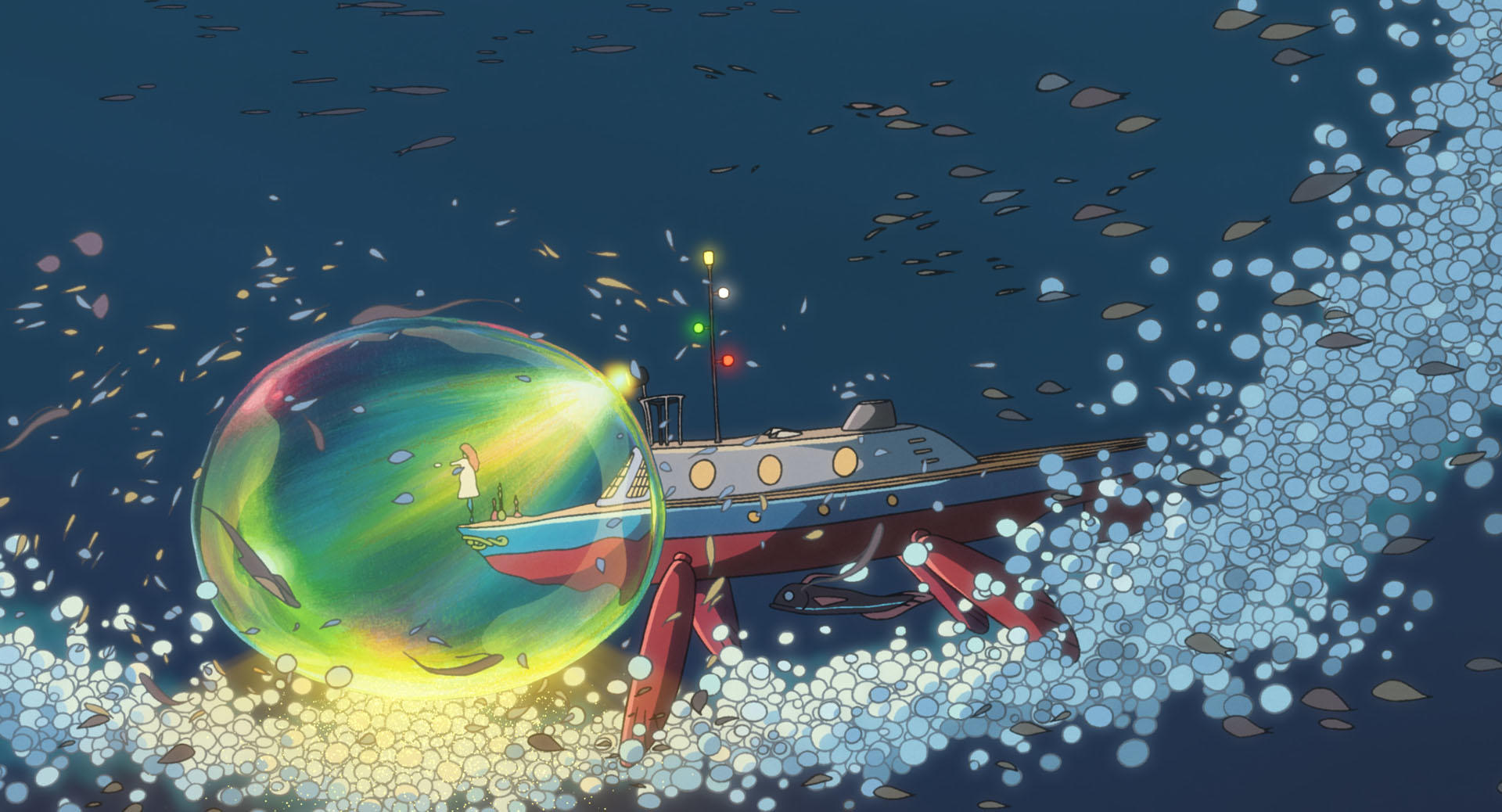
Ponyo begins life as Brunhilde, one of many small fish-like daughters of Fujimoto and the great sea goddess Granmamare. Fujimoto was once human, but now lives below the surface in a vessel filled with potions and marine life. He distrusts humanity because of the damage people cause to the ocean. His daughters are protected, observed and kept away from shore.
Brunhilde slips out on a jellyfish and is swept into a trawler’s net among rubbish from the seabed. She becomes trapped in a glass jar before washing up below Sōsuke’s clifftop home. Sōsuke breaks the jar, cuts his finger and discovers that the little creature heals the wound by licking it. He names her Ponyo, gives her ham and promises to look after her. Ponyo responds with the direct certainty of a very young child: she loves Sōsuke and wants to stay.
Fujimoto retrieves Ponyo and takes her underwater. He insists that humans are dangerous and tries to restore the form he believes she should have. Ponyo resists. The human blood she swallowed from Sōsuke’s cut has strengthened her ability to transform, first giving her limbs and then allowing her to become a little girl. Her wish is not abstract. She wants hands, feet, ham and the freedom to return to her friend.
While Fujimoto is away, Ponyo’s sisters help her escape. She breaks into a chamber containing his powerful Water of Life, and the released magic swells through the sea. The moon appears to move closer, ancient marine creatures return and a huge storm reaches the coast. Ponyo runs over waves shaped like giant fish while Lisa drives Sōsuke along the cliff road below. The reunion is ecstatic, but the weather reveals that Ponyo’s transformation has consequences beyond the children.
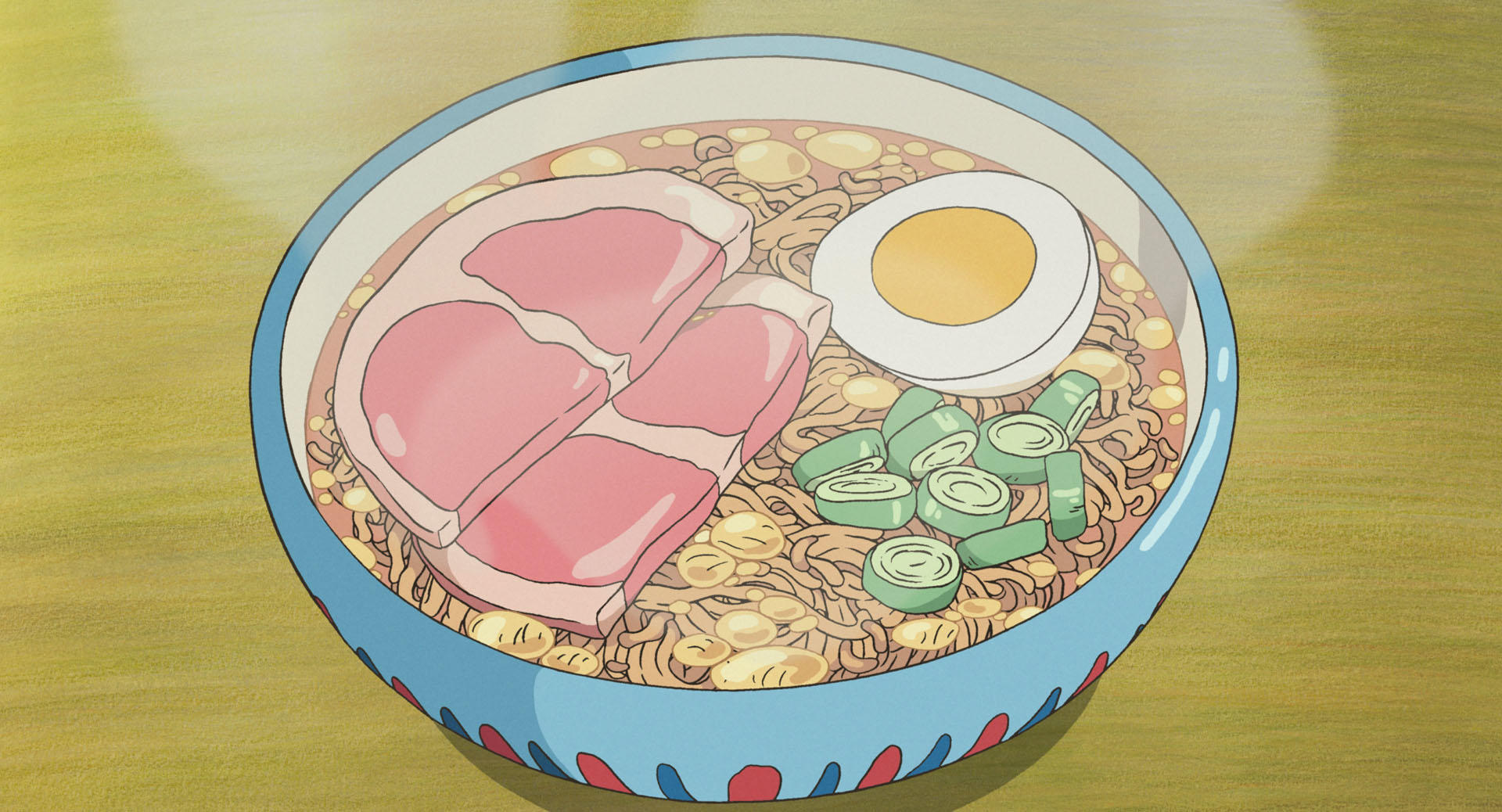
At the house, Lisa treats Ponyo as a guest rather than a threat. She dries both children, prepares a hot meal and listens to Ponyo’s blunt declarations. The ramen scene slows the film after the storm and makes safety tangible through steam, light and food. When the electricity fails, Ponyo uses magic to enlarge a toy boat. Her power is useful and delightful, although she tires quickly after using it.
Lisa leaves to check on the older residents at the care home where she works. By morning, the town is flooded. Sōsuke and Ponyo set out in the enlarged boat to find her. They pass families travelling calmly across the new inland sea, including a mother with a baby. Ponyo gives away food and uses magic to help, showing that her appetite and impulsiveness sit beside instinctive generosity.
When the boat returns to toy size, the children continue on foot through a landscape filled with prehistoric fish. Ponyo gradually loses energy and slips back toward her fish form. They find Lisa’s empty car, and Sōsuke briefly breaks down, fearing she has been hurt. Ponyo comforts him and continues forward despite her exhaustion.
Fujimoto leads them into a protected space beneath the sea, where Granmamare has brought Lisa and the care-home residents to safety. Granmamare proposes a test. If Sōsuke can accept Ponyo whether she is fish, human or something between, Ponyo may choose humanity and the dangerous imbalance will end. If the choice fails, Ponyo will become sea foam. The scene echoes fairy-tale stakes without turning Sōsuke’s answer into adult romance.
Sōsuke says he loves every version of Ponyo. His answer matters because he has already seen her as a strange creature, an unruly child and a force connected to the flood. He does not require her to become ordinary before offering care. Granmamare places Ponyo’s life force inside a bubble and tells Sōsuke to kiss it once they return to land. The ocean recedes, families reunite and the world settles. Ponyo bursts from the bubble as a human girl and leaps into Sōsuke’s arms.
Main characters and relationships
Ponyo
Ponyo is desire without much self-editing. She wants freedom, Sōsuke, legs and ham with equal intensity. That makes her funny and sometimes frighteningly powerful. The film does not punish her for wanting a different life, but it does show that freedom has consequences. Her growth comes through moving from escape toward a choice that other people can understand and support.
Sōsuke
Sōsuke is unusually steady for five, yet still recognisably a child. He cries when he fears for Lisa, depends on adults and cannot solve the magical crisis by technical knowledge. His gift is emotional clarity. He recognises Ponyo as a person before he understands what she is, and his care remains consistent as her form changes.
Lisa
Lisa is Sōsuke’s energetic, loving and sometimes impulsive mother. She drives through the storm, manages the household while her husband works at sea and cares for residents at the hilltop home. Calling her by her name rather than “Mum” gives their relationship an open, companionable quality, but she remains the adult who creates safety through decisions and work.
Fujimoto
Fujimoto is anxious, theatrical and controlling. His warnings about human damage to the ocean are not wrong, and his fear of magical imbalance proves justified. His mistake is treating protection as ownership. By trying to prevent Ponyo from choosing, he helps turn her wish into a desperate escape.
Granmamare
Granmamare is Ponyo’s mother and a vast presence associated with the sea. Where Fujimoto tries to contain uncertainty, Granmamare listens, assesses the danger and creates a path that respects Ponyo’s choice. Her calm does not mean the crisis is trivial. It shows authority secure enough to allow change.
Kōichi and the care-home residents
Kōichi, Sōsuke’s father, spends much of the story at sea and communicates with the house by signal lamp. His absence creates frustration but not a broken family. The older women at Lisa’s workplace bring humour and affection; underwater, they temporarily regain easy movement, turning rescue into a glimpse of wonder rather than helplessness.
Themes and meaning
Love means acceptance, not possession
Sōsuke’s final promise is powerful because it does not depend on Ponyo becoming a convenient kind of girl. Fujimoto also loves Ponyo, but initially expresses that love through confinement and correction. The contrast gives the fairy-tale ending its meaning. Care becomes stabilising when it makes room for another person’s real identity.
Nature is alive, beautiful and beyond control
The ocean is neither a passive resource nor a simple villain. It contains rubbish, prehistoric life, godlike power and playful creatures. Human pollution justifies Fujimoto’s anger, while his private attempt to manage nature with potions creates risks of its own. Balance cannot be achieved by one frightened person controlling every variable.
Childhood feelings can have mythic scale
Adults often treat children’s wants as temporary noise. Ponyo gives those feelings visual force. Joy races across waves and fear pulls the moon close. This does not mean every desire should be granted without limits. It means a child’s inner life is real enough to deserve serious attention.
Food and care make a home
Ham, tea and ramen recur because care is expressed materially. Lisa does not deliver a speech about welcoming Ponyo. She gives her dry clothes, warmth and dinner. In a film full of enormous water, the small domestic scene becomes the clearest image of safety.
Parents must protect and eventually release
Fujimoto and Lisa are very different, but both face danger they cannot completely remove. Lisa trusts Sōsuke with age-appropriate responsibility while returning to people who need her. Fujimoto has to accept that keeping Ponyo alive is not the same as keeping her unchanged. Granmamare offers the middle path: acknowledge the risk, then make the choice possible.
Age suitability and content guidance
Ponyo is among Studio Ghibli’s gentlest feature films and is suitable for many younger viewers. The BBFC classified the cinema version for general viewing with “very mild threat.” Families should still expect a trawler net, a cut finger with no graphic detail, a large storm, flooding, dangerous driving, brief separation from parents and several moments when Sōsuke fears Lisa may be hurt.
The giant fish-waves and changed moon may unsettle children who are sensitive to storms, deep water or surreal transformations. Ponyo shifts between fish, human and an in-between form. Nobody is shown dying, and the flooded community is presented with unusual calm. Check the current classification for your country and edition, since ratings differ by territory. For more detail, use the site’s dedicated Ponyo parent guide.
Production and release context
Hayao Miyazaki wrote and directed Ponyo, which opened in Japan on 19 July 2008. Joe Hisaishi composed the music. The story draws loosely on Hans Christian Andersen’s The Little Mermaid, but replaces sacrifice and romantic tragedy with a friendship between very young children and a distinctly Miyazaki concern for the living sea.
The film is celebrated for an emphatically hand-drawn look. Water does not behave like a photoreal simulation. Waves become creatures, coastlines bend and crowds of fish move with the energy of sketchbook lines. Pastel colours and simplified shapes make the film approachable while allowing its largest sequences to feel wild rather than mechanically precise.
Its coastal setting also keeps ordinary infrastructure visible. Boats, roads, tunnels, a care home and a clifftop house all have jobs to do. The fantasy becomes more persuasive because magic arrives in a community that already depends on tides, weather and people caring for one another.
Where to watch Ponyo legally
Streaming and home-video rights vary by country and change over time. Use the site’s current Studio Ghibli streaming guide, then confirm the title inside the licensed service available in your region. In North America, GKIDS maintains an official Ponyo page with release information. Licensed rental, purchase and physical editions may also be available.
Official image gallery
Related films and guides
Watch My Neighbor Totoro for another gentle early-childhood adventure, Spirited Away for a more intense transformation story, or The Cat Returns for another brisk fairy tale about choosing one’s own life. Continue with the Ponyo ending explainer, character guide, or films to watch after Ponyo.
Frequently asked questions
Is Ponyo a fish or a human?
Ponyo begins as a magical fish-like child and gains the ability to become human. The ending allows her to choose humanity after Sōsuke accepts every form she has taken. Her connection to the sea remains central to who she is.
Why does the ocean flood?
Ponyo releases powerful magic while escaping Fujimoto and transforming. That energy disrupts the balance between sea, land and moon. The flood is both a magical consequence and a visual expression of feelings becoming too large to contain.
What is Sōsuke’s test?
Granmamare asks whether Sōsuke can accept Ponyo as she really is, including her fish origin and magical nature. It is a test of honest childlike care, not an adult romantic contract or a demand that he control her future.
Is Fujimoto the villain?
No. He opposes Ponyo’s wish and behaves controllingly, but his fear of ecological and magical disaster is genuine. The film treats him as an anxious parent whose attempt to protect his child has become a refusal to hear her.
Is Ponyo based on The Little Mermaid?
It draws loosely on Hans Christian Andersen’s fairy tale, especially the sea-child who wishes to become human. Miyazaki radically changes the age, relationships, tone and ending, making acceptance and family balance more important than romantic sacrifice.
Is Ponyo good for a first Studio Ghibli film?
Yes, especially for families and viewers who want something visually rich but easy to follow. It has mild peril rather than graphic violence, a clear emotional centre and many recurring Ghibli interests: food, flight-like movement, nature, work and courageous children.
Does Ponyo have a sad ending?
No. The danger passes, families reunite and Ponyo becomes human by choice. The ending is deliberately joyful, even though it leaves the future practicalities to fairy-tale imagination.
Official film stills are credited to Studio Ghibli and used under its common-sense image-use notice.