Spirited Away quick facts
- Original Japanese release: 20 July 2001
- Director and writer: Hayao Miyazaki
- Studio: Studio Ghibli
- Running time: about 125 minutes
- Best for: viewers who want Ghibli’s richest blend of adventure, spirits, symbolism and coming-of-age drama
Spoiler-free answer: Spirited Away follows ten-year-old Chihiro into a spirit world where her parents are transformed and she must work in an enormous bathhouse to survive. It can be eerie, funny and overwhelming, but its real subject is a frightened child learning to act with care without losing her identity.
Storyline: what happens in Spirited Away?
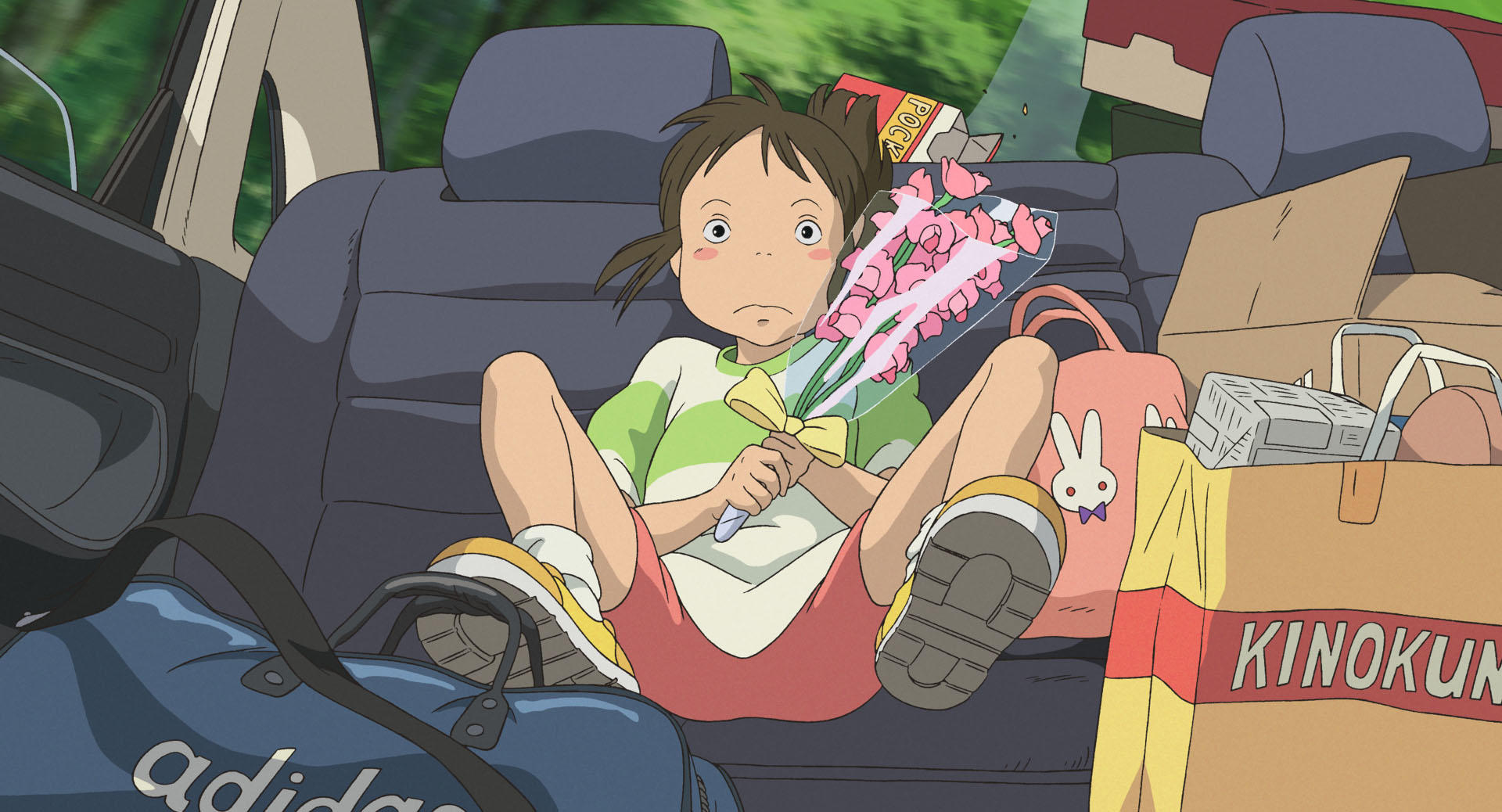
Chihiro is unhappy about moving to a new home. When her parents take a wrong turn, the family enters an apparently abandoned entertainment district. Food laid out without hosts tempts the adults, while Chihiro senses that the place is unsafe. Night falls, spirits arrive and her parents become pigs. A mysterious boy called Haku helps Chihiro avoid disappearing and tells her she must find work.
The bathhouse is run by the witch Yubaba, who controls workers partly by taking their names. Chihiro becomes Sen and is placed under the supervision of the sharp but caring Lin. Work gives the story its structure: Chihiro cleans, carries, listens and solves problems. Her kindness to a polluted river spirit reveals that courage is not the same as aggression. Her invitation to the lonely No-Face, however, has consequences once the bathhouse’s appetite for gold magnifies his need and greed.
Chihiro eventually has to help Haku, calm No-Face, face Yubaba’s twin sister Zeniba and remember what the bathhouse tried to make her forget. The ending is a test of attention rather than strength. She leaves changed because she can now trust her perception and act for others, not because every mystery has been explained.
Main characters
Chihiro
Chihiro starts as a believable, unhappy child rather than a ready-made hero. Her growth appears in small decisions: asking for work, helping a guest nobody wants, refusing easy gold and remembering a name.
Haku
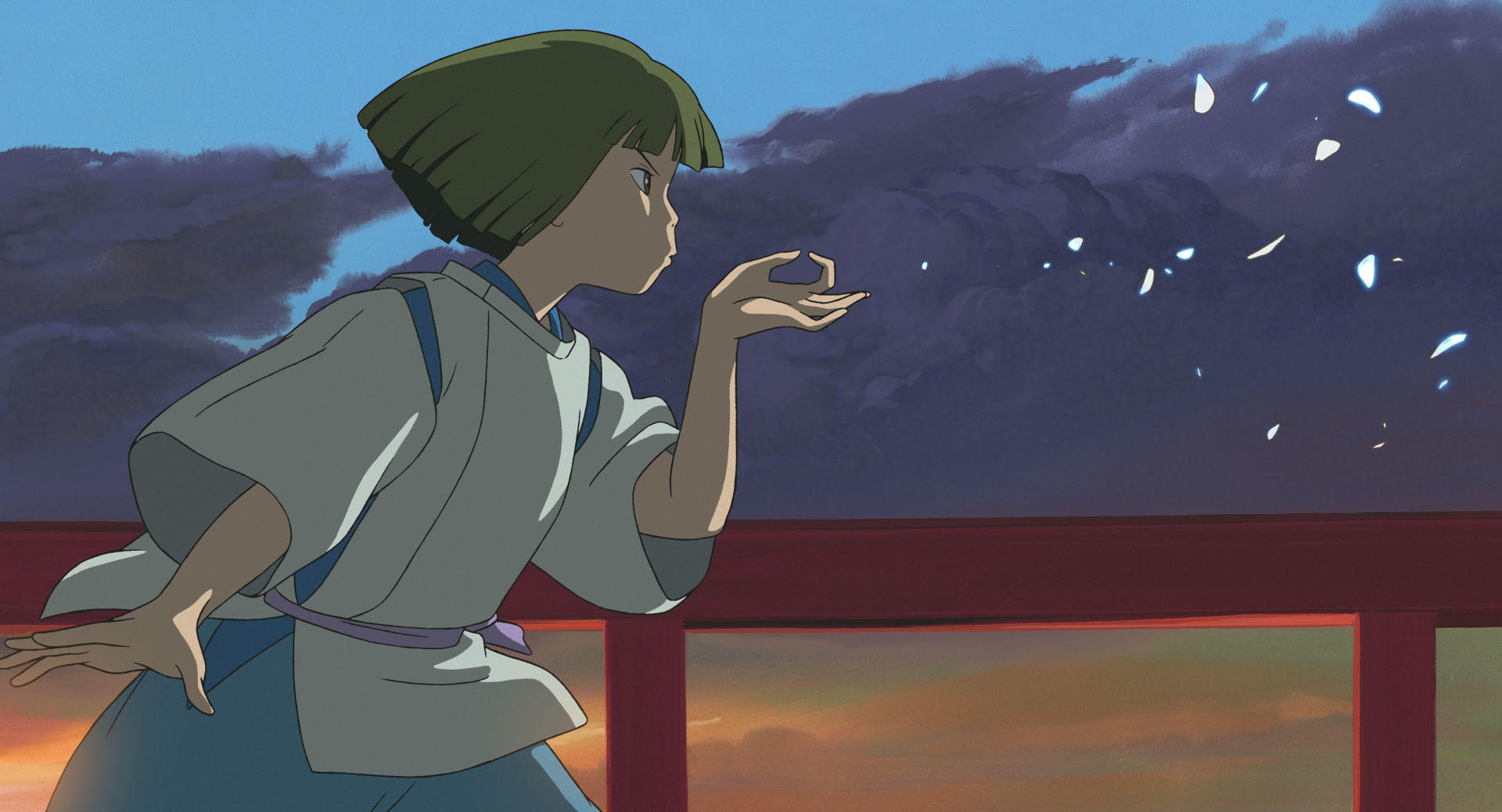
Haku is Chihiro’s guide and also someone trapped by Yubaba. His shifting identity as boy, dragon and forgotten river links memory to environmental loss.
No-Face
No-Face reflects the environment around him. In the bathhouse he consumes greed, attention and excess. Away from it he becomes quiet again, which makes him more than a simple monster.
Yubaba, Zeniba and Lin
Yubaba is controlling but not one-dimensional; she is an employer, magician and protective mother. Zeniba offers a different kind of household, while Lin’s practical kindness gives Chihiro a model of solidarity inside a hard workplace.
Themes and meaning
Names are the film’s clearest symbol. Losing a name makes a person easier to control, while remembering creates a route home. Work has a similarly double meaning. The bathhouse exploits its staff, yet purposeful work helps Chihiro discover competence and relationships. Miyazaki does not offer a slogan about labour; he shows the difference between service, exploitation and care.
Greed appears through the parents, bathhouse workers and No-Face, but food and desire are not automatically evil. The problem is consumption without attention. The polluted river spirit turns environmental damage into a physical burden, while Haku’s forgotten river suggests how development can erase both places and memory.
Age and content guidance
The film includes transformed parents, ghostly figures, a dragon injured by paper creatures, blood, vomiting, characters in peril and several intense confrontations. No-Face grows large and frightening after swallowing bathhouse workers, although the sequence is fantastical rather than graphic. Younger children can also be unsettled by Chihiro being separated from her parents for most of the story.
Many school-age viewers handle it well with an adult, but children sensitive to transformation, abandonment or strange creatures may prefer Totoro or Kiki first. The ending is positive and the parents return safely, though some spirits remain deliberately uncanny.
Production, release and legacy
Studio Ghibli released Spirited Away in Japan in 2001. Miyazaki developed Chihiro as an ordinary young heroine rather than an idealised fantasy figure. Joe Hisaishi’s score moves between melancholy, urgency and quiet observation. The film won the Golden Bear at the Berlin International Film Festival and the Academy Award for Best Animated Feature, achievements that helped introduce a much wider international audience to Studio Ghibli.
Where to watch legally
Legal streaming availability varies by territory and licensing window. Use our current where-to-watch guide, then confirm the title inside the service for your country. Licensed physical editions are another reliable route. We avoid hard-coding a platform here because a canonical guide should not become inaccurate when rights change.
Official image gallery
Related films
Watch My Neighbor Totoro for gentler childhood wonder, Howl’s Moving Castle for another transforming magical world, or Princess Mononoke for a more violent environmental conflict.
Frequently asked questions
Is Spirited Away scary?
It can be intense for younger or sensitive viewers. The imagery is strange and sometimes threatening, but the story is ultimately hopeful.
Why does Yubaba take Chihiro’s name?
Names represent memory and autonomy. Renaming workers helps Yubaba control them and makes forgetting home more likely.
What does No-Face represent?
No single label explains him. He reflects loneliness and the desires of his surroundings, becoming monstrous in a culture of greed and calmer in a caring home.
Does Chihiro remember the spirit world?
The ending leaves her conscious memory open, but her confidence and attention show that the experience has changed her.
Official film stills are credited to Studio Ghibli and used under its common-sense image-use notice.