Kiki’s Delivery Service quick facts
- Original Japanese title: Majo no Takkyūbin
- Japanese release: 29 July 1989
- Writer and director: Hayao Miyazaki
- Based on: the children’s novel by Eiko Kadono
- Music: Joe Hisaishi
- Studio: Studio Ghibli
- Running time: about 103 minutes
- Best for: viewers who want a warm coming-of-age story about independence, work, friendship and creative confidence
Spoiler-free answer: Kiki’s Delivery Service follows a thirteen-year-old witch who leaves home for a year of independent training. In a seaside city, Kiki turns her one dependable magical skill, flying, into a delivery business. The film has no traditional villain. Its real conflict is the pressure of becoming useful, earning a place in a community and recovering when confidence stops coming naturally.
Spoiler-free overview
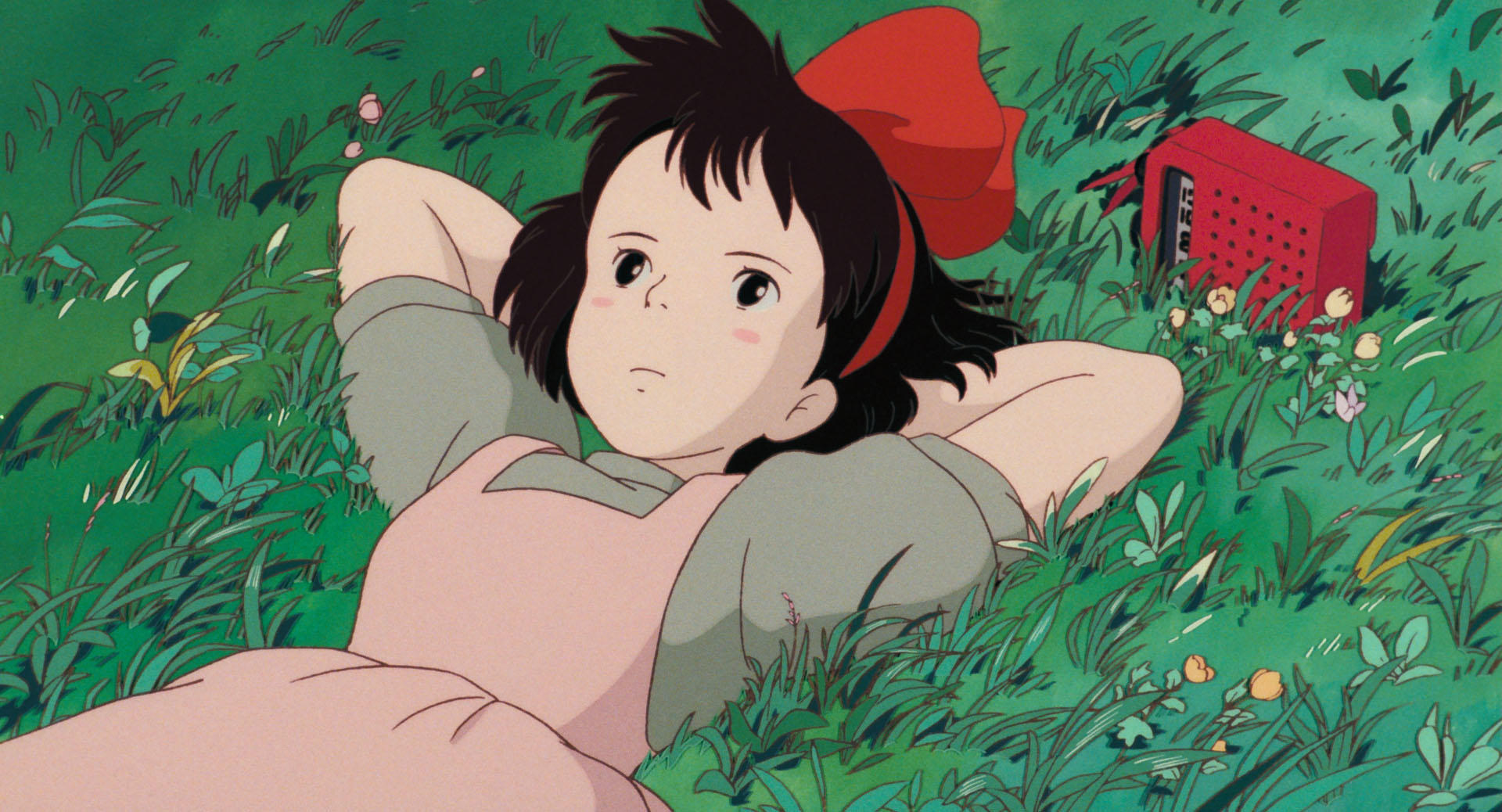
This is one of Studio Ghibli’s gentlest films, but it is not weightless comfort. Kiki is enthusiastic, capable and brave enough to leave home, then discovers that independence includes loneliness, awkward customers, bad weather, money worries and work that can drain the joy from a talent. The city is beautiful, yet it does not instantly welcome her. She has to build relationships through small acts of reliability.
The story’s magic stays close to ordinary life. Kiki can fly and speak with her black cat, Jiji, but she cannot solve every problem with a spell. She needs a room, food, customers and a reason to keep going. Osono offers practical kindness at the bakery. Ursula gives her language for understanding creative exhaustion. Tombo’s interest in flight helps Kiki see her ability through someone else’s eyes. These connections do not rescue her from growing up; they make growth possible.
For a first Studio Ghibli watch, the film is accessible and emotionally clear. It is calmer than Castle in the Sky, less surreal than Spirited Away, and especially strong for viewers who recognise burnout or the fear that a once-natural skill has disappeared.
Storyline: what happens in Kiki’s Delivery Service?
Tradition requires young witches to leave home at thirteen and spend a year living independently in a town that needs their skills. Kiki chooses a clear night, packs her mother’s broom and radio, and departs with Jiji. A storm forces them to shelter in a freight train, and by morning Kiki sees a large coastal city beside the sea. She decides that Koriko will be her new home even though the city already has little idea what to do with a witch.
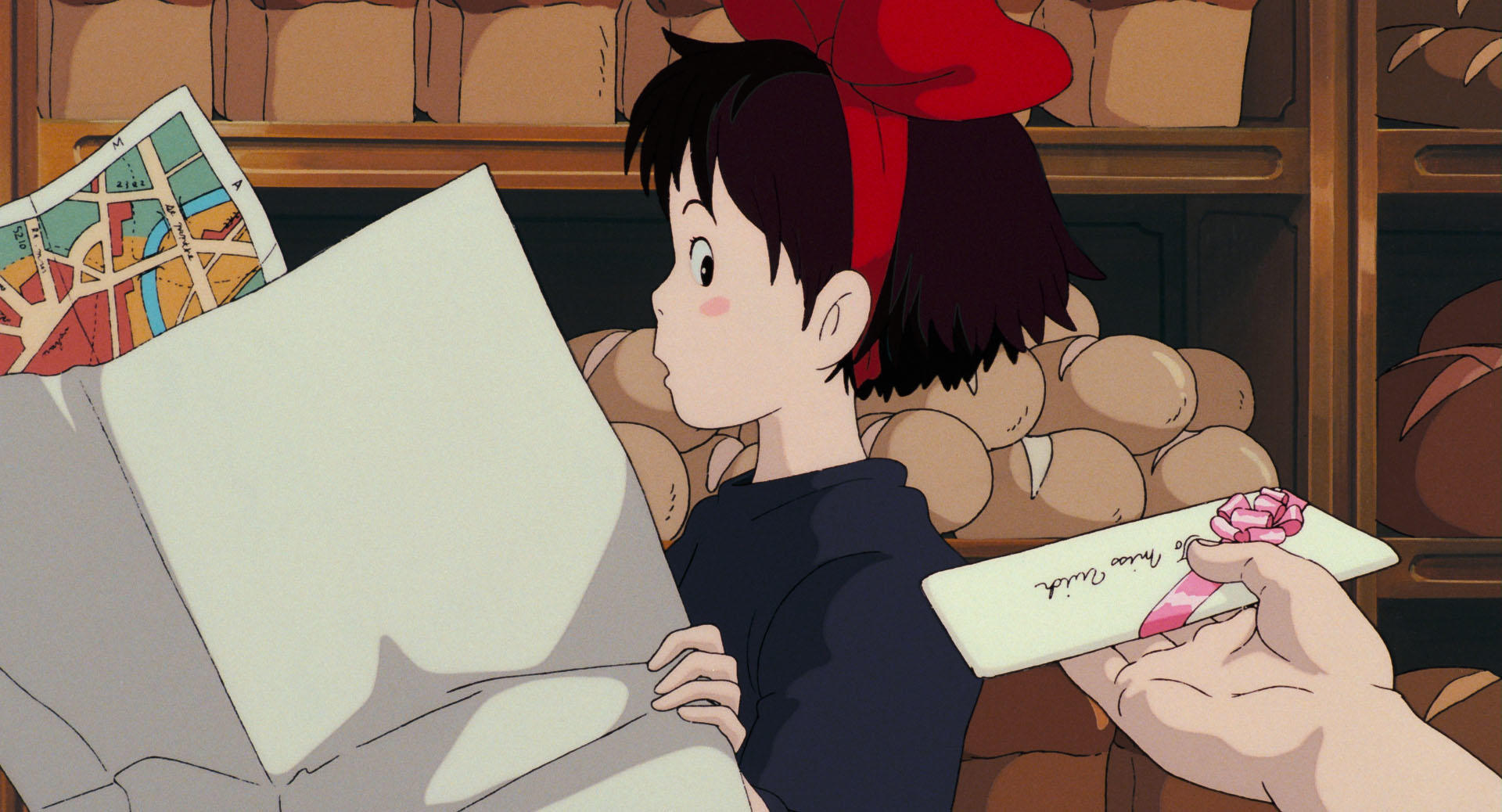
Kiki’s arrival is clumsy. She flies into traffic, attracts police attention and struggles to find somewhere affordable to stay. Her first real opening comes when she notices a customer leaving a baby’s dummy at a bakery. Kiki flies after her to return it. Osono, the warm and observant bakery owner, rewards the effort by offering Kiki a room in the attic and helping her imagine a business built around flying.
The delivery service begins with small jobs that quickly become tests of judgement. Kiki transports a toy cat as a birthday gift, but a gust knocks it from her cage. Jiji has to pretend to be the toy while Kiki searches a forest cabin, where she meets Ursula, a young painter living and working alone. Ursula helps repair the damaged toy. The episode turns a mistake into Kiki’s first example of asking for help without giving up responsibility.
Another delivery is harder in a quieter way. An elderly woman named Madame wants to send a homemade herring pie to her granddaughter, but the oven is not working. Kiki helps bake it and then flies through heavy rain to deliver it on time. The granddaughter receives the gift with indifference. Kiki cannot make a customer value the care behind a package, and the cold response leaves her exhausted and unwell.
As Kiki works, Tombo repeatedly tries to befriend her. His fascination with aviation can feel overwhelming when she is already self-conscious. Kiki eventually joins him on a bicycle fitted with a propeller. Their ride ends in a crash, laughter and a moment of connection, but Kiki withdraws when Tombo’s friends arrive. She still feels out of place among confident city teenagers.
Then Kiki’s magic falters. She can no longer understand Jiji, and her broom will not lift her. The loss is frightening because flying is both her identity and her income. Trying harder does not immediately restore it. Kiki stops taking deliveries and worries that she has failed as a witch.
Ursula invites Kiki to her cabin and compares the problem to an artist losing the ability to draw. Sometimes a skill flows without conscious effort. Sometimes it stops, and forcing it only deepens the block. Rest, experience and a different reason for working can allow it to return. The conversation does not provide an instant cure, but it helps Kiki understand that losing momentum is not the same as losing herself.
The final crisis arrives when a dirigible loses control over the city and Tombo is left hanging from a rope high above the streets. Kiki borrows a street sweeper’s push broom and, driven by the need to help rather than prove herself, manages to fly again. Her rescue of Tombo is public and dramatic, but the emotional victory is private: she can use her gift without demanding that it feel effortless forever.
By the ending, Kiki’s business is established and she has become part of the city. A letter home shows that some days are still difficult, but she is settling in. Jiji’s voice does not return for Kiki in the original Japanese version. The change can be read as part of growing up: their bond remains, while Kiki no longer needs her familiar to narrate every experience for her.
Main characters
Kiki
Kiki is independent without being impossibly self-sufficient. She makes mistakes, feels jealous, gets tired and sometimes interprets discomfort as proof that she does not belong. Her strength is the willingness to keep participating. The film lets competence grow through deliveries, conversations and repairs rather than a single magical revelation.
Jiji
Jiji is Kiki’s companion, sounding board and comic counterweight. He notices danger and social awkwardness before she does. His developing relationship with the white cat Lily gives him a life beyond accompanying Kiki. Whether his lost voice is understood literally or symbolically, the friendship is not erased.
Osono
Osono offers the most useful kind of adult support: generous but not controlling. She gives Kiki a room and a route to customers, while still allowing the business to belong to Kiki. Her bakery becomes a safe base from which independence can develop.
Tombo
Tombo is fascinated by flight, machines and Kiki’s ability. His persistence can initially annoy her, but he is not trying to use her magic. He represents curiosity and social confidence, and his homemade flying bicycle mirrors Kiki’s practical, imperfect approach to getting airborne.
Ursula
Ursula is an artist who understands that creative work cannot always be commanded. She treats Kiki as a fellow maker rather than a child with a cute problem. Her advice about blocks, rest and rediscovery gives the movie much of its lasting relevance for adult viewers.
Madame
Madame’s care contrasts with her granddaughter’s indifference. The film does not turn that disappointment into a moral lecture. Instead, it shows Kiki learning that good work can carry meaning even when the recipient does not recognise it.
Themes and meaning
Independence is built through interdependence
Kiki leaves home to prove she can live alone, but the lesson is not that adults should need nobody. Osono provides shelter, Ursula offers perspective, customers create work, and Kiki returns that support through effort. Independence means participating in a community without surrendering responsibility for your choices.
Work can give confidence and consume it
The delivery service turns flying into something useful. It also changes a joyful ability into a schedule, price and obligation. The film understands a tension familiar to freelancers and creative workers: being paid for a skill can validate it while making failure feel dangerous. Kiki’s recovery begins when the immediate reason to fly is care for Tombo, not performance or income.
Burnout is not a moral failure
Kiki loses access to abilities she previously took for granted. Nobody defeats her and no curse is revealed. Fatigue, isolation and pressure are enough. Ursula’s response is compassionate and practical. A blocked person may need rest, experience and reconnection rather than more self-criticism.
Belonging comes from repeated small actions
Koriko does not welcome Kiki with a grand ceremony. She becomes visible by delivering packages, helping at the bakery, talking to neighbours and showing up when something goes wrong. The city changes from intimidating spectacle into a network of recognisable people because Kiki contributes to it.
Growing up changes relationships
The shift in Kiki and Jiji’s communication is bittersweet because maturity brings both capability and distance. The ending does not suggest childhood closeness was false. It shows that a relationship can remain important even when its form changes.
Age suitability and content guidance
The film is suitable for many family audiences, but parents should expect several tense moments. Kiki is separated from home, becomes ill after flying in a storm, struggles with loneliness and temporarily loses her magic. The dirigible climax puts Tombo in sustained danger above the city. Kiki’s rescue involves heights, falling objects and crowds in panic, although nobody is shown suffering graphic injury.
There is no major villain, graphic violence or frightening monster. A flock of crows chases Kiki after she disturbs their nest, and the toy-cat delivery creates mild suspense. Sensitive children may respond more strongly to Kiki’s sadness and loss of confidence than to the physical danger. Parents should check the current age classification for their country because ratings and editions vary.
Production and place in Ghibli history
Kiki’s Delivery Service was written and directed for the screen by Hayao Miyazaki, adapting Eiko Kadono’s 1985 children’s novel. It was released in Japan on 29 July 1989. Joe Hisaishi composed the score. The adaptation focuses closely on Kiki’s first period in Koriko and gives her loss of confidence a central dramatic role.
The city blends visual influences from several European locations rather than copying one real place exactly. Trams, bakeries, tiled roofs, harbour views and narrow streets create a setting that feels both idealised and lived in. The film’s attention to work is equally detailed: bread is carried and shelved, parcels need addresses, weather affects deliveries, and customers are not automatically grateful.
The movie became an important early commercial success for Studio Ghibli. Its enduring appeal comes from the balance between fantasy and recognisable emotional labour. Flying is spectacular, but the hardest problems are finding a room, making friends, coping with comparison and continuing after a bad day.
Where to watch legally
Streaming and home-video rights vary by country and can change. Use the site’s current Studio Ghibli streaming guide, then confirm availability inside the service offered in your region. In North America, GKIDS maintains an official Kiki’s Delivery Service page with licensed release information. Digital rental, purchase and licensed physical editions may also be available.
Official image gallery
Related films
Watch My Neighbor Totoro for another gentle family story, Spirited Away for a more intense coming-of-age journey built around work, or Castle in the Sky for a faster adventure where flight and machinery take centre stage.
Frequently asked questions
Why does Kiki lose her magic?
The film does not give a mechanical cause. Her loss follows exhaustion, illness, isolation and shaken confidence, making it feel like burnout or a creative block rather than punishment. She recovers when urgent care for Tombo reconnects flying with purpose.
Why can Kiki no longer understand Jiji?
One common reading is that Jiji’s voice represents part of Kiki’s childhood inner world. As she matures, their relationship changes. The original Japanese ending does not restore his speaking voice to her, even though they remain close.
Is Kiki’s Delivery Service sad?
It contains loneliness, disappointment and a believable period of depression or burnout, but its overall tone is hopeful. Kiki receives support, finds purpose and ends the film more securely connected to her city.
Is Kiki’s Delivery Service good for a first Ghibli film?
Yes. It is easy to follow, has little frightening content and introduces recurring Ghibli interests such as flight, food, work, independence, generous communities and young heroines finding their own confidence.
Does Kiki have special powers besides flying?
The film presents flying as her main developed skill. Her mother makes potions, but Kiki has not mastered that craft. The limited magic keeps the story focused on practice, service and ordinary problem-solving.
Where is Kiki’s city?
Koriko is fictional. Its architecture and transport draw from multiple European inspirations, creating a coastal city that feels familiar without belonging to one exact country.
Official film stills are credited to Studio Ghibli and used under its common-sense image-use notice.