Quick answer: Totoro is best understood as a forest spirit and childhood guardian whose presence helps Mei and Satsuki live with fear, illness, and change.
What is Totoro?
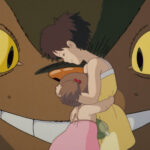
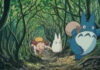
Totoro is the great forest spirit at the center of My Neighbor Totoro, but the movie does not treat him like a mascot who needs a detailed rulebook. He is part animal, part kami-like presence, part childhood wonder, and part guardian of the rural landscape. He is real within the film’s emotional world, yet he also belongs to the way children experience nature before adults explain it away.
That balance is why Totoro has lasted for decades. He is simple enough for a child to love immediately and mysterious enough for adults to keep thinking about.
What the movie is really about
My Neighbor Totoro is about children living with uncertainty. Satsuki and Mei move to the countryside while their mother is ill in hospital. Their father is loving but busy. The house is old, the surroundings are unfamiliar, and the girls do not know whether everything will be okay. For searchers comparing different interpretations, the safest approach is to separate what the film states directly from what it invites emotionally. Studio Ghibli rarely reduces its best moments to one locked answer; the films reward attention to behavior, setting, silence, and change over lore charts.
Totoro enters that uncertainty not as a doctor or problem-solver, but as a presence that makes the world feel alive and companionable. The film understands childhood fear without turning it into melodrama. Sometimes comfort comes from a huge creature at a bus stop, a tree growing in the night, or the feeling that the forest is watching kindly.
Is Totoro a god or imaginary friend?
The movie leaves room for several readings. Totoro can be understood as a forest spirit rooted in Japanese ideas of nature being inhabited by presences. He can also be read as the imaginative companion children create when adult language is not enough. The strongest interpretation is that the film does not require a hard division between those things.
For Mei and Satsuki, Totoro is real because the encounter changes how they inhabit the world. Whether adults can verify him is beside the point. Ghibli often presents wonder as something you become receptive to, not something you prove in court.
The meaning of the ending
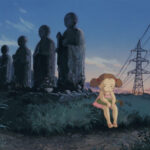
The ending is gentle. The girls see that their mother is improving, leave the corn, and return without a dramatic hospital-room reunion. This restraint is crucial. The film is not saying magic cures illness. It is saying that love, imagination, and nature can help children endure fear while life remains uncertain.
Keep exploring: Start with the Studio Ghibli movies in order guide, then browse movie guides, character guides, endings explained, and rankings.
Image note: featured imagery uses official Studio Ghibli stills made available through ghibli.jp for common-sense fan/press use.
How this guide fits into a bigger Ghibli watch path
This topic also works best when it is not treated in isolation. Studio Ghibli stories often repeat ideas through different moods: a child crossing into a strange world, a home becoming safer through care, a natural place asking to be remembered, or a character learning that courage can be quiet. Reading one film alongside another helps the patterns become clearer without forcing every movie into the same timeline.
If you are new to the studio, use this guide as a doorway rather than a final answer. Watch the relevant film once for feeling, then return to specific scenes for details: how characters speak, what they refuse, when music drops away, what food or work represents, and how the landscape changes around them. Those details usually explain more than a literal lore summary.
What to notice on a rewatch
On a rewatch, pay attention to the small choices that reveal character. Ghibli often lets growth appear through posture, silence, chores, meals, travel, and the way someone treats a weaker or stranger being. A character may not announce that they have changed; the film shows it through what they are finally able to see, say, or give up.
It is also worth noticing how little the films rely on simple villains. Even frightening figures usually reflect a pressure in the world around them: greed, loneliness, war, vanity, fear, or forgetfulness. That moral complexity is one reason these stories keep attracting adult viewers as well as children.
FAQ for searchers
Is there one official interpretation?
Usually no. Studio Ghibli films give viewers strong emotional direction, but they often avoid reducing symbols to a single dictionary meaning. The best interpretation should fit the story, the character arc, and the feeling of the ending.
Is this a good entry point for new fans?
Yes. Explainer and character guides are useful for first-time viewers because they clarify what to watch for without requiring a full franchise background. Most Ghibli films stand alone, so curiosity is more important than chronology.
What the ending changes about the meaning
The ending of My Neighbor Totoro matters because it keeps the mystery intact. Totoro does not turn into a conventional problem-solving hero who explains himself. He helps Satsuki find Mei, gives the sisters a way to reach their mother emotionally, and then slips back into the forest. That choice keeps the film from becoming a simple fantasy adventure. The magic is real within the girls’ experience, but it remains private, seasonal, and tied to childhood attention.
This is why the film still works for adults. The story understands that children often process fear through play, imagination, ritual, and sudden bursts of belief. Satsuki is trying to act older than she is. Mei is too young to manage her worry neatly. Totoro gives them a language for feelings that the adults cannot fully fix. The forest does not erase illness or uncertainty, but it gives the sisters enough wonder to keep going.
How to read Totoro without over-explaining him
One of the weakest ways to watch the film is to reduce Totoro to a single literal answer. He does not need to be only a forest god, only an imaginary friend, or only a symbol of grief. The better reading is broader: Totoro is the presence of a living world that children can still meet directly. He is funny, huge, sleepy, strange, and kind, which is exactly why he feels believable in the emotional logic of the movie.
The film’s quiet power comes from that restraint. It gives viewers enough details to trust the world, then refuses to flatten the mystery. That is also why Totoro makes such a good early Studio Ghibli watch. It teaches the viewer how to pay attention to small things: wind in the trees, soot sprites in an old house, seeds sprouting at night, and a bus that is also a cat. The plot is simple, but the feeling is dense.
Image source: official Studio Ghibli still from ghibli.jp.
Best companion watches after Totoro
If Totoro is the Ghibli film that clicks for you, the next step depends on what you loved most. For another gentle childhood perspective, try Ponyo. For a slightly older coming-of-age story, move to Kiki’s Delivery Service. If you want a bigger spirit-world journey with more danger and symbolism, Spirited Away is the natural next step.
For readers building a full viewing path, the site’s beginner-friendly Studio Ghibli watch order is the best place to connect Totoro with the wider catalogue.