Castle in the Sky quick facts
- Original Japanese title: Laputa: Castle in the Sky
- Japanese release: 2 August 1986
- Writer and director: Hayao Miyazaki
- Producer: Isao Takahata
- Music: Joe Hisaishi
- Studio: Studio Ghibli
- Original Japanese distributor: Toei
- Running time: about 124 minutes
- Best for: viewers who want a fast, warm adventure with airships, sky pirates, ancient technology and two brave young leads
Spoiler-free answer: Castle in the Sky follows Sheeta, a girl carrying a mysterious levitation crystal, and Pazu, a miner’s apprentice who dreams of proving that the floating city Laputa exists. Pirates and government forces chase them toward the legendary island, where its peaceful gardens and catastrophic weapons reveal two very different ideas of civilisation.
Spoiler-free overview
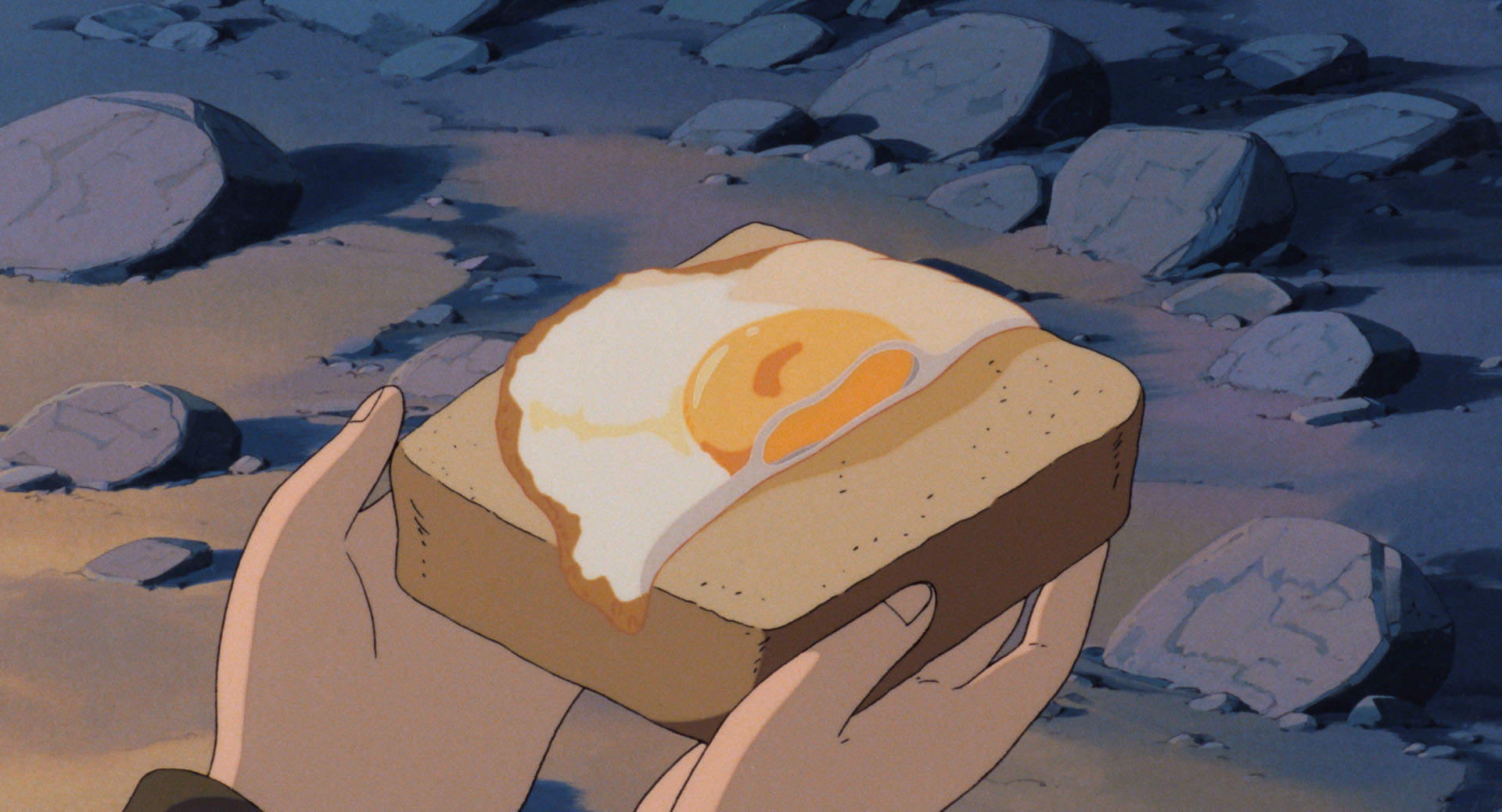
This is Studio Ghibli in full adventure mode. The film moves through airship raids, mining towns, underground caverns, military fortresses and cloud-filled skies before reaching one of animation’s most memorable lost cities. Its machines have weight and personality: engines cough, propellers strain and pirate craft look held together by invention and nerve.
The spectacle works because the story stays emotionally simple. Pazu wants to restore his late father’s reputation after other people dismissed the photograph he took of Laputa. Sheeta wants to understand the crystal and family name that have made her a target. Neither child wants a throne. Their trust gives the film a moral centre while adults compete to capture, monetise or weaponise the city.
Compared with quieter films such as My Neighbor Totoro, this is louder and more intense. It has guns, explosions, peril and a clear villain. It is still recognisably Ghibli in the way it combines flight, nature, industrial detail, food, work and ordinary kindness. The movie is an excellent early Ghibli watch for families with older children, adventure fans and viewers who enjoy stories about lost technology.
Storyline: what happens in Castle in the Sky?
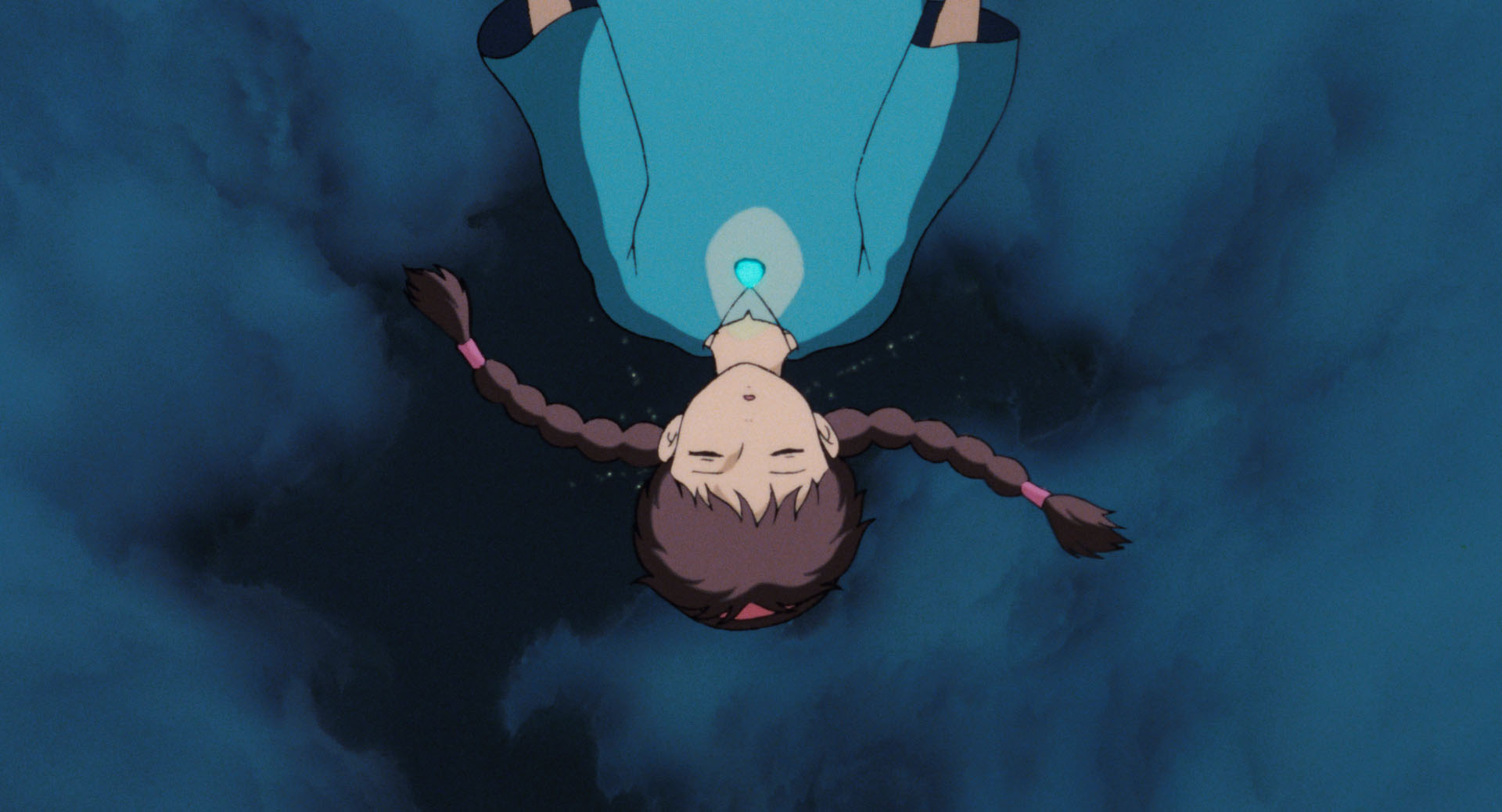
Sheeta is being held aboard an airship when Dola’s pirate crew attacks. During the struggle she falls into the night, but the blue crystal around her neck glows and slows her descent. Pazu catches her near the mining settlement where he works. He shows her his model aircraft and a photograph his father took of Laputa, a floating city most people now treat as a legend.
Sheeta’s arrival draws two pursuers. Dola and her sons believe the crystal can lead them to treasure. A government agent named Muska wants it for a more dangerous reason. Pazu and Sheeta escape through the town and mines, where the old miner Uncle Pom explains that the crystal contains aetherium, the same rare material that keeps Laputa in the sky. The stone’s light confirms that Sheeta’s family history is tied to the island.
The pair are captured and taken to a military fortress. Muska shows Sheeta a dormant Laputian robot and uses threats against Pazu to force her cooperation. She tells Pazu to leave, but he soon joins Dola’s crew when he realises she is still in danger. This temporary alliance turns the pirates from comic antagonists into rough-edged protectors. Their greed does not disappear, but their loyalty to one another lets them recognise the children’s courage.
When Sheeta recites an old family spell, the robot awakens and tries to protect her. Its destructive power exposes what Laputian technology can do in military hands. Pazu rescues Sheeta, and the crystal points toward a vast storm hiding Laputa. Pirates and soldiers race into it by air, while the children survive a violent passage through the clouds.
Laputa is both more beautiful and more troubling than the legends. A solitary garden robot cares for plants, birds and graves in a peaceful upper world. Beneath the roots lies a weapon system capable of mass destruction. Muska reveals his own Laputian ancestry and plans to rule through that power. Sheeta rejects the idea that bloodline gives either of them the right to dominate other people.
Cornered by Muska, Sheeta and Pazu recite the destruction spell together. The weaponised lower structure breaks apart and Muska falls with it. The enormous central tree protects the living upper island, which rises beyond human reach. Pazu, Sheeta and the pirates escape. Laputa survives, but not as a kingdom anyone can possess.
Main characters
Sheeta
Sheeta begins as a hunted orphan but never becomes a passive key to someone else’s quest. She understands the cost of her family inheritance and ultimately rejects Muska’s claim that ancestry creates a right to rule. Her gentleness is paired with clarity: a city cut off from soil, community and responsibility cannot justify its power.
Pazu
Pazu is practical, inventive and stubbornly loyal. His dream begins with proving his father was telling the truth, yet reaching Laputa teaches him that discovery does not equal ownership. He is brave without being invulnerable and useful because he knows engines, mines and physical work.
Colonel Muska
Muska is the film’s clearest villain. He understands Laputa’s systems but not its lesson. Where the children see history and life, he sees proof that he deserves authority. His polished manner makes his contempt more chilling than the soldiers’ blunt force.
Captain Dola and the pirates
Dola is a comic threat, skilled commander and unexpected mentor. Her crew initially chase treasure, but they also cook, repair machines, argue and care for one another. Their improvised family stands against Muska’s sterile hierarchy. They want riches, yet they are still capable of affection and change.
The Laputian robots
The robots embody the film’s central contrast. One becomes a terrifying defensive weapon at the fortress. Another quietly tends Laputa’s garden. The machines are not presented as inherently evil. Their meaning depends on the purpose and values surrounding them.
Themes and meaning
Technology can serve care or domination
Laputa’s technology supports gardens, flight and knowledge, but it also contains an apocalyptic weapon. Miyazaki does not argue that machines are automatically corrupt. Pazu’s workshop and Dola’s aircraft are full of joy and cooperation. The danger arrives when technical power is separated from humility and accountability.
A living place cannot be reduced to treasure
Every faction imagines Laputa before seeing it. Pazu treats it as vindication, the pirates expect wealth and the military wants strategic control. The garden robot offers another perspective. It tends life without seeking an audience or reward. Laputa’s greatest value is not the gold scattered in its ruins but the ecosystem growing around its tree.
Inheritance is a responsibility, not a crown
Sheeta and Muska share an ancestral connection to Laputa. Their opposing choices show that heritage does not dictate morality. Muska uses bloodline to justify power. Sheeta uses memory to understand why that power must be limited.
Flight expresses freedom and danger
Few films make the sky feel this physical. Flight opens possibility, but storms, engines and military aircraft ensure it never becomes effortless fantasy. The children’s courage depends on teamwork and practical skill, not destiny alone. For more of this motif, see the site’s guide to Studio Ghibli flying scenes.
Age suitability and content guidance
The film includes gunfire, explosions, fistfights, military imprisonment, children in danger, aircraft crashes and a large-scale weapon destroying part of a fortress. A robot is attacked and damaged. Muska threatens and shoots at Sheeta, and his final fall is implied rather than shown in graphic detail. The violence is stylised, with little blood, but the peril can be sustained and noisy.
Many children who enjoy adventurous fantasy will find the pirates funny and Pazu and Sheeta easy to root for. Sensitive younger viewers may be frightened by the pursuit, the awakening robot or the weapon sequence. It is generally more intense than Totoro, Kiki or Ponyo. Parents should check the current age classification in their own country, since ratings and editions vary by territory.
Production and place in Ghibli history
Castle in the Sky was written and directed by Hayao Miyazaki, produced by Isao Takahata and scored by Joe Hisaishi. Released in Japan on 2 August 1986, it was the first feature produced under the Studio Ghibli name after the studio’s formation. That makes it a useful starting point for seeing many ideas that would recur across the catalogue: ambitious flight sequences, environmental unease, young people acting with moral courage and technology that can either support life or threaten it.
The name Laputa comes from the flying island in Jonathan Swift’s Gulliver’s Travels, but Miyazaki builds a distinct world around it. The film mixes European-looking mining and military imagery with original aircraft, folklore-like crystals and a ruined civilisation reclaimed by nature. Hisaishi’s music shifts between expansive orchestral adventure, melancholy and playful pirate energy.
Where to watch legally
Streaming and home-video rights differ by country and can change. Check the site’s current Studio Ghibli streaming guide, then confirm the title inside the service available in your region. In North America, GKIDS maintains an official Castle in the Sky page and licensed release information. Licensed Blu-ray, digital rental or purchase options are useful alternatives where available.
Official image gallery
Related films
Watch Nausicaä of the Valley of the Wind for another aerial adventure about ancient destructive power, Howl’s Moving Castle for magical machinery and anti-war fantasy, or Kiki’s Delivery Service for a gentler story about flight, work and independence.
Frequently asked questions
Is Castle in the Sky the first Studio Ghibli movie?
It is commonly described as the first feature produced under the Studio Ghibli name. Nausicaä of the Valley of the Wind came earlier and helped lead to the studio’s formation, but it was produced by Topcraft before Ghibli formally existed.
What is Laputa?
Laputa is an ancient floating city held aloft by powerful technology and an immense central crystal. Its peaceful garden and devastating weapon system preserve two opposing sides of its civilisation.
Why does Sheeta’s crystal glow?
The aetherium crystal is connected to Laputa and responds to old family spells. It can protect Sheeta, point toward the city and activate technology, which is why several groups pursue it.
What does the ending mean?
The ending separates life from domination. The military structure and weapons fall, while the tree, garden and surviving island rise beyond human control. Pazu and Sheeta save Laputa by refusing to own it.
Are the pirates villains?
Dola’s crew begin as treasure hunters and threats, but they are not the story’s true villains. They become allies because their loyalty and rough affection leave room for empathy and change.
Is Castle in the Sky good for a first Ghibli film?
Yes, especially for viewers who prefer plot-driven fantasy adventures. It introduces many recurring Ghibli strengths without requiring familiarity with any other film.
Official film stills are credited to Studio Ghibli and used under its common-sense image-use notice.