

The Wind Rises is one of Studio Ghibli’s most unusual films. It has no magical creatures, no witches, no forest spirits and no obvious fantasy world. Instead, it is a reflective historical drama about aviation, ambition, illness, love and the uneasy cost of making beautiful things in a troubled world.
This beginner guide explains what the film is about, why it divides some viewers, and why it matters inside the wider Ghibli catalogue.
Quick answer: what is The Wind Rises about?
The film is a fictionalised portrait of Jiro Horikoshi, the Japanese aircraft designer associated with the Mitsubishi A6M Zero. Rather than presenting a straightforward biography, Hayao Miyazaki turns Jiro’s life into a meditation on dreams, engineering, beauty and responsibility.
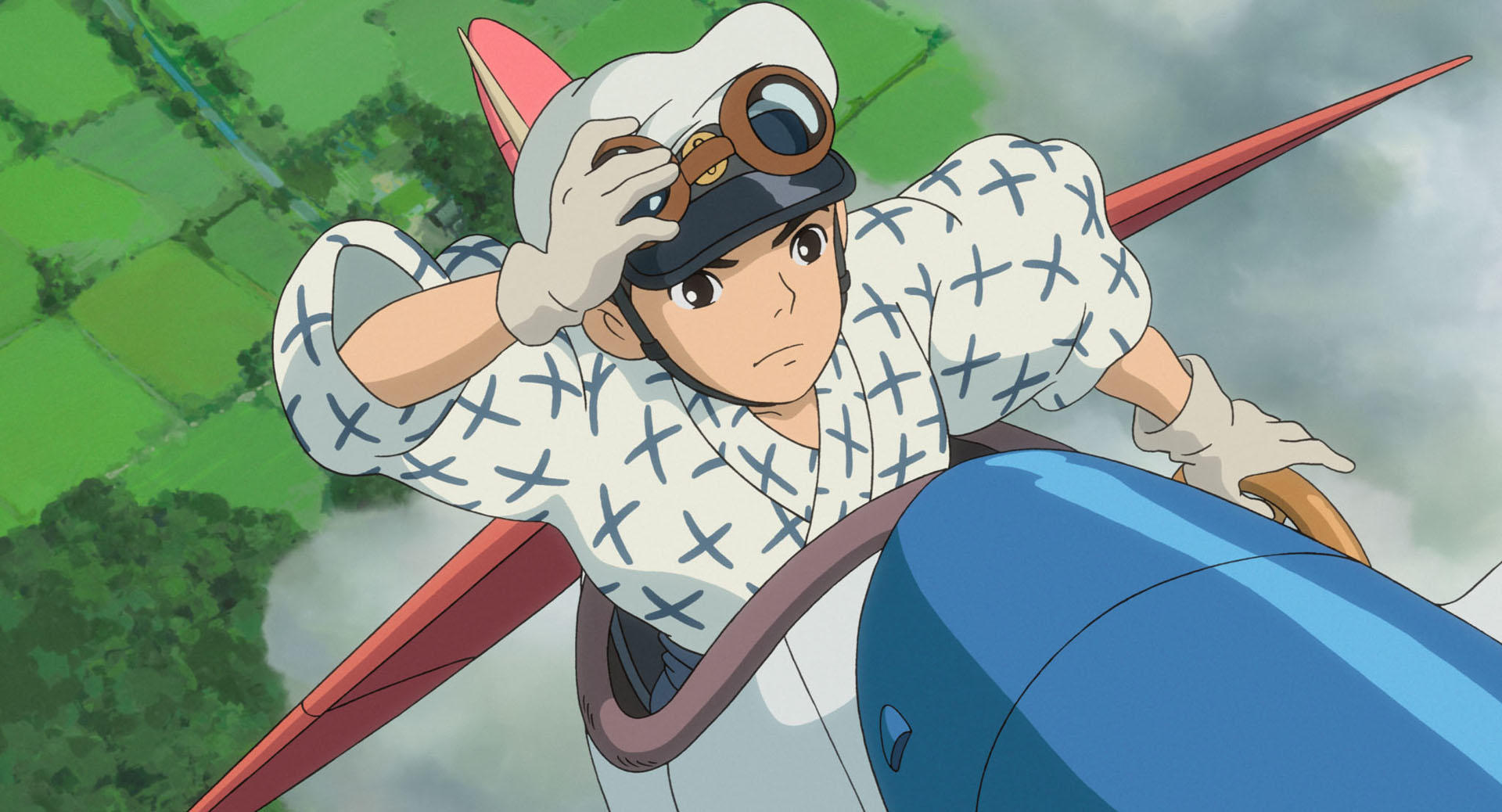
Jiro dreams of flight from childhood. Poor eyesight means he cannot become a pilot, so he becomes an aircraft designer instead. His imagination is guided by dreamlike meetings with Italian aircraft designer Giovanni Battista Caproni, who speaks to him about the beauty and danger of airplanes.
Why it feels different from other Ghibli films
The Wind Rises is slower, more adult and more ambiguous than many famous Ghibli films. It is not built around adventure. It is built around work: study, design, failure, revision, compromise and obsession.
That makes it a strange recommendation for viewers expecting something like Spirited Away or Howl’s Moving Castle. But it also makes the film one of Miyazaki’s most personal works. It asks a question that sits behind much of his career: what does it mean to devote your life to beauty when the world can use beauty for destructive ends?
The dream of flight
Flight in Ghibli is usually liberating. In Kiki’s Delivery Service, it is linked to confidence and identity. In Castle in the Sky, it is adventure and myth. In The Wind Rises, flight is still beautiful, but it carries a shadow.
Jiro loves aircraft as elegant machines. He sees lines, curves, wind resistance and possibility. The film does not suggest his love is fake. It shows the sincerity of craft. But it also refuses to ignore where those designs lead.
The love story with Naoko
Jiro’s relationship with Naoko gives the film its emotional centre. Their romance is tender, restrained and fragile. Naoko’s illness means their time together is limited, and the film treats that limitation with quiet sadness rather than heavy sentiment.
Their relationship also mirrors the larger theme of impermanence. Beautiful things may not last. Dreams may be compromised. Love can be real even when it cannot stop loss.
Is The Wind Rises anti-war?
Yes, but not in the simple shape some viewers expect. The film does not become a courtroom argument or a direct political lecture. Instead, it shows the tragedy of talent being absorbed by history. Jiro wants to make beautiful aircraft; the world wants military machines.
This ambiguity is why the film can feel uncomfortable. It does not let the viewer sit in an easy moral position. It asks whether creators are responsible for what power does with their work, and whether beauty can ever be separated from context.
Who should watch it?
- Viewers interested in Miyazaki’s more adult, reflective side.
- Fans of historical drama and aviation design.
- Anyone who likes stories about work, craft and obsession.
- Ghibli fans ready for a slower film with fewer fantasy elements.
- People interested in moral ambiguity rather than clear heroes and villains.
Who might not enjoy it?
If you want fast pacing, creature fantasy or a child-friendly adventure, this may not be the best next choice. Younger viewers may find it slow. Even adults sometimes struggle with the film’s quietness if they expect a more conventional plot.
It is better approached as a reflective drama than as a comfort-watch fantasy.
Where it fits in a Ghibli watch order
The Wind Rises is best watched after you already understand Ghibli’s range. Start with more accessible films like My Neighbor Totoro, Kiki’s Delivery Service, Spirited Away or Howl’s Moving Castle, then come to this when you are ready for a mature late-career statement.
It also pairs well with Porco Rosso, another Miyazaki film about aviation, masculinity, regret and historical atmosphere, though Porco Rosso is much more playful.
Final verdict
The Wind Rises is not the easiest Studio Ghibli movie, but it is one of the most revealing. It shows Miyazaki wrestling with the romance of machines, the discipline of craft and the painful fact that dreams do not exist outside history.
If you watch it expecting magic, you may be surprised. If you watch it as a film about creation, compromise and the cost of beauty, it becomes one of Ghibli’s richest works.
Image note: official Studio Ghibli stills are used where available under the studio’s common-sense image-use guidance. This is an independent fan guide and is not affiliated with Studio Ghibli.
Why the dream scenes matter
The dream sequences are not just decoration or a way to make aviation look romantic. They show the split inside Jiro’s ambition. In dreams, planes can be beautiful, weightless, and almost innocent. In history, those same machines become part of war. The film keeps both truths in view, which is why it can feel gentle and troubling at the same time.
That tension is the reason The Wind Rises often stays with viewers after the plot details fade. It asks whether a person can love the craft of making something while still being responsible for what the world does with it. Studio Ghibli does not give an easy answer, and the movie is stronger because it sits with the discomfort.
How to watch it without missing the point
Go in expecting a reflective historical drama, not a fantasy adventure. The emotional movement is quiet: work, illness, compromise, beauty, and regret. Pay attention to sound as well as image. The wind, engines, earthquake sequence, and human-made flight noises all help the film connect dreams to consequences.
Source note
Image source: official Studio Ghibli stills from ghibli.jp.