

Quick answer: Howl’s Moving Castle ends with Sophie returning Howl’s heart, freeing Calcifer, and breaking the patterns that kept both Sophie and Howl cursed.
The ending in plain English
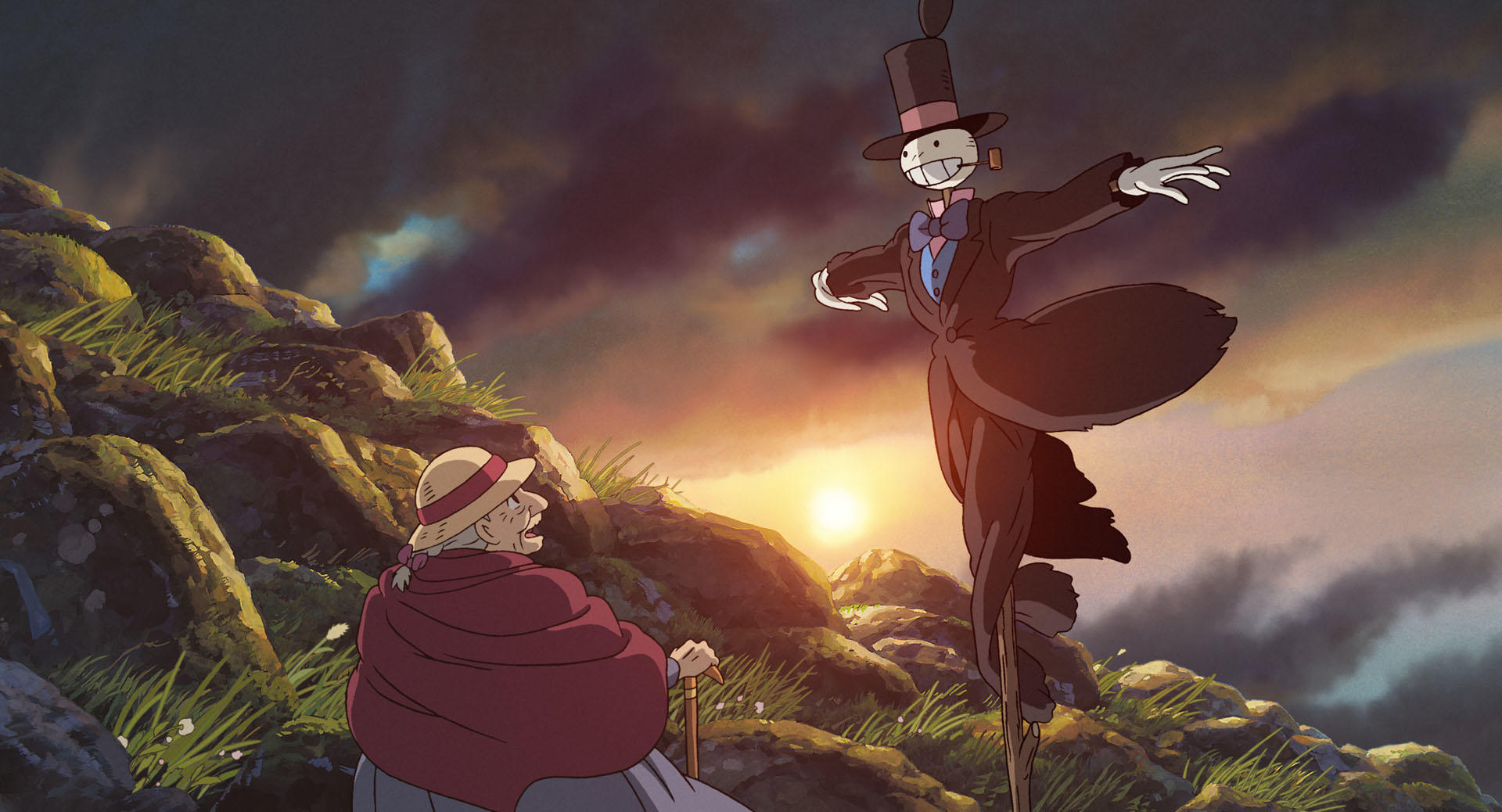
The ending of Howl’s Moving Castle resolves three intertwined problems: Sophie’s curse, Howl’s missing heart, and the destructive war surrounding them. Sophie returns Howl’s heart, Calcifer is freed without dying, Turnip-Head is restored, and the castle transforms from a chaotic hiding place into a home that can move forward.
It can feel sudden because the film uses fairy-tale emotional logic more than plot mechanics. The important question is not which spell exactly cancels which rule, but what changes when Sophie and Howl stop hiding from themselves.
Sophie’s curse
The Witch of the Waste turns Sophie into an old woman, but the spell responds to Sophie’s own self-image. When Sophie feels resigned, fearful, or invisible, she appears older. When she acts with confidence and love, youth returns to her face and body. The curse externalizes how she already saw herself at the start: as the plain eldest daughter with no special future. For searchers comparing different interpretations, the safest approach is to separate what the film states directly from what it invites emotionally. Studio Ghibli rarely reduces its best moments to one locked answer; the films reward attention to behavior, setting, silence, and change over lore charts.
By the ending, Sophie is not simply young again. She has integrated both versions of herself. Her silver hair remains, which is a beautiful sign that the experience is not erased. She carries age, courage, and self-knowledge with her.
Howl’s heart and Calcifer
Howl gave his heart to a falling star, Calcifer, when he was young. That bargain gave Calcifer life and powered Howl’s magic, but it also left Howl emotionally evasive and spiritually incomplete. He can be charming, brave, vain, cowardly, and generous all at once because his heart is literally outside him.
Sophie returning the heart does not destroy Calcifer because she speaks with care and intention. She recognizes Calcifer as a living being, not a fuel source. The scene completes the film’s argument that love is not possession. The heart can return, and the fire can still live.
What happens to the war?
The war ending is intentionally brisk and satirical. Madame Suliman appears ready to stop the conflict once the magical spectacle has run its course, which makes the war look absurd, bureaucratic, and ego-driven rather than noble. Miyazaki is less interested in military strategy than in showing how ordinary lives are consumed by leaders’ games.
Keep exploring: Start with the Studio Ghibli movies in order guide, then browse movie guides, character guides, endings explained, and rankings.
Image note: featured imagery uses official Studio Ghibli stills made available through ghibli.jp for common-sense fan/press use.
How this guide fits into a bigger Ghibli watch path
This topic also works best when it is not treated in isolation. Studio Ghibli stories often repeat ideas through different moods: a child crossing into a strange world, a home becoming safer through care, a natural place asking to be remembered, or a character learning that courage can be quiet. Reading one film alongside another helps the patterns become clearer without forcing every movie into the same timeline.
If you are new to the studio, use this guide as a doorway rather than a final answer. Watch the relevant film once for feeling, then return to specific scenes for details: how characters speak, what they refuse, when music drops away, what food or work represents, and how the landscape changes around them. Those details usually explain more than a literal lore summary.
What to notice on a rewatch
On a rewatch, pay attention to the small choices that reveal character. Ghibli often lets growth appear through posture, silence, chores, meals, travel, and the way someone treats a weaker or stranger being. A character may not announce that they have changed; the film shows it through what they are finally able to see, say, or give up.
It is also worth noticing how little the films rely on simple villains. Even frightening figures usually reflect a pressure in the world around them: greed, loneliness, war, vanity, fear, or forgetfulness. That moral complexity is one reason these stories keep attracting adult viewers as well as children.
FAQ for searchers
Is there one official interpretation?
Usually no. Studio Ghibli films give viewers strong emotional direction, but they often avoid reducing symbols to a single dictionary meaning. The best interpretation should fit the story, the character arc, and the feeling of the ending.
Is this a good entry point for new fans?
Yes. Explainer and character guides are useful for first-time viewers because they clarify what to watch for without requiring a full franchise background. Most Ghibli films stand alone, so curiosity is more important than chronology.
Rewatch details that make the ending clearer
The ending works best if you watch the castle as a picture of Howl’s emotional state, not just a magical vehicle. Early in the film it is impressive, unstable, overloaded, and difficult to understand from the outside. That mirrors Howl himself: charming, powerful, frightened, and constantly rearranging the rooms of his life so nobody can reach the vulnerable centre.
Sophie’s role is not to “fix” him through patience alone. She keeps choosing honesty when the people around her hide behind glamour, curses, uniforms, or duty. By the time the curse logic resolves, the film has already shown what changed: Sophie can name what she wants, Howl can stop performing escape, and Calcifer can be treated as a living bond rather than a hidden engine.
The war ending can feel abrupt because the film is less interested in military mechanics than in the emotional machinery that lets adults excuse destruction. Once the central characters stop feeding that machinery with fear and vanity, the story’s fairy-tale logic lets the wider conflict collapse quickly. It is not a realistic peace process. It is a moral image: the spell breaks when people stop accepting the roles that kept it alive.
Image note: This article uses official Studio Ghibli imagery from ghibli.jp, shared under the studio’s common-sense use notice.