Quick answer: No-Face in Spirited Away is a lonely spirit who reflects the desires and behaviour around him. He is not a simple villain. In the bathhouse, where greed, status, and consumption shape almost every interaction, he becomes monstrous because people teach him that gold and swallowing are ways to be noticed. Around Chihiro, who treats him with basic kindness but does not flatter him, he becomes quiet again.
Who is No-Face?
No-Face is one of the most memorable spirits in Spirited Away because he is both simple and unsettling. He first appears as a silent, masked figure standing outside the bathhouse. Chihiro lets him in because she thinks he is a customer left in the rain. That tiny act of kindness matters. It gives No-Face access to a world where everyone seems to know what they want, while he has almost no stable identity of his own.
His Japanese name, Kaonashi, literally points toward the idea of “facelessness.” That does not mean he has no personality at all. It means he lacks a firm self. He absorbs voices, habits, greed, hunger, and emotional cues from whoever is nearby. The bathhouse does not merely reveal his darkness. It helps create the version of him that becomes frightening.
Why does No-Face become dangerous?
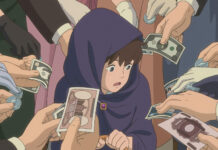
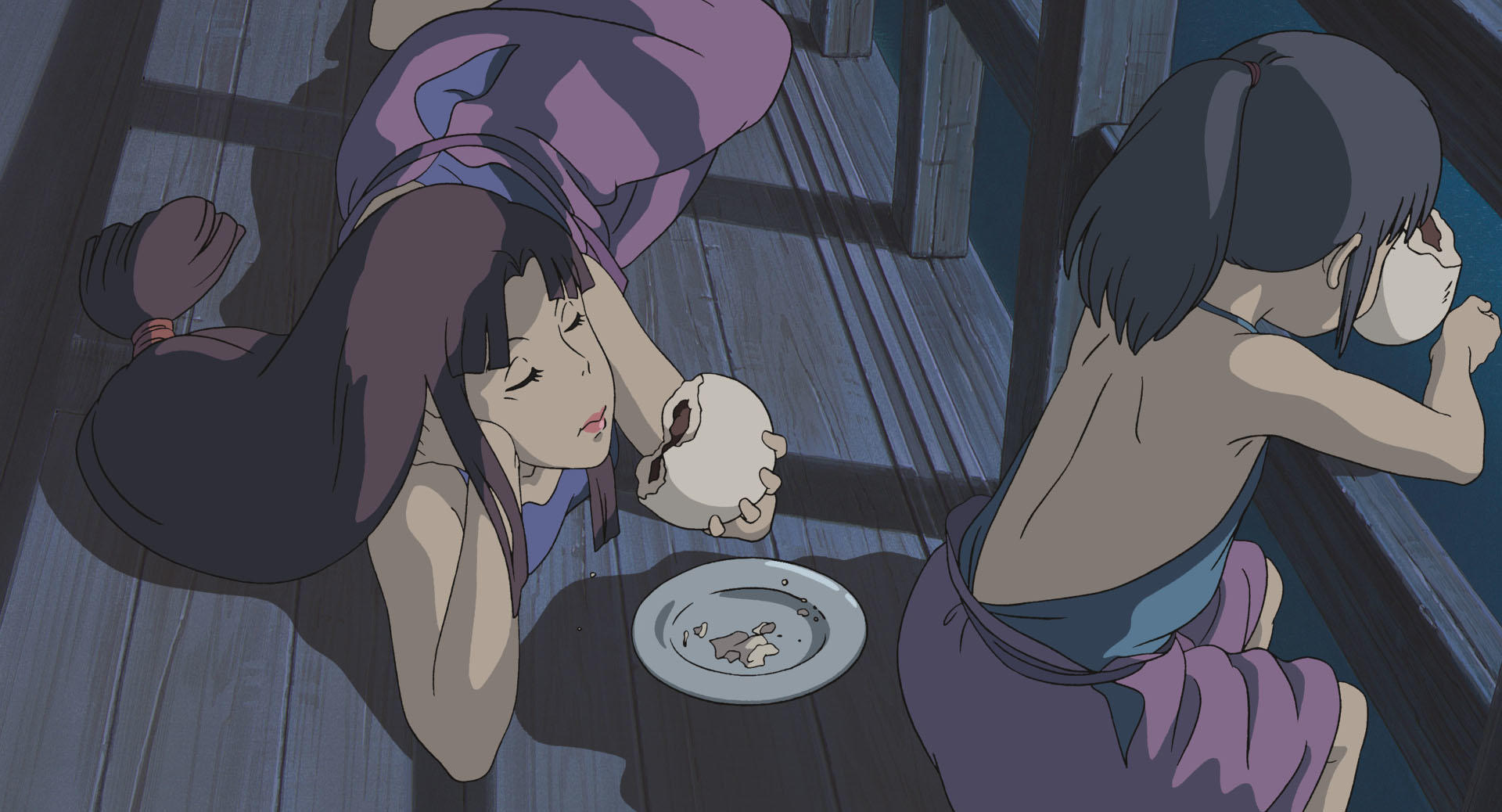
No-Face becomes dangerous because the bathhouse rewards the worst possible lesson: if you can produce gold, people will crowd around you, praise you, feed you, and ignore the warning signs. At first, he is awkward and needy. Then he discovers that fake gold gives him power. Workers who dismissed him suddenly treat him as important. That attention teaches him to perform generosity in a distorted way.
Once the cycle starts, No-Face consumes more food, more attention, and eventually people. The swallowing is grotesque, but it also makes emotional sense. He is trying to fill an emptiness with whatever the bathhouse values. The tragedy is that none of it gives him a self. It only makes him louder, larger, and more alone.
Is No-Face evil?
No-Face is not evil in the same way a traditional villain is evil. He does harm, and the bathhouse workers have real reasons to fear him, but the film frames him less as a mastermind and more as a vulnerable spirit shaped by a corrupt environment. He copies the voices of those he swallows. He offers gold because that is what people respond to. He rages when the exchange stops working.
That ambiguity is why he stays interesting. Spirited Away does not excuse his behaviour, but it also does not reduce him to a monster. Chihiro’s solution is not to defeat him with force. She refuses his gifts, gives him the medicine from the River Spirit, and leads him out of the bathhouse. Removing him from the environment changes what is possible.
What does No-Face symbolise?
No-Face can be read in several useful ways. He symbolises loneliness, consumer appetite, social imitation, and the danger of wanting connection without knowing how to receive it. He also reflects the bathhouse itself. In a place obsessed with money, hierarchy, luxury, and service, a needy spirit learns to become a grotesque customer.
The key is that No-Face is reactive. With greedy workers, he becomes greedy. With Chihiro, he becomes calmer. With Zeniba, he becomes useful and domestic, quietly spinning thread and finding a place where his presence is not treated as a transaction. That arc makes him one of Ghibli’s clearest examples of character as environment.
Why does Chihiro help him?
Chihiro helps No-Face because she sees that something is wrong without being seduced by what he offers. She does not want his gold, and she does not treat him as a prize customer. Her kindness is practical rather than sentimental. She lets him follow, keeps moving, and creates distance from the bathhouse until his appetite has less to feed on.
This is part of Chihiro’s growth. Early in the film, she is frightened and reactive. By the time she faces No-Face, she can make a difficult judgement: he is dangerous inside the bathhouse, but not beyond help. That is different from being naïve. She is learning how to act with courage and boundaries at the same time.
Why does No-Face stay with Zeniba?
No-Face staying with Zeniba is one of the film’s gentlest resolutions. Away from noise, appetite, and performance, he becomes quiet enough to belong. Zeniba does not flatter him or fear him. She gives him ordinary work. That matters because No-Face does not need another spectacle. He needs a place where he is not rewarded for becoming excessive.
The image of No-Face sitting peacefully in Zeniba’s cottage is funny, strange, and moving. It suggests that the same being who became monstrous in one setting can become harmless in another. Spirited Away often works this way: names, places, and habits shape people, but they do not have to trap them forever.
How No-Face fits Spirited Away’s bigger themes
No-Face connects directly to the film’s ideas about names, work, greed, memory, and identity. Yubaba controls people by taking names. The bathhouse turns service into performance. Chihiro survives by remembering who she is and refusing to let the rules fully define her. No-Face is the warning version of that theme: a spirit without a secure identity can be pulled almost completely into the values around him.
For more context, read the site’s Spirited Away beginner guide and the broader Studio Ghibli watch order guide. No-Face is one reason Spirited Away works so well as an early Ghibli watch for adults and older children: he is scary, funny, sad, and meaningful without needing a long explanation onscreen.
FAQ
Why does No-Face give people gold?
He gives gold because the bathhouse workers respond to it. Gold becomes his way of buying attention, even though the connection it creates is false.
Why does No-Face eat people?
He eats people after his hunger and need for attention spiral out of control. Symbolically, he is consuming the greed and voices of the bathhouse.
Why is Chihiro not tempted by No-Face?
Chihiro wants to save her parents and remember herself, not gain status in the bathhouse. Her refusal breaks the transaction No-Face expects.
Is No-Face good at the end?
He is calmer and harmless by the end, but the better answer is that he has found an environment where he does not become monstrous.
Image note: Images used in this guide are official Studio Ghibli stills from ghibli.jp, where the studio provides stills with common-sense usage guidance.