Quick answer: the best Studio Ghibli movies for interior design inspiration are Howl’s Moving Castle for maximalist rooms and magical clutter, Kiki’s Delivery Service for warm small-business interiors, My Neighbor Totoro for simple rural home comfort, Spirited Away for grand bathhouse atmosphere, Whisper of the Heart for bookish everyday spaces, and Arrietty for tiny details that make a room feel lived in. Start with Howl if you want visual drama, and Totoro if you want calm, homely warmth.
Studio Ghibli is not an interior-design studio, but its films are full of rooms people remember: crowded workshops, kitchens, bedrooms, bathhouses, cottages, bakeries, antique shops and family houses that feel like someone has just stepped out of frame. That is why Ghibli interiors are useful for design inspiration. They are not sterile mood boards. They are spaces shaped by routine, memory, work, mess, care and personality.
Quick design watchlist
| Movie | Design mood | What to notice |
| Howl’s Moving Castle | Layered maximalism | Objects, fabrics, books, lamps and magical clutter. |
| Kiki’s Delivery Service | Warm shop-and-home interiors | Bakery light, practical kitchens and small-room charm. |
| My Neighbor Totoro | Rural simplicity | Wood, tatami, storage, windows and breathing space. |
| Spirited Away | Grand atmospheric architecture | Scale, corridors, lamps, thresholds and ritual spaces. |
| Arrietty | Tiny-world detail | Repurposed objects, texture and miniature domestic logic. |
1. Howl’s Moving Castle: maximalism with a heartbeat
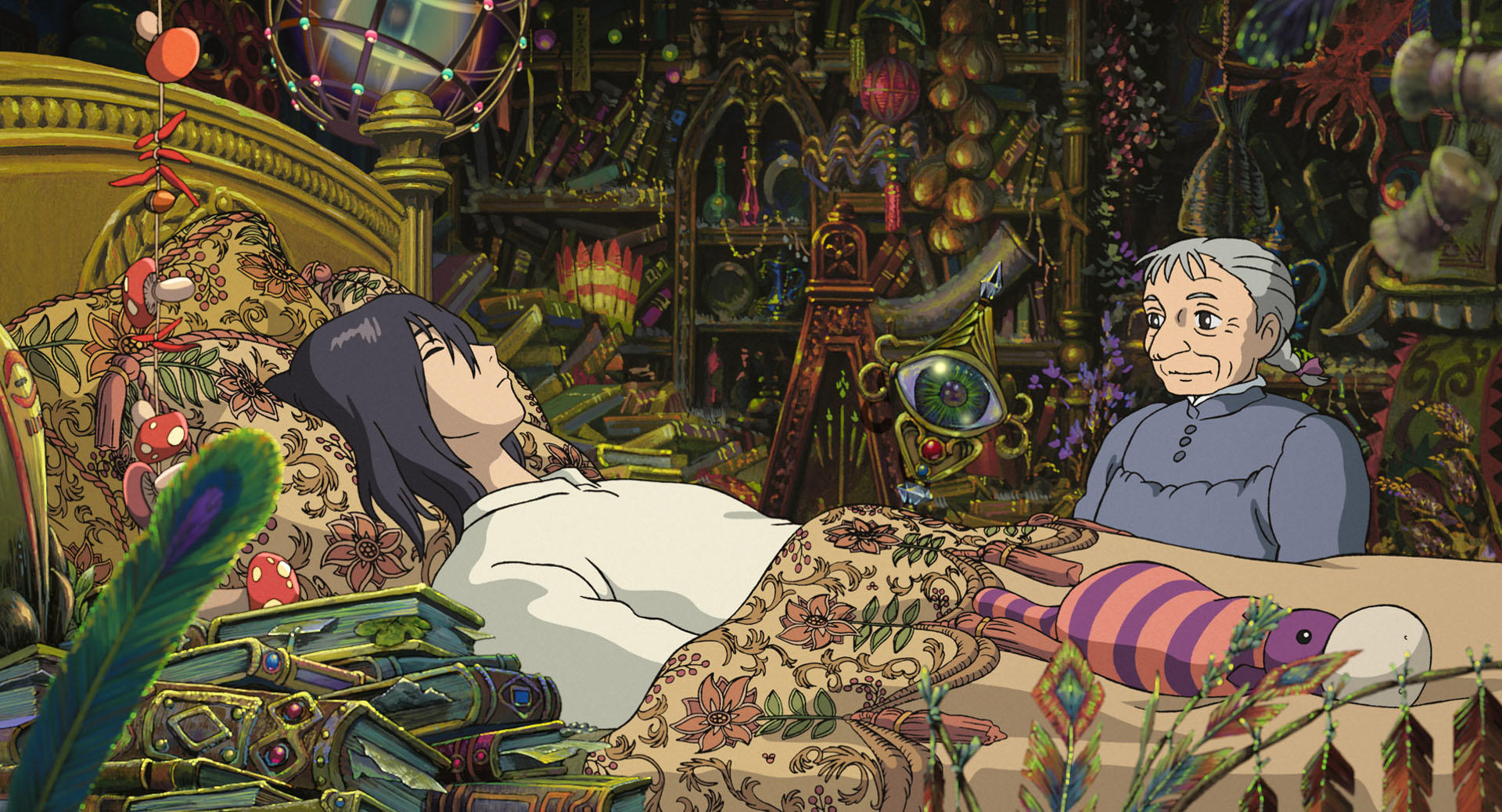
Howl’s Moving Castle is the strongest Ghibli film for anyone drawn to maximalist interiors. Howl’s spaces are full of objects: bottles, books, fabric, tools, trinkets, mirrors, furniture and strange magical devices. The rooms feel chaotic, but not random. They reveal a person who performs glamour, hides vulnerability and surrounds himself with surfaces, protections and distractions.
The design lesson is not “buy more stuff.” It is that a layered room works when the layers say something. Howl’s interiors have contrast: beautiful and messy, theatrical and private, enchanted and practical. If you like maximalism, the useful takeaway is to group objects by feeling and function rather than scattering decoration everywhere. Let the room show what the person does, fears, loves and avoids.
2. Kiki’s Delivery Service: small rooms that feel generous
Kiki’s Delivery Service is excellent for warm, practical design. The bakery, attic room and seaside city all make small spaces feel usable rather than cramped. Osono’s bakery has the comfort of a real workplace: counters, food, light, storage and hospitality. Kiki’s room is modest, but it becomes meaningful because it supports a new life.
For interior inspiration, watch how the film uses windows, stairs and work surfaces. A room does not need to be huge to feel inviting. It needs clear purpose, good light, objects within reach and a sense that everyday tasks can happen there. Kiki is a useful antidote to interiors that look impressive but do not seem livable.
3. My Neighbor Totoro: calm rural home design
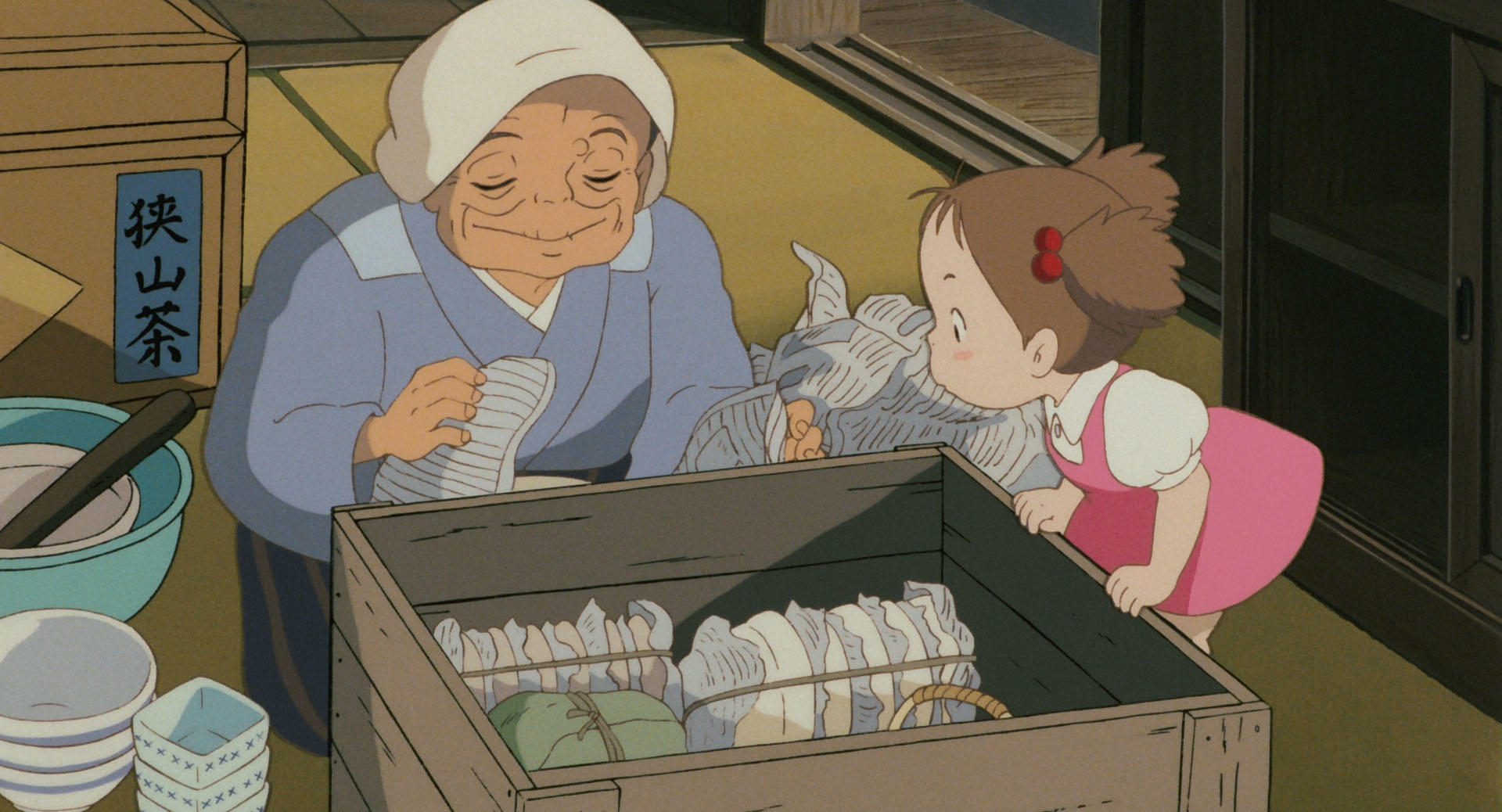
My Neighbor Totoro offers a different kind of inspiration: simplicity, air and rhythm. The Kusakabe house is old, imperfect and a little mysterious, but it feels honest. The film pays attention to sliding doors, baths, storage, floors, gardens, windows and the way children move through a home when adults are busy.
The design lesson is restraint. A calm room does not have to be empty. It can be made from natural materials, useful furniture, visible routines and a strong relationship to the outside. Totoro is especially helpful if you want a home to feel less like a display and more like a place where people can breathe.
4. Spirited Away: atmosphere, thresholds and scale
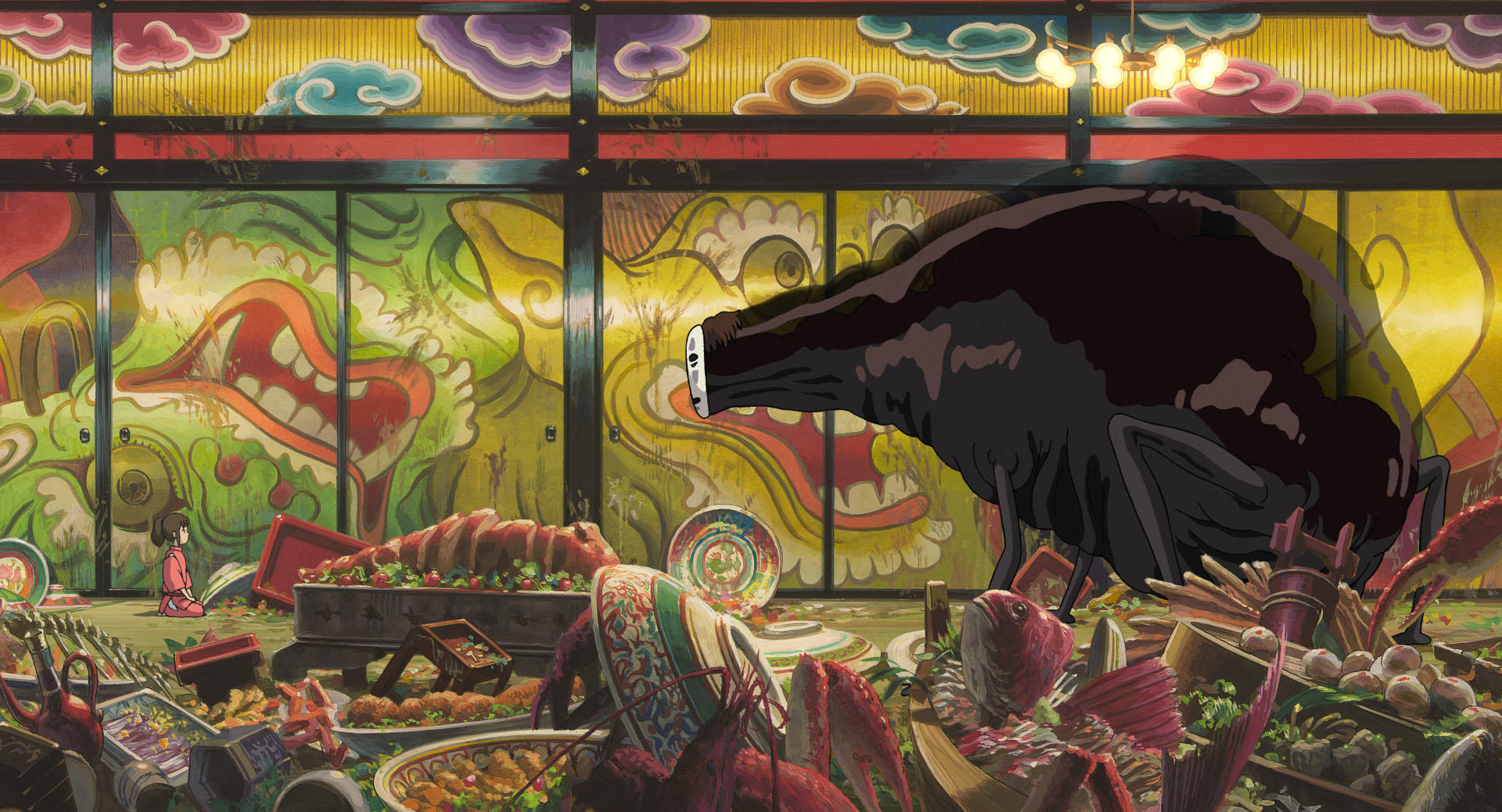
Spirited Away is not cozy in the same way, but it is one of Ghibli’s richest design films. The bathhouse is built around thresholds: bridges, counters, elevators, boiler rooms, guest rooms, corridors and hidden workspaces. Each zone has a different social meaning. Some spaces impress guests. Others support labour. Others frighten, shelter or test Chihiro.
That makes the film useful for thinking beyond decoration. Good interiors guide behaviour. They tell people where to pause, where to gather, where they are welcome and where they should not go. Even if your home is not a supernatural bathhouse, the same principle applies: entries, lighting, storage and transitions shape how a space feels.
5. Whisper of the Heart: bookish rooms and creative corners
Whisper of the Heart is perfect for anyone who likes lived-in creative spaces. Shizuku’s ordinary home, the library trail and the antique shop all feel connected to attention and imagination. The antique shop is especially useful because it is not simply “old stuff.” It is a room of stories: polished wood, objects with history, quiet corners and a sense that looking carefully matters.
The design takeaway is to create one area that supports noticing. That could be a reading chair, a desk, a shelf of meaningful objects or a small writing corner. Ghibli-style coziness is rarely just softness. It is often a room that invites someone to pay attention.
6. Arrietty: miniature logic and useful detail
The Secret World of Arrietty is one of the best films for detail-driven inspiration. Borrower design is built from adaptation: pins, paper, jars, cloth, string, labels and household fragments turned into tools. The charm comes from scale, but the deeper lesson is resourcefulness.
If you enjoy small-space design, Arrietty is worth studying because every object has to earn its place. Nothing is decorative only. Texture, storage and reuse matter. A room feels magical because it has been solved, not because it has been filled.
How to use Ghibli as design inspiration without copying it
The best way to use these films is to borrow principles, not sets. From Howl, take layered personality. From Kiki, take warm practical workspaces. From Totoro, take air, natural texture and a strong connection to outside. From Spirited Away, take lighting, thresholds and atmosphere. From Whisper, take personal history. From Arrietty, take scale and resourcefulness.
Try watching one film with a notebook and pause when a room feels memorable. Ask what is doing the work: colour, light, clutter, height, furniture, windows, visible food, plants, tools, books, fabric or the way a character moves through it. That is more useful than trying to make a real room look like a screenshot.
For follow-up viewing, pair this with the Ghibli movies for artists guide, the food scenes ranking for kitchens and tables, and the train scenes guide if you are interested in how spaces create mood during movement.
FAQ
Which Studio Ghibli movie has the best interiors?
Howl’s Moving Castle is the best overall pick for memorable interiors because its rooms are layered, expressive and full of personality. Spirited Away is the strongest choice for large-scale atmospheric spaces.
Which Ghibli film is best for cozy home inspiration?
My Neighbor Totoro is the best cozy home inspiration if you want calm, simple, rural warmth. Kiki’s Delivery Service is better for small city rooms, shops and practical warmth.
Can Studio Ghibli inspire real interior design?
Yes, but it works best when you borrow principles rather than copying rooms exactly: layered objects, natural materials, warm light, practical work areas, visible routines and spaces that feel lived in.
Which Ghibli movie is best for small-space ideas?
The Secret World of Arrietty is the best small-space inspiration because its miniature rooms make every object useful, textured and intentionally placed.
Image credit: Official stills from the Howl’s Moving Castle and Spirited Away pages on ghibli.jp, used under Studio Ghibli’s common-sense image-use notice. This article is an independent fan guide and is not affiliated with Studio Ghibli.