Quick answer: the main Kiki’s Delivery Service characters are Kiki, Jiji, Osono, Tombo, Ursula, and Kiki’s parents. The film works because each character reflects a different pressure on Kiki: independence, work, friendship, creativity, self-doubt, and the need to rest before confidence can return.
Why the characters matter
Kiki’s Delivery Service looks gentle on the surface, but its character writing is sharp. It is not a film where a villain arrives and forces Kiki to grow. Instead, the people around her quietly test whether she can build a life away from home without losing the warmth that made her leave in the first place.
That is why the supporting cast matters so much. Osono gives Kiki a practical foothold. Tombo gives her a messy version of friendship. Ursula gives her a creative mirror. Jiji gives her comfort, sarcasm, and finally a painful measure of change. Together they turn a simple witch story into one of Studio Ghibli’s clearest coming-of-age films.
Kiki
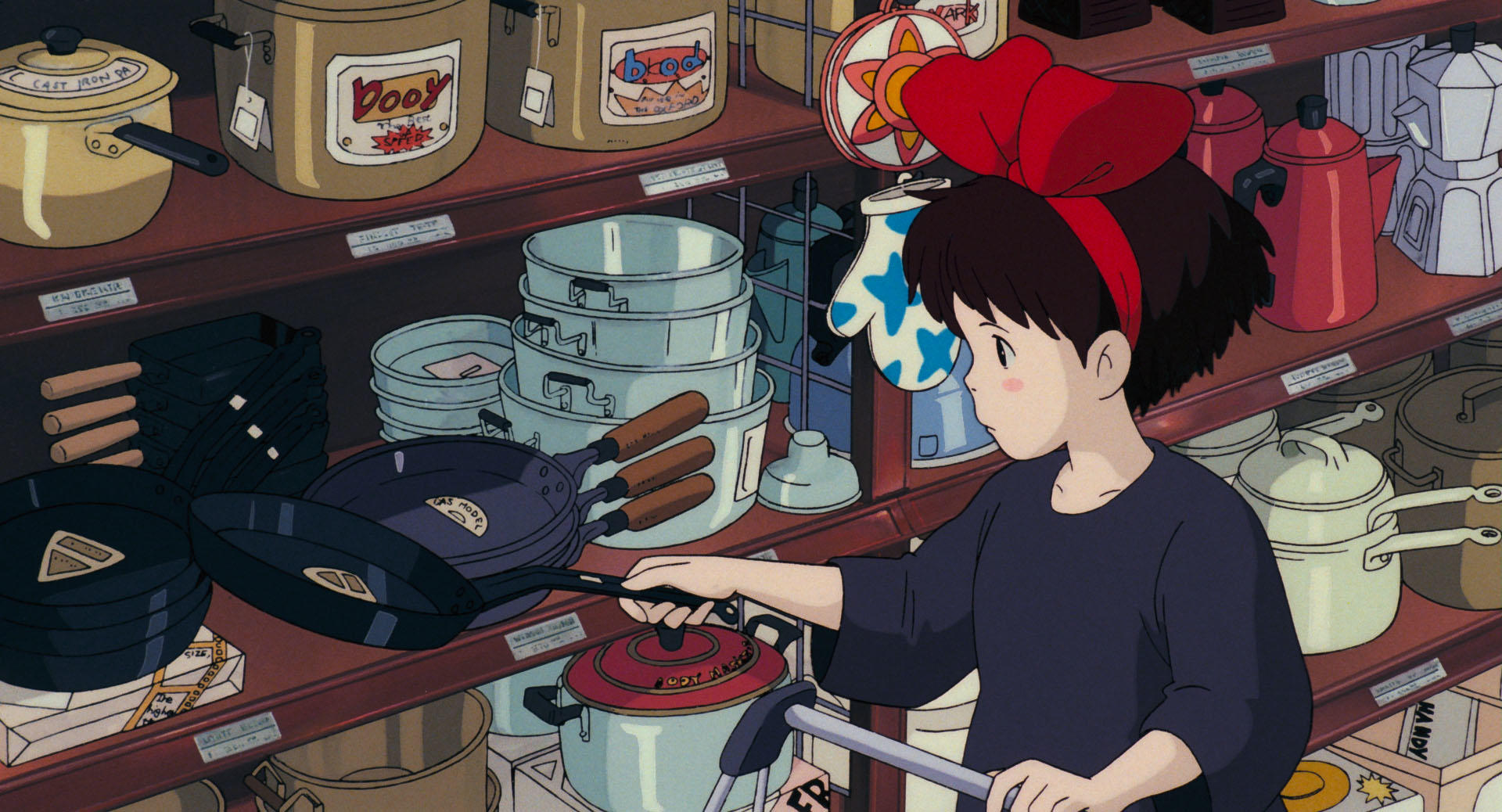
Kiki is a young witch who leaves home to spend a year training in another town. Her magic is simple compared with the grand powers in some fantasy stories: she can fly on a broom. The film’s clever move is treating that modest gift as both freedom and work. Flying lets Kiki leave home, deliver parcels, meet people, and feel useful. When her confidence collapses, the same power becomes fragile.
What makes Kiki memorable is that she is brave without being endlessly cheerful. She is proud, awkward, kind, jealous, tired, and occasionally defensive. That mix makes her feel like a real teenager rather than a mascot for inspiration. Her arc is not about becoming perfect. It is about learning that independence includes asking for help, resting properly, and accepting that motivation can disappear before it comes back.
Jiji
Jiji is Kiki’s black cat, travel companion, and funniest commentator. Early in the story, he says what Kiki is too polite or nervous to say. He is skeptical of strangers, suspicious of inconvenience, and wonderfully dry about the business of being a witch in a new city.
Jiji also carries one of the film’s most debated details. As Kiki grows and her magic changes, she can no longer understand him in the same way. The film does not need to explain this as a hard rule. Emotionally, it suggests that part of childhood has shifted. Kiki still loves Jiji, but she cannot stay exactly the same person she was when she left home.
Osono
Osono is the bakery owner who gives Kiki a room, work, and a reason to stay. She is not sentimental about it. Her kindness is practical: a place to sleep, a job to do, food, and steady adult attention. That makes her one of the most important characters in the film.
For Kiki, Osono is proof that adulthood does not have to be cold. She models generosity without smothering Kiki or solving every problem for her. The delivery service begins because Osono sees Kiki’s flying as useful, not merely magical. In a film about finding your place, that matters: Kiki’s identity becomes real when it connects to everyday needs.
Tombo
Tombo is the aviation-obsessed boy who is fascinated by Kiki’s flying. He can be overeager, and Kiki’s irritation with him is understandable. He represents a kind of attention Kiki is not ready to trust at first, especially when she is already trying to look capable in a city that makes her feel out of step.
As the story opens up, Tombo becomes more than comic enthusiasm. His homemade flying machine and love of flight echo Kiki’s own gift from a human, mechanical angle. He admires what she can do, but he also has his own dream. Their friendship works because it is imperfect, a little embarrassing, and built through small repairs rather than instant closeness.
Ursula
Ursula, the artist in the forest, is the character who best understands Kiki’s creative block. She does not treat burnout as a moral failure. Instead, she compares magic to painting: sometimes the work flows, sometimes it disappears, and sometimes the only useful answer is to stop forcing it.
This makes Ursula essential to the film’s emotional intelligence. She gives Kiki language for a problem many viewers recognize, even outside fantasy. Losing confidence does not mean the gift was fake. It may mean the relationship with the gift has changed. Ursula helps Kiki see that talent needs patience, repetition, and space.
Kiki’s parents
Kiki’s parents appear most strongly at the beginning, but they shape the whole story. Her mother, Kokiri, represents the old way of witchcraft: medicines, local trust, and a slower rural life. Her father is affectionate and anxious, proud of Kiki but not entirely ready to let her go.
The goodbye scene matters because it frames independence as loving rather than rebellious. Kiki is not escaping a bad home. She is leaving a good one because growing up requires distance. That makes her loneliness in the city more poignant. She has chosen the journey, but that does not make it easy.
Other characters who shape the city
The unnamed or smaller city characters help make Koriko feel alive. The fashionable girls who make Kiki feel plain, the clients who treat delivery as routine, the bakery customers, and the people watching the airship crisis all contribute to the sense that Kiki has entered a world that will not automatically make room for her.
That city pressure is crucial. Kiki is not battling monsters. She is learning how to remain herself in a place full of comparison, work, embarrassment, money, weather, and expectations. The smaller characters give those pressures a human face.
Best character for new viewers to watch closely
First-time viewers should watch Kiki and Ursula together. Kiki shows the inside of burnout: panic, pride, and the fear that a gift has vanished. Ursula shows the outside perspective: calm, experience, and the reminder that creative confidence often returns indirectly. Their scenes turn the film from a charming witch story into a useful comfort movie for anyone who has lost momentum.
FAQ
Who is the main character in Kiki’s Delivery Service?
Kiki is the main character. She is a young witch who leaves home for her training year and starts a delivery service in a seaside city.
Is Jiji still Kiki’s friend at the end?
Yes. The emotional change is not that Jiji stops mattering. It is that Kiki’s childhood relationship with him changes as she grows more independent.
Why is Ursula important?
Ursula helps Kiki understand creative block and burnout. She shows that losing confidence can be part of learning, not proof that the gift is gone.
Related guides
Image note: Images on this page use official Studio Ghibli stills from ghibli.jp, shared under the studio’s common-sense use notice.