Quick answer: Kiki’s Delivery Service ends with Kiki regaining her ability to fly because she stops forcing confidence and acts from care. Jiji’s changed voice is not a plot hole. It marks Kiki growing into a more independent relationship with herself and the world.
Image note: official Studio Ghibli stills are used from ghibli.jp under the studio’s common-sense usage notice.
What happens at the end
The ending brings Kiki’s burnout to a public crisis. After spending much of the film trying to prove that she can live alone, work professionally and stay useful, Kiki loses the two things that seemed to define her as a witch: flying and understanding Jiji. When Tombo is left hanging from the airship, Kiki does not get a tidy training montage. She grabs a street sweeper’s broom, throws herself into the attempt and flies because someone needs her.
That rescue matters because it changes the emotional source of her magic. Earlier, flying had become tied to pressure: delivery deadlines, comparison, loneliness and the fear that she was not special enough. In the climax, she is not performing being a witch. She is responding to a person she cares about. The film treats that shift as more important than technical skill.
After Tombo is saved, Kiki writes home in a calmer voice. She is still living away from her parents, still working and still learning, but the panic has loosened. The ending is not “Kiki becomes perfect.” It is “Kiki understands that losing confidence is survivable.” That is why the film feels gentle but unusually honest about growing up.
Why Kiki loses her powers
Kiki loses her powers after a slow build of emotional exhaustion. She arrives in the city excited but quickly learns that independence is not the same as freedom from doubt. She needs money, a place to live, customers, social confidence and proof that her one skill is worth something. Every awkward interaction makes her watch herself more closely.
The film never reduces magic to a mechanical system. Kiki’s flying depends on a kind of inner rhythm: confidence, imagination, attention and trust. When she becomes too self-conscious, the rhythm breaks. That is why Ursula’s advice in the forest is so important. Ursula compares Kiki’s block to an artist losing the ability to paint. Sometimes forcing the skill makes it worse. Rest, ordinary life and a changed relationship to the work are part of getting it back.
This makes Kiki’s Delivery Service one of Ghibli’s clearest films about burnout. Kiki is not lazy and she has not failed morally. She is young, isolated and trying to turn a gift into a job before she has built the emotional support to carry it. The movie is kind to her because it understands that courage and tiredness can exist at the same time.
Why Jiji’s voice changes
The Jiji question is the part many viewers remember. In some versions, Jiji speaks again at the end; in the original Japanese interpretation, Kiki does not return to the same talking-cat relationship she had at the start. The stronger reading is that Jiji’s changed role represents Kiki’s growth. He was partly a companion, partly a comfort object and partly the voice of her private doubts.
As Kiki matures, she no longer needs Jiji to translate the world for her in the same way. That does not mean she stops loving him. It means their relationship changes. Jiji has his own life with Lily, while Kiki has new human friendships, work routines and a wider sense of belonging in the city.
This can feel bittersweet because childhood often changes exactly like that. A skill, toy, pet or private voice that once felt central becomes less central without becoming meaningless. The ending respects that sadness. Kiki gets back her flight, but she does not simply rewind to the girl she was before leaving home.
What the ending says about independence
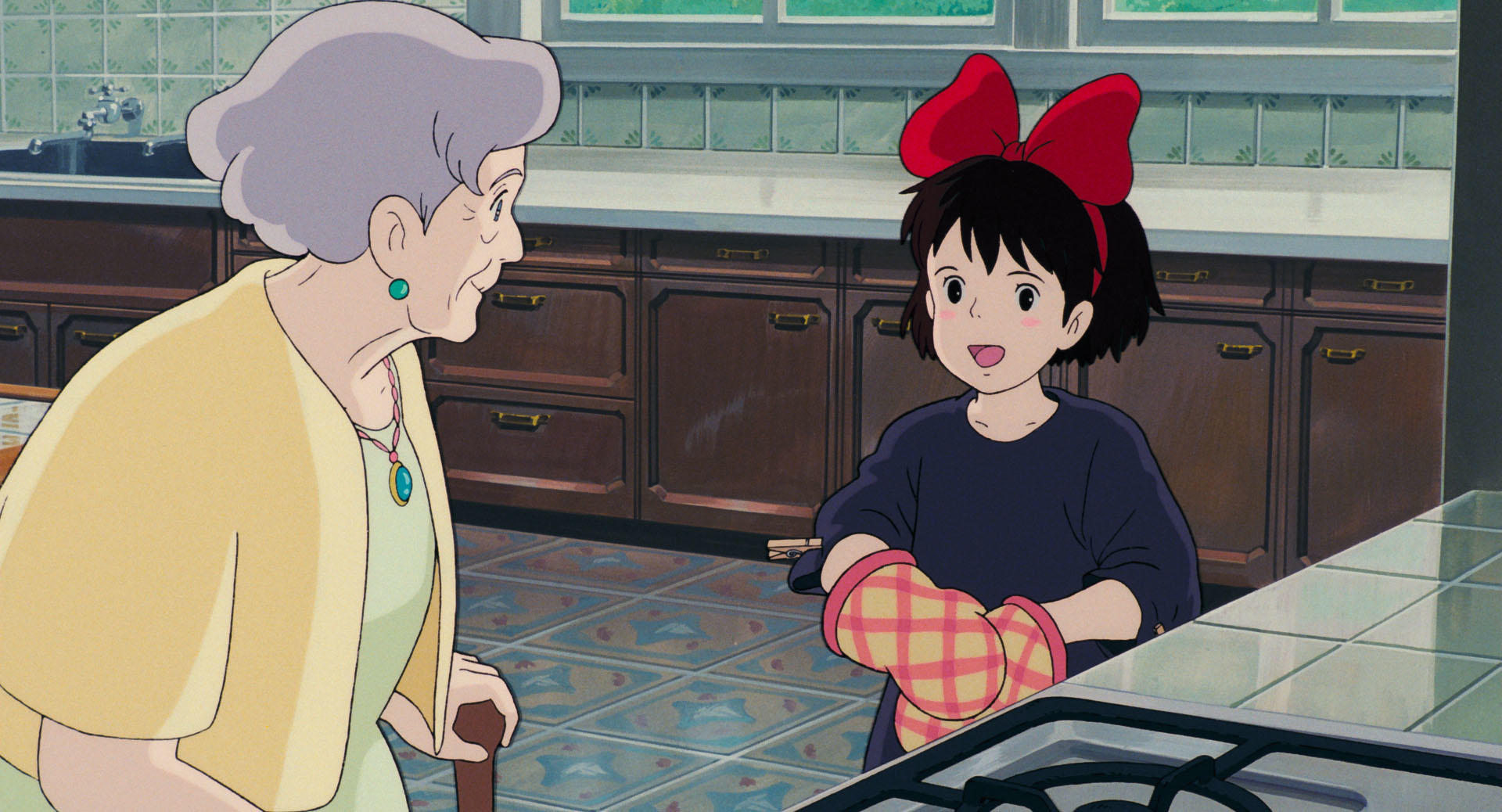
Kiki begins with a romantic idea of independence. She wants to leave, find a city and prove herself as a witch. The city teaches her that independence includes boredom, embarrassment, work, rejection and needing help. Osono gives her shelter. Ursula gives her perspective. Tombo gives her friendship even when she is prickly. The old woman shows her gratitude and patience. Kiki’s independence is built through relationships, not in spite of them.
That is why the final rescue works emotionally. Kiki is not saved by becoming isolated and impressive. She becomes herself again by letting care move through her. She accepts a borrowed broom. She accepts public attention. She accepts that she may wobble and still try. It is a much healthier fantasy of growing up than the idea that young people must become instantly competent alone.
The final letter home is modest, which is exactly right. Kiki does not claim the city is easy now. She says there are still hard days, but she likes it. That is the adult sentence hidden inside a children’s film: life can remain difficult and still be worth choosing.
Why the ending still resonates
The ending lasts because it gives viewers relief without pretending the problem has vanished forever. Anyone who has lost a creative spark, started a new job, moved away or felt suddenly unable to do something that used to come naturally can recognise Kiki’s fear. The film’s answer is not hustle. It is rest, friendship, humility and a return to purpose.
For a rewatch, pay attention to how often Kiki is looking for proof that she belongs. By the end, she has not conquered the city. She has joined it. That is a smaller victory than many fantasy endings, but it is more useful. Kiki gets back the ability to fly because she has begun learning how to live.
Quick FAQs
Does Kiki permanently lose the ability to understand Jiji?
The most meaningful reading is that their relationship changes as Kiki matures. She still loves Jiji, but she no longer needs him in exactly the same childhood role.
Why can Kiki fly again during the rescue?
She stops forcing magic as proof of worth and acts from urgent care for Tombo. The purpose returns before the confidence does.
Is Kiki’s block supposed to be burnout?
Yes, the film strongly supports a burnout reading: pressure, isolation and self-consciousness interrupt a gift that once felt natural.