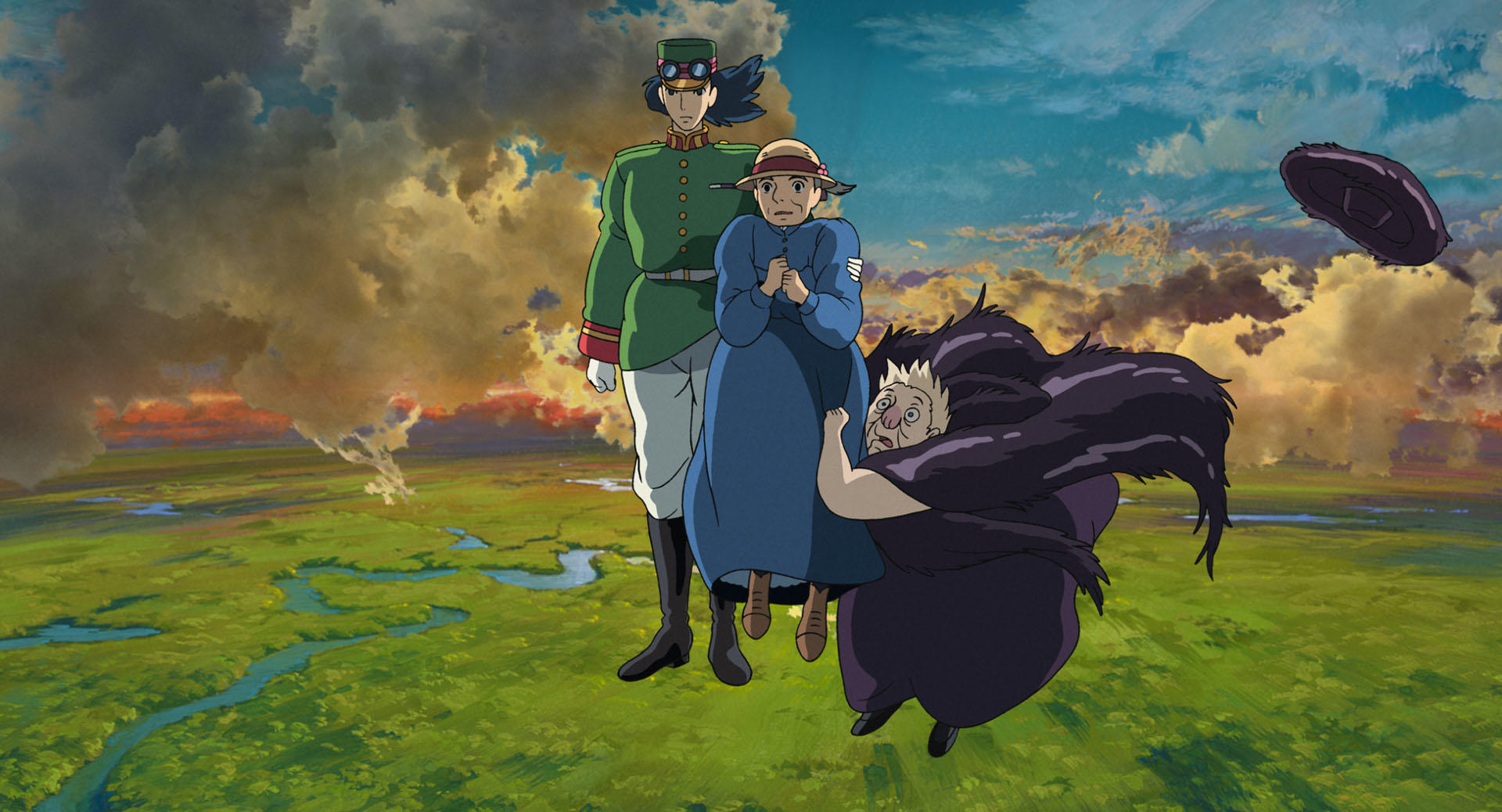
Quick answer: The main Howl’s Moving Castle characters are best understood as different responses to fear: Sophie hides inside duty, Howl hides inside beauty and escape, Calcifer hides inside a bargain, and the Witch of the Waste hides inside appetite and control.
Image note: official Studio Ghibli stills are used from ghibli.jp under the studio’s common-sense usage notice.
The character map in one view
Howl’s Moving Castle can feel dreamlike on a first watch because the plot moves through curses, doors, wars, royal orders and emotional transformations without pausing to explain every rule. The characters are the best anchor. Each major figure is trapped by a false version of themselves, and the story slowly asks what they are willing to give up to become more honest. If a younger viewer is watching, the parent guide to Howl’s Moving Castle gives a spoiler-light warning for the war and transformation scenes.
Sophie thinks of herself as plain, practical and already old before the curse makes that feeling visible. Howl performs glamour and carelessness because he is terrified of being trapped, exposed or made responsible. Calcifer acts like a grumpy fire demon, but he is bound to Howl’s heart and therefore bound to Howl’s avoidance. The Witch of the Waste begins as a threat, then becomes a sadder picture of desire without limits.
Seen this way, the film is less confusing. The magic externalises emotion. Age, beauty, fire, doors and monsters show what the characters believe about themselves. The ending works because the characters do not merely defeat an enemy. They change the bargains they have been living under.
Sophie Hatter: the heroine who was already cursed
Sophie’s visible curse turns her into an old woman, but the film suggests she was emotionally cursed before the Witch arrived. She has accepted a small life because she believes she is the sensible, unremarkable eldest daughter. The spell gives physical shape to that belief. Strangely, it also frees her. Once she looks old, she stops trying to perform youth, attractiveness or politeness.
That is why Sophie becomes bolder after the curse. She leaves home, talks back, cleans the castle, confronts powerful people and cares for Howl without being dazzled by him. Her age shifts throughout the film because her self-image shifts. When she is fearful or resigned, she looks older. When she acts with love and conviction, youth returns to her face.
Sophie is not important because she fixes a beautiful man. She is important because she learns to see herself clearly. Her love for Howl matters, but so does her anger, stubbornness and practical courage. The castle becomes a home because Sophie refuses to treat its mess as permanent.
Howl: beauty, cowardice and a hidden heart
Howl is charming, vain and genuinely kind, which is why he is interesting rather than simply romantic. He protects people, but he also runs from commitment. He changes names, keeps moving doors, avoids royal summons and hides behind spectacular magic. His beauty is partly self-expression and partly armour.
The missing heart is the key. Howl gave his heart to Calcifer as a child, gaining power but losing a stable relationship with fear, responsibility and vulnerability. Without that heart properly inside him, he can be generous one moment and melodramatically selfish the next. His monster form shows what happens when he keeps using power while refusing wholeness.
Sophie does not save Howl by admiring him. She saves him by seeing the frightened child, the vain wizard and the brave protector together. The film’s romance depends on recognition, not fantasy. Howl becomes more lovable as he becomes less polished.
Calcifer: the bargain at the centre of the home
Calcifer is funny because he complains constantly while holding everything together. He powers the castle, cooks the food, moves the rooms and keeps Howl’s secret. He wants freedom, but he is also afraid of what freedom will cost because his life is tied to Howl’s heart.
As a character, Calcifer turns emotional dependency into something visible. He and Howl need each other, but the bargain is no longer healthy. The castle works, yet it is unstable. Everyone can live inside it, but nobody is fully free. Sophie’s arrival changes the household because she treats Calcifer as both powerful and domestic, both demon and companion.
When Sophie returns Howl’s heart, Calcifer is released without being discarded. That detail matters. Healthy change in Ghibli often does not mean cutting every tie. It means changing a bond so it no longer traps the people inside it.
The Witch of the Waste and Markl
The Witch of the Waste begins as Sophie’s glamorous antagonist, but the film gradually removes her grandeur. Once her power is stripped, she becomes needy, jealous and almost childlike. That shift can feel abrupt, but it fits the film’s interest in identity. The Witch built herself around wanting Howl’s heart, and without power that wanting looks smaller and sadder.
Markl works as the counterweight. He is a child pretending to be older for business, using a beard and voice to act like a proper wizard’s assistant. Around Sophie, he becomes more openly childlike again. His arc is quiet, but it supports the film’s larger theme: homes let people stop performing so hard.
Together, these side characters keep the castle from being only a romance. It becomes a found family of people at different stages of fear, disguise and need. Sophie’s gift is not that she makes everyone perfect. She makes honesty more possible.
Why these characters make the film rewatchable
On rewatch, Howl’s Moving Castle becomes clearer if you track when characters change shape, names, voices or roles. Those changes are emotional tells. Sophie’s age, Howl’s feathers, Calcifer’s flame, Markl’s disguises and the Witch’s decline all reveal what dialogue leaves unsaid.
The film’s ending can look like a rush of magical fixes, but the character logic is steady. Sophie claims her own desire. Howl receives his heart. Calcifer gains freedom. The household survives in a new form. The war is pushed aside because Miyazaki is more interested in the private refusal to be consumed by fear and violence than in a clean political victory.
Quick FAQs
Who is the main character of Howl’s Moving Castle?
Sophie is the main character. Howl is central to the romance and magic, but the story is anchored in Sophie’s self-image and courage.
Why does Sophie’s age keep changing?
Her appearance reflects her self-belief and emotional state. The curse weakens when she acts with confidence, honesty and love.
What does Calcifer represent?
Calcifer represents the living bargain around Howl’s heart: power, dependency, warmth and the need to change a bond without destroying it.