Quick answer: Kiki’s Delivery Service is not just a sweet film about a young witch. It is one of Studio Ghibli’s clearest stories about burnout, confidence, creative blocks, and the scary moment when a talent that once felt natural suddenly stops feeling easy. Kiki loses her magic because she is exhausted, lonely, and trying to prove herself too hard. She begins to recover when she stops treating usefulness as the only measure of her worth.
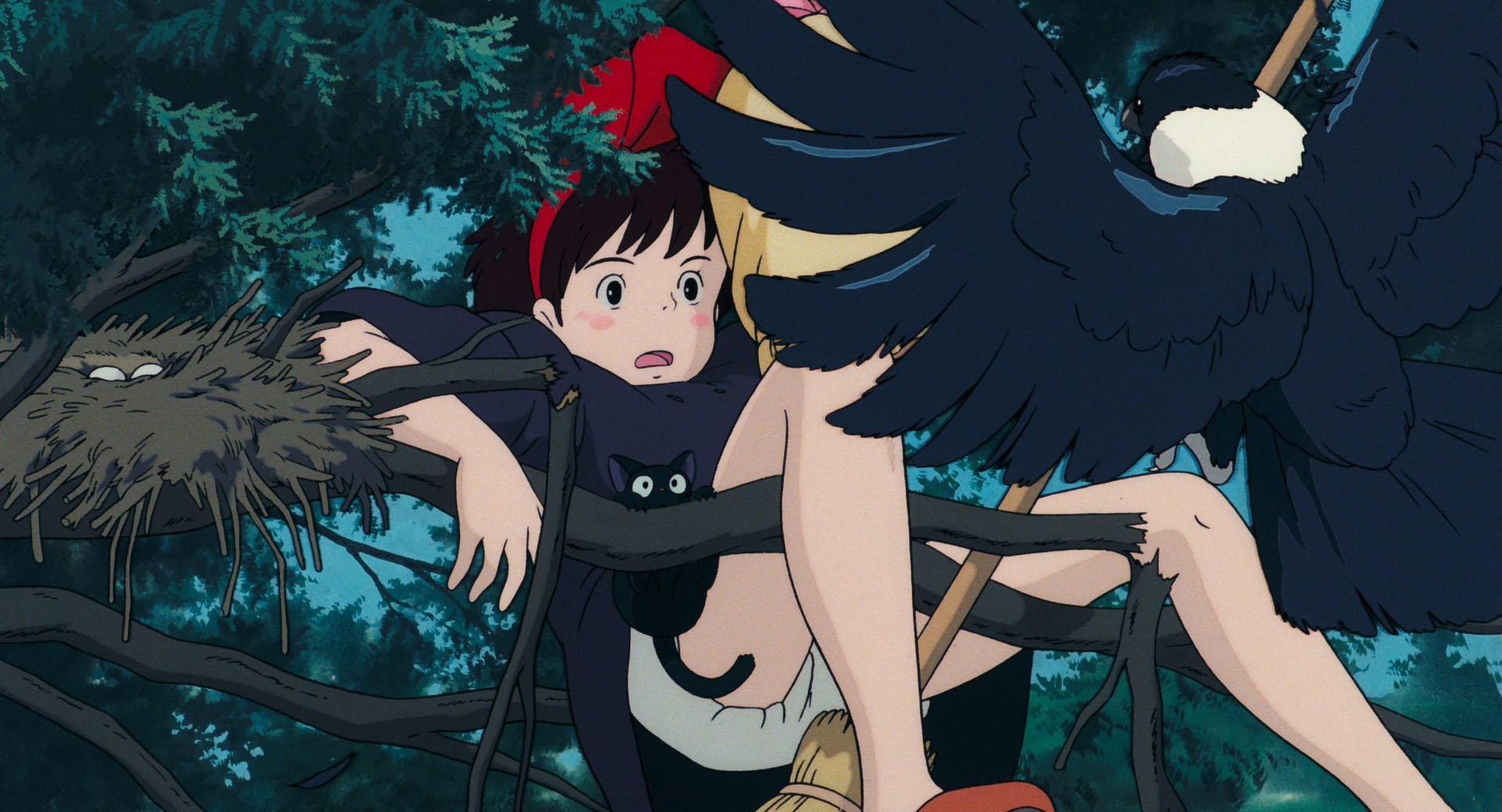
Image source: official Studio Ghibli still from ghibli.jp, used under Studio Ghibli’s common-sense image notice.
What Kiki’s Delivery Service is really about
At first glance, Kiki’s Delivery Service looks like one of Ghibli’s gentlest coming-of-age films. Kiki leaves home at thirteen, finds a seaside city, starts a flying delivery service, and tries to become independent. The plot is simple enough for younger viewers, but the emotional engine is very adult: Kiki is learning what happens when identity, work, money, pride, and self-belief all get tangled together.
Kiki wants to be useful. She wants to prove she can live away from home. She wants to be seen as a proper witch, a good worker, and someone who deserves a place in the city. That pressure slowly drains the joy out of the thing she is best at. The film’s genius is that it makes burnout visible without turning it into a lecture.
Why Kiki loses her magic
Kiki loses the ability to fly and can no longer understand Jiji because her inner life has gone out of balance. The film never gives a mechanical rule like a video game power meter. Instead, it shows confidence as something relational and emotional. Kiki’s magic depends on focus, instinct, and trust in herself. When she feels alienated, embarrassed, overworked, and unsure who she is, the magic falters.
This is why the loss feels so relatable. Many people have had a skill, hobby, job, or creative routine that once felt natural, then suddenly became heavy. The harder they forced it, the worse it felt. Kiki’s block is a child-friendly version of that adult experience: what do you do when the thing that made you special stops working?
Burnout, not laziness
Kiki is not lazy when she struggles. She is tired. She has moved away from home, built a business from nothing, dealt with difficult customers, navigated class differences in the city, and tried to keep smiling through rejection. Her work looks whimsical because she delivers packages by broom, but the pressure is real.
That is why Kiki’s Delivery Service has become such a comfort film for viewers who are burned out. It says that losing momentum does not mean you were fake. It says a creative block does not erase your talent. It says rest, friendship, food, kindness, and perspective are not distractions from the work. They are part of how the work becomes possible again.
Ursula’s advice and the creative block
Ursula, the painter in the forest, gives Kiki the film’s most practical philosophy. She explains that when she cannot paint, sometimes she works anyway, and sometimes she stops completely. The important part is not panic. Creative energy has rhythms. Forcing it can make the block worse, while stepping away can let the desire return.
This advice is useful because Ursula does not romanticise creativity as constant inspiration. She treats it as a relationship. You show up, you get stuck, you live a little, and eventually you understand the work differently. Kiki needs that lesson because she has started to see flying only as a service she sells, not as a part of herself she can enjoy and rediscover.
Why Jiji changes
One of the most debated parts of the film is Jiji. Kiki stops understanding him, and by the end, his ordinary cat life has moved forward. In the Japanese version, the shift is especially poignant because Jiji’s silence is not simply reversed as a tidy reward. Kiki is growing up. The childhood voice that once answered every fear no longer works the same way.
That does not mean Kiki has lost something cruelly. It means her relationship with herself is changing. Jiji can still be loved, but he no longer has to function as the external voice of her inner confidence. Kiki must learn to fly without needing the old form of reassurance.
Tombo, friendship, and being seen
Tombo matters because he likes Kiki before she feels impressive. He is awkward, enthusiastic, and sometimes too pushy, but he sees wonder in flying when Kiki is beginning to see only pressure. Their friendship gives the final rescue scene emotional weight. Kiki is not performing for a customer or proving her business is viable. She is trying to save someone she cares about.
That difference matters. Her magic returns in a moment of urgency, but also in a moment where love and instinct are stronger than self-consciousness. She is no longer asking, “Am I good enough?” She is simply acting.
Is Kiki’s Delivery Service good for beginners?
Yes. It is one of the best first Studio Ghibli movies because it is clear, warm, funny, and emotionally honest without being too intense. If you are building a family-friendly watch list, pair it with the beginner-friendly Studio Ghibli watch guide and lighter film guides such as My Neighbor Totoro. For older viewers, Kiki also pairs beautifully with more reflective Ghibli films about work, identity, and memory.
What to notice on a rewatch
- Food as care: meals, baked goods, and small acts of hospitality keep Kiki grounded.
- The city’s scale: Koriko is beautiful, but it often makes Kiki feel tiny and replaceable.
- Flying as mood: Kiki’s broom scenes change with her confidence, fatigue, and fear.
- Osono’s kindness: she gives Kiki practical support without making her feel helpless.
- The final flight: it is messy, improvised, and brave, which is exactly the point.
FAQ
Why can’t Kiki fly?
She loses her ability because her confidence and sense of self have collapsed under pressure. The film frames magic as connected to instinct, mood, and self-trust.
Does Kiki get her powers back?
Yes, her flying returns during the rescue of Tombo. The film suggests she has recovered enough trust in herself to act when it matters.
Why can’t Kiki understand Jiji anymore?
Jiji’s changed voice represents growing up and Kiki’s changing relationship with her own inner confidence. It is one of the film’s most bittersweet details.
Is Kiki’s Delivery Service sad?
It has sad and anxious moments, but the overall feeling is hopeful. It is more comforting than tragic.
Final verdict
Kiki’s Delivery Service endures because it understands that growing up is not only about leaving home. It is about learning how to keep going when confidence disappears. Kiki’s magic returns only after she stops treating herself like a machine that must always be useful. That makes the film one of Ghibli’s most comforting stories for anyone who has ever felt tired, blocked, or unsure whether they still have the thing that once made them feel alive.