Quick answer: Castle in the Sky is one of the best Studio Ghibli starting points for viewers who want classic adventure, sky pirates, ancient technology, big-hearted characters, and a clear good-versus-greed story. It is faster and more plot-driven than many quieter Ghibli films, but it still has the studio’s familiar interest in nature, memory, flight, and the cost of human ambition.
This spoiler-light guide explains what Castle in the Sky is about, why it matters, who should watch it, where it fits in a Studio Ghibli watch order, and what to notice on a first viewing.
What is Castle in the Sky about?
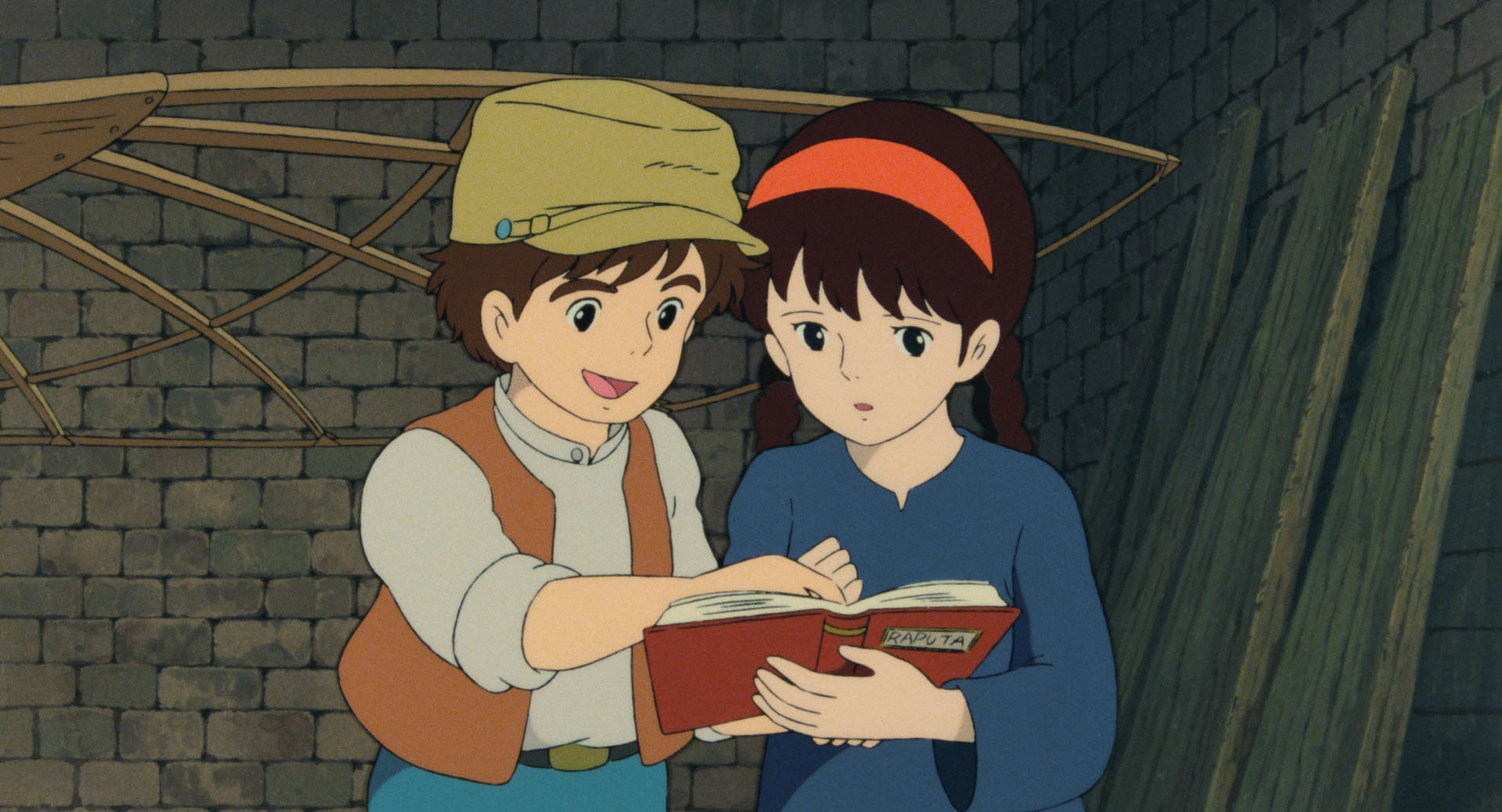
Castle in the Sky follows Sheeta, a mysterious girl with a glowing crystal, and Pazu, a young miner who dreams of proving that the legendary floating city of Laputa is real. Their meeting pulls them into a chase involving pirates, soldiers, secret agents, airships, robots, and a lost civilization above the clouds.
At its simplest, it is a flying adventure. Underneath that, it is a story about power. Everyone wants Laputa for a different reason. Some see treasure. Some see military control. Some see proof of a dream. The film asks what happens when ancient beauty becomes something people try to own, weaponize, or strip for parts.
Why it works so well for new Ghibli fans
Some Studio Ghibli films are gentle mood pieces. Castle in the Sky is not one of them. It has momentum from the opening sequence, a strong central mystery, and some of the studio’s most entertaining set pieces. If someone says Ghibli looks beautiful but they are worried the films might be too slow, this is a strong counterexample.
The film also introduces several recurring Ghibli pleasures in a very accessible way: flight, brave children, complicated adults, warm domestic details, old machines, environmental caution, and the feeling that the world is bigger than the characters understand. It is adventurous without being shallow and family-friendly without feeling disposable.
The appeal of Sheeta and Pazu
Sheeta and Pazu are easy to root for because they are not written as chosen-one superheroes. Pazu is practical, loyal, and stubborn in the best way. He believes in impossible things because his father did, but he also knows how to cook, work, climb, fix, and keep moving. Sheeta begins as a mystery, yet the film gradually makes her more than the object everyone is chasing. Her choices matter because she understands the danger of power better than the adults around her.
Their friendship gives the movie its warmth. Ghibli often handles young characters with unusual respect. Here, the children are not clever because adults are stupid. They are brave because they still have enough moral clarity to see what greed is doing.
Sky pirates, robots, and the joy of old machines
The world of Castle in the Sky is full of machines that feel heavy, noisy, and handmade. Airships creak. Engines cough. Mining equipment looks used. Even the more fantastical technology has texture. This is a big part of why the film remains visually satisfying decades later.
The pirates also give the story comic energy. They begin as a threat, but the film has fun complicating that first impression. Like many Ghibli side characters, they are more human than their role initially suggests. They make the chase sequences lively while preventing the film from becoming too grim.
What Laputa represents
The floating city is beautiful because it feels abandoned rather than empty. It suggests a civilization that reached incredible heights and then disappeared, leaving nature to soften the ruins. That contrast between advanced technology and quiet overgrowth is one of the film’s strongest images.
Laputa is not just a prize at the end of the adventure. It is a warning. The city contains wonder, but it also contains the possibility of terrible destruction. The film’s moral center is not anti-technology. It is anti-domination. Ghibli is often fascinated by flight and engineering, but it is deeply suspicious of people who turn beauty into control.
Where it fits in a Studio Ghibli watch order
For beginners, Castle in the Sky works early. A good path is to watch My Neighbor Totoro for gentle charm, Kiki’s Delivery Service for a warm coming-of-age story, then Castle in the Sky when you want more plot and adventure. It also pairs well with Nausicaä of the Valley of the Wind and Princess Mononoke, because all three deal with power, nature, weapons, and the consequences of human ambition.
If you are following a release-order journey, this film is important because it shows Hayao Miyazaki refining ideas that would echo throughout later Ghibli work. The sky, the machines, the capable young heroine, the distrust of militarism, and the mix of action with tenderness all feel foundational.
Is Castle in the Sky suitable for children?
Generally, yes, especially for older children who enjoy adventure stories. There is peril, gunfire, explosions, and some intense chase scenes, but the tone is still more adventurous than frightening. Sensitive younger viewers may need reassurance during the darker moments. For families, it is one of the easier feature-length Ghibli films to recommend because the story goal is clear and the pace rarely drifts.
What to notice on your first viewing
1. How flight changes the mood
Flight in this film is not just transportation. It creates wonder, danger, freedom, and scale. Notice how different the world feels from the mine, the airships, and the floating ruins.
2. How adults respond to power
Almost every adult group wants something from Sheeta, Pazu, or Laputa. The film becomes more interesting when you compare their motives rather than treating everyone as equally bad.
3. How nature reclaims the impossible
The quietest images of Laputa are some of the most important. The film’s most lasting idea may be that technology without humility cannot endure, while nature keeps returning.
FAQ
Is Castle in the Sky a good first Studio Ghibli movie?
Yes. It is one of the easiest Ghibli films to recommend first if the viewer likes adventure, fantasy, airships, and clear storytelling.
Is it connected to other Ghibli films?
No. It stands alone. You do not need to watch anything else first, although it shares themes and visual interests with several other Miyazaki films.
What should I watch after Castle in the Sky?
Try Nausicaä of the Valley of the Wind for another ecological adventure, Princess Mononoke for a darker epic, or Howl’s Moving Castle for more fantasy spectacle and moving architecture.
Image source: official Studio Ghibli stills from ghibli.jp, where the image usage notice states: “※画像は常識の範囲でご自由にお使いください。”