Ponyo is one of the easiest Studio Ghibli movies to recommend to first-time viewers: it is bright, funny, short enough for younger audiences, and built around a simple fairy-tale story about a goldfish girl who wants to become human. If you want a gentle first Ghibli film for children, family viewing, or a comfort-watch night, Ponyo is a very safe starting point.
Quick answer: is Ponyo a good first Studio Ghibli movie?
Yes. Ponyo is a good first Studio Ghibli movie if the viewer wants something warm, visual, and easy to follow. It does not ask you to understand a complicated fantasy world before the story starts. The emotional shape is clear: Ponyo wants freedom, Sosuke wants to protect her, and the adults around them are trying to keep everyone safe while the sea becomes wilder and stranger.
It is especially strong for families because the film works on two levels. Children can enjoy Ponyo’s huge feelings, food scenes, waves, magic, and friendship with Sosuke. Adults can notice the film’s gentler ideas about trust, parenting, environmental imbalance, and what it means to let children grow without turning the movie into a lecture.
What Ponyo is about, spoiler-light
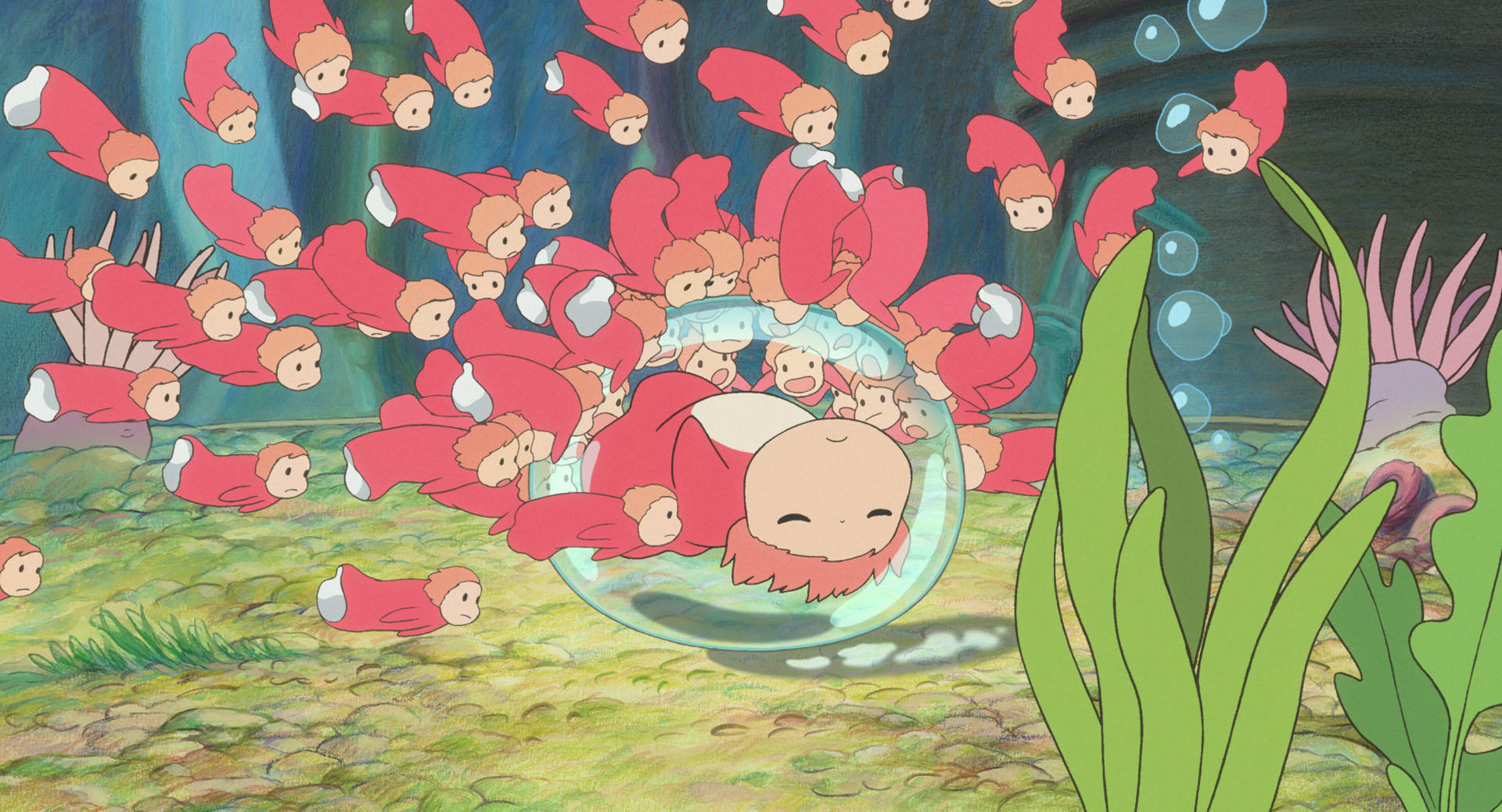
Ponyo follows a tiny magical fish who escapes from her underwater home and is found by Sosuke, a young boy living by the sea. Sosuke names her Ponyo, promises to care for her, and quickly forms a bond that feels completely serious in the way childhood friendships often do. Ponyo’s father, Fujimoto, is frightened by the human world and tries to bring her back, but Ponyo’s wish to become human grows stronger.
The story then becomes part domestic adventure, part ocean fairy tale. A seaside town is flooded, the moon seems too close, giant prehistoric-looking fish move through the roads, and Ponyo’s magic changes the shape of ordinary life. Through all of it, the film stays rooted in small details: soup, ham, a toy boat, a mother driving through rain, and a child trying to keep a promise.
Why Ponyo feels different from other Ghibli films
Many Studio Ghibli films mix everyday life with fantasy, but Ponyo leans especially hard into childlike logic. The film does not stop to explain every magical rule. It behaves like a story a child could believe immediately: the sea is alive, parents can be scary and loving at the same time, food fixes almost everything for a moment, and a promise can matter enough to calm a storm.
That simplicity is not a weakness. It is the main design choice. Where Princess Mononoke is mythic and morally complex, Ponyo is direct. Where Spirited Away feels mysterious and sometimes unsettling, Ponyo is more openly comforting. It is a useful reminder that Ghibli is not one mood. The studio can make huge historical epics, quiet realist dramas, surreal coming-of-age stories, and also a joyful sea adventure that feels like a bedtime story with an enormous budget of imagination.
Best reasons to watch Ponyo
1. It is one of Ghibli’s most family-friendly films
If you are choosing a film for mixed ages, Ponyo is easier than many Ghibli classics. The stakes are real, but the tone stays generous. There are storms, separation worries, and moments of danger, yet the film rarely feels harsh or frightening in the way darker fantasy can. For many families, it lands in the sweet spot between exciting and reassuring.
2. The animation has a handmade, storybook energy
Ponyo is famous for its flowing water, wobbly transformations, and sea life that seems to breathe. The waves do not behave like realistic waves. They swell into creatures, chase cars, and turn the coast into a moving fantasy landscape. That hand-drawn looseness gives the film a different texture from glossier animated adventures. It feels physical, imperfect in the best way, and full of motion.
3. Sosuke and Ponyo are easy to care about
The central friendship is simple, but it works because neither character is treated as a miniature adult. Ponyo is impulsive, hungry, delighted, and stubborn. Sosuke is sincere and brave in a child-sized way. He cannot fix the whole ocean, but he can keep his promise, help his mother, and look after the friend in front of him. That makes the film emotionally legible without making it bland.
4. It has the best kind of Ghibli food scenes
The ramen scene is a tiny masterpiece of comfort viewing. Hot noodles, ham, steam, and Ponyo’s pure joy tell you as much about the movie as any plot summary. Ghibli often uses food to show care, rest, and safety. In Ponyo, food becomes a way for the magical and ordinary worlds to meet at the kitchen table.
Who should watch Ponyo first?
Start with Ponyo if you want a cheerful introduction to Studio Ghibli, if you are watching with children, or if you want something visually beautiful without needing a complicated backstory. It is also a good choice for viewers who found Spirited Away too strange on a first attempt or who are not ready for the heavier tone of Grave of the Fireflies, The Wind Rises, or Princess Mononoke.
If the viewer wants older protagonists, romance, historical detail, or moral complexity, Ponyo may feel too young. In that case, try Spirited Away, Kiki’s Delivery Service, Howl’s Moving Castle, or Castle in the Sky instead. But if the goal is warmth, momentum, and instant charm, Ponyo does exactly what it needs to do.
Age guidance and intensity
Ponyo is generally one of the gentler Ghibli recommendations for children, but it is not completely conflict-free. Sensitive younger viewers may react to the storm sequences, the flooded town, or moments when characters are separated from parents. The film’s tone remains hopeful, and the scarier imagery is usually softened by wonder, humor, or the confidence of the child characters.
For a first family viewing, the best approach is simple: watch it together. The film gives plenty of natural pauses for reassurance because so much of it is built around care. Sosuke’s mother Lisa is protective and practical, the elderly women at the care home bring warmth, and Ponyo herself is rarely frightened for long. The overall feeling is not danger for danger’s sake, but a world temporarily out of balance finding its way back.
What Ponyo adds to a Ghibli watch order
In a beginner watch order, Ponyo works well near the start. It shows Ghibli’s softer, more playful side before you move into stranger, sadder, or more complex films. A good simple path would be My Neighbor Totoro, Ponyo, Kiki’s Delivery Service, then Spirited Away. That sequence moves from gentle childhood wonder into independence and then into a fuller fantasy coming-of-age story.
It also pairs nicely with My Neighbor Totoro. Both films trust small children as emotional leads, both care about family spaces, and both use fantasy as something close to nature rather than a superhero power system. Totoro is quieter and more mysterious. Ponyo is louder, wetter, and more openly comic.
FAQ
Is Ponyo scary?
Mostly no, though it has storm scenes, flooding, and moments of separation. The film is usually more exciting than scary, and its emotional tone is warm.
Do I need to watch any other Studio Ghibli movie before Ponyo?
No. Ponyo is completely standalone and is one of the easiest Ghibli films to watch without context.
Is Ponyo good for adults?
Yes, if you enjoy gentle animation, fairy-tale storytelling, and visual craft. Adults looking for a dense plot may prefer Princess Mononoke or The Wind Rises, but Ponyo is not only for children.
What should I watch after Ponyo?
Try My Neighbor Totoro for another child-centered comfort film, Kiki’s Delivery Service for a slightly older coming-of-age story, or our beginner-friendly Studio Ghibli watch guide if you want a broader route through the films.
Final verdict
Ponyo is not the most complex Studio Ghibli movie, but it is one of the most immediately lovable. It is a bright, ocean-soaked fairy tale about trust, care, and the seriousness of childhood promises. For beginners, families, and anyone who wants a comforting Ghibli watch that still feels visually wild, it is an easy recommendation.
Image source: official Studio Ghibli still from ghibli.jp, used under the studio’s common-sense image guidance.