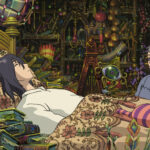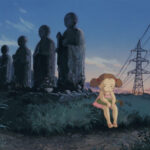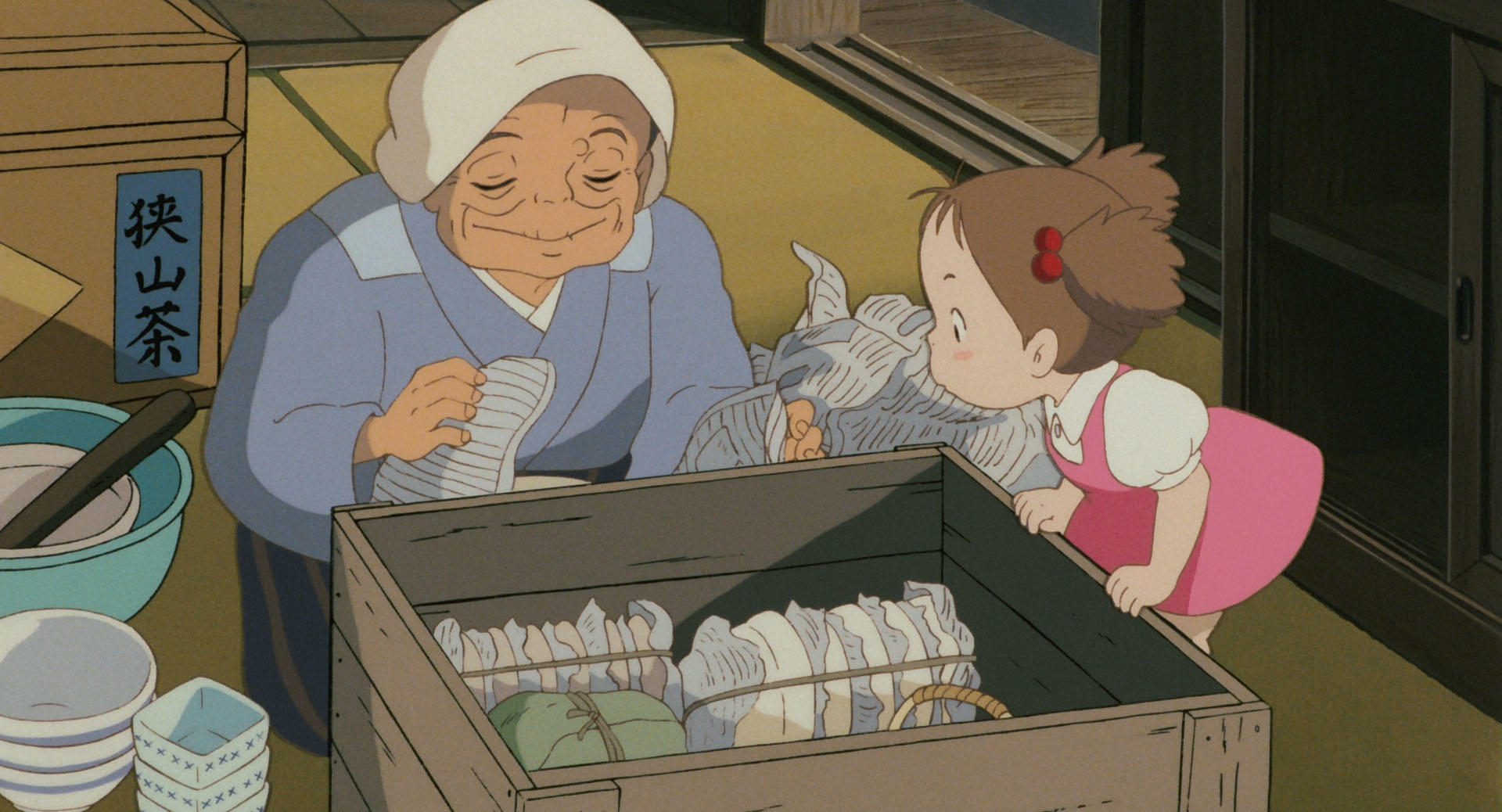
The quick answer: Studio Ghibli rain scenes matter because they slow the story down at the exact moment a character needs to feel something clearly. Rain in Ghibli is rarely just background weather. It makes fear quieter, comfort warmer, streets more alive, and childhood memories feel more real.
If you are building a rainy-day watch list, start with My Neighbor Totoro, Kiki’s Delivery Service, Spirited Away, Ponyo, and When Marnie Was There. Each uses weather differently: sometimes as comfort, sometimes as danger, and sometimes as the little pause before a character changes.
Why rain feels different in Studio Ghibli films
In many animated films, rain is a shortcut for sadness. In Studio Ghibli, it is more flexible than that. Rain can make a bus stop feel magical, a delivery route feel lonely, a bathhouse feel stranger, or a seaside town feel suddenly unstable. The weather does not simply tell you what to feel. It gives the characters room to notice what they already feel.
That is why Ghibli rain scenes often stay with people. They are not usually loud set pieces. They are small, patient scenes where the world keeps moving while a child waits, worries, listens, or learns to be brave. The drops on an umbrella, the shine on a road, the grey light in a room, and the heavy pause before someone speaks all do storytelling work.
My Neighbor Totoro: rain as patience and wonder
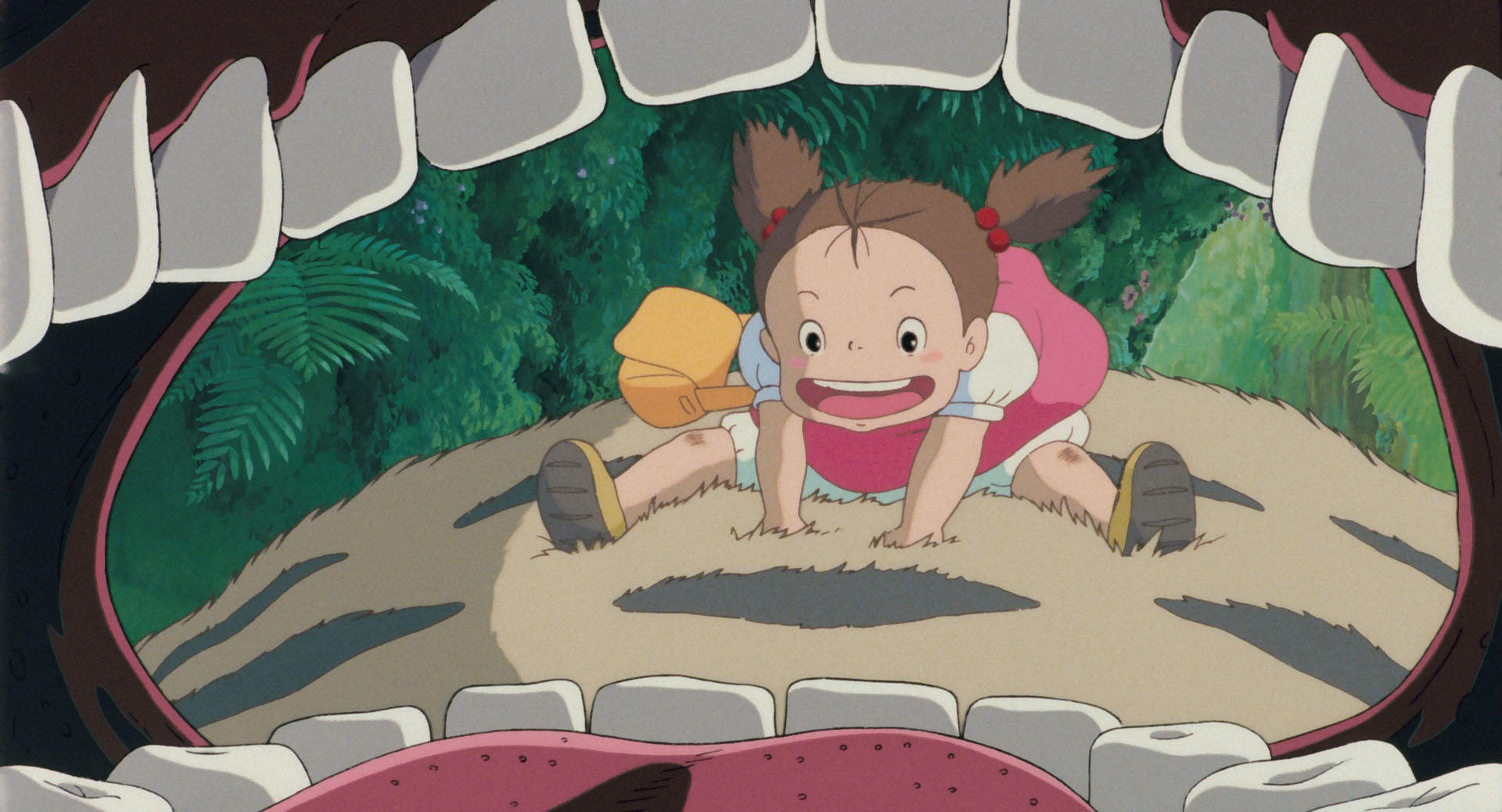
The bus stop sequence in My Neighbor Totoro is the clearest example of Ghibli turning rain into memory. Satsuki is waiting in the dark with Mei on her back, holding an umbrella and trying to stay responsible. Nothing dramatic has to happen for the scene to work. The rain, the night, and the waiting are already enough.
Then Totoro appears, and the scene becomes funny and magical without losing its stillness. The famous umbrella moment works because the film has made us feel the weight of the pause first. Totoro is not introduced through explanation. He is introduced through shared shelter, curiosity, and the sound of rain hitting leaves. For younger viewers, it is playful. For adults, it can feel like a perfect little image of childhood faith: wait long enough, and the world may answer in a way nobody else would believe.
This is also why Totoro remains one of the safest starting points for kids. The tension is gentle, the wonder is clear, and the rain makes the film feel cozy rather than frightening.
Kiki’s Delivery Service: rain as work, loneliness, and resilience
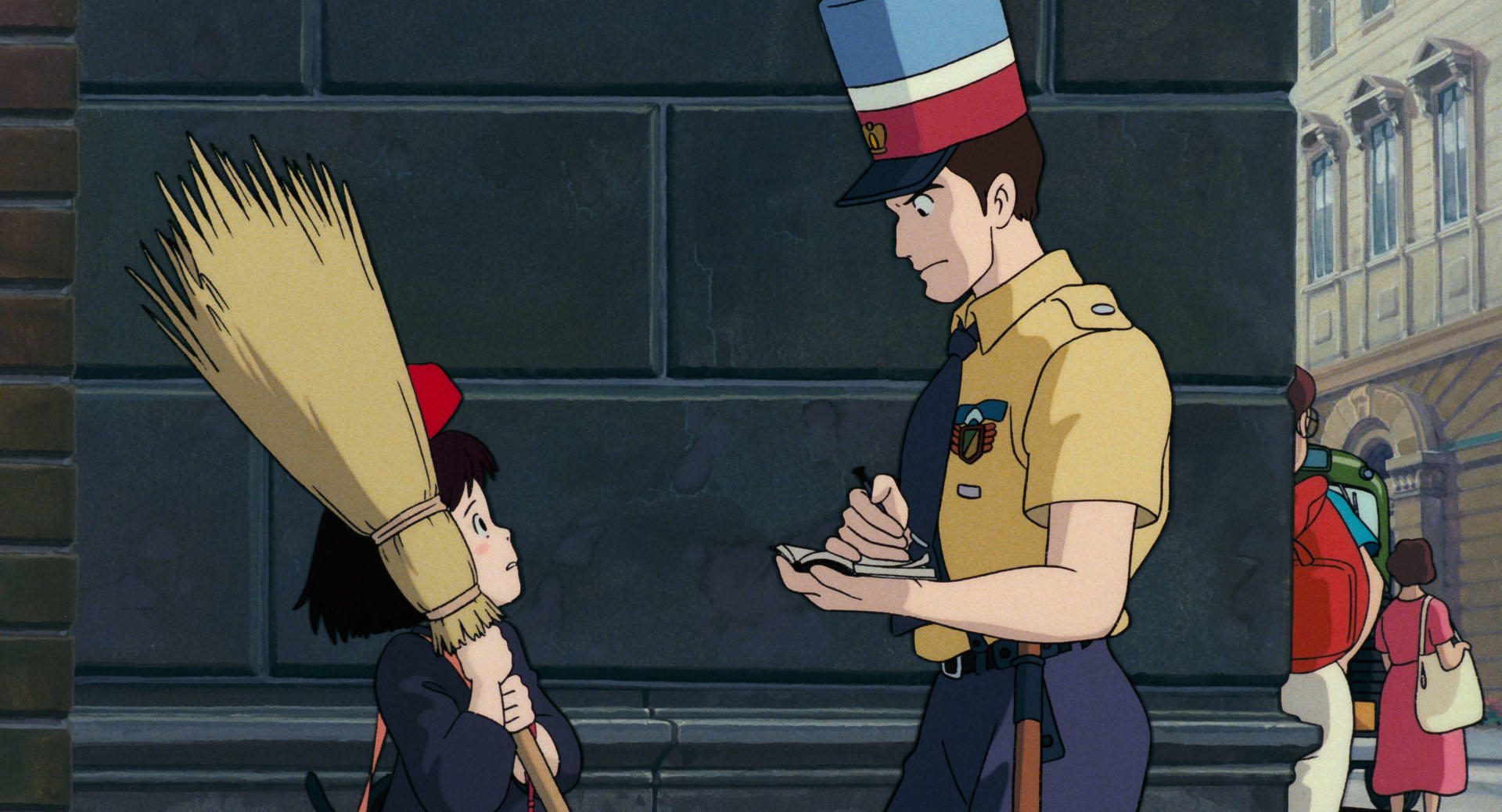
Kiki’s Delivery Service uses wet weather in a more practical way. Kiki is not just a magical girl flying through pretty skies. She is a young worker trying to deliver on promises, make customers happy, and figure out who she is when confidence disappears. Bad weather makes that struggle physical. A delivery becomes harder. A mood becomes heavier. The city feels less romantic and more demanding.
That is the point. Ghibli often treats independence as something ordinary and tiring, not just inspirational. Rain makes Kiki’s world less glossy. It reminds us that growing up includes bad timing, awkward social moments, and days where you do the job even when you do not feel special. The comfort comes later, when the film shows that burnout and self-doubt are not the end of the story.
Spirited Away: wet places, thresholds, and unease
In Spirited Away, water and weather feel more mysterious. The flooded world around the bathhouse is not cozy in the same way as Totoro’s bus stop. It feels like a boundary. Chihiro is separated from the ordinary world, and the wet landscape makes that separation visible. Tracks, platforms, reflections, and open water all suggest that she has crossed into a place where normal rules are suspended.
That is one reason the film works so well for beginners who want something richer and stranger than a simple adventure. The weather and water imagery keep reminding us that Chihiro cannot solve the story by force. She has to observe, remember, work, and keep her name intact. If you want a broader first-watch path, pair this with the site’s beginner-friendly Studio Ghibli watch order.
Ponyo: weather as chaos and childhood feeling
Ponyo turns weather into pure motion. The storm scenes are huge, strange, and childlike. Waves run like living creatures, the sea pushes into town, and the natural world feels delighted and dangerous at the same time. Where Totoro’s rain is patient, Ponyo’s storm is overflowing.
That fits the film’s emotional logic. Ponyo is about a young love and a young promise, told at the scale of a fairy tale. The weather is not realistic disaster-movie weather. It is the world responding to a magical child who wants something intensely and does not yet understand the consequences. For families, this can be thrilling, but it is also worth knowing that Ponyo is louder and more chaotic than Totoro.
When Marnie Was There: damp air and emotional distance
When Marnie Was There uses atmosphere differently again. Its marshes, mist, and damp quietness make the story feel private. The weather does not announce a big adventure. It creates distance. Anna is physically present in a beautiful place, but emotionally guarded. The soft, wet landscapes match that guarded feeling.
This is one of Ghibli’s best examples of weather as mood rather than plot. The film is not asking you to race through clues. It asks you to sit with loneliness, memory, and the difficulty of accepting care. Rainy or misty scenes support that pace. They make the story feel like something half-remembered, which is exactly the emotional territory the film wants.
Continue with the full When Marnie Was There guide for the marsh-house mystery, Anna and Marnie’s relationship, the ending, themes and viewer guidance.
Best Ghibli rain scenes for different moods
- For cozy comfort: My Neighbor Totoro, especially if you want a gentle family watch.
- For growing-up feelings: Kiki’s Delivery Service, where rough weather makes independence feel real.
- For mystery: Spirited Away, where water and rainlike atmosphere make the spirit world feel separate.
- For big weather energy: Ponyo, especially if you want stormy visuals and fairy-tale chaos.
- For quiet emotion: When Marnie Was There, where damp landscapes support memory and loneliness.
Why these scenes are useful for new viewers
Rain scenes are a good way to understand what makes Studio Ghibli different. They show the studio’s confidence in quiet storytelling. Instead of rushing to explain every feeling, the films let setting, weather, and tiny gestures carry meaning. A character waiting under an umbrella can tell us as much as a speech. A flooded train ride can make a fantasy world feel lonely and sacred. A storm can turn a child’s emotion into a whole landscape.
For a first Ghibli watch session, rain-heavy or weather-rich films are also easy to pair by mood. Watch Totoro when you want comfort, Kiki when you want resilience, Spirited Away when you want mystery, and Ponyo when you want movement and colour. If you want more gentle picks, the cozy Studio Ghibli ranking is the natural next stop.
FAQ
What is the most famous Studio Ghibli rain scene?
The bus stop scene in My Neighbor Totoro is the most famous. It combines waiting, childhood responsibility, Totoro’s strange humour, and the iconic umbrella moment.
Which Studio Ghibli movie is best for a rainy day?
My Neighbor Totoro is the safest rainy-day comfort pick. Kiki’s Delivery Service is better if you want a coming-of-age mood, while Spirited Away is stronger if you want mystery and atmosphere.
Are Ghibli rain scenes usually sad?
Not always. Rain in Ghibli can be sad, cozy, funny, tense, or magical. The meaning depends on the character’s situation and the film’s overall mood.
Why does weather matter so much in Studio Ghibli?
Weather helps Ghibli films make emotion visible without over-explaining it. Wind, rain, mist, sunlight, and storms often reveal how a character is changing internally.
Image source note: official Studio Ghibli stills from ghibli.jp, where the studio publishes selected stills with the common-sense use notice: “画像は常識の範囲でご自由にお使いください。”