Quick answer: soot sprites in Studio Ghibli movies are tiny work spirits, not simple comic sidekicks. They make the hidden labour of a magical world visible, and they help explain why films like My Neighbor Totoro and Spirited Away feel cosy, strange, and alive at the same time.
What are soot sprites?
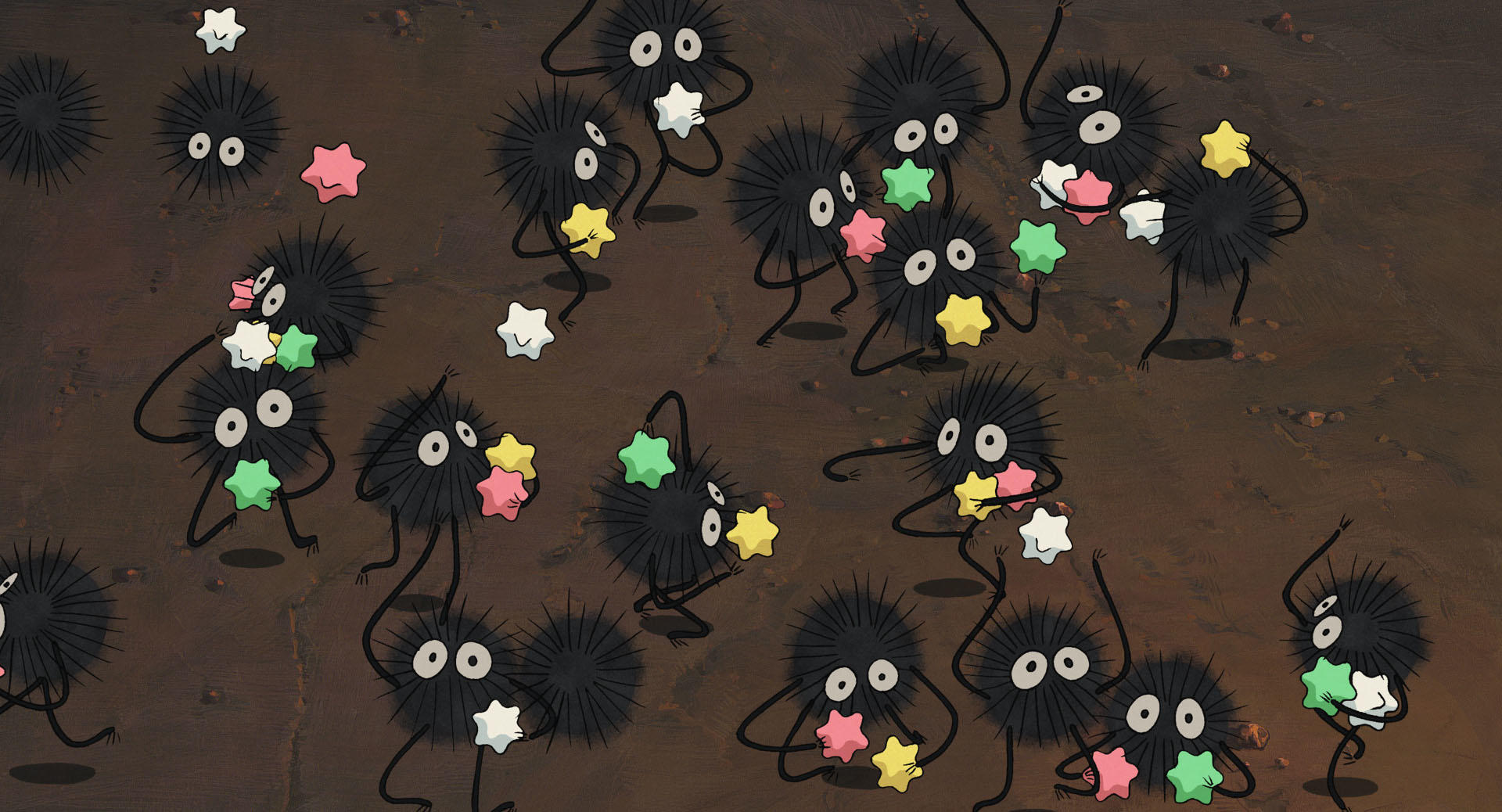
Soot sprites are small black, dust-like spirits that appear in the corners of Ghibli’s magical worlds. In My Neighbor Totoro, they are linked to the old country house that Satsuki and Mei move into with their father. The girls see them as skittering black specks, half dust and half living creature, disappearing into cracks and dark spaces when the house begins to feel less abandoned. In Spirited Away, a related version works in Kamaji’s boiler room, carrying coal and helping keep the bathhouse running.
The important thing is that soot sprites are not explained through a long mythology lecture. Ghibli lets you understand them through behaviour. They hide, gather, work, panic, and respond to kindness. That makes them instantly readable even if you do not know anything about Japanese folklore or animation symbolism.
Why they matter in My Neighbor Totoro
In My Neighbor Totoro, the soot sprites help turn a slightly scary house into a place of discovery. The first time the girls enter, the building is dusty, creaky, and unfamiliar. Instead of making that fear into a horror scene, the movie gives it a playful spirit form. The black dust is alive, but it is not evil. It is just startled by the new family.
That small choice changes the tone of the whole film. The house is not empty, and the countryside is not merely a backdrop. It has presences, habits, and tiny rules. Satsuki and Mei’s openness lets them notice those things. Adults may dismiss the sprites as dust, but the film sides with the children long enough for the viewer to feel that the world is bigger than it first appears.
The sprites also give the movie one of its gentlest ideas: a home can be strange before it becomes safe. The family does not conquer the house or drive the spirits away with force. They clean, laugh, settle in, and the soot sprites move on. It is a soft handover from one kind of life to another.
Why they matter in Spirited Away
In Spirited Away, the soot sprites, often called susuwatari, feel more like workers than house spirits. They carry coal in Kamaji’s boiler room, receive food, and operate as part of the bathhouse’s unseen machinery. Their presence fits the film’s larger concern with labour. Chihiro enters a world where everyone has a role, a boss, a routine, and a price to pay for idleness or greed.
That makes the sprites funny, but also meaningful. They are cute because they are tiny and expressive. They are memorable because they show how the bathhouse depends on small, overlooked forms of work. Chihiro earns her place not by being powerful, but by helping, paying attention, and refusing to treat the smallest beings as disposable.
Are the soot sprites the same in both movies?
They are best understood as a recurring Ghibli spirit idea rather than a strict shared-universe clue. Fans often connect the soot sprites across the two films, and the resemblance is deliberate enough to invite that connection. But the movies use them differently. Totoro uses them to make a new home feel enchanted. Spirited Away uses them to make a workplace feel alive from the basement upward.
That flexibility is part of their appeal. Ghibli does not need every magical creature to come with a rulebook. A spirit can return in a different context and still feel emotionally consistent. The soot sprites remain small, busy, vulnerable, and strangely charming wherever they appear.
What do soot sprites symbolise?
Soot sprites symbolise the life inside overlooked places. They are dust, work, shyness, and hidden energy turned into character. In a normal film, dust might simply mean neglect. In Ghibli, dust can suggest memory, age, occupation, and the feeling that a place existed before the main characters arrived.
They also make invisible labour visible. Someone feeds the fire. Someone carries the coal. Someone lives in the corners. This is one reason they fit so well beside Ghibli’s broader themes of care, attention, and respect for ordinary work. The films repeatedly ask viewers to notice what is small: a meal, a chore, a train ride, a plant, a spirit, a child trying to be brave.
Why fans love them
Fans love soot sprites because they are simple enough to be instantly cute and specific enough to feel uniquely Ghibli. Their design is almost nothing: black fuzz, eyes, little limbs, quick movement. That simplicity makes them perfect for stickers, plush toys, fan art, and small background details. They are easy to recognise without losing their mystery.
They also carry a comforting kind of weirdness. They are not polished mascots dropped into the story to sell merchandise. They feel like creatures the animators noticed hiding inside dust itself. That is the Ghibli trick: the ordinary world is not replaced by fantasy, it is gently revealed as already strange.
Best movies to watch if you like soot sprites
Start with My Neighbor Totoro if you want the soft, childhood-discovery version of small spirits. Then watch Spirited Away for the busier, stranger bathhouse version. If you enjoy the idea of tiny lives happening alongside human life, continue with The Secret World of Arrietty, which is not about soot sprites but shares the pleasure of seeing the world from a smaller scale.
For a broader route through the studio, the Studio Ghibli movies in order guide is the best starting point. It helps you decide whether to watch by release date, beginner friendliness, or mood.
FAQ
Are soot sprites good or bad?
They are not villains. In both major appearances, soot sprites are shy, busy, and reactive rather than dangerous. They may startle people, but the films frame them with curiosity and affection.
Do soot sprites prove the Ghibli movies share one universe?
Not necessarily. They are better read as a recurring creative motif. Ghibli often reuses emotional ideas, visual rhythms, and spirit-like presences without turning every film into a single connected timeline.
What is the Japanese name for soot sprites?
They are commonly known as susuwatari, often translated as soot sprites or travelling soot. The English term captures their appearance, while the Japanese name preserves more of the folklore-like feeling.
Why are they so popular as Ghibli characters?
They are visually simple, emotionally readable, and tied to two of the studio’s most beloved films. That combination makes them easy to love even though they have no long speeches or complicated backstory.
Image note: official Studio Ghibli still sourced from ghibli.jp, where the studio publishes images with the notice: “※画像は常識の範囲でご自由にお使いください。”