The bathhouse in Spirited Away is the magical workplace where Chihiro has to survive, grow up, and learn the rules of a spirit world that does not explain itself kindly. It is not just a beautiful building. It is the engine of the movie: a place of labour, hierarchy, appetite, cleansing, danger, and transformation.
For first-time viewers, the bathhouse can feel overwhelming. Spirits arrive in crowds, workers rush between floors, contracts matter, names can be stolen, and every room seems to have its own social order. This guide explains what the bathhouse is, why it matters, and how it helps make Spirited Away one of Studio Ghibli’s most memorable films.
Quick answer: what is the bathhouse?
The bathhouse is a resort and workplace for spirits. It is run by Yubaba, staffed by workers such as Lin and Kamaji, and powered by strict routines: guests arrive, baths are prepared, food is served, orders are shouted, and everyone is expected to know their place. Chihiro enters it by accident after her parents are transformed, then takes a job there under the name Sen so she can stay alive long enough to save them.
On a story level, it gives Chihiro a problem she can act on. She cannot simply wait to be rescued. She has to work, remember who she is, and learn which rules matter and which people can be trusted.
Why the bathhouse feels so alive
Studio Ghibli makes the bathhouse feel real by filling it with practical details. There are boiler rooms, tokens, herbal soaks, food counters, sleeping quarters, elevators, ledgers, uniforms, and tired workers. Even the strangest spirits are treated like customers in a functioning business. That mixture of fantasy and routine is what makes the setting convincing.
The building is also vertical. Chihiro moves through lower workspaces, public baths, crowded halls, private rooms, and Yubaba’s office. Each level feels like a different layer of power. Kamaji’s boiler room is hot, cramped, and mechanical. The main baths are social and chaotic. Yubaba’s space is rich, controlled, and intimidating. Chihiro’s journey through the building is also a journey through its power structure.
Yubaba’s bathhouse as a workplace
One of the cleverest things about Spirited Away is that its fantasy world runs on work. Chihiro’s safety depends on getting hired. Once she has a job, she has tasks, shifts, colleagues, and a name that belongs to the business. That makes the magic feel less like a dream and more like a strange version of adult life.
The bathhouse can be read as a place where people are valued for usefulness. Chihiro is dismissed because she is human, clumsy, scared, and unfamiliar with the rules. Yet she becomes useful by doing what others avoid: helping the stink spirit, showing compassion to No-Face, and refusing to forget her true name. Her growth is not about becoming powerful in a flashy way. It is about staying decent under pressure.
The bathhouse and the theme of cleansing
Because the setting is a bathhouse, cleansing is built into the movie’s structure. Spirits arrive to be washed, refreshed, or restored. The most obvious example is the polluted river spirit, who is mistaken for a stink spirit until Chihiro helps pull human rubbish from his body. The scene turns a bath into an environmental rescue, and it shows that cleaning is not just cosmetic. It can reveal what something really is.
This idea applies to Chihiro too. She arrives frightened and passive, but the bathhouse strips away some of her old helplessness. It does not make her less childlike in a harsh way. Instead, it shows that courage can appear through responsibility, memory, and repeated small acts.
Why names matter in the bathhouse
Yubaba controls workers partly by taking their names. Chihiro becomes Sen, and Haku warns her that forgetting her real name would trap her. This makes the bathhouse more than a workplace. It is a place where identity can be reduced to function. If Chihiro forgets who she is, she becomes only what the system calls her.
That is why the name theme is so powerful. The movie does not treat identity as a speech or a slogan. It turns it into a practical danger. Chihiro has to remember herself while everyone around her keeps using a shorter, more useful version of her name.
No-Face and the bathhouse’s appetite
No-Face becomes especially dangerous inside the bathhouse because the building gives him a language of appetite. He offers gold, workers serve him, and the whole place bends toward greed and consumption. Outside that environment, he is quieter and less defined. Inside it, he absorbs the bathhouse’s worst habits and magnifies them.
This is one reason the bathhouse works so well as a symbolic setting. It is not evil in a simple way. It is lively, useful, beautiful, exploitative, generous, greedy, funny, and frightening all at once. Different characters reveal different parts of it.
Is the bathhouse based on a real place?
The bathhouse draws on Japanese bathhouse and inn imagery, but it is not just one real location copied into animation. Part of its power is that it feels familiar and impossible at the same time. Viewers often connect it with historic onsen towns, traditional inns, and ornate wooden architecture, but the film reshapes those influences into a fantasy workplace for gods and spirits.
Why the bathhouse is essential to Spirited Away
Without the bathhouse, Spirited Away would lose its central pressure. The building gives Chihiro rules to learn, people to observe, and moral choices to make. It also gives the audience a place they want to explore. Every room suggests another story, another spirit, another job, or another danger just off-screen.
If you are new to Studio Ghibli, Spirited Away is a strong early watch because the bathhouse shows how the studio blends wonder with everyday behaviour. For a broader route through the films, start with our Studio Ghibli movies in order watch guide.
FAQ
Who runs the bathhouse in Spirited Away?
Yubaba runs the bathhouse. She controls contracts, names, money, workers, and access to power inside the building.
Why does Chihiro need a job there?
In the spirit world, work gives Chihiro a way to survive. Getting hired protects her from being treated as an intruder and gives her time to find a way to save her parents.
What does the bathhouse symbolize?
It can symbolize labour, greed, cleansing, adulthood, identity, and social hierarchy. Its meaning changes depending on which character you watch.
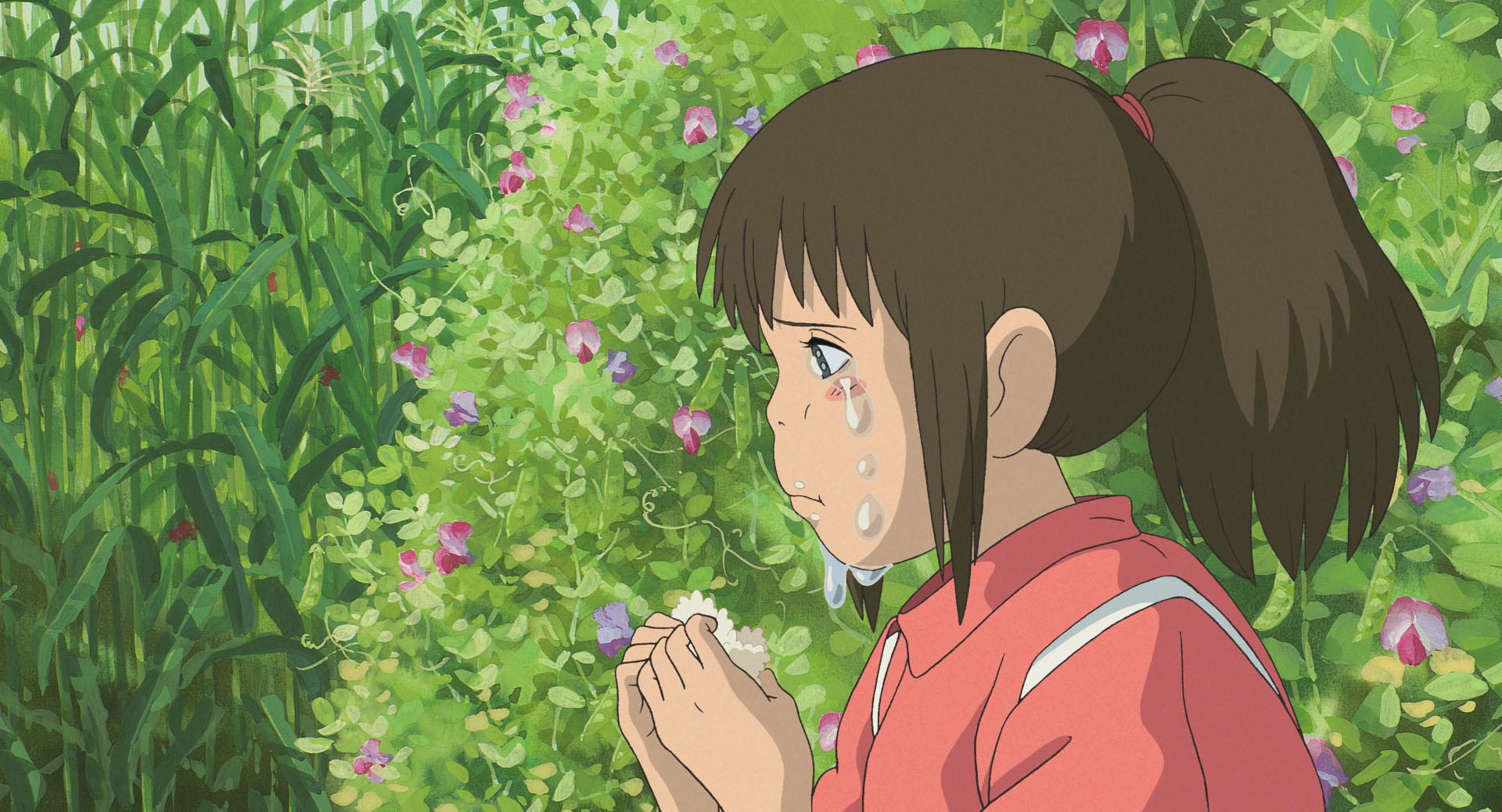
Image source: official Studio Ghibli still from ghibli.jp, used under Studio Ghibli’s published common-sense image notice.