Quick answer: Studio Ghibli food scenes feel comforting because they show care in motion. The cooking is usually simple, physical, and shared: rice, soup, bread, eggs, noodles, tea, or a packed meal. The point is not luxury. It is the feeling that someone has made a small safe place in the middle of a strange world.
Ghibli food is about care, not just appetite
Many animated films use food as a quick gag. Studio Ghibli uses it as character writing. A meal can show whether someone is safe, lonely, greedy, exhausted, welcomed, or becoming part of a household. The famous food moments work because they are tied to relationships: a parent feeding a child, a stranger offering a place to rest, a tired worker eating properly for the first time that day.
This is why even very simple food can feel memorable. The bacon and eggs in Howl’s Moving Castle, the rice balls in Spirited Away, the ramen in Ponyo, and Kiki’s bakery life all communicate warmth through routine. They slow the story down just enough for the viewer to feel grounded.
Quick guide: what food means in each film
| Film | Food moment | What it communicates |
|---|---|---|
| Spirited Away | Forbidden feast and Haku’s rice ball | Greed first, then care and recovery after fear |
| Kiki’s Delivery Service | Bakery work and shared food | Belonging built through routine, labour and community |
| Howl’s Moving Castle | Breakfast around Calcifer | A chaotic magical space becoming a household |
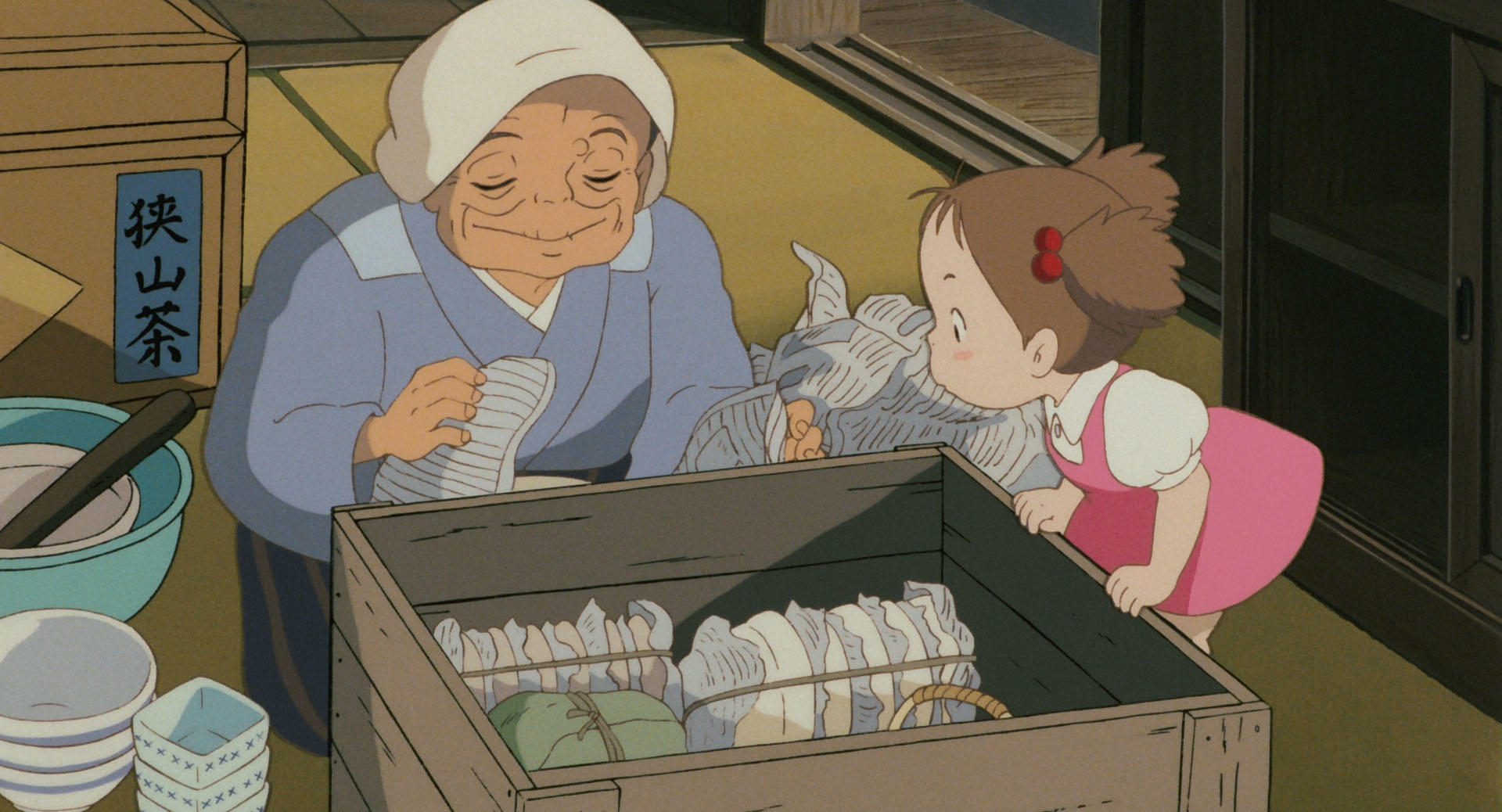
| My Neighbor Totoro | Packed lunches and garden produce | Family rhythm, childhood independence and rural life |
| Ponyo | Hot ramen during the storm | Warmth and safety when the outside world feels unstable |
| Castle in the Sky | Simple food shared on the journey | Practical generosity and trust during an adventure |
The pattern is more important than any single dish. Ghibli uses food to reveal the condition of a relationship: who serves, who waits, who eats carelessly, who finally relaxes, and who has started to feel at home.
The animation makes food feel handmade
Ghibli food has weight. Eggs crack, steam rises, chopsticks lift, bread tears, soup moves, and characters chew like they have actually been hungry. That physical detail matters. It tells the viewer that this world is not just a backdrop for plot. It is a place where bodies get tired, kitchens get messy, and small acts of care count.
The studio often frames meals at a human pace. Instead of rushing past the domestic moment, the camera lingers. A character sits down. Someone waits. A bowl is held with both hands. Those tiny pauses make the fantasy feel livable.
Food marks safety after stress
In Spirited Away, food is complicated. Chihiro’s parents are transformed after eating greedily, but later the rice ball from Haku becomes a moment of emotional release. Chihiro cries because the food confirms that someone sees her and wants her to survive. The scene is not comforting because rice is inherently magical. It is comforting because it arrives after fear.
Ponyo uses food differently. The ramen scene is pure warmth: hot bowls, ham, eggs, and a child’s delight. It makes the storm outside feel manageable. In Howl’s Moving Castle, cooking breakfast turns a chaotic moving house into a temporary family. Calcifer, Sophie, Markl, and Howl all become connected around the stove.
Why these scenes are so shareable
Ghibli food clips and screenshots spread because they trigger a very specific kind of longing. Viewers do not only want the food. They want the room, the quiet, the rain, the company, and the sense of being looked after. That is why these scenes inspire recipes, cozy edits, kitchen art, and comfort-watch lists.
They also feel achievable. Most Ghibli meals are not restaurant fantasies. They are closer to what someone could make at home: toast, soup, rice, noodles, eggs, vegetables, and tea. The magic is in the attention.
Best films to watch for cozy food moments
Start with Howl’s Moving Castle for breakfast and hearth energy. Watch Ponyo for ramen and family warmth. Choose Kiki’s Delivery Service for bakery comfort and everyday work rhythms. Rewatch Spirited Away when you want food scenes that carry emotional contrast as well as beauty. For more gentle recommendations, see our cozy Studio Ghibli movie guide.
FAQs
Why does Studio Ghibli food look so good?
The animation emphasizes texture, steam, hand movement, and the social meaning of eating. It feels cared for rather than decorative.
What is the most famous Ghibli food scene?
The breakfast in Howl’s Moving Castle and the rice ball scene in Spirited Away are two of the most widely discussed.
Are Ghibli food scenes important to the stories?
Yes. They often signal safety, greed, recovery, belonging, or emotional support.
Image source note: official Studio Ghibli stills are credited to ghibli.jp and used within the official common-sense usage notice.
How food turns fantasy into home
One reason Ghibli food scenes linger is that they make impossible worlds feel domestic. A bathhouse for spirits becomes more believable when workers eat, complain, hurry, and rest. A moving castle becomes a home when someone cooks breakfast. A storm becomes less frightening when a child gets hot noodles. Food is the bridge between the magical and the ordinary.
That bridge is especially important because many Ghibli protagonists are displaced. Chihiro is separated from her parents. Kiki has left home. Sophie has been transformed and pulled into a strange household. Ponyo crosses from ocean to land. In each case, eating or preparing food helps mark a temporary place of belonging. The character may not be safe forever, but for that moment they are held by a routine.
Why fans recreate Ghibli meals
Fans recreate these meals because the scenes are emotionally legible. You do not need to build a castle or summon a forest spirit to feel close to the film. You can make ramen, toast, soup, rice balls, tea, or a simple breakfast. That makes Ghibli’s world unusually easy to bring into everyday life. The food becomes a small act of fandom, comfort, and memory at the same time.
Why the food feels calm instead of flashy
Ghibli food scenes are memorable because they rarely behave like advertisements. The camera does not simply show a perfect plate and move on. It usually shows a process: hands cracking eggs, steam rising, chopsticks dividing a portion, someone waiting for another person to sit down, or a character eating because they finally feel safe enough to be hungry. That process makes the food feel lived-in rather than decorative.
This is why simple meals can feel more powerful than elaborate banquets. The herring pie in Kiki’s Delivery Service, the breakfast in Howl’s Moving Castle, and the rice balls in Spirited Away all carry emotional information. They tell us who is caring for whom, who is exhausted, who is trying to be polite, and who has reached a point where ordinary comfort matters more than adventure.
Best Ghibli films to rewatch for food comfort
If you are rewatching specifically for cozy food scenes, start with Kiki’s Delivery Service for bakery warmth and everyday independence. Choose Howl’s Moving Castle if you want a more theatrical kitchen mood, especially the famous breakfast sequence. Pick Spirited Away when you want food to feel tied to courage, exhaustion, and recovery. For a softer family rhythm, My Neighbor Totoro remains one of the best examples of simple meals making a home feel real.
The common thread is not luxury. It is care. Ghibli food works because it sits inside relationships, routines, and small acts of attention. That is what makes viewers remember it long after the plot details fade.
Related comfort guides
Continue with the Kiki’s Delivery Service movie guide for more on bakery life and belonging, the rainy-day Ghibli guide for a comfort-watch route, or the beginner-friendly watch guide for a broader starting point.