


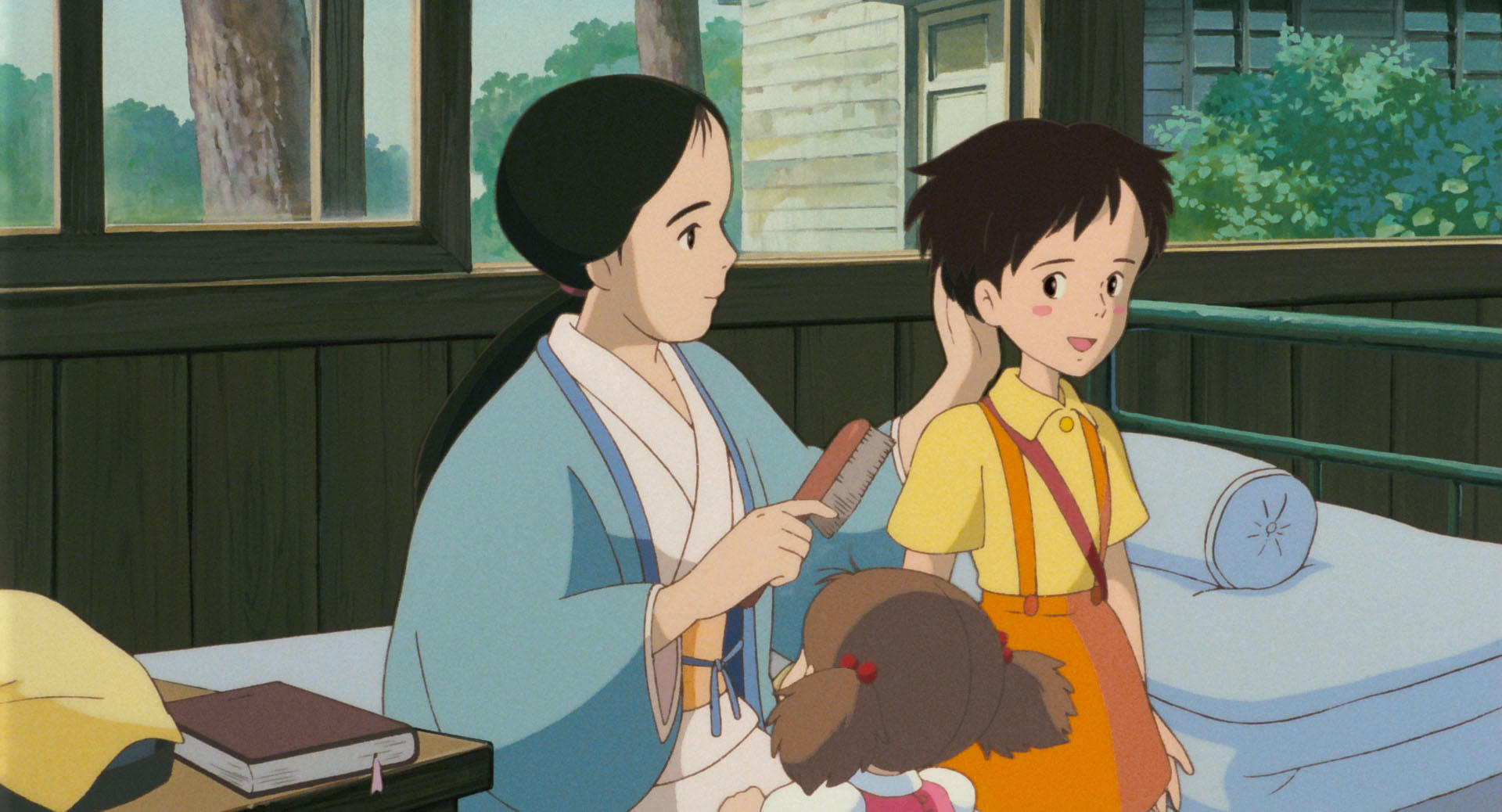
Quick answer: the best Studio Ghibli rainy-day rewatches are the films that feel warm, textured, and emotionally generous: My Neighbor Totoro, Kiki’s Delivery Service, Whisper of the Heart, Howl’s Moving Castle, From Up on Poppy Hill, Ponyo, and Spirited Away if you want something stranger and more immersive.
What makes a Ghibli movie good for a rainy day?
A rainy-day film is not just a film with rain in it. It needs atmosphere, comfort, and enough emotional movement to make staying inside feel intentional rather than lazy. Studio Ghibli is unusually good at this because the movies leave room for quiet domestic details: cooking, walking, working, cleaning, waiting for a train, listening to the weather, or noticing how a room feels in the afternoon light.
The picks below lean cozy first, but they are not empty comfort watches. Each one has a reason to return to it when the weather is grey: a gentle pace, a hopeful ending, a lived-in world, or a story about getting through uncertainty without becoming hard or cynical.
1. My Neighbor Totoro
My Neighbor Totoro is the safest rainy-day recommendation because it turns slowness into the point. The film is built around a house, a garden, a bus stop, a hospital visit, and a child’s sense that the world is bigger than adults admit. It is warm without being sugary, and it makes ordinary family routines feel magical.
This is the one to choose if you want comfort without too much plot pressure. The countryside setting, soft creature designs, and famous bus stop scene make it ideal for a blanket-and-tea rewatch. It also works brilliantly for new viewers because it explains the appeal of Ghibli without needing a complicated mythology.
2. Kiki’s Delivery Service
Kiki’s Delivery Service is a rainy-day film for anyone who feels low on confidence. Kiki’s problem is not a villain. It is burnout, self-doubt, and the awkward gap between wanting independence and actually knowing how to live it. That makes it quietly adult, even though the story is friendly enough for younger viewers.
The seaside city, bakery apartment, radio, deliveries, and Jiji’s little bursts of commentary give the film a homely rhythm. It is especially good when you need encouragement to start again, do a small errand, make one useful thing, or stop treating a temporary dip as a permanent failure.
3. Whisper of the Heart
Whisper of the Heart is the best pick for a rainy creative afternoon. It is about writing, practice, embarrassment, first love, and discovering that talent has to be trained rather than merely discovered. The film has less fantasy than many Ghibli titles, but the emotional fantasy is powerful: the idea that a young person’s private curiosity can become a real path.
Choose this when you want a gentle push rather than pure escapism. It pairs well with journaling, sketching, planning a small project, or doing something creative after the credits. It is cozy, but it also asks you to care about your own effort.
4. Howl’s Moving Castle
Howl’s Moving Castle is the rainy-day choice when you want visual abundance. The castle, the cluttered rooms, Calcifer’s fire, Sophie’s practical stubbornness, and the film’s romantic chaos make it feel like stepping into a moving antique shop during a storm.
The plot is famously dreamlike, so it is not the cleanest recommendation for someone who wants every rule explained. But for atmosphere it is hard to beat. It is a strong rewatch because you can enjoy the surfaces, the jokes, the design, and Sophie’s emotional arc even when the politics and spells remain messy.
5. From Up on Poppy Hill
From Up on Poppy Hill is a grounded comfort watch. It has school clubs, family meals, harbour views, memory, grief, and young people trying to preserve a building that matters to them. It is not as iconic as Totoro or Spirited Away, but that lower-key quality is exactly why it suits a rainy day.
Watch it when you want something human-scale. The stakes are emotional and local rather than cosmic, and the film’s affection for shared spaces makes it a good fit for viewers who like Ghibli’s domestic detail as much as its fantasy.
6. Ponyo
Ponyo is less “quiet rainy day” and more “the weather has taken over the whole afternoon.” It is bright, strange, watery, and full of childlike momentum. The ocean imagery gives it a stormy energy, but the family scenes, ramen, lamps, and small acts of care keep it from feeling overwhelming.
This is a good pick for families or for viewers who want something visually lively rather than meditative. It is also one of the easiest Ghibli films to enjoy without overthinking the symbolism.
7. Spirited Away
Spirited Away is not the coziest film on this list, but it may be the most absorbing. If the rainy-day goal is to disappear into another world, Chihiro’s bathhouse journey is perfect. It has food, trains, steam, spirits, work, fear, kindness, and one of the richest fantasy spaces in animation.
Choose it when you want a full cinematic experience rather than background comfort. It is darker and more intense than Totoro, but the ending leaves the same essential Ghibli feeling: you can be frightened, changed, and still come through with more courage than you had before.
Best rainy-day pick by mood
- Most comforting: My Neighbor Totoro
- Best for burnout: Kiki’s Delivery Service
- Best for creative motivation: Whisper of the Heart
- Best for romance and atmosphere: Howl’s Moving Castle
- Best for family viewing: Ponyo
- Best for total escape: Spirited Away
FAQ
What is the coziest Studio Ghibli movie?
For most viewers, My Neighbor Totoro is the coziest because it is gentle, short, family-friendly, and built around everyday wonder rather than conflict.
Which Ghibli movie should I watch when I feel stuck?
Kiki’s Delivery Service is the best choice for feeling stuck. Its central idea is that losing confidence does not mean losing your gift forever.
Should I start with a cozy Ghibli film?
Yes. Cozy entries such as Totoro and Kiki are excellent introductions because they show Ghibli’s emotional style without requiring a heavy plot commitment.
Image source note: official Studio Ghibli stills from ghibli.jp, used within the studio’s published common-sense usage guidance.