Quick answer: Kiki’s Delivery Service is one of the best Studio Ghibli movies for viewers who want a gentle coming-of-age story with a clear emotional arc. It is about leaving home, losing confidence, learning how work changes you, and finding a quieter kind of courage.
What Kiki’s Delivery Service is about
Kiki’s Delivery Service follows a young witch who leaves home at thirteen, as tradition requires, and settles in a seaside city where she starts a flying delivery business. The premise sounds simple, but the movie’s strength is how honestly it treats independence. Kiki is not fighting a villain. She is trying to become useful, make friends, earn money, and understand who she is when the first excitement of freedom wears off.
That makes it a very easy Studio Ghibli entry point. You do not need any wider lore, complicated mythology, or background knowledge. The film gives you a clear situation, a memorable city, a small cast of warm characters, and a conflict that feels recognisable even if you have never ridden a broom in your life.
Why it works as a beginner Studio Ghibli movie
For new viewers, Kiki’s Delivery Service shows several of Ghibli’s best qualities without feeling heavy. It has everyday magic, detailed food and rooms, expressive flying scenes, kind adults, and a heroine whose problems are emotional rather than explosive. The movie is gentle enough for family viewing, but it is not shallow. Adults often connect with it because Kiki’s creative block and self-doubt feel close to burnout, imposter syndrome, or the awkward first stage of doing serious work.
If you are choosing a Studio Ghibli watch order, this is a strong early pick after My Neighbor Totoro or before moving into darker films like Princess Mononoke. It gives the studio’s softer side room to breathe.
The main characters
Kiki
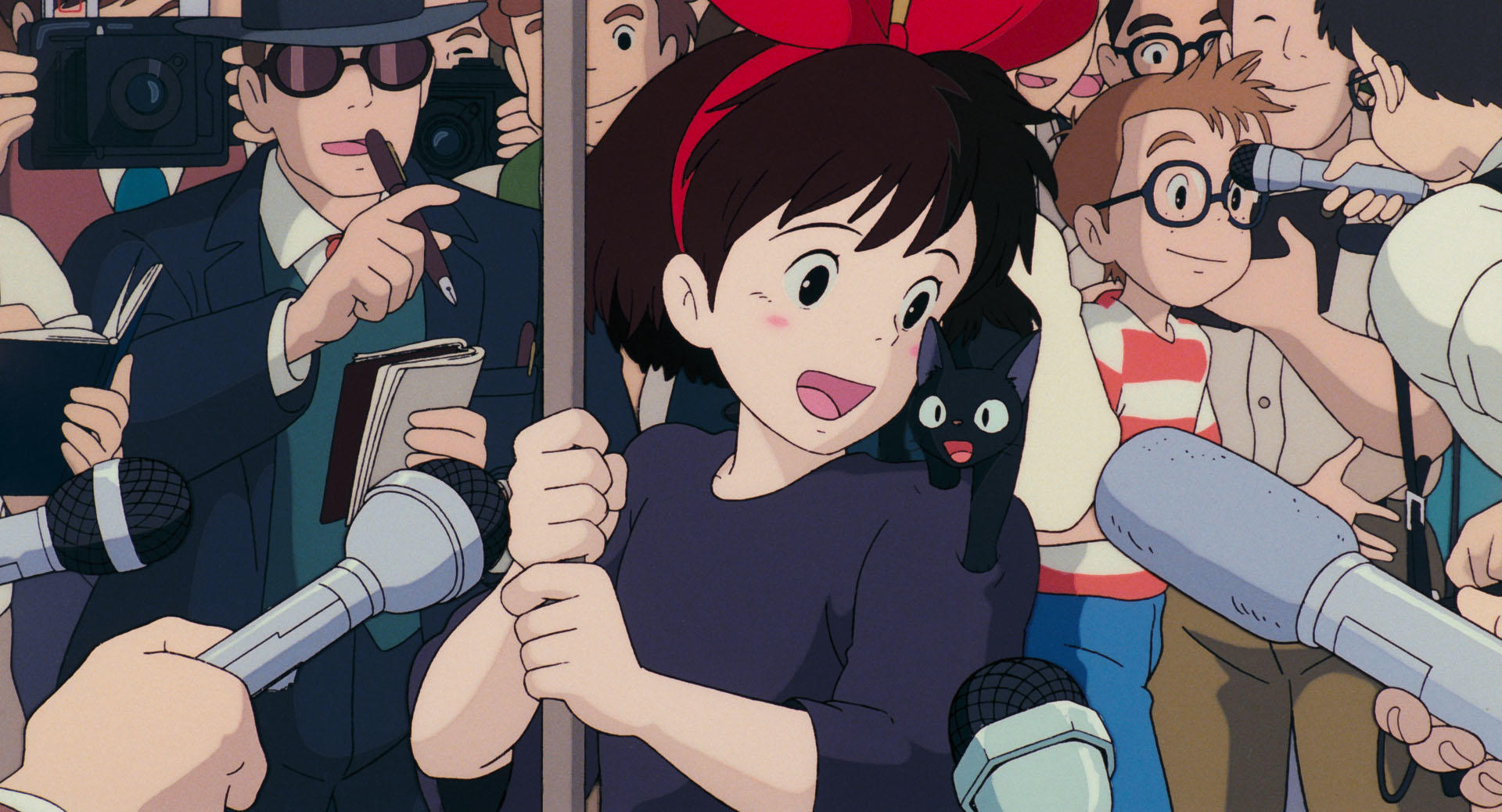
Kiki is eager, proud, helpful, and sometimes stubborn. Her charm is that she is not a perfect young heroine. She misreads people, feels embarrassed, wants to be independent before she fully knows how, and slowly learns that confidence is not something you possess forever. It needs care.
Jiji
Jiji, Kiki’s black cat companion, gives the film much of its humour and tenderness. He also quietly reflects Kiki’s changing relationship with childhood. Without turning the story into a lecture, the film lets Jiji’s role shift as Kiki grows.
Osono, Ursula, and Tombo
The supporting characters are important because they show different kinds of help. Osono gives practical shelter and work. Ursula gives creative perspective. Tombo offers curiosity and friendship, even when Kiki does not know how to accept it. None of them solve Kiki’s life for her, which is part of why the ending feels earned.
Themes to watch for
The central theme is independence, but the movie is careful about what independence means. Kiki does not succeed by refusing all support. She succeeds by learning which support is healthy, which expectations are too heavy, and how to rebuild trust in her own abilities after they stop feeling automatic.
The film is also one of Ghibli’s best stories about work. Kiki’s delivery service starts as a charming adventure, then becomes a real responsibility. Customers are not always easy. Jobs do not always go smoothly. Being useful can be satisfying and exhausting at the same time. That mix makes the film unusually mature for such a cosy-looking story.
Is it suitable for children?
Yes, this is one of the more family-friendly Studio Ghibli films. There is brief peril, especially around flying and the airship sequence, but the tone stays warm and reassuring. Younger children may simply enjoy the broom, the cat, and the city. Older children and adults are more likely to notice the emotional story about loneliness, pride, and confidence.
Best way to watch it
Watch it when you want something comforting but not empty. It is a particularly good choice for a Sunday rewatch, a first Ghibli night with someone new to the studio, or a reset after heavier films. If you enjoy character-led stories, follow it with Whisper of the Heart. If you want more fantasy and spectacle after Kiki, move to Castle in the Sky or Howl’s Moving Castle.
What to notice on a rewatch
On a first viewing, the story can feel like a sweet adventure about a witch finding her place. On a rewatch, the small details become the real pleasure. Notice how often Kiki is framed looking at the city from above or from the edge of a room. She is close to belonging, but not fully settled yet. Notice the difference between flying as freedom and flying as work. Early flights feel open and thrilling. Later deliveries can feel awkward, rainy, rushed, or emotionally loaded.
The city is also worth watching closely. It is not a fantasy kingdom. It feels like a lived-in European port city with bakeries, trams, clocks, sea air, traffic, customers, and rent. That grounded setting makes the magic feel more natural. Kiki is special, but she still has to navigate ordinary adult systems: earning trust, doing a job properly, apologising, making friends, and resting when she is depleted.
Who should watch it next
This is an easy recommendation for viewers who like cosy films, coming-of-age stories, gentle fantasy, and character growth. It is also a good pick for anyone who thinks Studio Ghibli is only surreal or myth-heavy. Kiki’s Delivery Service proves the studio can make a quiet personal story feel just as memorable as a giant adventure.
FAQ
Is Kiki’s Delivery Service connected to other Studio Ghibli movies?
No. It stands alone, so you can watch it at any point.
Is Kiki’s Delivery Service sad?
It has melancholy moments, especially when Kiki loses confidence, but the overall feeling is hopeful and comforting.
Why do adults like it so much?
Because its story about starting over, working hard, and losing then rebuilding confidence feels very adult, even though the film is gentle enough for children.
Image source: Official Studio Ghibli still via ghibli.jp, where Studio Ghibli provides stills with a common-sense usage notice.