Quick answer: the main Castle in the Sky characters are Sheeta, Pazu, Colonel Muska, Captain Dola and her air-pirate family, the military, and the ancient Laputian robots. The story works because each character wants something different from Laputa: safety, wonder, power, profit, protection, or a second chance.
Castle in the Sky, also known as Laputa: Castle in the Sky, is one of Studio Ghibli’s clearest adventure stories, but the character web is sharper than it first looks. Sheeta and Pazu are not just two children running from villains. They are the emotional test of the film’s biggest question: what should people do with a beautiful power that can also become a weapon?
Sheeta: the hidden heir who wants an ordinary life
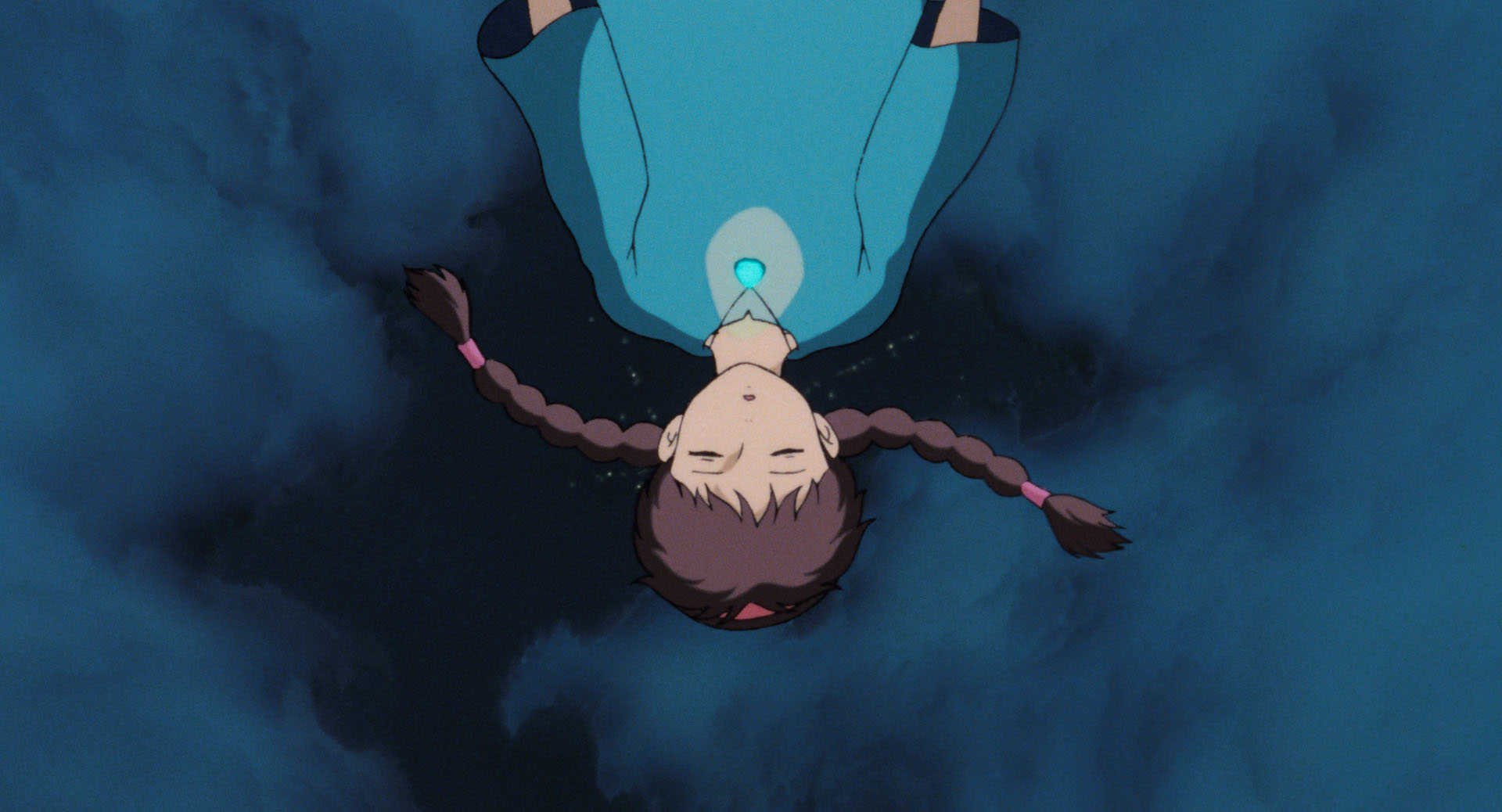
Sheeta is the heart of the movie. At first, she looks like a classic lost princess figure: quiet, pursued, and connected to a mysterious crystal. What makes her memorable is that she does not dream of ruling Laputa. She wants safety, dignity, and a life where she is not treated as a key to someone else’s ambition.
Her full importance comes from contrast. Muska sees her bloodline as a route to control. The army sees her as evidence that a legendary weapon might be real. Dola initially sees her as a prize. Pazu sees a frightened person who needs help. The film quietly asks the audience to judge every adult by how they treat Sheeta when she is vulnerable.
Sheeta’s strength is not loud. She is brave because she keeps choosing compassion while surrounded by people who want to use her. Her decisions near the end are also the reason the film avoids turning Laputa into a simple treasure. She understands that the floating city’s beauty cannot justify its destructive power.
Pazu: the dreamer who gives the adventure its warmth
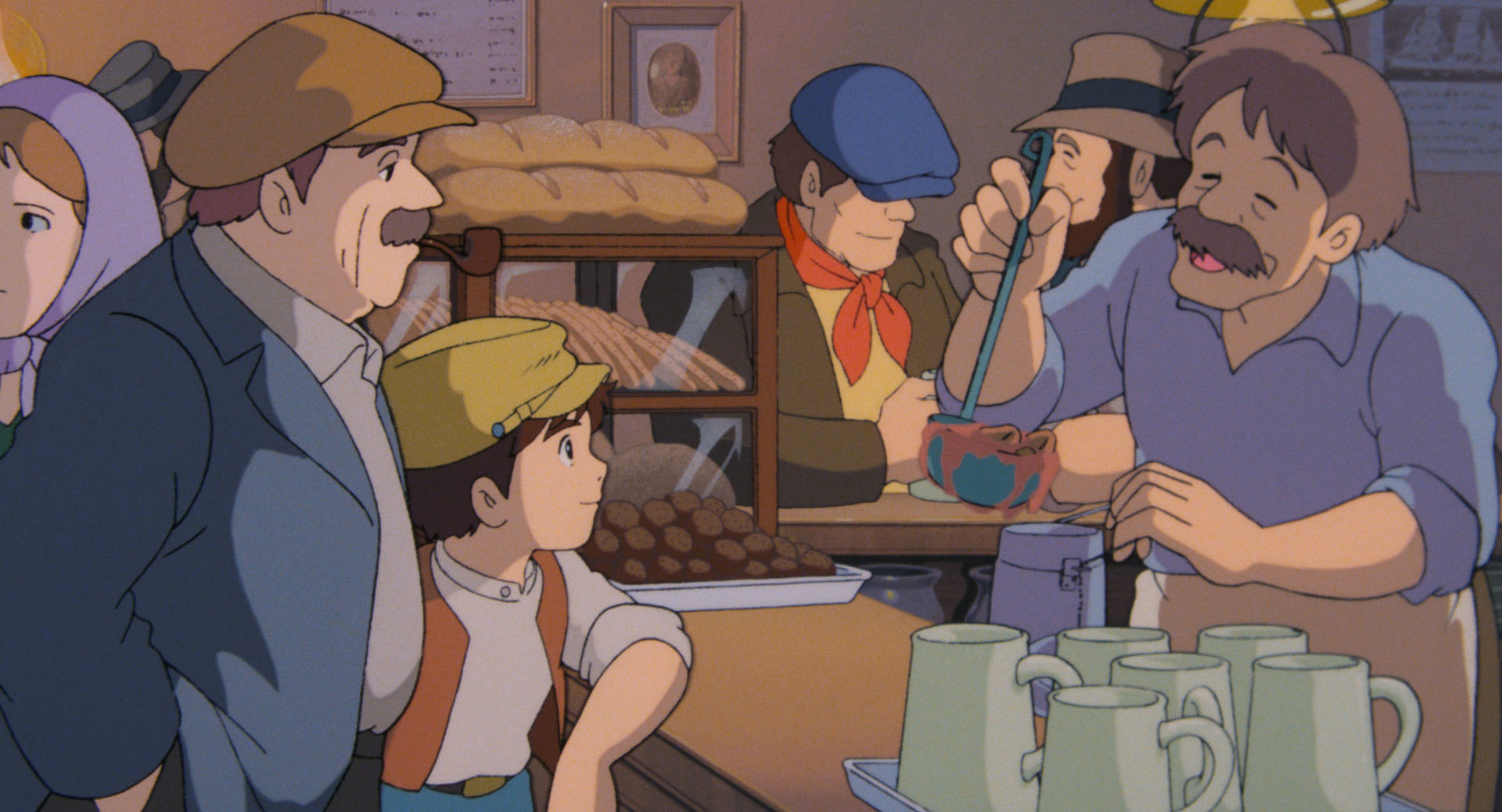
Pazu is the character who makes the story feel open and hopeful. He lives in a mining town, works hard, and carries his father’s unfinished dream of proving that Laputa exists. In a lesser adventure, that dream could have made him selfish. Instead, Pazu’s curiosity is tied to loyalty. He wants to see the sky city, but he never treats Sheeta as a shortcut to glory.
That is why Pazu is such a good entry point for new viewers. He gives the film its excitement: rooftop escapes, airship chases, secret caves, and the thrill of discovery. But he also grounds the story in kindness. His best moments are not only action beats. They are the moments where he listens, promises help, or refuses to abandon someone when the easier choice would be to run.
If you are building a first-watch route through Studio Ghibli, Pazu also explains why this movie pairs so well with the site’s Castle in the Sky movie guide for new fans. He makes the film approachable before its mythology gets bigger.
Colonel Muska: charm, control, and the danger of inherited power
Muska is one of Ghibli’s most direct villains because his politeness hides a very simple hunger: control. He understands the history of Laputa better than almost anyone around him, but knowledge does not make him wise. It makes him more dangerous. He treats the city’s technology as proof that he deserves to rule.
What separates Muska from a generic military villain is that he believes he has a rightful claim. His connection to Laputa mirrors Sheeta’s, but their responses could not be more different. Sheeta sees inheritance as a burden that should be handled carefully. Muska sees inheritance as permission. That split gives the ending its moral force.
Muska also helps explain why Castle in the Sky still feels relevant. The film is not anti-technology in a simple way. It is wary of powerful systems in the hands of people who lack humility. Muska can read the old language and activate the old machines, but he cannot understand the restraint that should come with them.
Captain Dola: pirate, mother, and scene-stealing chaos engine
Captain Dola begins as a threat and slowly becomes one of the film’s funniest and most generous characters. She is greedy, practical, and extremely willing to break rules, but she is not empty-hearted. Her crew, mostly her sons, turn the air-pirate scenes into a strange family comedy inside the larger adventure.
Dola works because she changes without becoming tidy. She does not stop being a pirate. She simply starts seeing Sheeta and Pazu as people rather than loot. That shift gives the middle of the film a lot of its energy. The same airship that once felt dangerous becomes a messy refuge, and the same pirates who chased the children become part of the rescue.
She also reflects one of Hayao Miyazaki’s recurring strengths: older women in his films are allowed to be powerful, funny, vain, capable, and emotionally complicated. Dola is not a soft mentor. She is a storm with instincts, and the film is better for it.
The robot soldiers: gentle guardians and terrifying weapons
The Laputian robots are among the movie’s most important characters even though they do not speak like the humans. They show both sides of Laputa. One robot can destroy a fortress with frightening ease. Another tends the abandoned gardens, protects animals, and seems to carry the last gentle memory of the city.
This dual role matters. The robots are not evil by nature. They are tools and guardians shaped by purpose. When humans approach Laputa with fear or greed, the machines become part of a nightmare. When the film slows down in the gardens, they become mournful reminders that the lost civilization was not only a weapon platform. It was also a home.
For many viewers, the garden robot is the image that lingers longest. It turns the film from a chase story into an elegy. Laputa is wondrous, but it is also lonely. Its machines outlived the people who made them.
The army and the miners: two worlds around Sheeta and Pazu
The supporting groups make the main characters clearer. The military represents official power without imagination. Soldiers want the crystal, the city, and the weapon, but they do not understand the story they have entered. Their confidence makes them brittle. They are prepared for a strategic discovery, not a myth with moral consequences.
The miners, by contrast, give Pazu his community. They are rough, physical, and comic, but they also protect their own. Their town shows what grounded human life looks like beside the dream of Laputa. This matters because the ending is not a rejection of wonder. It is a choice to value living communities over dead empires.
Best character to watch on a rewatch
On a first viewing, most people follow Sheeta and Pazu. On a rewatch, Dola and Muska become especially interesting. Dola’s reactions reveal how quickly her attitude toward the children changes, while Muska’s calm delivery makes his arrogance more obvious long before he fully exposes himself.
For a character-focused rewatch, pay attention to how often the film frames people looking upward. Pazu looks up with wonder. Muska looks up with entitlement. The army looks up with calculation. Sheeta often looks up with dread because the sky city is tied to danger she never asked for. That repeated visual idea keeps the character motivations easy to read even during fast action scenes.
How the characters fit into Studio Ghibli themes
The cast of Castle in the Sky connects to several themes that run through Studio Ghibli: environmental loss, anti-war feeling, children forced to navigate adult greed, flight as freedom, and technology as both marvel and threat. It is more plot-driven than some later Ghibli films, but its character choices point toward the studio’s bigger worldview.
Sheeta and Pazu prove that innocence in Ghibli does not mean passivity. Dola proves that flawed adults can still choose decency. Muska proves that intelligence without compassion becomes dangerous. The robots prove that beauty and destruction can come from the same invention. Together, they make Castle in the Sky feel like more than a treasure hunt.
FAQs about Castle in the Sky characters
Who is the main character in Castle in the Sky?
Sheeta and Pazu share the central role. Sheeta carries the mystery of Laputa through her crystal and ancestry, while Pazu drives much of the adventure through his courage, work ethic, and belief in the sky city.
Is Muska related to Sheeta?
The film presents Muska as having his own connection to Laputa’s royal line, which makes him a dark mirror of Sheeta. The important difference is moral rather than genealogical: Sheeta rejects domination, while Muska embraces it.
Are the Laputian robots good or bad?
They are not simply good or bad. The robots can be devastating weapons, but the garden robot is gentle and protective. Their role depends on the purpose they are serving and on the humans trying to control them.
Which Studio Ghibli film should I watch after Castle in the Sky?
If you like the adventure and flight elements, try Studio Ghibli movies about flying. If you want another mythic conflict with a stronger environmental edge, move to Princess Mononoke.
Image credit: official Studio Ghibli stills from ghibli.jp, used under Studio Ghibli’s common-sense image usage notice.