Quick answer: the most relatable part of Kiki’s Delivery Service is not the flying broom or the talking cat. It is the moment Kiki cannot do the thing that used to feel natural. Her lost magic works as a gentle but sharp metaphor for creative burnout, work fatigue, and the fear that your talent has disappeared.
This theme explainer looks at why Kiki loses her magic, what the film says about confidence, and why the story still lands with artists, freelancers, students, and anyone trying to rebuild momentum after a wobble. For a broader viewing overview, see the site’s Kiki’s Delivery Service watch guide.
Kiki’s lost magic is not a random plot twist
In a simpler fantasy story, a young witch might lose her powers because of a curse, a villain, or a broken magical object. Kiki’s Delivery Service chooses something more human. Kiki loses access to her magic after she becomes tired, lonely, self-conscious, and disconnected from the joy that made flying feel effortless. The film never gives a technical explanation because the emotional explanation is the point.
Kiki has not stopped being a witch. She has stopped feeling like herself. That difference matters. The story is not saying talent vanishes forever when confidence drops. It is saying that talent is not separate from rest, identity, friendship, and the way a person talks to themselves. Kiki’s broom is magical, but the problem is deeply ordinary.
Why this feels like creative burnout
Creative burnout often arrives in a confusing way. You can still remember being good at something. You can still understand the skill. You may even still want the result. But the easy connection is gone. The task feels heavier, the joy feels further away, and every attempt becomes evidence that something is wrong with you.
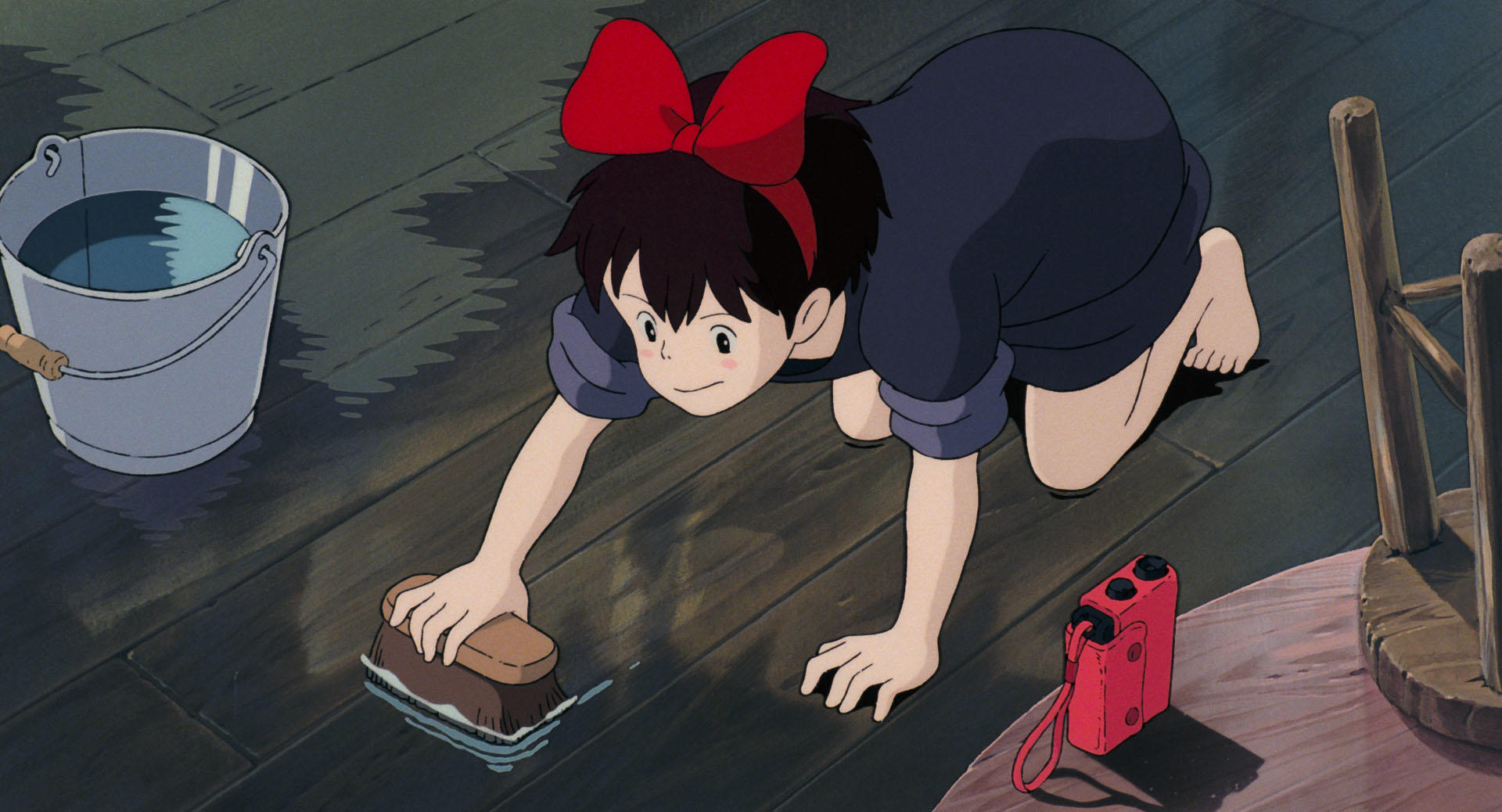
Kiki’s crisis follows that pattern. At first, flying is part of her identity. It is how she travels, works, and proves she belongs in the city. Once she starts comparing herself to others, failing socially, and treating every delivery as a test of worth, flying stops being play and becomes pressure. The more she needs it to work, the harder it becomes.
That is why the film hits adults so strongly. Many viewers have had a Kiki moment: the work dries up, the idea will not come, the confidence disappears, or the thing that made them feel useful suddenly feels unreachable. Ghibli makes that feeling visible without turning it into melodrama.
The delivery business matters
Kiki does not lose her magic while training in a grand academy. She loses it while running a small delivery service. That is important because the film links burnout to practical life. Kiki is not only learning who she is. She is learning how to make money, keep promises, handle customers, and live away from home.
The business begins as a symbol of freedom. She can fly, so she can work. She can work, so she can stay. But the same business also turns her gift into an obligation. A talent that once felt like identity becomes a service other people rely on. That shift is familiar to anyone who has turned a creative skill, hobby, or personal strength into paid work.
Ursula gives the film its clearest advice
Ursula, the artist in the forest, understands Kiki’s problem better than almost anyone else in the film. She does not tell Kiki to try harder in a generic motivational way. She talks about losing the ability to paint and needing to stop, sleep, walk, look at things, and let the feeling return.
That advice is quietly practical. Sometimes the answer is not another push. Sometimes it is a break from proving yourself. Ursula reframes the block as part of the process rather than a final verdict. For creative people, that may be the most comforting idea in the movie: losing the feeling does not mean the feeling was fake.
Jiji’s silence makes the change more painful
Kiki’s changing relationship with Jiji is one of the film’s most discussed details. However viewers interpret it, the emotional effect is clear. Jiji represents a familiar inner voice, a childhood companion, and a form of safety. When that connection changes, Kiki feels more alone.
That loneliness is part of growing up. The film does not frame maturity as becoming colder or less imaginative. It shows that some supports change shape. Kiki has to build new confidence that does not depend entirely on the voice that used to reassure her. That is a subtle, bittersweet version of independence.
Why the movie does not rush the recovery
The recovery works because it is not treated like a switch. Kiki does not solve burnout by hearing one inspiring sentence. She rests, spends time with Ursula, stops forcing herself to perform, and reconnects with a reason to act. When she flies again, it is urgent, imperfect, and emotionally earned.
That matters because the film respects the viewer’s own difficult seasons. It does not promise that confidence returns neatly. It suggests that confidence can return through care, distance, friendship, necessity, and small acts of courage. Kiki’s comeback is powerful precisely because it is shaky.
How it connects to other Studio Ghibli heroines
Kiki belongs beside Ghibli heroines who grow through action rather than speeches. Chihiro in Spirited Away learns by working in a strange bathhouse. Shizuku in Whisper of the Heart faces the gap between ambition and craft. San in Princess Mononoke carries a much harsher conflict around identity and belonging. If this is the part of Ghibli you like most, the site’s guide to Studio Ghibli movies with strong female leads is a useful next read.
Why this theme keeps the film alive
Kiki’s Delivery Service is often described as cozy, and it is. The seaside city, bakery, radio music, and flying scenes make it one of the easiest Ghibli films to revisit. But the reason it lasts is not only comfort. It is comfort with an honest centre.
The film understands that growing up can make a person feel less magical before it makes them stronger. It understands that useful work can drain the same gifts it depends on. Most importantly, it understands that losing your spark is not the same as losing yourself. Kiki’s magic returns because she is still Kiki, even when she cannot feel it for a while.
FAQ
Why does Kiki lose her powers?
The film leaves room for interpretation, but emotionally she loses them because of stress, self-doubt, exhaustion, and disconnection from her sense of self.
Is Kiki’s lost magic a metaphor for depression?
Some viewers read it that way, but the film is broader. It can reflect burnout, creative block, loneliness, or the loss of confidence that comes with growing up.
Does Kiki get her magic back?
Yes, but not because everything becomes easy again. She regains it through rest, support, urgency, and renewed trust in herself.
For another gentle Ghibli rewatch route, see the best Studio Ghibli movies for a calm reset.
Image source: official Studio Ghibli stills from the Kiki’s Delivery Service work page, which includes Studio Ghibli’s common-sense usage notice.