The ending of Kiki’s Delivery Service is not about Kiki becoming a more powerful witch. It is about her recovering the confidence to trust herself again. By the final rescue, Kiki has not learned a flashy new spell, solved every adult problem, or returned to the simpler version of herself from the opening. She has learned something quieter and more useful: creativity can disappear when you are exhausted, lonely, or trying too hard to prove yourself, and it can return when you stop treating your gift like a test you are failing.
That is why the ending still feels so gentle even though it contains one of the film’s most dramatic scenes. Kiki saves Tombo, the city cheers, and her delivery business survives, but the emotional victory is internal. She has found a way to live in the city without losing herself to it.
The quick answer: what does the ending mean?
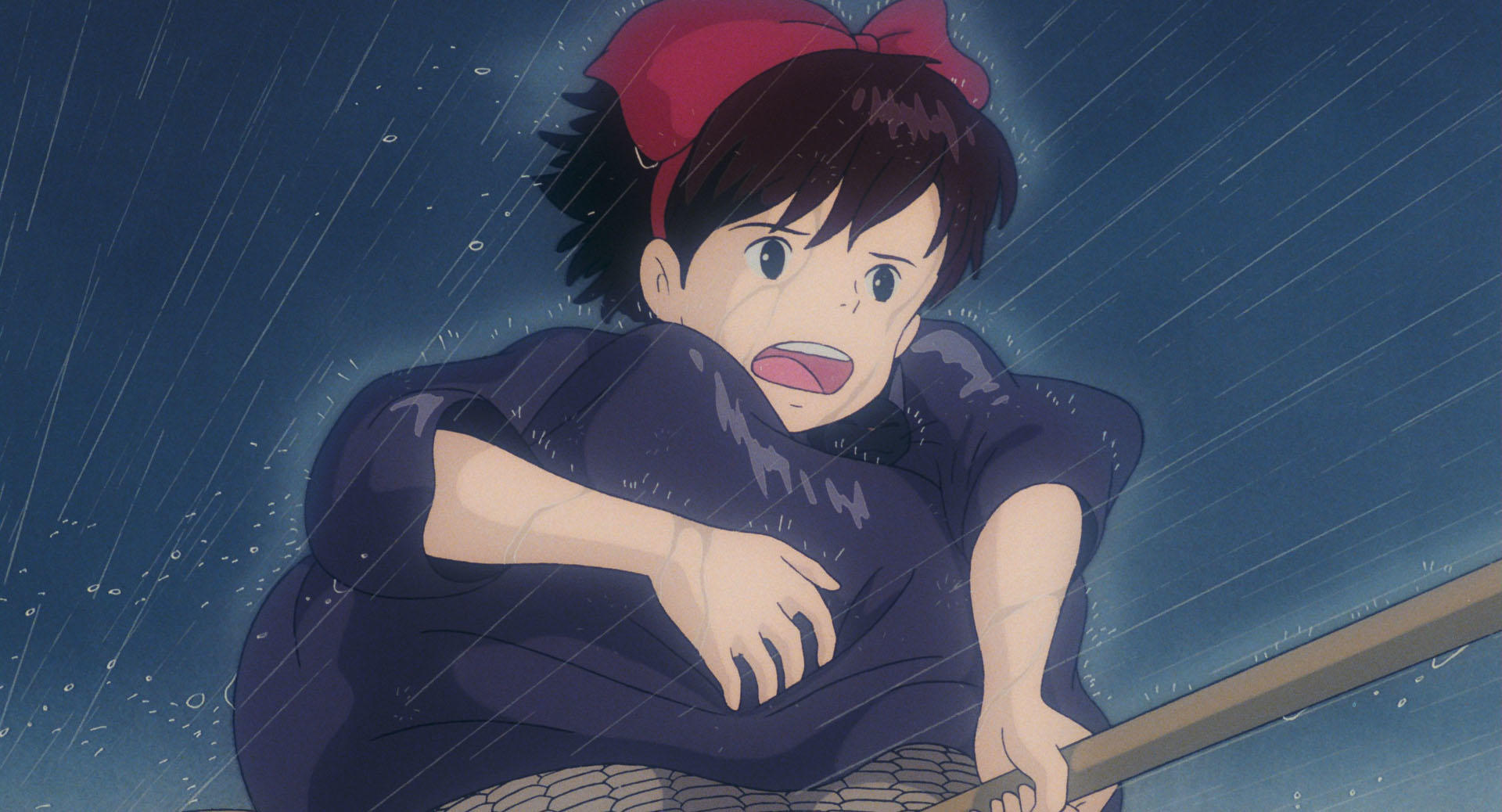
Kiki’s Delivery Service ends with Kiki rescuing Tombo from the runaway airship after regaining enough of her flying ability to use a borrowed street sweeper as a broom. The point is not that she has permanently “fixed” herself. The ending means Kiki has broken through the fear and self-doubt that made her magic vanish. She acts before she feels perfectly ready, and that action reconnects her to the part of herself that flying represents.
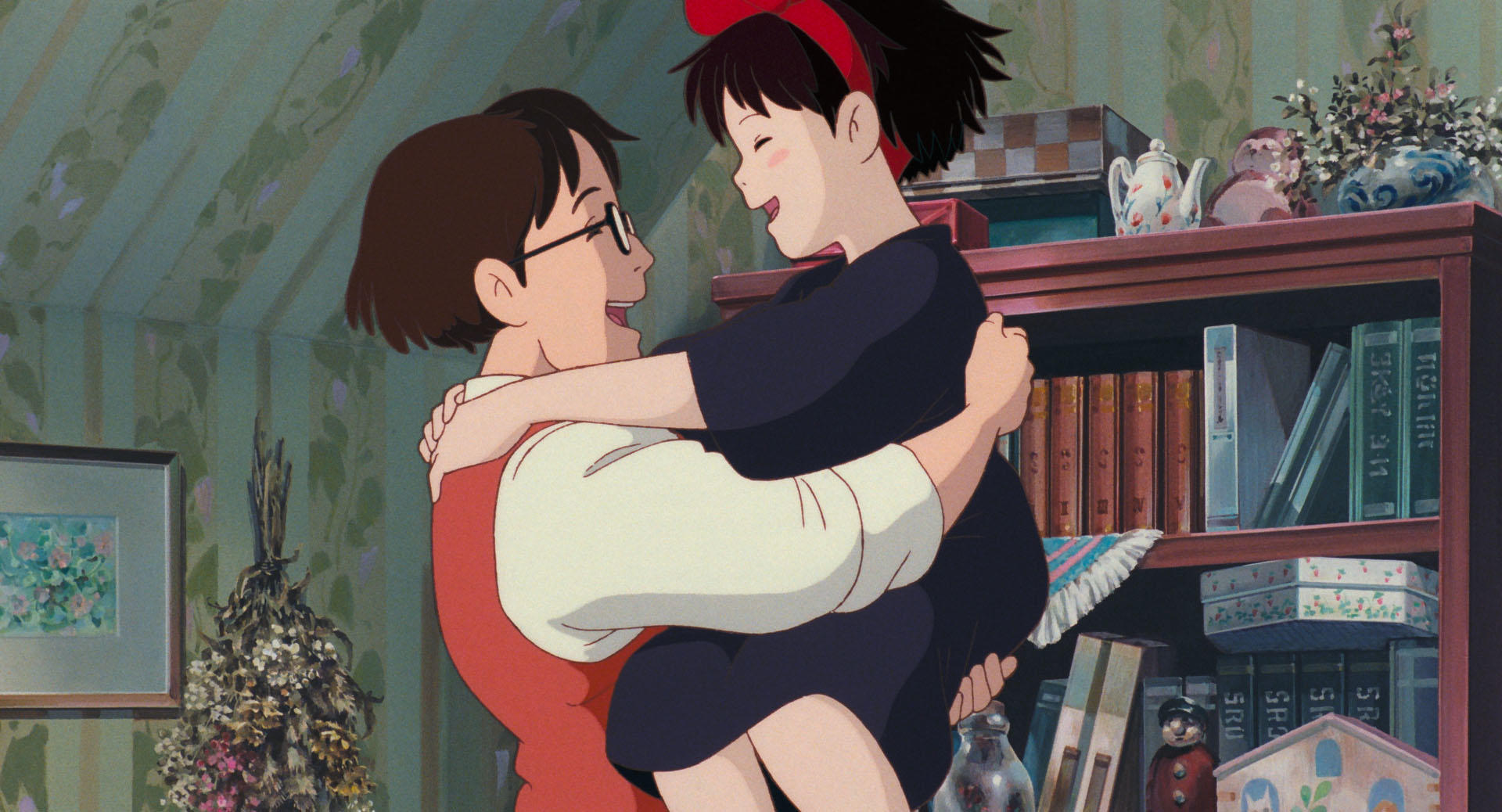
The film’s final moments show Kiki writing home with more confidence. She is still living independently, still working, still friends with Tombo and Osono, and still learning. Her life is not wrapped up like a fairy-tale prize. It has simply become livable. For a Studio Ghibli coming-of-age story, that is the perfect ending.
Why does Kiki lose her powers?
Kiki loses her powers after a stretch of emotional overload. She arrives in the city with big hopes, but almost every part of her new life is harder than expected. She has to find somewhere to sleep, earn money, speak to strangers, cope with rude customers, and make sense of people who do not understand her. At first she pushes through by being cheerful and useful. Eventually, that performance stops working.
The film never turns her burnout into a lecture. Instead, it shows the symptoms in simple, recognisable ways. Kiki cannot fly properly. She cannot understand Jiji. She withdraws from Tombo. She becomes embarrassed by the city girls who seem more polished and socially confident. Her magic is tied to her sense of self, so when that sense of self wobbles, the magic wobbles too.
This is one reason the film connects with adults as much as children. Kiki’s problem is not laziness. It is the frightening moment when something you were “good at” suddenly feels unreachable. Flying used to be natural. Once she starts measuring herself against other people and against the pressure to make her gift useful, it becomes difficult.
What Ursula teaches Kiki about burnout and creativity
Ursula, the artist in the forest, gives Kiki the film’s clearest explanation. She compares Kiki’s lost magic with an artist losing the ability to paint. Sometimes you cannot force the gift back by staring harder at the blank page. You rest. You do ordinary things. You stop trying to squeeze proof out of yourself. Then, eventually, the connection returns.
That advice is important because it does not treat Kiki like a broken machine. Ursula does not hand her a magic solution. She gives her permission to be in a low season without turning it into a permanent identity. Kiki can be a witch who temporarily cannot fly, just as Ursula can be an artist who temporarily cannot paint. The gift is still there, but it needs space.
Why the Tombo rescue matters
The rescue works because Kiki is not thinking about proving herself anymore. Tombo is in danger, and the city needs someone who can reach him. Kiki grabs the nearest possible object, a street sweeper, and tries. It is messy, awkward, and improvised. That matters. She does not return to flying because the conditions are perfect. She returns because she chooses action over self-consciousness.
The street sweeper also makes the scene feel different from the film’s opening. Kiki begins the movie with her mother’s broom, leaving home inside a tradition. She ends it on a borrowed, ridiculous object in the middle of a modern city. She is still a witch, but now she is a witch who has adapted. The ending says growing up does not mean preserving your original confidence untouched. It means finding new confidence after the first version cracks.
Does Kiki ever understand Jiji again?
This is the most debated part of the ending. In the Japanese version, Jiji does not return to the same speaking role he had before. In some dubbed versions, the ending has been softened or altered in ways that can imply Jiji speaks again. The more emotionally consistent reading is that Kiki’s relationship with Jiji has changed.
Jiji’s voice represents Kiki’s childhood intimacy with her old self. When she arrives in the city, he is her companion, commentator, and comfort. As she matures, she no longer needs him in exactly the same way. That does not mean she stops loving him. It means the film allows growing up to include a small loss. Some childhood voices become less literal, but the bond remains.
That choice is one of the reasons the ending feels honest rather than sugary. Kiki gets her confidence back, but she does not rewind the clock. She is older, more independent, and a little less protected from change.
Is the ending happy or bittersweet?
It is both, which is very Studio Ghibli. The city accepts Kiki. Her business has a future. Tombo is safe. Osono’s bakery feels like a real home base. Those are happy outcomes. But the film also understands that independence costs something. Kiki has had to feel lonely, inadequate, and uncertain. She has learned that being talented does not spare you from burnout.
The ending is hopeful because it refuses to make that struggle meaningless. Kiki is not celebrated because she was effortlessly special. She is celebrated because she kept going, accepted help, rested when she needed to, and returned when it mattered.
How the ending fits Studio Ghibli’s wider coming-of-age themes
Many Studio Ghibli films are interested in thresholds: childhood to adolescence, dependence to independence, fantasy to responsibility, home to the wider world. Kiki’s Delivery Service is one of the clearest examples because the plot is so small on purpose. There is no villain to defeat. The conflict is whether Kiki can build a life without losing the joy that made her leave home in the first place.
That makes it a natural companion to other Ghibli stories about growth and identity. If you are building a watch list around this theme, pair it with the site’s guides to the best Studio Ghibli movies for beginners, Studio Ghibli coming-of-age movies, and Studio Ghibli movies by mood.
FAQ
Why can Kiki fly again at the end?
She flies again because the emergency pulls her out of self-consciousness. Saving Tombo matters more than proving she is still talented, and that shift helps her reconnect with her magic.
Is Jiji losing his voice sad?
It is bittersweet. Jiji remains part of Kiki’s life, but the old childhood dynamic has changed. The film treats that as a natural part of growing up, not as a punishment.
What is the main message of Kiki’s Delivery Service?
The main message is that independence is not just freedom. It also involves work, loneliness, self-doubt, help from others, and learning how to keep your inner spark alive when life becomes practical.
Final reading
The ending of Kiki’s Delivery Service is powerful because it makes recovery feel ordinary and earned. Kiki does not become invincible. She becomes herself again, but with more experience. Her magic returns when she stops treating it as a performance and uses it as an expression of care. That is why the final rescue feels thrilling without breaking the film’s gentle tone. It is a public moment, but the real victory is private: Kiki can keep going.
Image source note: Featured and inline imagery used here comes from the official Studio Ghibli Kiki’s Delivery Service work page, whose usage notice says images may be used within common-sense bounds.