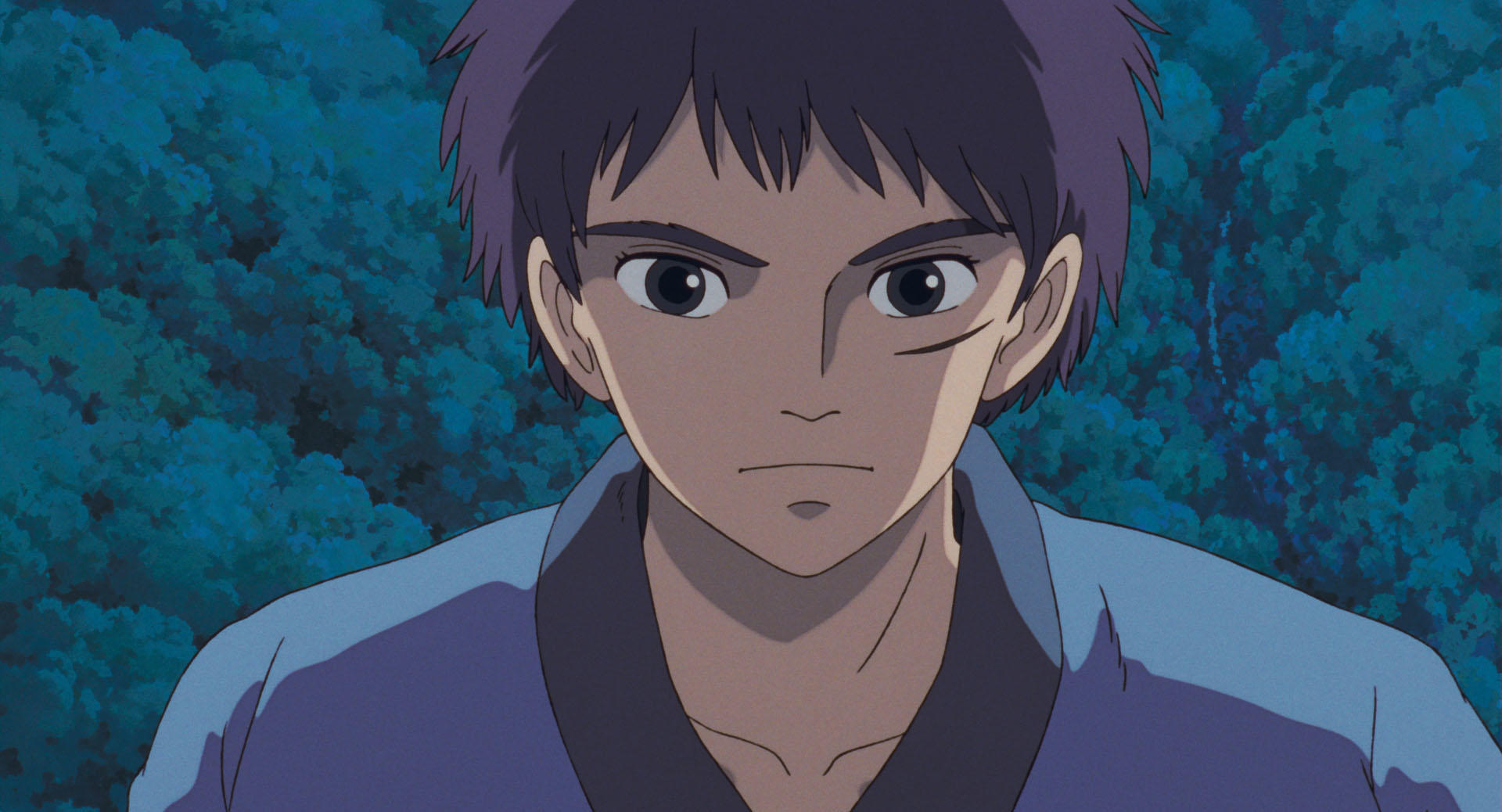
Quick answer: the ending of Princess Mononoke is not a neat victory for humans or nature. Ashitaka helps stop the worst disaster, San and Eboshi survive, and the Forest Spirit restores life before disappearing. But the film ends with a compromise: Irontown must be rebuilt differently, San cannot simply live with humans, and Ashitaka chooses to stay near both sides rather than pretend the conflict is solved.
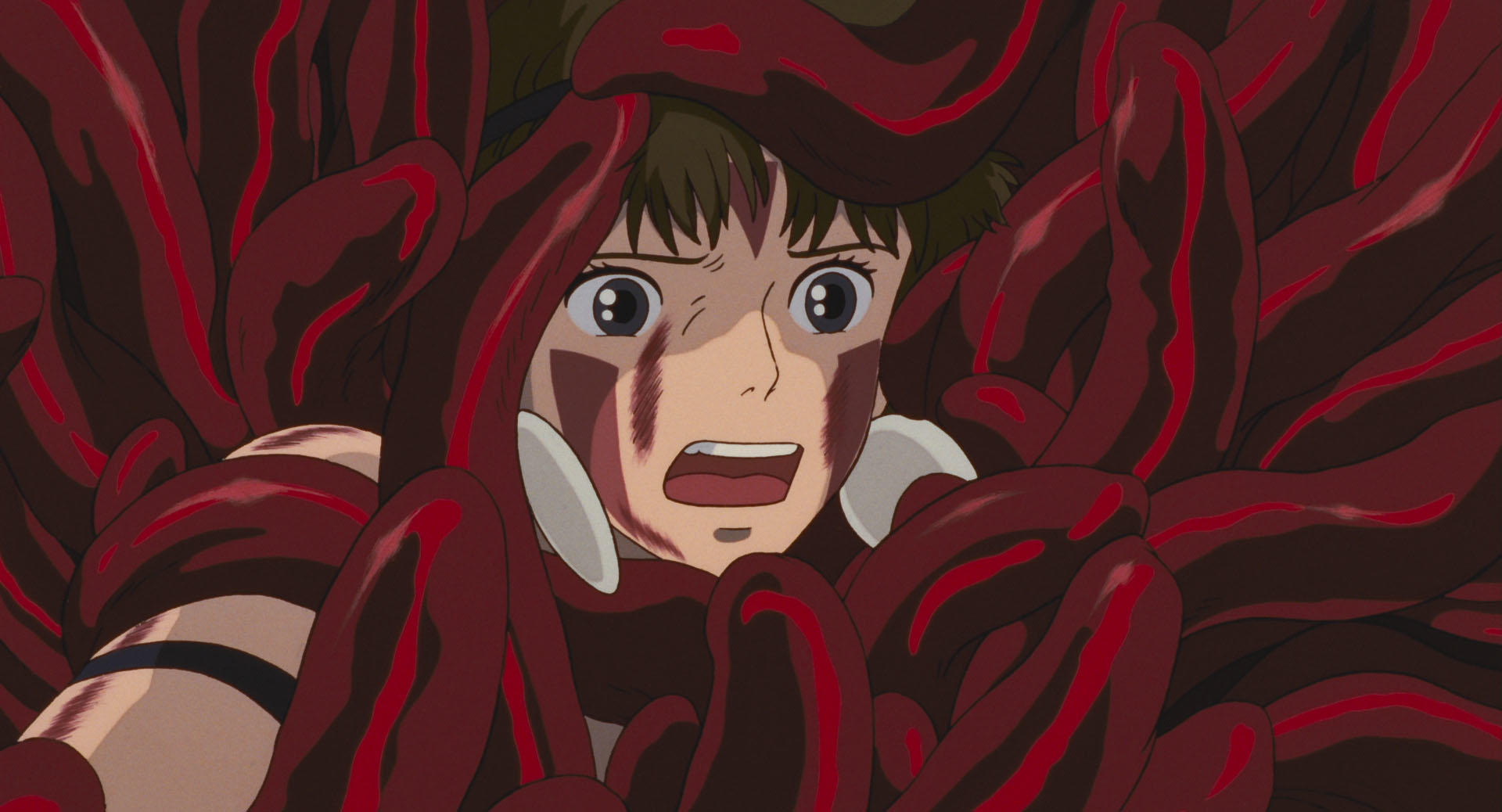
What happens at the end of Princess Mononoke?
The final act brings the film’s three main forces into one crisis. Lady Eboshi wants the Forest Spirit’s head because it would protect Irontown’s political future and reward the people who depend on her. Jigo wants the head for imperial power and personal gain. San wants to protect the forest from humans, while Ashitaka is trying to see with “eyes unclouded by hate” and stop everyone from destroying each other.
When the Forest Spirit is beheaded, the world does not behave like a normal battlefield. The Night-Walker loses form, black liquid spreads across the land, and life begins to die wherever it touches. This is the film’s clearest warning: nature is not just scenery or a resource. It is a system humans live inside. When humans try to own or weaponise it completely, the damage returns to them.
Ashitaka and San return the head. The Forest Spirit rises, restores green life across the mountain, and then vanishes with the sunrise. Irontown is damaged, many people are changed by what they saw, and Eboshi says she will build a better town. San still cannot forgive humans. Ashitaka tells her he will live at Irontown but visit her in the forest. The curse mark on his arm fades, but does not vanish entirely.
Does the Forest Spirit die?
The Forest Spirit dies in one sense, but the ending is more spiritual and cyclical than literal. During the day, the Forest Spirit appears as a deer-like god who gives and takes life. At night, it becomes the enormous Night-Walker. When its head is taken, that balance breaks. The creature becomes destructive because the natural order has been violently interrupted.
After Ashitaka and San return the head, the Forest Spirit restores life and disappears. That can be read as death, transformation, or withdrawal from the world. The important point is that the film does not present nature as a friendly mascot who simply forgives everyone. The forest survives, but it is changed. Humans survive, but only after seeing how close they came to making their home unlivable.
What does Ashitaka’s curse mean?
Ashitaka’s curse is both physical and moral. It begins when he kills the boar demon Nago, whose rage has been intensified by an iron bullet. The mark gives Ashitaka frightening strength, but it also spreads toward death whenever hatred and violence pull at him. It is the film’s way of making hatred visible on the body.
That matters because Ashitaka is not a neutral tourist in someone else’s conflict. He is wounded by the same cycle of fear, revenge, extraction, and survival that drives everyone else. His task is not to “pick the good side” and destroy the bad one. His task is harder: to keep looking clearly when every side has reasons, injuries, and blind spots.
At the end, the curse fades because Ashitaka has helped break the immediate cycle. But a trace remains, which is one of the smartest details in the movie. Hatred does not disappear because one crisis is resolved. Healing takes longer than victory.
Is Lady Eboshi a villain?
Lady Eboshi is an antagonist, but calling her a simple villain misses the point of Princess Mononoke. She destroys forest habitat, arms hunters, and shoots the Forest Spirit. Those actions are catastrophic. At the same time, Irontown gives work, shelter, and dignity to people who have been discarded elsewhere, especially women and people with leprosy.
This is why the ending is so strong. Eboshi is not humiliated into becoming a different person overnight. She is forced to confront the cost of her ambition. When she says she will build a better town, it feels less like a tidy redemption arc and more like a beginning. The film asks whether industry can be remade with humility rather than domination.
Why San and Ashitaka do not simply end up together
San loves Ashitaka, but she cannot live in Irontown as if nothing happened. Humans killed gods, damaged her home, and treated the forest as a thing to conquer. Ashitaka loves San, but he also sees the people of Irontown as human beings with needs, fears, and futures. A simple romantic ending would betray both characters.
Their final arrangement is deliberately unresolved. Ashitaka will live near the town and visit San in the forest. That sounds bittersweet, but it is also honest. They become a bridge, not a cure. Their relationship points toward coexistence while admitting that coexistence will take daily work.
What the ending is really saying
The ending of Princess Mononoke argues against two easy fantasies. The first is the fantasy that humans can master nature without consequences. The second is the fantasy that nature is pure and humans are only corruption. Hayao Miyazaki gives the audience something more adult: a damaged world where people still have to choose better behaviour tomorrow.
That is why the last images feel hopeful but not naïve. Green shoots return. Kodama appear again. Irontown will be rebuilt. San is alive. Ashitaka has somewhere to stand. The film does not say balance has been restored forever. It says balance is possible only if people remember how fragile it is.
For the spoiler-light story, main characters, viewer guidance, and themes beyond the final act, use the complete Princess Mononoke movie guide as the main overview.
How this ending connects to other Studio Ghibli films
If you are watching Studio Ghibli for the first time, Princess Mononoke pairs well with the studio’s broader environmental and coming-of-age themes. For a softer nature story, see the site’s guide to Ponyo. For a broader theme route, the Studio Ghibli movies about nature guide is the best next internal stop. If you want a more practical route through the catalogue, start with the Studio Ghibli movies in order guide.
FAQs about the Princess Mononoke ending
Is Princess Mononoke a happy ending?
It is hopeful, not purely happy. The forest and Irontown survive, but both are changed. The movie ends with responsibility, not celebration.
Why does San say she cannot forgive humans?
San has been raised by wolves and has watched humans destroy parts of the forest. Her refusal to forgive immediately keeps the ending emotionally honest.
What happens to Irontown?
Irontown is badly damaged, but Eboshi says she will rebuild it as a better place. The line suggests reform rather than total destruction.
What are the kodama at the end?
The kodama are tree spirits. Seeing one again suggests the forest is recovering, even if the old world has not returned exactly as it was.
Image source: official Studio Ghibli stills from ghibli.jp’s Princess Mononoke work page, where the studio states images may be used within common-sense bounds.