Earwig and the Witch quick facts
- Japanese title: Āya to Majo (Aya and the Witch)
- First Japanese broadcast: 30 December 2020 on NHK General TV
- Japanese theatrical release: 27 August 2021
- Director: Gorō Miyazaki
- Screenplay: Keiko Niwa and Emi Gunji
- Based on: Diana Wynne Jones’s children’s novel Earwig and the Witch
- Planning: Hayao Miyazaki
- Producer: Toshio Suzuki
- Music: Satoshi Takebe
- Running time: about 82 minutes
- Animation: Studio Ghibli’s first fully 3D CG animated feature
- Best for: viewers curious about Ghibli’s most unusual visual experiment, clever child protagonists, witch stories and mischievous domestic fantasy
Spoiler-free answer: Earwig and the Witch follows a confident ten-year-old orphan who is adopted by the witch Bella Yaga and the intimidating Mandrake. When Bella makes her work but refuses to teach her magic, Earwig allies with a talking black cat and begins turning the household’s own rules against its adults. It is a compact, deliberately abrasive comedy about agency, negotiation and a family history hidden in an old rock band.
Spoiler-free overview
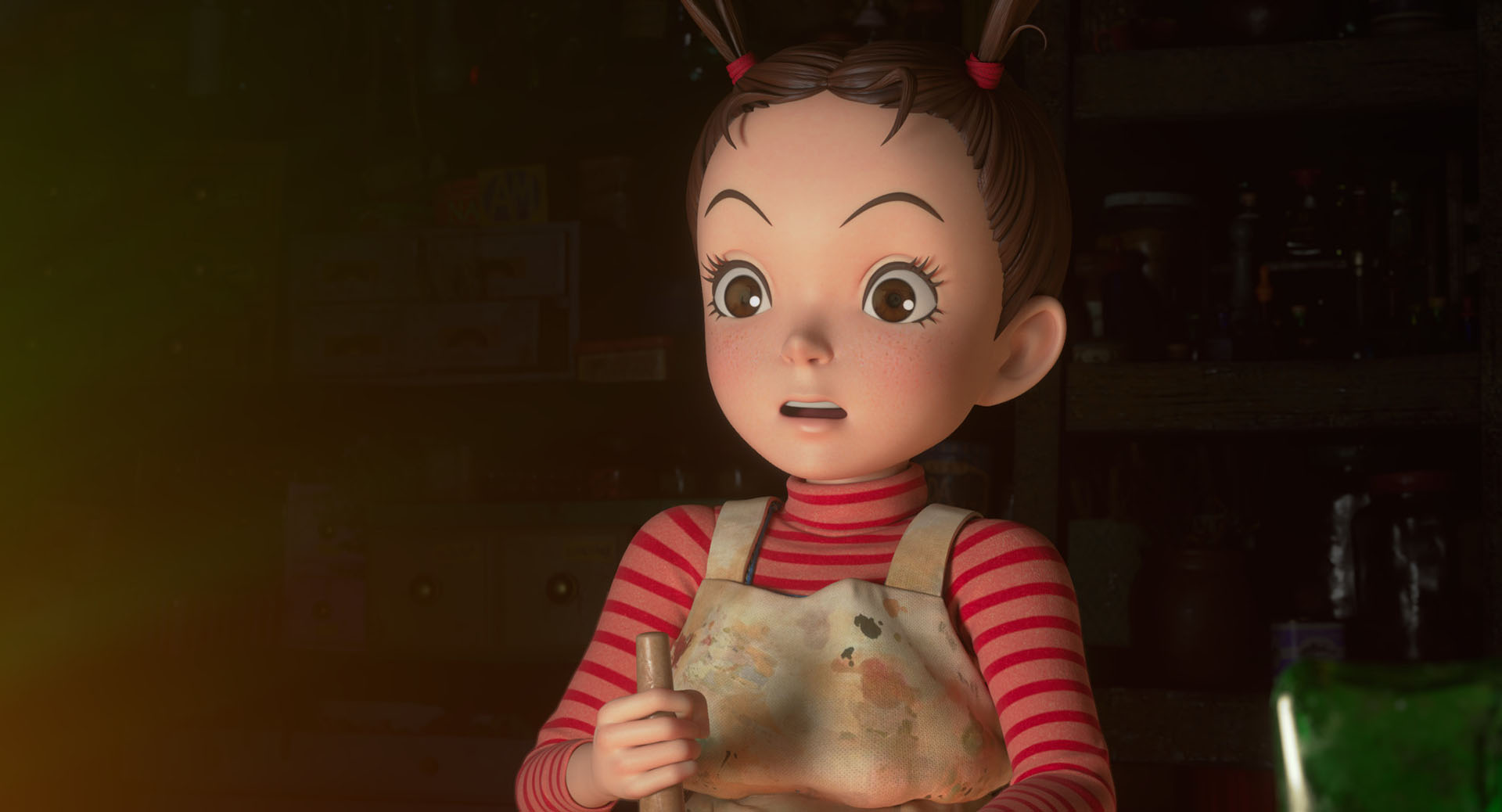
Earwig has grown up at St Morwald’s Home for Children in the English countryside. She is not waiting sadly to be rescued. She likes her friend Custard, knows exactly how to charm the adults and enjoys a small world arranged largely to her satisfaction. Adoption is a threat because it would mean entering a household where her influence has not already been established.
That threat arrives in the form of Bella Yaga and Mandrake. Bella is a working witch who needs another pair of hands. Mandrake is a tall, strange figure whose anger can transform the atmosphere of the whole house. Their home is magically sealed, full of forbidden rooms and governed by one warning: do not disturb Mandrake. Earwig cannot simply leave, so she treats the place as a system to understand and manipulate.
This is not a hand-drawn Ghibli film with soft watercolour backgrounds. Gorō Miyazaki and a younger production team built the studio’s first fully 3D CG feature. Characters have sculpted hair, solid clothes and an intentionally puppet-like presence. Some viewers find the approach energetic and readable; others miss the expressive line work and natural movement associated with Ghibli. That disagreement is part of the film’s history, but the format also suits a story about rooms, objects, potions and characters testing one another at close range.
The closest Ghibli comparison is not simply Kiki’s Delivery Service. Both involve girls and witchcraft, but Kiki’s story is about building an independent working life, while Earwig’s is about surviving an unfair household through leverage. Diana Wynne Jones also wrote the novel behind Howl’s Moving Castle, making the film useful for viewers interested in how different Ghibli directors reshape her sharp, unruly magic.
Full storyline and ending
This section contains complete plot and ending spoilers.
In 1990s England, a red-haired witch is pursued while carrying a baby. She leaves the child at St Morwald’s with a note explaining that twelve witches are chasing her and that she intends to return when she has escaped them. The matron dislikes the name Earwig and renames the baby Erica Wigg. Earwig grows into a clever ten-year-old who has learned how to make the orphanage run her way.
Earwig’s closest friend is Custard. She does not want a conventional family, partly because St Morwald’s gives her security and partly because she already understands its adults. When prospective parents arrive, she expects to avoid being chosen. Bella Yaga and Mandrake are different from the ordinary couples. Bella selects Earwig as suitable labour, while Mandrake’s barely contained power makes resistance feel dangerous.
At their house, Bella states the bargain bluntly: Earwig will prepare ingredients, clean the workroom and help with spells. Earwig agrees only on the condition that Bella teaches her magic. Bella accepts the words but ignores their meaning. She gives orders, withholds instruction and threatens punishment. Mandrake disappears into his own rooms and demands not to be disturbed. Attempts to find an exit reveal that the doors and windows are magically controlled.
Earwig begins mapping her prison. She listens at walls, studies Bella’s work and notices old cassette tapes by a band called Earwig. Thomas, Bella’s black cat familiar, can speak but is frightened of his owner. Earwig persuades him to help her read spell books and work secretly at night. Their first important spell protects them from Bella’s magic, converting knowledge into a form of safety.
They then prepare a retaliatory spell based on Bella’s claim that she needed an extra pair of hands. Bella wakes with an additional pair attached to her body. Furious, she sends magical worms into Earwig’s room. The protective spell means the worms cannot control Earwig. She pushes them through a hole in the wall and into Mandrake’s private space, triggering the rage everyone fears.
Chaos tears open the boundaries of the house. Earwig reaches Mandrake’s room and discovers that it is connected to the music she has been hearing. Old photographs reveal that Mandrake and Bella were once musicians in the band Earwig. The red-haired lead singer was Earwig’s mother. What seemed like unrelated household secrets becomes a broken shared history.
Mandrake’s behaviour also changes once Earwig understands his interests. Behind the threat is someone who writes, cooks, remembers the band and responds to music. Bella’s hostility is not erased, but Earwig now has leverage with both adults. She has survived not by becoming obedient and not by overpowering them physically, but by learning what they value, what they fear and what they have concealed.
The ending jumps forward to Christmas. Earwig has made the household more comfortable for herself and arranges for Custard to visit. The family structure remains odd rather than suddenly sentimental. Then Earwig’s mother arrives at the door. The reunion comes just as the film ends, turning the old band’s story into a future question rather than resolving it.
Main characters
Earwig, also called Aya or Erica Wigg
Earwig is resourceful, controlling, funny and frequently difficult. The film does not make her virtuous before allowing her agency. She reads people quickly and expects agreements to matter. Her instinct to manipulate others can be selfish, but it is also the survival skill that stops Bella from reducing her to unpaid labour. The Japanese title uses Aya, while the English-language story plays with the name Erica Wigg and the band name Earwig.
Bella Yaga
Bella is a practising witch who adopts Earwig for help rather than affection. She has knowledge, status and magical force, but she breaks her promise to teach. Her cruelty is domestic and recognisable: endless work, belittling language, slaps and punishments backed by authority. The old band photographs reveal that this rigid adult once had a louder, more collaborative life.
Mandrake
Mandrake is the house’s ultimate threat. His eyes and body signal dangerous anger, and everyone organises themselves around the rule that he must not be disturbed. Yet he is not only a monster. He writes, cooks elaborate food and carries grief or resentment from the band’s collapse. Earwig’s discovery does not make his temper safe, but it makes him legible.
Thomas
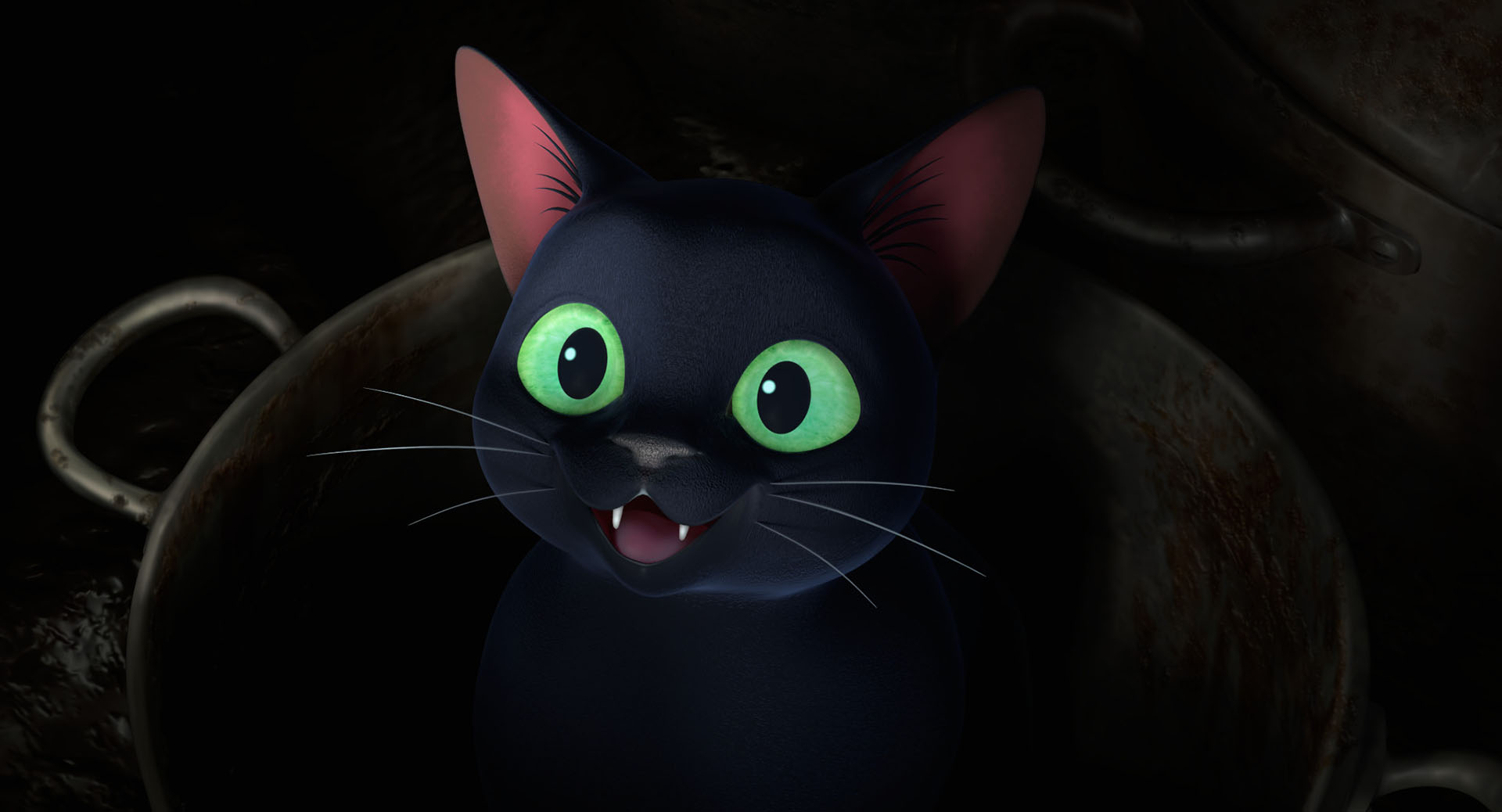
Thomas is Bella’s black cat familiar and Earwig’s essential ally. He understands magic but has learned to fear using that knowledge against Bella. Earwig gives him a plan; Thomas gives her access to the practical craft hidden in the workroom. Their partnership is the story’s healthiest relationship because each contributes something the other lacks.
Custard and Earwig’s mother
Custard represents the secure friendship Earwig refuses to surrender when she is adopted. Earwig’s mother exists first as an absence, then as a voice and image connected to the band. Her final appearance links the magical chase in the opening to the household’s musical past, but deliberately leaves the reunion unexplored.
Themes and interpretation
Agency without idealised goodness
Children’s stories often reward a polite child or reform a naughty one. Earwig remains demanding. Her growth is tactical: she learns that a new environment cannot be controlled with the same tricks she used at the orphanage. The film asks viewers to recognise a child’s need for agency without pretending every method she uses is admirable.
Knowledge changes the balance of power
Bella keeps magic mysterious because ignorance preserves hierarchy. Earwig and Thomas become safer once they can read the spell books and reproduce the work themselves. The message is not that knowledge automatically makes someone good. It is that hidden rules are harder to challenge than understood ones.
Family as negotiation rather than instant belonging
The adoption does not create a loving family by legal declaration. Earwig, Bella and Mandrake build an uneasy arrangement through conflict, boundaries, food, music and mutual usefulness. The result may feel unsatisfying to viewers expecting emotional reconciliation, but that incompleteness is deliberate to the film’s tone.
Music preserves the adults they used to be
The band Earwig is more than a plot twist. Music reveals an earlier identity shared by the three adults, before the house hardened into separate rooms and strict roles. The tapes give Earwig access to a family history no one has chosen to tell her. Rock performance also supplies a form of expression more rebellious than the household’s controlled spell work.
An ending designed as an interruption
The mother’s arrival is not a complete resolution. We do not see why she stayed away so long, how Bella and Mandrake will respond, or whether the band can repair its history. The sudden cut mirrors the short source novel’s compact shape and leaves the film feeling like the first movement of a larger story. That is a valid reason some viewers find the ending frustrating.
Age suitability and content guidance
Earwig and the Witch is aimed at family audiences, but its household can be unsettling. A child is adopted against her wishes and confined in a magically sealed home. Bella uses threats, shouts, strikes Earwig and relies on her for exhausting work. Mandrake’s anger produces frightening transformations, fiery eyes and an atmosphere of danger.
Magic includes creepy ingredients, spells, extra limbs and writhing worms. The worms are fantastical rather than gory, though sensitive children may dislike them. There are moments of peril, a near traffic accident, arguments and intimidating adults. The film has no graphic gore, sexual content or sustained realistic violence. Music, food and Thomas provide comic relief.
Ratings differ by territory, so check the current local classification. As practical guidance, many primary-school children can manage the fantasy scares, especially with an adult. The more important question is whether they will enjoy a protagonist who manipulates people and a story that ends immediately after opening its biggest family question. Watching together creates useful space to discuss broken promises, unfair work and the difference between clever resistance and controlling other people.
Production, animation and release context
Studio Ghibli’s official works page credits Gorō Miyazaki as director, Toshio Suzuki as producer, Diana Wynne Jones for the original novel, Hayao Miyazaki for planning, Keiko Niwa and Emi Gunji for the screenplay, and Satoshi Takebe for music. It lists an approximately 82-minute running time, the 30 December 2020 NHK broadcast and Toho’s Japanese theatrical release on 27 August 2021.
The production was a collaboration between Studio Ghibli, NHK and NHK Enterprises. It was the studio’s first fully 3D CG animated feature. Rather than imitate hand-drawn cels exactly or chase photorealism, the team gave characters a solid, puppet-like construction. Hair appears in sculpted masses and rooms are built to support camera movement around physical-looking objects.
The change attracted unusually sharp debate because Ghibli’s identity is so closely associated with hand-drawn movement. A fair assessment can hold two ideas at once: the film is a genuine technical experiment, and many viewers find its facial acting or surface textures less expressive than the studio’s strongest drawn work. Its value in the catalogue does not depend on declaring that experiment an unquestioned success.
The adaptation also extends Diana Wynne Jones’s short novel through a 1990s setting and the rock-band backstory. Jones wrote the source book and the novel behind Howl’s Moving Castle, but the two films have different directors, screenwriters and goals. Earwig’s English setting, sharp child logic and adults who are both magical and petty remain recognisably connected to Jones’s storytelling.
Where to watch legally
Availability changes by country. As checked in July 2026, HBO Max has an official US streaming page for Earwig and the Witch, while GKIDS lists US on-demand rental or purchase options and Blu-ray/DVD. Netflix originally acquired streaming rights across many territories outside the United States and Japan, and the film may still appear with the wider Ghibli catalogue in supported regions. Confirm the title inside your local service before subscribing or paying.
Use the site’s Studio Ghibli streaming guide as a starting point. Search both Earwig and the Witch and Āya to Majo if a catalogue uses alternate titles. A legal disc is useful when you want to compare Japanese audio, subtitles and an English dub without relying on shifting streaming rights.
Related films and guides
Watch Kiki’s Delivery Service for a warmer film about a young witch learning work and independence, Howl’s Moving Castle for another Diana Wynne Jones adaptation, or From Up on Poppy Hill and Tales from Earthsea for Gorō Miyazaki’s earlier features. The release timeline places the CG experiment within the studio’s wider history.
Frequently asked questions
Is Earwig and the Witch a Studio Ghibli movie?
Yes. It appears in Studio Ghibli’s official works catalogue and was produced with NHK and NHK Enterprises. It is visually unusual because it is Ghibli’s first fully 3D CG animated feature.
Who directed Earwig and the Witch?
Gorō Miyazaki directed it. He also directed Tales from Earthsea and From Up on Poppy Hill.
Is it based on a book?
Yes. Keiko Niwa and Emi Gunji adapted Diana Wynne Jones’s children’s novel. Jones also wrote the novel Howl’s Moving Castle, though the two Ghibli adaptations are very different.
Why is the film CGI?
The production was designed as Ghibli’s first fully 3D CG feature and made with a younger team under Gorō Miyazaki. Its solid, puppet-like look is a deliberate experiment rather than an attempt to conceal the medium.
Who is Earwig’s mother?
She is the red-haired singer of the old band Earwig, whose other members included Bella Yaga and Mandrake. The film reveals the connection late and ends when she arrives at Christmas.
Does Earwig learn magic?
Bella does not teach her as promised. Earwig secretly studies the spell books with Thomas, and together they create protective and retaliatory spells. Her learning is practical and rebellious rather than formal.
Why does the ending feel abrupt?
The mother’s arrival opens the largest family question and then the credits begin. The film chooses a mischievous cliffhanger instead of showing a reunion or explaining every past relationship.
Is Earwig and the Witch suitable for children?
It contains fantasy scares, controlling adults, slaps, magical confinement, worms and frightening anger, but no graphic gore. Many school-age children can watch it, while younger or sensitive viewers may need reassurance.
How long is Earwig and the Witch?
Studio Ghibli’s official page lists a running time of approximately 82 minutes.
Official film stills are credited to Studio Ghibli and used under its common-sense image-use notice.