From Up on Poppy Hill quick facts
- Japanese title: Kokuriko-zaka Kara
- Japanese release: 16 July 2011
- Director: Gorō Miyazaki
- Screenplay: Hayao Miyazaki and Keiko Niwa
- Based on: the manga by Chizuru Takahashi and Tetsurō Sayama
- Producer: Toshio Suzuki
- Music: Satoshi Takebe
- Running time: about 91 minutes
- Setting: Yokohama in 1963
- Best for: teens and adults who want a grounded school drama, gentle romance, historical atmosphere and a story about preserving shared places
Spoiler-free answer: From Up on Poppy Hill follows Umi Matsuzaki, a responsible schoolgirl who raises maritime signal flags each morning in memory of her father. She joins Shun Kazama and their classmates in a campaign to save the Latin Quarter, a beloved but crumbling school clubhouse. As affection grows between Umi and Shun, a family photograph creates a painful uncertainty that sends them looking for the truth about a generation shaped by war and loss.
Spoiler-free overview
From Up on Poppy Hill is one of Studio Ghibli’s most grounded films. There are no spirits, witches or flying castles. Its pleasures come from routines: cooking breakfast, cycling down a hill, editing a school newspaper, cleaning an overstuffed clubhouse and looking across a working harbour. The story finds drama in whether a building should survive and whether two teenagers can trust the history adults have handed them.
Umi is already capable when the film begins. Her mother is studying abroad, so Umi helps run the family’s boarding house while attending school. She cooks, organises and cares for younger siblings without presenting herself as a hero. Her coming of age is not about learning responsibility from nothing. It is about discovering that competence does not remove grief, desire or the right to ask adults for answers.
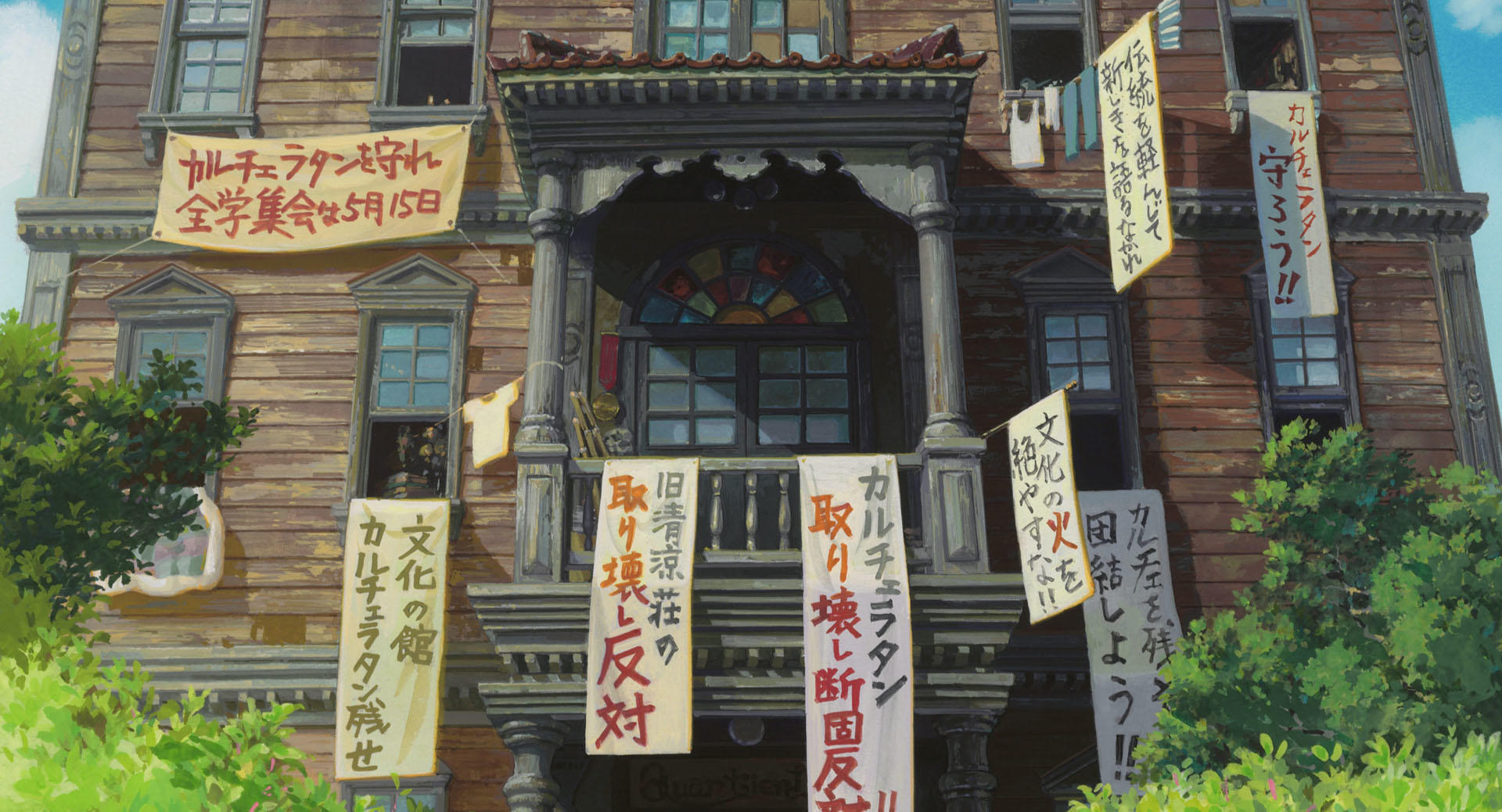
The Latin Quarter gives the film its communal energy. It is chaotic, dusty and impractical, but it contains years of student clubs, arguments and curiosity. When school authorities plan to demolish it in the name of modernisation, the students do not merely complain. They clean it, repair it, write about it and make the case that old things can have a future when people actively care for them.
Choose this after Whisper of the Heart if you want another realistic teenage story, or after Only Yesterday if you enjoy Ghibli’s interest in memory and ordinary work. It is gentler than The Wind Rises and less emotionally mysterious than When Marnie Was There.
Storyline: what happens in From Up on Poppy Hill?
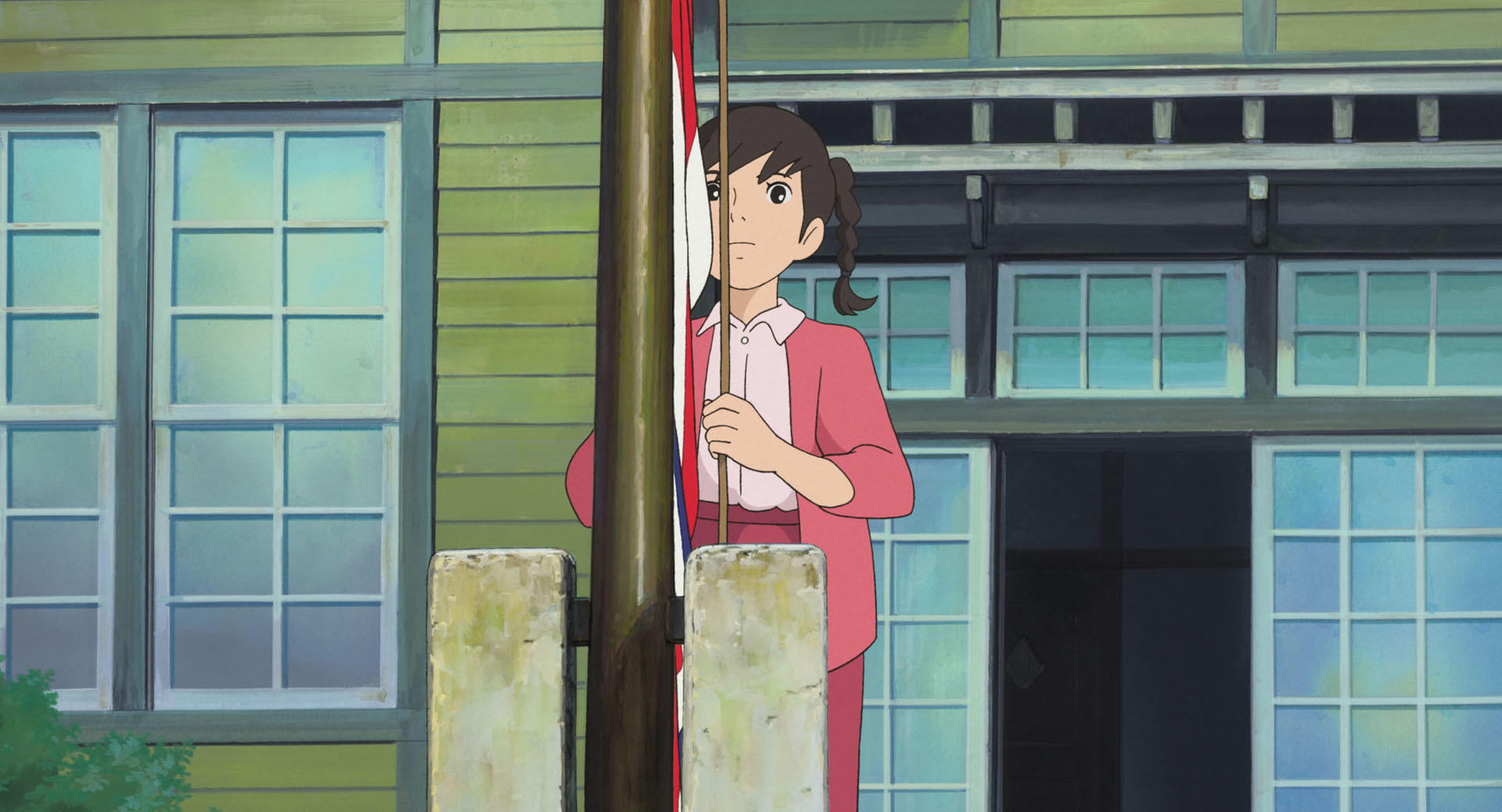
The story takes place in Yokohama in 1963, as Japan looks toward the following year’s Tokyo Olympics and visible modernisation. Umi lives in a hilltop boarding house overlooking the harbour. Every morning she raises a set of signal flags for her father, a sailor who died during the Korean War. The ritual is private remembrance, but someone on the water has noticed it.
At school, Umi encounters Shun Kazama, a confident student involved with the newspaper and the campaign to save the Latin Quarter. He stages a dramatic jump into a pool as publicity, and Umi initially sees him as reckless. She later learns that Shun wrote a poem in the newspaper about the girl who raises flags above the harbour. Their connection grows through shared work rather than an instant declaration.
The Latin Quarter is a rambling clubhouse occupied by philosophy, astronomy, chemistry, debate and other student societies. The building is filthy and structurally neglected, which makes demolition seem reasonable to outsiders. Shun and his friend Shirō Mizunuma argue that the students should prove its value. Umi brings other girls into the campaign, and a huge cleaning effort transforms the building without erasing its character.
Umi and Shun spend more time together editing copy, painting, carrying materials and moving through Yokohama. Their attraction develops quietly. Umi shows Shun a photograph of three young sailors, including her father, Yūichirō Sawamura. Shun recognises the same photograph from his own family history. His records name Sawamura as his father, while Umi believes Sawamura was her father too.
Shun pulls away because he thinks he and Umi may be brother and sister. He does not explain immediately, leaving Umi hurt and confused. When the truth emerges, both teenagers take the possibility seriously. The film does not use the misunderstanding as a light romantic obstacle. It makes them confront how war, death, adoption and incomplete records can leave children carrying uncertainty that adults were once too overwhelmed to resolve neatly.
Meanwhile, the clubhouse campaign reaches a turning point. The renovated Latin Quarter impresses visitors, but the chairman responsible for the redevelopment plan still intends to replace it. Umi, Shun and Shirō travel to Tokyo to make their case directly. Their sincerity and the evidence of the students’ work persuade him to inspect the building before making a final decision.
Umi’s mother Ryōko returns and explains part of the family history. Shun was born to Hiroshi Tachibana, another sailor in the photograph. Tachibana died, and Yūichirō registered the infant as his own so that Shun would not be left without legal family. He then entrusted the baby to the Kazamas, who raised him. This means the records connect Shun to Umi’s father, but not because Umi and Shun share a biological parent.
The teenagers still want confirmation from someone who knew the men. They race to the harbour to meet Yoshio Onodera, the third sailor in the photograph. Onodera confirms that Tachibana was Shun’s father and Sawamura was Umi’s father. He remembers the friendship among the three men and recognises how acts of care during a chaotic period created the confusing paperwork.
The Latin Quarter is saved after the chairman sees what the students have restored and agrees that the building should remain. Umi and Shun return to their lives with the central uncertainty resolved, but the ending is not about winning a romance and forgetting the past. Umi continues raising her flags. The film lets remembrance remain part of daily life while no longer allowing grief or incomplete records to dictate the future.
Main characters
Umi Matsuzaki
Umi is practical, observant and quietly determined. She manages household duties while her mother is away and keeps her father’s memory alive through the signal flags. Her strength is not emotional invulnerability. She cries, becomes uncertain and asks difficult questions, while continuing to do the work in front of her.
Shun Kazama
Shun is energetic, idealistic and sometimes theatrical. His newspaper work gives the clubhouse campaign a public voice. When the family records create doubt, he withdraws because he is trying to act responsibly, even though the silence hurts Umi. His search for the truth is also a search for a history he can live with.
Shirō Mizunuma
Shirō is the student council president and one of the Latin Quarter campaign’s sharpest organisers. He balances Shun’s impulsiveness with strategy. The film uses him to show that preserving a place requires persuasion, paperwork and coalition-building as well as affection.
Ryōko Matsuzaki
Umi’s mother is a doctor studying abroad for part of the story. Her return supplies essential family context. She represents an adult life that includes love, professional ambition and difficult decisions made in the aftermath of war.
Yūichirō Sawamura, Hiroshi Tachibana and Yoshio Onodera
The three sailors connect the teenagers’ present to the losses of the previous generation. Sawamura was Umi’s father. Tachibana was Shun’s biological father. Onodera survives to explain how friendship and emergency shaped the records. Their history turns the photograph from suspicious evidence into proof of mutual care.
Themes, meaning and interpretation
Preservation must be active
The Latin Quarter is not saved because age automatically makes it valuable. It is saved because students demonstrate what happens there and accept responsibility for its condition. The film avoids both blind nostalgia and careless demolition. A shared place earns a future when a living community renews its purpose.
Modernisation without amnesia
The 1963 setting places the story between postwar loss and the optimism surrounding the Tokyo Olympics. New roads and buildings promise progress, but the pressure to make everything look modern can flatten memory. The film argues that moving forward should not require pretending the recent past never happened.
Care is visible work
Cooking, washing, editing, cleaning and repairing fill the film. These actions are not decorative background. They are how homes and communities continue. Umi’s household labour and the students’ clubhouse work make affection tangible without turning either into a grand speech.
Family is more than a clean record
Shun’s paperwork is confusing because adults responded to death with practical compassion. The truth matters, especially once romance creates an ethical question, but the film does not treat adoption or non-biological parenthood as lesser. It separates biological history from the genuine family that raised Shun.
Grief can become ritual rather than prison
Umi’s flags begin as a promise to someone who will not return. By the end, she still raises them. Healing does not require deleting the ritual. Its meaning expands: the flags honour her father, connect her to the harbour and helped another person notice her. Memory remains, but it no longer closes the future.
Age suitability and content guidance
From Up on Poppy Hill contains very little physical threat. There is a staged jump from a roof into a shallow pool, busy street travel and some urgency near the harbour, but no graphic violence, fantasy horror or sustained peril. Its mature material is emotional and historical rather than frightening.
The main issue for families is the temporary belief that Umi and Shun may share a father after romantic feelings have developed. The film treats this seriously, stops the romance while the facts are unclear and ultimately confirms that they are not biological siblings. It also discusses parental death, wartime and postwar loss, adoption, grief and an absent parent. Younger children may find the school politics and family-record mystery slow or confusing. Older children and teens are more likely to appreciate it. Ratings differ by territory, so check the current local classification.
Production, source and release context
Studio Ghibli’s official works page lists a Japanese release date of 16 July 2011 and a running time of approximately 91 minutes. Gorō Miyazaki directed the film. Hayao Miyazaki and Keiko Niwa wrote the screenplay, adapting the manga created by Chizuru Takahashi and Tetsurō Sayama. Toshio Suzuki produced the film, and Satoshi Takebe composed the score.
The film was Gorō Miyazaki’s second feature as director after Tales from Earthsea. Its strongest creative choice is restraint. Rather than competing with Ghibli’s fantasy epics, it builds momentum through ensemble scenes, period streets, student argument, household activity and the physical transformation of one building.
Yokohama is more than a pretty coastal backdrop. The harbour links Umi’s flags, her father’s work, Shun’s history and the final confirmation from Onodera. Ships and hills make private memories visible across distance. The 1963 date also lets the film examine a society eager to present a clean modern face while many families still live with consequences of war.
Where to watch legally
Streaming, rental and disc rights vary by country and change over time. Use the site’s Studio Ghibli streaming guide as a starting point, then confirm the title in your local authorised service or retailer. Search both From Up on Poppy Hill and Kokuriko-zaka Kara if a catalogue uses alternate titles. This page does not claim one worldwide service because availability is regional.
Official image gallery
Related films and guides
Continue with Whisper of the Heart for another grounded teenage story about work and affection, Only Yesterday for memory and choosing a future, or The Wind Rises for a more adult historical drama about ambition and loss. Browse the complete Movies directory for the release-order route.
Frequently asked questions
Are Umi and Shun brother and sister?
No. The records are confusing because Umi’s father registered Shun after Shun’s biological father died. Yoshio Onodera confirms that Hiroshi Tachibana was Shun’s father and Yūichirō Sawamura was Umi’s father.
Why does Umi raise the flags?
She raises maritime signal flags in memory of her father, whose ship did not return. The ritual also connects her visually with the harbour and inspires the newspaper poem that helps bring her and Shun together.
What is the Latin Quarter?
It is the school’s old clubhouse, packed with clubs, books, experiments and student history. Its threatened demolition gives the students a practical cause through which the film explores preservation and modernisation.
When is From Up on Poppy Hill set?
It is set in Yokohama in 1963, during the rapid modernisation preceding the 1964 Tokyo Olympics.
Is From Up on Poppy Hill based on a manga?
Yes. The film adapts a manga created by Chizuru Takahashi and Tetsurō Sayama.
Who directed From Up on Poppy Hill?
Gorō Miyazaki directed it. Hayao Miyazaki and Keiko Niwa wrote the screenplay.
Is the film suitable for children?
It has little violence, but its family-history mystery, grief and temporary sibling concern are better suited to older children and teens than very young viewers.
How long is From Up on Poppy Hill?
Studio Ghibli’s official works page lists a running time of approximately 91 minutes.
Official film stills are credited to Studio Ghibli and used under its common-sense image-use notice.