Quick answer: the tanuki do not save Tama Hills at the end of Pom Poko. Their spectacular transformations briefly frighten and amaze the humans, but the new suburban development continues. Some tanuki hide in the small green spaces left behind, while skilled transformers disguise themselves as humans and join the exhausting city workforce. Shokichi’s final reunion with his own kind is therefore hopeful only on a personal level. The community survives, but its habitat and old way of life have been permanently broken.
The ending is deliberately bittersweet rather than a simple victory or defeat. Isao Takahata lets the tanuki retain humour, adaptability and fellowship, yet refuses to pretend that adaptation cancels ecological loss. The final message is not that nature will always bounce back. It is that displaced animals remain present inside landscapes people describe as successfully developed.
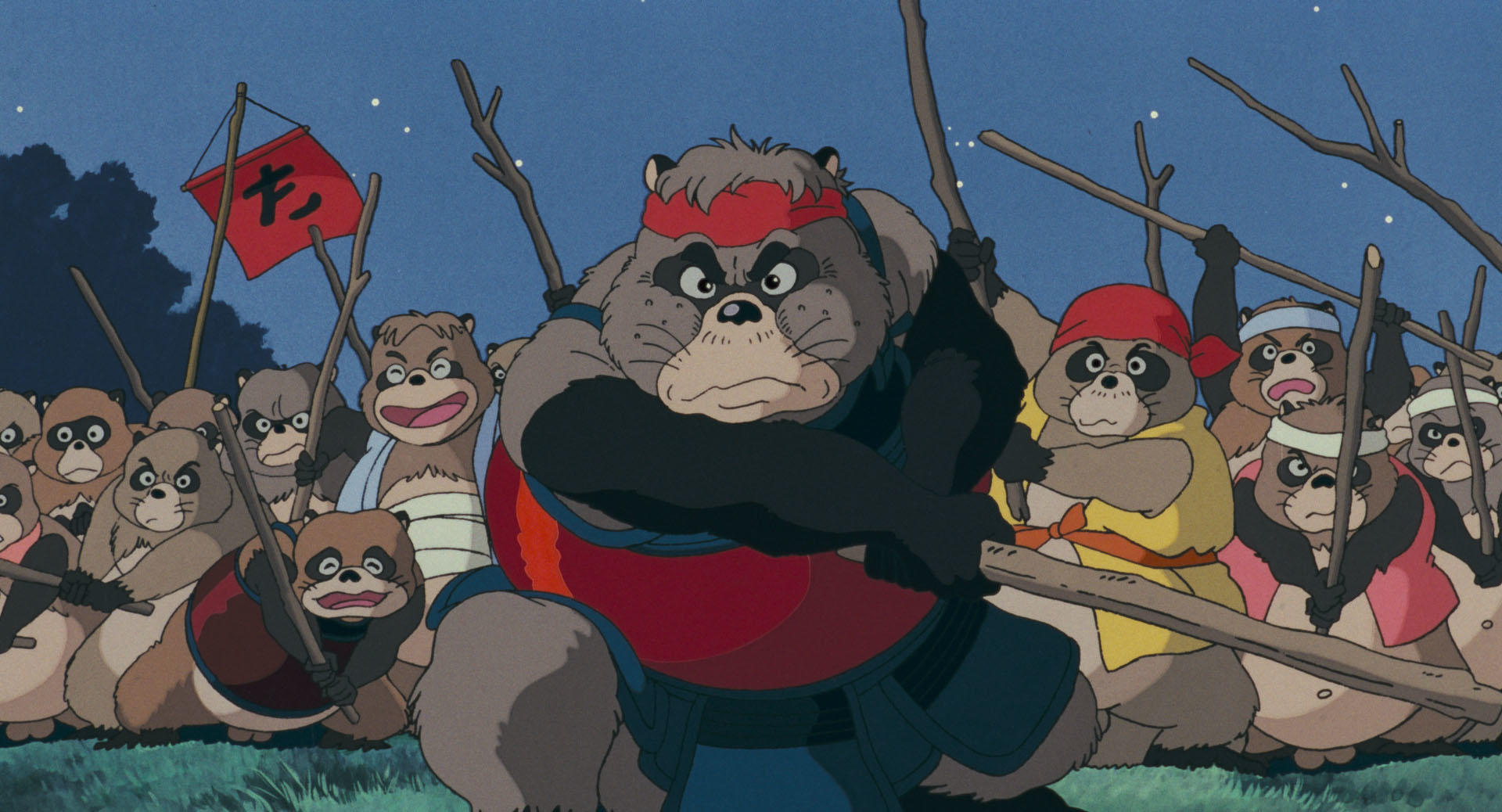
Pom Poko ending recap
After years of resisting the destruction of their hills, the tanuki launch their most ambitious operation: a huge supernatural parade created through transformation magic. Ghosts, monsters, gods and impossible creatures fill the new town. The display is beautiful and frightening, but it fails as a lasting defence. A theme-park promoter takes public credit for the spectacle, allowing people to treat a genuine warning as entertainment.
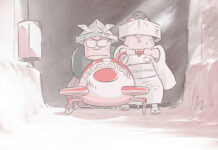
The tanuki’s unity then fractures. Gonta leads a more violent attack and dies with his followers in a final confrontation with the humans. The great transforming masters leave on a magical vessel rather than continue the struggle. Those who remain use their last reserves of power to recreate the vanished rural landscape as an illusion. For one night the concrete development appears to become fields, woods and farms again. By morning, the modern town remains.
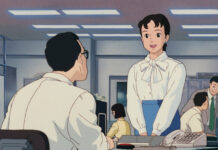
Years later, Shokichi narrates his life while disguised as a human office worker. He sees a tanuki cross the commuter train and follows it to a surviving patch of green, where the animals are holding a celebration. He drops his human shape and joins them. The film closes on the persistence of communal joy, then directly reminds viewers that real tanuki and foxes are still trying to live around human expansion.
Do the tanuki win or lose?
In practical terms, they lose. They cannot stop the Tama New Town development, restore the forest or keep their entire community together. Many die through traffic, hunger and conflict. Others are forced into increasingly small fragments of habitat. The humans experience strange events, but society never responds with the scale of change required to protect the hills.
However, the ending does not treat survival as meaningless. The tanuki preserve memory, identity and moments of collective life. Their defeat is not moral proof that the development was right or inevitable. Takahata separates power from value: the humans have the machinery and institutions to reshape the land, but the weaker community still has a legitimate claim to home and dignity.
Why the monster parade fails
The parade is the tanuki’s greatest artistic achievement. Drawing on Japanese folklore, they turn the sky and streets into a procession of yōkai and supernatural figures. Its failure is not caused by a lack of imagination. It fails because modern culture is extremely good at absorbing a warning and selling it back as spectacle.
Once a businessman claims the parade as promotion for his amusement park, the public gains a comfortable explanation. The supernatural becomes special effects; fear becomes publicity; the threatened animals disappear behind the story of a clever commercial event. The sequence anticipates a familiar environmental problem: people can admire images of nature and folklore without protecting the physical places that sustain them.
What the restored landscape illusion means
The final illusion of the old hills is one of the film’s saddest scenes. The tanuki do not use their remaining strength for another attack. They let humans see the landscape that development erased: woodland, farms, paths and open ground. Some older residents respond with recognition because the vision restores their own memories of the area.
Yet memory does not reverse construction. The scene exposes the difference between nostalgia and conservation. People may feel sincere affection for the countryside after it has gone, but affection without action cannot rebuild an ecosystem. The illusion is both a memorial and an accusation. It shows exactly what was traded away, then vanishes because the real decision has already been made.
Why some tanuki become human
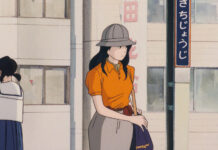
Transformation gives certain tanuki a route into human society. Shokichi and other skilled shape-shifters take jobs, commute and pay for food. This keeps them alive, but it is not presented as effortless integration. Maintaining human form is tiring, and office life leaves Shokichi drained. He survives by concealing the body and community that make him who he is.
The arrangement also creates inequality among the tanuki. Those with enough transformation ability can enter the human economy. Those without it must remain in shrinking green spaces and face roads, rubbish, hunger and exposure. Adaptability is therefore not a complete solution. A species should not need magical access to human institutions simply to survive the destruction of its home.
What happens to Shokichi and Okiyo?
Shokichi and Okiyo adapt to life among humans and build a family. Their outcome is among the film’s more hopeful threads, but their stability carries a cost. They have not found a restored natural home. They have learned how to function inside the society that displaced them.
Shokichi’s narration sounds matter-of-fact because compromise has become routine. He works, commutes and follows the rhythms of the city. The closing celebration matters because it briefly releases him from that performance. Rejoining the tanuki allows him to be physically and socially himself instead of treating his original identity as something that must stay hidden.
Why Gonta’s resistance ends in tragedy
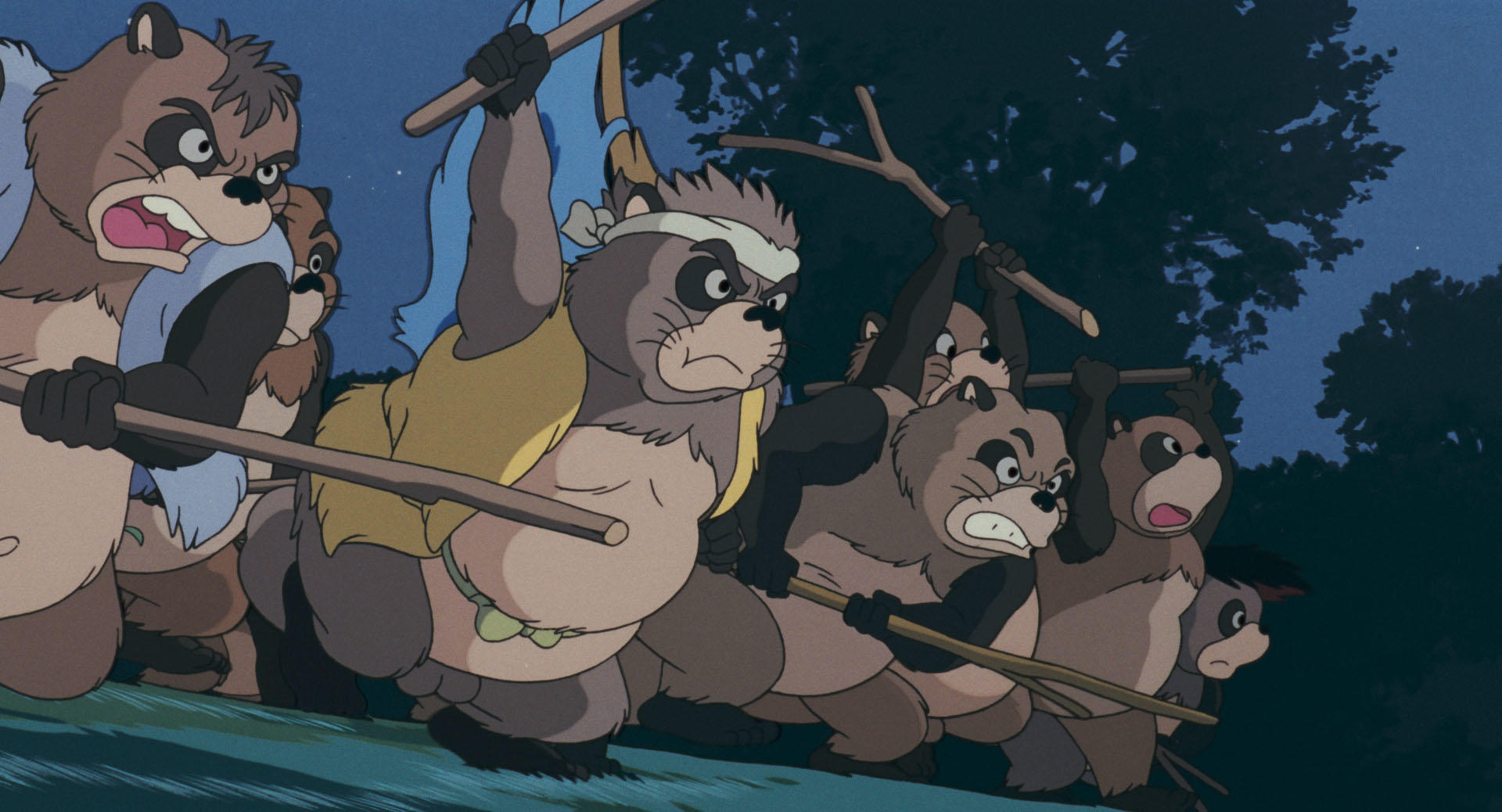
Gonta believes direct force is the only honest response to destruction. His anger is understandable: negotiation, tricks and public spectacle have all failed while the hills keep disappearing. The film does not mock his willingness to resist, but it shows that violent escalation cannot overcome the humans’ numbers, vehicles and infrastructure.
Where do the transforming elders go?
The three renowned transformation masters eventually depart aboard a fantastical vessel. The imagery can be read as a spiritual withdrawal, an escape into legend or simply another example of the film blending folklore with modern crisis. What matters narratively is that their extraordinary skill does not produce a practical future for the ordinary tanuki left behind.
Why Shokichi joins the final party
When Shokichi notices a tanuki during his commute, he steps away from the human crowd and follows. The movement reverses the pattern of his working life: instead of suppressing his identity to keep pace with the city, he leaves its route and returns to his community. Dropping the disguise is a moment of relief.
The party does not mean everything is fixed. The patch of land is small, development still surrounds it and many tanuki are absent. Celebration is valuable precisely because survival has become difficult. Takahata gives the characters joy without using joy to erase the loss that made their reunion necessary.
Why the film breaks the fourth wall
Near the close, the narration turns outward and asks viewers to notice real animals living at the edges of towns and roads. This direct address collapses the safe distance between folklore and ordinary development. The tanuki may speak and transform in the story, but the habitat problem does not depend on believing in magic.
The appeal also changes how the comedy should be remembered. Pom Poko is full of songs, visual jokes and exaggerated bodies, yet its final concern is concrete: when woods and fields become housing, non-human residents do not simply disappear into a happy elsewhere. They die, relocate, hide or compete for what remains.
Is the Pom Poko ending happy?
It is joyful, sad and unresolved at the same time. Shokichi has a partner, children and enough adaptability to live. He can still find his community, and the tanuki have not lost their capacity for play. Those details make the ending warmer than total extinction.
But the central campaign fails, the landscape is gone and survival is uneven. Calling the ending happy would understate the damage. Calling it hopeless would miss the tanuki’s resilience. The most accurate description is bittersweet: life continues, but continuation should not be mistaken for justice.
What Pom Poko is saying about development
The film is not arguing that every house or city is inherently evil. Its human residents include people who remember the countryside and respond emotionally to its temporary return. The criticism is aimed at a system that treats land as empty once human construction has been approved, then treats displaced wildlife as a nuisance.
By telling the story from the tanuki’s perspective, the film makes “progress” look different. New homes and transport links may benefit one population while destroying the conditions another population needs to live. The ending asks viewers to include that hidden cost when judging whether development has truly succeeded.
Final interpretation
Pom Poko ends with adaptation, not restoration. The tanuki can change shape, improvise and celebrate, but they cannot transform away the consequences of habitat destruction. Shokichi’s human life demonstrates resilience; his return to the party demonstrates what assimilation cannot replace.
For the full story, characters, production context and age guidance, read the Pom Poko movie guide. You can also explore how it compares with Studio Ghibli’s wider environmental themes or browse the complete Studio Ghibli movie directory.
FAQ
Do the tanuki save their forest in Pom Poko?
No. Their operations delay and disrupt development, but the new town is completed and the surviving tanuki must adapt to the changed landscape.
Does Shokichi become human permanently?
He lives disguised as a human, but the final celebration shows that he can still drop the transformation and return to his tanuki form.
Why do the humans see the old countryside again?
The tanuki use their remaining transformation power to recreate the lost landscape as an illusion, giving residents a brief vision of what development erased.
What is the main message of the ending?
Survival and adaptation do not make habitat destruction harmless. The ending values resilience while asking people to notice the wildlife displaced by ordinary human expansion.
Image credit: Official stills from the Pom Poko page on ghibli.jp, used under Studio Ghibli’s common-sense image-use notice. This article is an independent fan guide and is not affiliated with Studio Ghibli.