Tales from Earthsea quick facts
- Japanese title: Gedo Senki
- Japanese release: 29 July 2006
- Director: Gorō Miyazaki
- Screenplay: Gorō Miyazaki and Keiko Niwa
- Source: inspired by Ursula K. Le Guin’s Earthsea books, with a concept credited to Hayao Miyazaki
- Producer: Toshio Suzuki
- Music: Tamiya Terashima
- Running time: about 115 minutes
- Best for: older children, teenagers and fantasy viewers comfortable with a darker, more solemn Ghibli adventure
Spoiler-free answer: Tales from Earthsea follows the troubled young prince Arren after he meets the wandering archmage Sparrowhawk. Across a land where magic and nature have fallen out of balance, they encounter the guarded Theru and confront the sorcerer Cob, whose terror of death is damaging the boundary between life and immortality. It is a sombre film about fear, divided identity and the courage required to choose life.
Spoiler-free overview
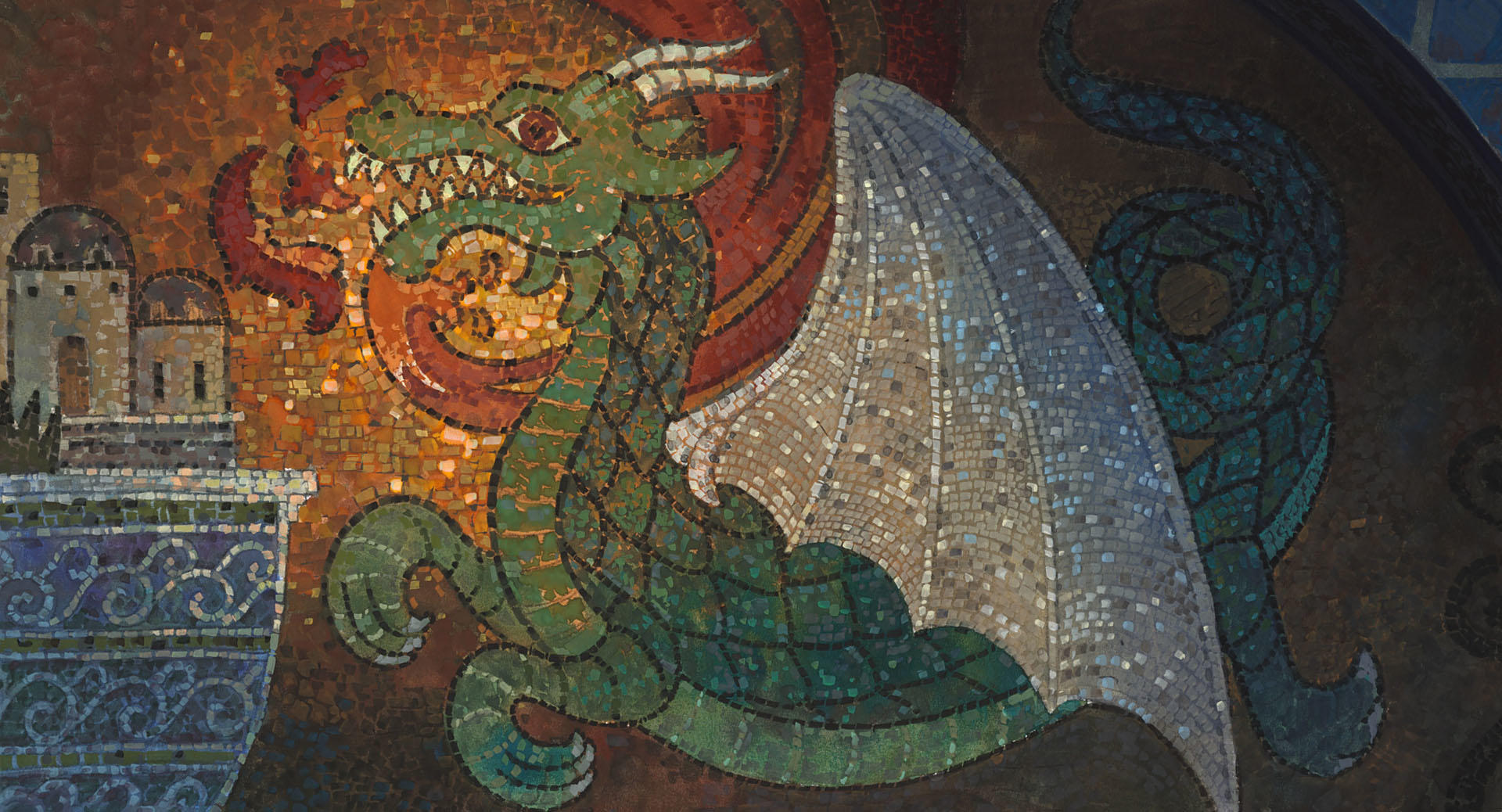
Tales from Earthsea opens with omens rather than explanations. Dragons are seen fighting in the human world, crops fail, livestock suffer and people speak of weakening magic. The setting is a chain of islands, farms, ports and old powers, but the immediate emotional focus is Arren, a prince running from an act he cannot understand.
Sparrowhawk finds him alone in the wilderness and recognises that the young man is being pursued by more than ordinary danger. Their journey leads to the farm of Tenar, an old friend of Sparrowhawk, and to Theru, a girl who distrusts Arren’s evasions. The outward conflict involves slave traders and Cob’s search for eternal life. The inward conflict is Arren’s inability to face his fear, guilt and capacity for violence as parts of one life.
This is not a light entry point like My Neighbor Totoro or The Cat Returns. Its pace is measured, its colours often muted and its central characters spend time discussing death, despair and responsibility. The story can feel elliptical because it draws names, relationships and ideas from a much larger literary world without adapting one novel scene by scene.
Approach it as Ghibli’s own compressed interpretation of Earthsea rather than a replacement for Ursula K. Le Guin’s books. Readers will notice major rearrangements. New viewers can still follow its main line: imbalance grows when people reject the limits that make life meaningful, while wholeness begins when Arren stops fleeing from himself.
Storyline: what happens in Tales from Earthsea?
The film begins at sea, where sailors witness two dragons fighting above the clouds. Dragons are not supposed to cross into the ordinary human realm. On land, a king hears reports of drought, disease and social disorder. His son Arren then attacks him, takes his sword and escapes. The act is presented as a shocking rupture rather than a calculated bid for power.
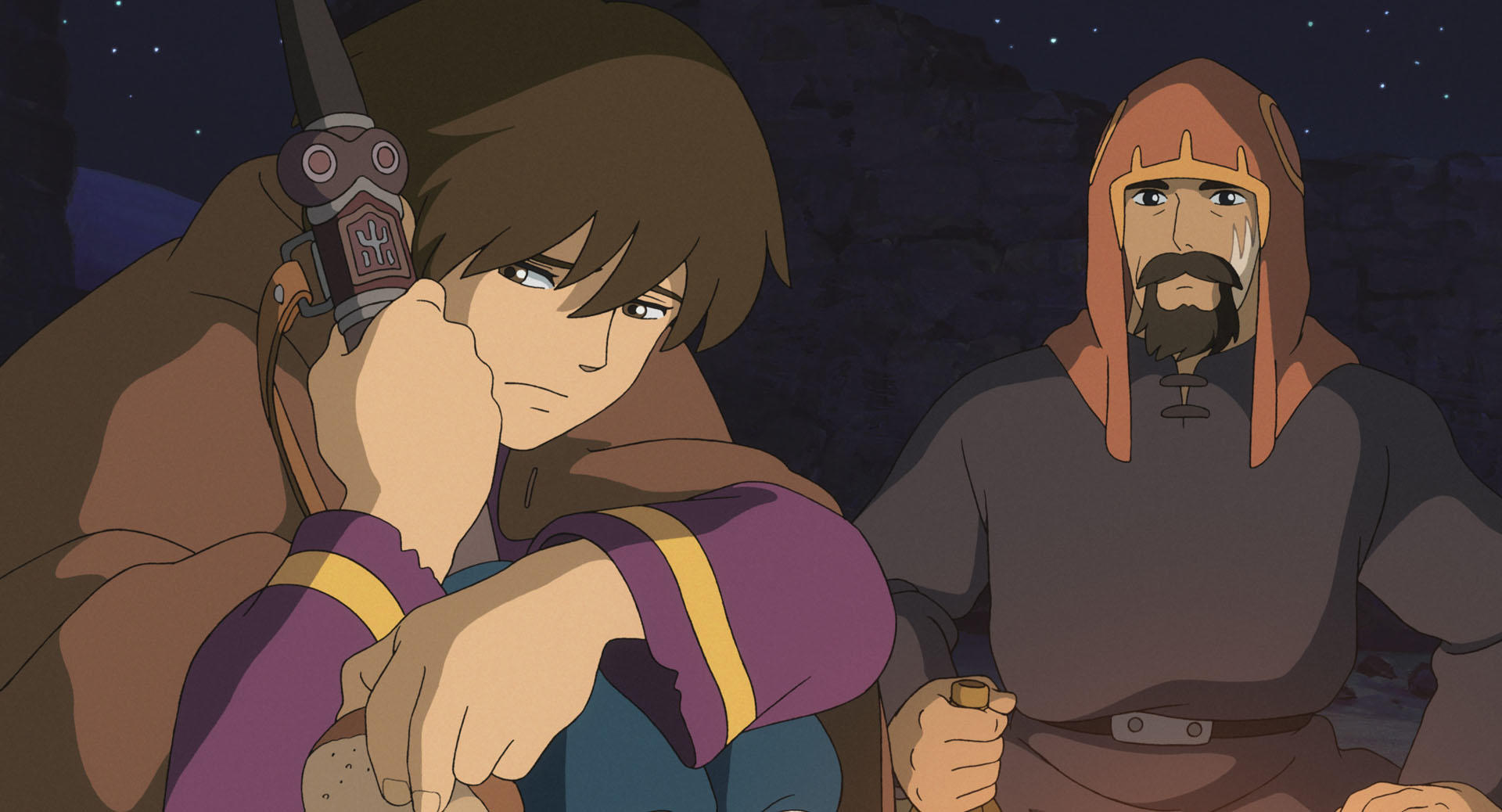
Far from the palace, Arren wanders through a barren landscape. Wolves corner him before Sparrowhawk, also known as Ged, drives them away. Sparrowhawk is travelling to understand why the world’s balance has weakened. He sees that Arren is frightened and unstable but does not force an immediate confession. The two continue toward the port city of Hort Town.
The city turns the global imbalance into everyday exploitation. People seek narcotic relief, slave traders prey on the vulnerable and commerce continues beneath a sense of exhaustion. Arren intervenes when men led by Hare seize Theru. He fights with startling ferocity and frees her, but she rejects his posture as empty if he does not value his own life. Later, Hare’s men capture Arren and place him among enslaved people bound for sale. Sparrowhawk rescues him and disables the traffickers without sharing Arren’s uncontrolled rage.
Sparrowhawk brings Arren to Tenar’s farm. Tenar has a long history with him and has built a practical life based on work, hospitality and care. Theru lives with her and remains suspicious of Arren. The farm offers a temporary alternative to fear: planting, repairing, eating and working beside other people. Arren helps in the fields, but nightmares and a shadowy double continue to trouble him.
Cob is a powerful sorcerer who has become obsessed with avoiding death. Once defeated by Sparrowhawk, Cob now experiments with the boundary between life and death and uses the disruption in the world to expand control. Cob’s agents learn that Sparrowhawk is nearby. Hare kidnaps Tenar, forcing Sparrowhawk to enter Cob’s stronghold in exchange for her safety.
Arren’s conflict becomes more dangerous because Cob understands his fear. The prince does not simply fear being killed. He fears the fact of mortality so intensely that he cannot inhabit his own life. Cob offers escape through the promise of endless existence, while the shadow pursuing Arren represents the part of him that still carries his true self and the desire to live.
Theru finds Arren and forces him to confront what happened. He admits that he killed his father and fled with the royal sword. His violence came from a divided state, not from a coherent ambition, but confession does not excuse it. Theru answers despair with a demanding form of compassion: life has value because it is limited and shared. Her trust helps Arren reunite with the self he had tried to abandon.
Arren and Theru reach Cob’s castle as Sparrowhawk and Tenar face execution. Arren can finally draw his sword once he accepts responsibility rather than using violence to flee responsibility. He challenges Cob and helps free the captives. The confrontation exposes the sorcerer’s promised immortality as terror rather than mastery. Cob’s body deteriorates as the stolen appearance of youth fails.
Cob takes Theru and climbs the tower. Her true nature is revealed through fire and dragon form, turning the film’s opening image into part of its resolution. Cob cannot control a life grounded in its own nature. The tower collapses, and the survivors return to Tenar’s farm.
Arren does not receive a simple absolution. He chooses to return home and face the consequences of killing his father. That decision is the completion of his journey: courage is not escape from death, guilt or judgment, but the willingness to live truthfully within them. Sparrowhawk continues his work, while Theru remains with Tenar and the restored possibility of balance.
Main characters
Prince Arren
Arren is a frightened young man split between numbness and sudden violence. The film deliberately withholds a neat psychological explanation for his first act. His arc is built around integration. He must admit what he did, recognise the shadow as part of himself and choose responsibility over disappearance.
Sparrowhawk, or Ged
Sparrowhawk is an archmage whose power is matched by restraint. He understands that magic should serve balance rather than personal domination. With Arren, he behaves less like a lecturer than a patient guide, allowing work, danger and truthful relationships to reveal what the prince is avoiding.
Theru
Theru lives with Tenar and bears visible scars. She reacts sharply to Arren because his disregard for his own life also devalues the lives of people who struggle to survive. Her guardedness protects real compassion. The story ultimately connects her identity to the dragons whose separation from humanity frames the crisis.
Tenar
Tenar provides the film’s moral and practical centre. Her farm is not an escape from the world but a place where care takes material form through food, shelter and labour. Her established trust with Sparrowhawk suggests a history larger than this one film.
Cob
Cob is a sorcerer whose fear of death has become a hunger to dominate the structure of life itself. The youthful appearance, controlled servants and ruined castle cannot conceal fragility. Cob represents what happens when the desire to preserve the self destroys every reason for living.
Hare
Hare leads Cob’s men and the city’s slave operation. He translates his master’s abstract corruption into direct human cruelty, treating frightened people as goods and loyalty as obedience to power.
Themes, meaning and interpretation
Life gains meaning from limits
The film’s central claim is that mortality is not an error to be defeated. Death gives choices weight and makes relationships urgent. Cob wants endless time but becomes unable to live, while Theru accepts vulnerability and therefore protects life fiercely.
Balance is ethical, not merely magical
Earthsea’s failing equilibrium appears in dragons, weather and weakened magic, but also in slavery, addiction and social despair. The crisis is not solved by a larger spell alone. Balance requires people to stop treating nature, magic and one another as resources without limits.
The shadow and the divided self
Arren is pursued by what seems to be another person, yet the shadow carries the self he abandoned. His healing is not victory over an outside monster. It is reunion with fear, guilt and hope. Wholeness requires owning the parts of life he finds unbearable.
Power without restraint becomes fear
Sparrowhawk and Cob are both powerful, but their ideas of power oppose each other. Sparrowhawk acts sparingly and accepts the world’s order. Cob hoards control because nothing feels secure. The contrast makes restraint a sign of strength rather than weakness.
Ordinary care resists despair
Tenar’s farm matters because it gives the film’s philosophy a physical shape. Meals, shared work and honest speech do not look as dramatic as dragons or castles, yet they rebuild connection. Arren begins recovering when he participates in life instead of only thinking about escape.
Age suitability and content guidance
Tales from Earthsea is one of the darker Ghibli films for families. It begins with a son killing his father, though the act is not shown graphically. The story includes sword fights, wolves, slavery and attempted trafficking, drug-like substances, kidnapping, threats of execution, frightening transformations, a decaying villain and falls from a collapsing tower. There is some blood and sustained emotional menace, but no prolonged graphic gore.
The heavier material is psychological. Arren experiences despair, nightmares, dissociation and fear of death. Cob’s appearance becomes disturbing near the climax. Younger viewers may also find the plot difficult because motives and world-building are not always explained directly. Families should check the current local classification, which varies by territory and release. As a practical guide, this usually suits older children or teenagers who can handle sombre fantasy and discuss its treatment of death, guilt and mental distress.
Production, release and relationship to the books
Studio Ghibli’s official page lists a Japanese release date of 29 July 2006 and a running time of approximately 115 minutes. Gorō Miyazaki directed and co-wrote the screenplay with Keiko Niwa. The page credits Ursula K. Le Guin as the original author, Hayao Miyazaki for the concept, Toshio Suzuki as producer, Tamiya Terashima for music and Aoi Teshima for the theme song. Toho handled the Japanese theatrical release.
The film was Gorō Miyazaki’s feature directorial debut. Its source relationship needs careful wording. It uses Earthsea’s world and major characters, and draws especially from later material, but it compresses, combines and reassigns events rather than adapting one book faithfully. The title and some imagery also reflect Hayao Miyazaki’s earlier interest in Le Guin’s work and his graphic journey story Shuna’s Journey.
To compare Gorō Miyazaki’s later feature and its sharply different visual approach, the Earwig and the Witch movie guide covers its story, characters, 3D CG style and family viewing considerations.
That approach explains why book readers and film-only viewers can have very different reactions. The novels build their cultures, magic and character histories across several volumes. A two-hour film cannot carry all of that context, and this adaptation also chooses its own plot architecture. It is most useful to compare the versions rather than asking which one replaces the other. See the site’s Ghibli adaptations guide for more book-to-film context.
Where to watch legally
Streaming, rental and disc rights vary by country and change over time. Start with the site’s current Studio Ghibli streaming guide, then search for the title in your local service before subscribing. An is available through GKIDS on YouTube. Do not assume availability in one region applies to another.
Official image gallery
Related films and guides
Continue with Princess Mononoke for a more expansive conflict between human power and natural balance, Nausicaä of the Valley of the Wind for ecological fantasy led by a heroine seeking understanding, or Howl’s Moving Castle for another literary adaptation shaped into a distinct Ghibli anti-war fantasy. The adaptation watch guide places Earthsea beside Ghibli’s other book-inspired films.
Frequently asked questions
Is Tales from Earthsea based on Ursula K. Le Guin’s books?
Yes, but it is not a close adaptation of one volume. It combines characters, ideas and events from the wider Earthsea cycle and reshapes them into a separate film story.
Who directed Tales from Earthsea?
Gorō Miyazaki directed it and co-wrote the screenplay with Keiko Niwa. It was his feature directorial debut for Studio Ghibli.
Why did Arren kill his father?
The film presents the act as the violent expression of Arren’s divided, fearful state rather than a planned seizure of power. His journey requires confession and responsibility, but the film leaves some of the psychology deliberately unresolved.
Who is the shadow following Arren?
The shadow represents the true self and life force Arren has separated from while trying to escape fear and guilt. Reuniting with it allows him to act as a whole person.
Is Theru a dragon?
The climax reveals Theru’s connection to dragon nature. The revelation links her defence of life to the dragons whose appearance in the human world signals the broken balance.
Is Tales from Earthsea suitable for young children?
It is generally better for older children and teenagers than for very young viewers. It includes patricide, slavery, sword violence, frightening transformations and sustained themes of death and despair.
How long is Tales from Earthsea?
Studio Ghibli’s official works page lists the running time as approximately 115 minutes.
Do I need to read the Earthsea books first?
No. The main conflict can be followed on its own, although knowledge of the books adds context for Ged, Tenar, Arren, dragons and the rules of magic.
Official film stills are credited to Studio Ghibli and used under its common-sense image-use notice.