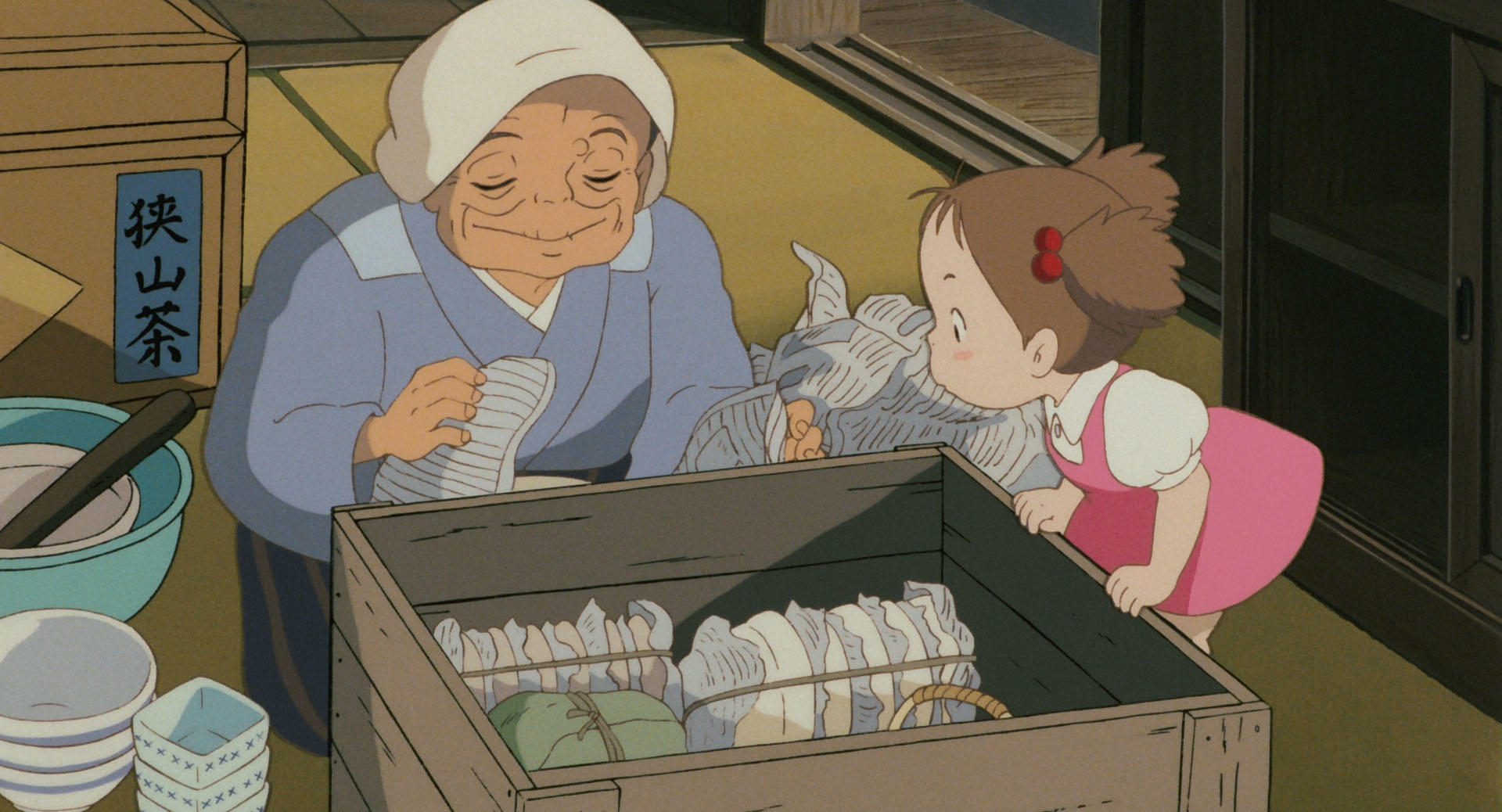
Ocean Waves quick facts
- Japanese title: Umi ga Kikoeru, often translated as “I Can Hear the Sea”
- Original Japanese broadcast: 5 May 1993 on Nippon Television
- Director: Tomomi Mochizuki
- Original novel: Saeko Himuro
- Screenplay credit on Studio Ghibli’s works page: Kaoru Nakamura
- Music: Shigeru Nagata
- Theme song: performed by Yoko Sakamoto
- Running time: about 72 minutes
- Setting: mainly Kōchi and Tokyo
- Best for: viewers who like short, realistic coming-of-age dramas about messy friendships and feelings understood in hindsight
Spoiler-free answer: Ocean Waves is a compact Studio Ghibli television film about Taku Morisaki, his best friend Yutaka Matsuno and Rikako Muto, a difficult new student transferred from Tokyo to Kōchi. A secret loan and an impulsive journey to Tokyo strain all three relationships. There are no spirits or fantasy quests here. The film’s tension comes from adolescent pride, divided loyalties and the gap between what young people feel and what they can admit.
Spoiler-free overview
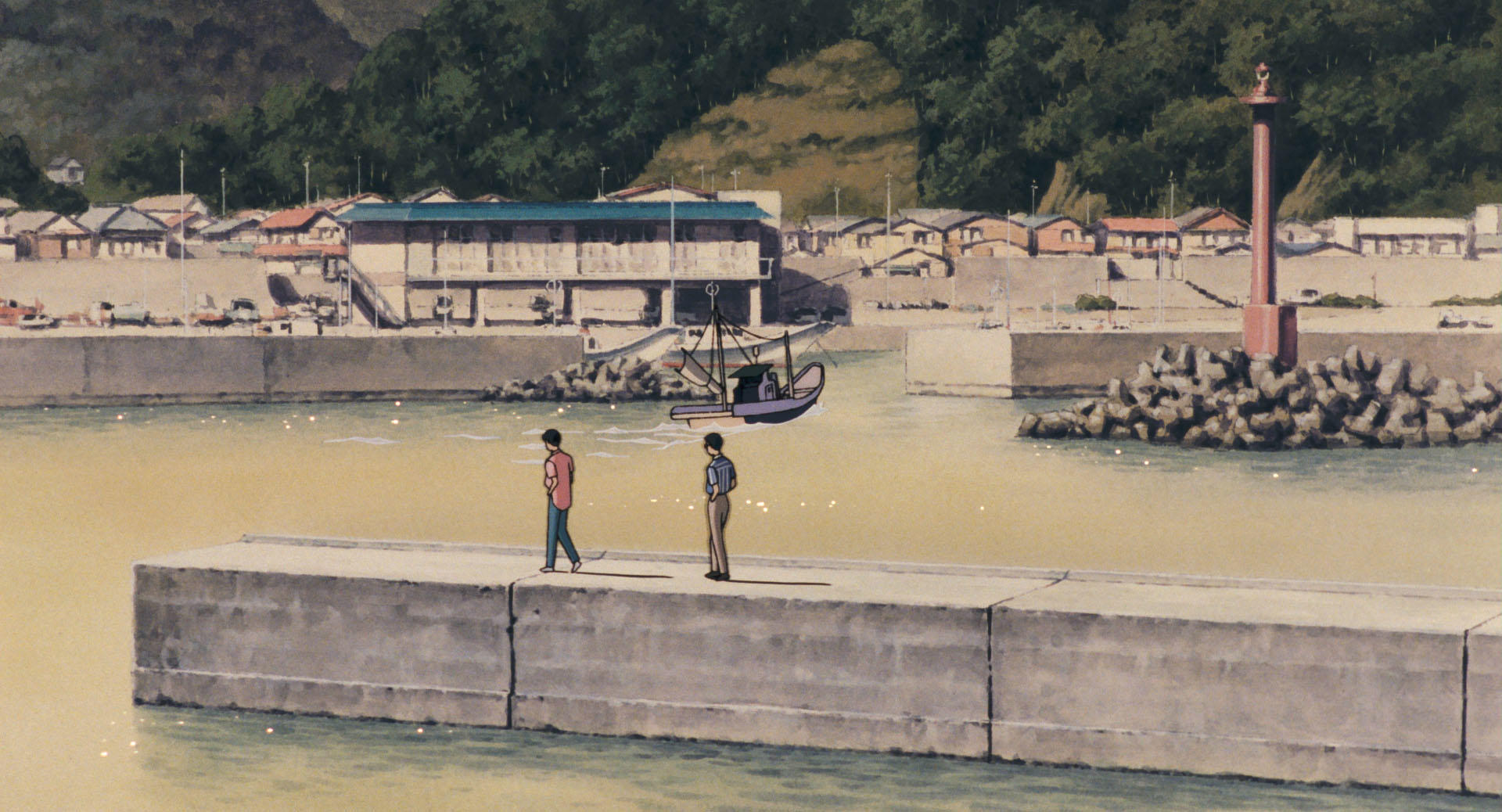
Ocean Waves feels unlike the studio’s famous fantasies because it deliberately narrows its scale. Its teenagers take school trips, borrow money, ride trains, argue in corridors and misread one another. The animation pays close attention to classrooms, station platforms, hotel rooms, shopping streets and sunlight on the coast. Those ordinary details are not background filler. They preserve the texture of a period in life that the adult Taku can only understand after it has passed.
The central relationship is often described as a love triangle, but that phrase makes it sound tidier than it is. Yutaka is immediately drawn to Rikako. Taku tries to be loyal to his friend while becoming involved in Rikako’s problems. Rikako, angry about being moved away from Tokyo after her parents’ separation, uses confidence and sharpness to protect herself. Affection, resentment and competition overlap until nobody behaves especially well.
That is the film’s appeal and its difficulty. Rikako can be manipulative. Taku can be passive, judgemental and physically reactive. Yutaka turns hurt into anger. The story does not give viewers an ideal romance to copy. It asks them to look back at adolescent behaviour with enough distance to see the fear beneath it without excusing the harm. For another grounded Ghibli film about memory and adult perspective, see our Only Yesterday guide.
Story and ending explained
This section contains full spoilers. The film opens with university-age Taku in Tokyo. At a station he briefly sees a young woman who resembles Rikako. The sight sends him back into memories of high school in Kōchi, where Yutaka once called him to school and introduced a new transfer student from Tokyo.
Rikako is academically able and athletic, but she keeps classmates at a distance. Taku senses that her dismissive manner hides unhappiness about leaving Tokyo. During a school trip to Hawaii, she privately asks him for a large loan after claiming that her money has gone missing. Taku has savings from part-time work and lends it on the condition that the situation remains secret. That secrecy ties him to her before either is willing to describe the connection.
Back in Kōchi, Rikako befriends Yumi Kohama but still has not repaid Taku. Yumi later calls him from the airport in distress. Rikako told her they were travelling to a concert, but actually intends to fly to Tokyo using the borrowed money. Taku goes to the airport and takes Yumi’s place, partly to protect her and partly because he is already entangled in Rikako’s choices.
In Tokyo, Rikako expects to return to the father she idealised during her parents’ conflict. Instead, she discovers that he has a new partner and a life that no longer contains the version of home she imagined. Her father repays Taku and books him a hotel room. Rikako stays there too, and Taku awkwardly offers her the bed while he tries to sleep in the bathtub. The arrangement is comic, uncomfortable and emotionally revealing rather than sexual. Rikako is stranded between the family she lost and the new life she refuses to accept.
The next day she meets a former boyfriend, Okada, but calls Taku when the encounter turns disappointing. Taku criticises both of them for performing their grievances instead of speaking honestly. Once back at school, rumours spread that Taku and Rikako spent the night together. Yutaka tells Taku that Rikako rejected his confession. Taku confronts her about the lies and secrecy. Their argument becomes physical: Rikako slaps Taku, and he strikes her back. The scene is meant to be ugly, not romantic.
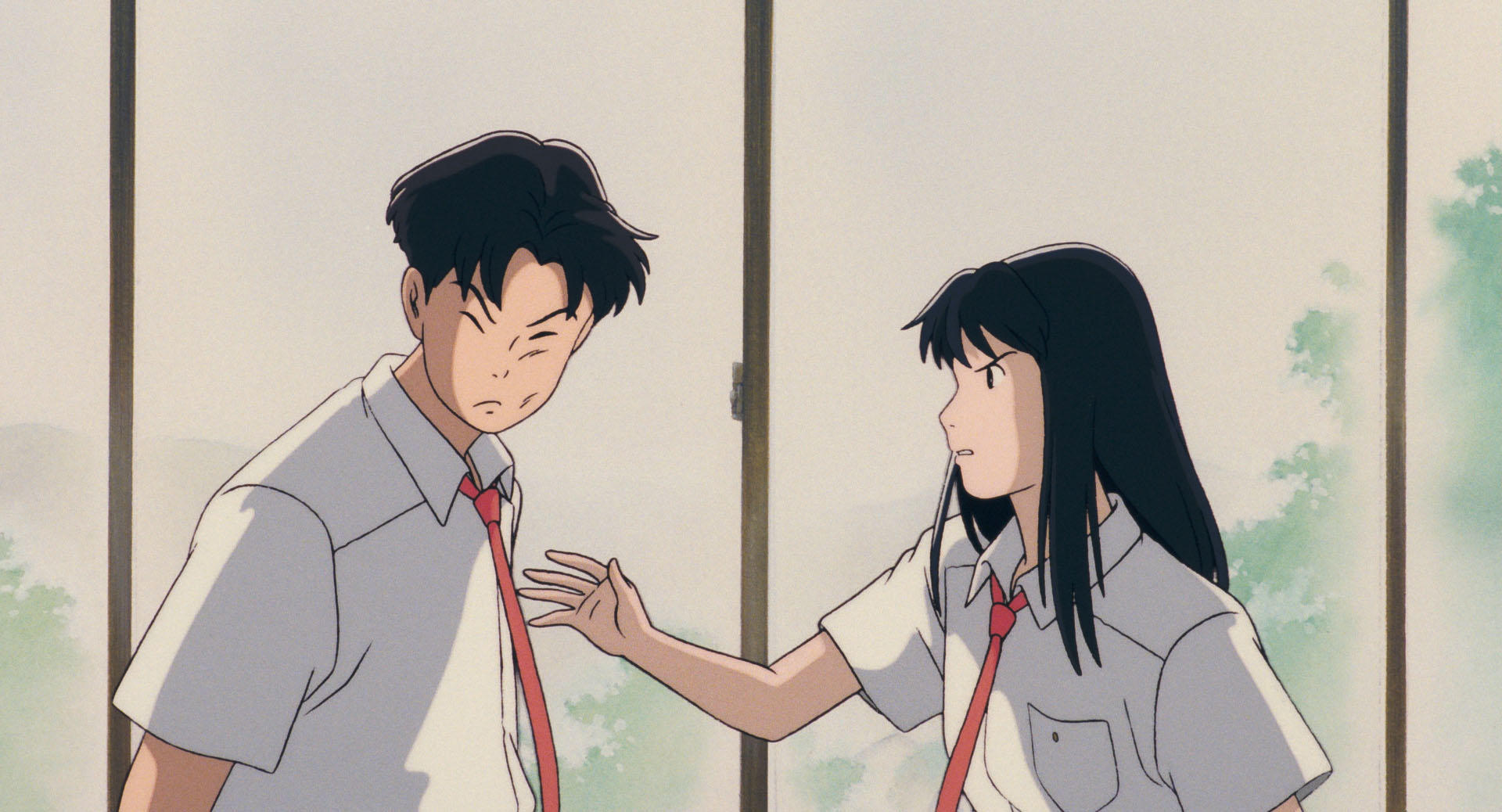
At the school festival, Rikako remains isolated and is confronted by other students. Taku admires her ability to stand up for herself but again chooses observation over support. Rikako slaps him and runs away in tears. Yutaka, furious that his friend did not defend her, punches Taku. The friendship at the centre of the story fractures, and the three leave school for different universities without repairing it.
Years later, Taku returns to Kōchi for a class reunion. Yutaka explains that he hit Taku because Taku had denied his own feelings out of loyalty after seeing Yutaka rejected. His anger came from recognising that the friendship had become an excuse for avoidance. The two men look toward the water and can finally describe what they were unable to say as teenagers.
Rikako is absent from the reunion, but a classmate says she went to Tokyo to see someone who likes sleeping in bathtubs. Back in Tokyo, Taku sees Rikako across a train platform. He runs toward her, and she waits rather than boarding the train. The ending does not prove that they will form a healthy permanent relationship. It shows that memory has finally become action. Taku stops watching his life from a distance and chooses to meet her honestly.
Main characters
Taku Morisaki
Taku is practical, observant and slow to state what he wants. His part-time work gives him the money Rikako borrows, while his loyalty to Yutaka gives him a reason to deny his attraction. Adult Taku’s narration makes the film a story about delayed understanding. His calm surface is not the same as emotional maturity, and his retaliatory violence is a serious failure.
Rikako Muto
Rikako is intelligent, talented and deeply angry about losing her Tokyo home after her parents separate. She manages vulnerability through control. She lies to Yumi, uses Taku’s money and lashes out when confronted. The film lets her be wounded without turning every harmful choice into something harmless. Her difficulty is central because adolescence here is not idealised.
Yutaka Matsuno
Yutaka is Taku’s closest friend and the first to take an interest in Rikako. He appears more direct because he confesses his feelings, yet he also lets humiliation and protectiveness become aggression. His reunion conversation with Taku is one of the film’s most important acts of honesty. Their friendship survives only when they stop using it to hide from difficult truths.
Yumi Kohama
Yumi tries to welcome Rikako and is then pulled into the false concert plan. Her airport call triggers the Tokyo journey. She represents the ordinary friendship Rikako might have accepted if fear and pride had not made trust feel dangerous.
Themes and interpretation
Memory changes the meaning of adolescence
The adult frame is essential. Events that seemed random, humiliating or unfair in high school form a pattern only later. The film does not claim that time automatically heals everything. It gives Taku enough distance to recognise his own evasions and to hear what Yutaka was really saying.
Displacement and the loss of home
Rikako’s behaviour makes more sense when read through displacement. Kōchi is not merely a school setting she dislikes. It represents the outcome of her parents’ separation and her lack of control. Her impulsive Tokyo trip is an attempt to restore an old family story. Discovering her father’s new life destroys that fantasy.
Friendship, rivalry and unspoken desire
Taku and Yutaka value their friendship, but neither understands how to carry romantic competition without turning it into secrecy or sacrifice. Taku avoids pursuing Rikako in the name of loyalty. Yutaka later reveals that this supposed loyalty denied him the respect of an honest choice. Friendship becomes stronger when it can survive truth rather than requiring silence.
Communication through harmful actions
Almost every conflict grows because characters act instead of speaking. Rikako lies and slaps. Taku lends money, follows her and judges from the edge of scenes. Yutaka punches the friend he wants to wake up. The film’s realism is not an endorsement of those actions. It shows how badly teenagers can communicate when pride makes direct vulnerability feel impossible.
Ordinary places as emotional landmarks
Stations, classrooms, hotel corridors and the Kōchi coast carry memory. The soft colours and restrained movement create a visual album of places that become important because of what happened there. The “ocean waves” of the title suggest both the literal home landscape and feelings that return after seeming to recede.
Age suitability and content guidance
GKIDS lists its North American release as PG-13. The film has no fantasy monsters or graphic violence, but its relationship conflict is better suited to teenagers than young children. There are several slaps, Taku retaliates by hitting Rikako, and Yutaka punches Taku. These moments are brief but emotionally uncomfortable.
The story also includes parental separation, lying, manipulation, school rumours, rejection, bullying or group hostility, and teenagers sharing a hotel room under awkward circumstances. There is no explicit sexual activity in that sequence. Younger viewers may simply find the quiet pacing and complicated motives unengaging. Families should discuss that hurt and displacement explain behaviour but do not excuse deception or violence. Always check the classification attached to the edition available in your country.
Production and release context
Studio Ghibli’s official works page lists Saeko Himuro’s novel as the source, Kaoru Nakamura for screenplay, Tomomi Mochizuki as director and Shigeru Nagata for music. It gives a running time of about 72 minutes and records the original Nippon Television broadcast on 5 May 1993. The film was made for television rather than beginning as a standard theatrical feature.
GKIDS describes it as the first Studio Ghibli film directed by someone other than studio founders Hayao Miyazaki and Isao Takahata. Mochizuki led a group of younger staff members in adapting Himuro’s bestselling novel. That production goal fits the finished work: a youthful story, concise running time and emphasis on social detail rather than large fantasy spectacle.
The visual style uses soft pastel colour, bright coastal light and carefully observed interiors. The modest scale does not mean careless filmmaking. Framing often places characters beside windows, across platforms or at the edge of groups, turning emotional separation into physical space. It is a useful reminder that Studio Ghibli’s identity includes quiet contemporary drama as well as imaginative worlds.
Where to watch Ocean Waves legally
Availability changes by country and date. As checked in July 2026, the official GKIDS Ocean Waves page lists North American on-demand options through Prime Video and Apple TV, plus Blu-ray and DVD. Its listed edition uses Japanese audio with English subtitles. For other regions, use our legal Studio Ghibli viewing guide and confirm the title inside the service or retailer available to you.
Related films
Watch Only Yesterday for another memory-led, realistic Ghibli drama; Kiki’s Delivery Service for a kinder coming-of-age story about independence; or Porco Rosso for adult regret filtered through a more adventurous form. Whisper of the Heart is the strongest next choice if you want a warmer school-age story about first love and creative purpose. Find its developing entry in the complete Movies directory.
Frequently asked questions
Is Ocean Waves a Studio Ghibli movie?
Yes. Studio Ghibli produced it as a television film for Nippon Television. Its realistic style and original broadcast format make it feel like an outlier, but it belongs in the studio’s feature catalogue.
What does Umi ga Kikoeru mean?
The Japanese title is commonly translated as “I Can Hear the Sea.” The English release title Ocean Waves keeps the coastal image while making it more concise.
Why is Ocean Waves so different from other Ghibli films?
It has no fantasy elements and was designed as a compact television production led by younger staff under director Tomomi Mochizuki. Its drama comes from school life, family disruption, friendship and romantic confusion.
Is Rikako meant to be likeable?
The film does not require a simple judgement. Rikako is grieving a lost home and family structure, but she also deceives and hurts people. Understanding her situation can make her behaviour legible without making every choice acceptable.
Why does Taku hit Rikako?
He retaliates during an angry confrontation after she slaps him. The moment reveals his own immaturity and loss of control. It should not be treated as a romantic gesture or justified response.
What does the ending mean?
The station reunion shows Taku finally acting on feelings he understood only after gaining distance from high school. Rikako waiting for him opens the possibility of a new conversation. It does not guarantee a perfect romance.
Is there an English dub?
The current North American GKIDS listing specifies Japanese audio with English subtitles. Check your exact service or physical edition because language options can vary and may change.
Image source: official Ocean Waves stills from the Studio Ghibli works gallery, whose exact page includes the studio’s common-sense image-use notice.
Official film stills are credited to Studio Ghibli and used under its common-sense image-use notice.