Only Yesterday quick facts
- Original Japanese title: Omohide Poro Poro
- Japanese release: 20 July 1991
- Screenplay and director: Isao Takahata
- Based on: the manga by Hotaru Okamoto and Yuko Tone
- Music: Katz Hoshi
- Studio: Studio Ghibli
- Original Japanese distributor: Toho
- Running time: about 119 minutes
- Best for: adults and older teenagers who enjoy realistic stories about memory, family, work and choosing a life
Spoiler-free answer: Only Yesterday follows Taeko Okajima, a 27-year-old Tokyo office worker who travels to rural Yamagata to help with a safflower harvest. On the journey, memories of herself as a ten-year-old begin returning with unusual clarity. The film moves between 1966 and 1982, asking how childhood embarrassment, family expectations and half-understood desires continue to shape adult choices.
Spoiler-free overview
Only Yesterday is one of Studio Ghibli’s most grounded films. There are no supernatural creatures, villains or adventure mechanics. Its drama grows from train journeys, conversations in farm vehicles, school memories, meals and the practical labour of harvesting and processing safflowers. That quiet surface is deliberate. Taeko is not trying to save a world; she is trying to decide whether the life she can explain is also the life she wants.
The childhood scenes are not arranged as a tidy catalogue of causes. Some memories are painful, some funny and some apparently trivial: tasting fresh pineapple for the first time, struggling with fractions, hearing classmates gossip about periods, being cast in a school play, or receiving attention from a boy on the baseball team. Their meaning changes because adult Taeko is remembering them now. The film understands memory as an active conversation between past and present rather than a perfect recording.
This makes the movie especially rewarding for adult viewers, people in transition and anyone who has wondered whether an old version of themselves still makes decisions for them. Its pace is slower than Kiki’s Delivery Service and its emotions are less dramatic than Grave of the Fireflies, but Takahata’s attention to ordinary experience gives the film unusual depth.
Storyline and ending: what happens in Only Yesterday?
This section contains full spoilers. In 1982, Taeko lives and works in Tokyo. She is unmarried, and questions about marriage have become part of how relatives and acquaintances measure her adulthood. For her summer holiday she plans to visit the rural family of her older sister’s husband in Yamagata, where she previously enjoyed farm work. As the overnight train leaves the city, memories of fifth grade begin travelling with her.
The film repeatedly shifts to 1966. Ten-year-old Taeko is the youngest of three sisters in a comfortable but emotionally restrained household. She wants experiences that seem natural to other children, including a trip to the countryside, yet her family spends holidays at home. When a pineapple arrives, everyone anticipates an exotic treat. The fruit proves difficult to prepare and disappointing to taste. It is a funny scene, but it captures the distance between an imagined life and the reality of getting what you thought you wanted.
School brings its own pressures. Taeko cannot understand why division of fractions requires turning one fraction upside down. Her difficulty becomes evidence, in her family’s eyes, that she does not think in the expected way. The adult Taeko later reflects on the old claim that children who struggle with fractions may struggle in life. The movie does not prove that saying true. It shows how casually delivered judgements can remain lodged in a child’s idea of herself.
Other memories concern the body and social shame. The girls learn about menstruation, boys steal the information and teasing spreads through the class. Taeko’s anxiety is not about a dramatic event so much as the humiliation of private change becoming public entertainment. In another sequence, she is praised for her comic performance in a school play and briefly imagines acting more seriously. Her father refuses the opportunity. When Taeko reacts badly before a family outing, he slaps her. The moment is brief and disturbing, and its lack of later explanation is part of its force.
Taeko also remembers Hirota, a talented baseball player who appears to like her. Their exchanges are awkward, tender and unfinished. A conversation beneath a strange, impressionistic sky turns first attraction into a feeling too large for ordinary realism. Nothing becomes a conventional childhood romance. The memory matters because it preserves a moment when Taeko felt seen before adulthood taught her to describe herself more cautiously.
In Yamagata, adult Taeko is met by Toshio, a young farmer connected to her hosts. He is energetic, curious and committed to organic agriculture. Taeko joins the safflower harvest, learning that the bright dye historically associated with beauty and luxury begins with thorny plants, exhausting hand-picking and laborious processing. The work complicates any easy city fantasy about the countryside. Rural life is beautiful, but its beauty is produced through knowledge, repetition and physical effort.
Taeko shares her memories with Toshio during drives and conversations. He listens without treating them as childish trivia. As she speaks, the distance between the fifth-grade girl and the office worker becomes less rigid. The rural family notices the growing connection and suggests that Taeko could marry Toshio and remain in Yamagata. The suggestion embarrasses her. It turns a private attraction and an emerging sense of possibility into a ready-made life plan before she has decided what she wants.
Taeko leaves for the station. On the train, the childhood classmates of her memory gather around her. Rather than trapping her in nostalgia, they help her recognise that she has been listening to her younger self throughout the journey. She gets off at the next stop and returns. Toshio is waiting, and the children cheer as the adult Taeko moves toward a choice she has made for herself.
The ending does not provide a detailed forecast of marriage, career or permanent rural life. Its certainty is emotional rather than contractual. Taeko stops treating the life she already has as the only respectable answer. She chooses to explore the relationship and place that have made her feel more present.
Main characters
Taeko Okajima
Taeko is reflective, capable and more unsettled than her organised adult life first suggests. The film avoids describing her as simply unhappy in Tokyo. Her conflict is subtler: she has learned to function within expectations without deciding whether they express her own values. Remembering childhood lets her recover forms of curiosity, hurt and desire that adulthood has made easier to dismiss.
Young Taeko
The ten-year-old Taeko is not merely the adult heroine in miniature. She is imaginative, sensitive, sometimes stubborn and often unable to explain why ordinary events affect her so strongly. Her memories show how identity forms through moments that adults around a child may barely notice.
Toshio
Toshio is a farmer interested in organic agriculture and the relationship between human work and the land. He can explain rural practices without romanticising himself as a source of wisdom. His most important quality is attention: he listens to Taeko’s stories and treats her unusual associations as meaningful rather than embarrassing.
Taeko’s family
Her parents and older sisters provide security, judgement, affection and frustration in unequal measures. They are not organised into heroes and villains. Their comments about school, behaviour, marriage and opportunity become part of the social framework Taeko must eventually examine for herself.
The rural family
Taeko’s hosts offer warmth and belonging, but their marriage suggestion also shows how quickly a community can turn possibility into expectation. The film does not reject their welcome. It lets Taeko distinguish between choosing connection and accepting a role because other people find it sensible.
Themes and interpretation
Memory changes when the present needs it
The flashbacks are triggered by adult questions. Taeko remembers fractions while thinking about whether she has failed to understand life correctly, and childhood performance while reconsidering paths that were closed. The past is fixed in event but not in meaning. Adult reflection can neither erase hurt nor recover childhood, but it can produce a more generous account of who she became.
Adulthood is not the end of coming of age
Taeko has a job, independence and social competence, yet she is still growing. The film challenges the idea that maturity means settling permanently into one legible identity. An adult can recognise that a respectable path was inherited rather than chosen and still change direction.
Work, land and the danger of rural fantasy
The countryside gives Taeko space to think, but the safflower harvest prevents it becoming a decorative retreat. Beauty has a material history. Plants have thorns, colour requires processing, and farming depends on skill and labour. Taeko’s attraction to rural life becomes credible because she participates rather than merely consuming the view.
Family expectations can become an inner voice
No single family verdict defines Taeko, yet repeated small judgements teach her which desires are practical, which talents count and when emotion is inconvenient. Her final choice is not a dramatic rejection of family. It is the quieter act of noticing that inherited expectations are not the same as truth.
The younger self can be a companion, not a burden
The final procession of classmates transforms memory. Taeko does not need to defeat or abandon her younger self to become free. She needs to let that child’s experiences count. The ending’s joy comes from integration: the adult chooses while the child is finally heard.
Age suitability and content guidance
Only Yesterday contains little physical danger and no graphic violence, but its themes and pace are aimed more naturally at older teenagers and adults. A father slaps young Taeko once. Schoolchildren tease girls about menstruation, and several scenes involve embarrassment, family criticism and social pressure. There are discussions of marriage, puberty, menstruation and childhood attraction.
Younger children may not be upset, but many will find the realistic two-hour drama slow or difficult to connect with. Older children who enjoy character stories may recognise the school scenes, while adults are more likely to appreciate the questions about career, family and paths not taken. Check the current age classification for your country and edition because ratings vary.
Production, adaptation and release context
Studio Ghibli’s official works page credits Isao Takahata with screenplay and direction and lists the Japanese release date as 20 July 1991, a running time of approximately 119 minutes, music by Katz Hoshi and distribution by Toho. The source manga by Hotaru Okamoto and Yuko Tone centres on episodes from a girl’s childhood. Takahata’s film adds the adult Taeko and the 1982 rural framing story, allowing those episodes to become an inquiry into memory.
The visual language separates the periods without making them feel unrelated. Childhood memories often sit in pale space with softened edges, as if details beyond the remembered moment have fallen away. Adult rural scenes are fuller and more tactile. The contrast makes memory feel selective while preserving its emotional intensity.
The film was a Japanese theatrical success but reached some English-speaking audiences much later than the better-known Ghibli catalogue. That delayed route helped give it a reputation as a discovery for adult fans. Its place in the studio’s history is important: it demonstrates that Ghibli’s attention to motion, landscape and daily work can carry a realistic psychological drama without fantasy.
Where to watch legally
Streaming and home-video availability varies by country and changes over time. Use the site’s current Studio Ghibli streaming guide, then confirm the title inside the service available in your region. In North America, GKIDS maintains an official Only Yesterday film page with licensed release information. Licensed physical editions, rentals and purchases may differ elsewhere.
About the image on this guide
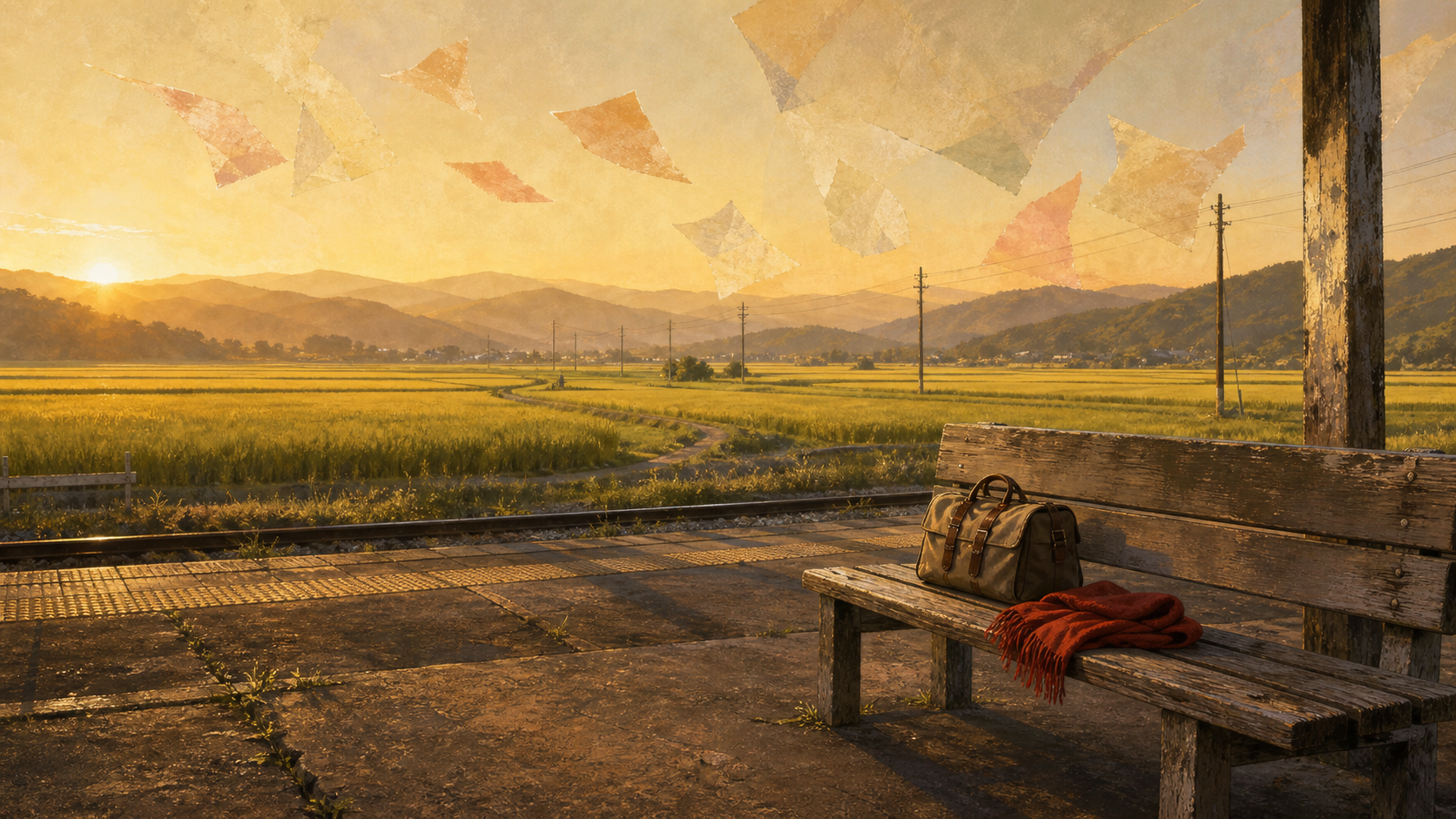
The landscape image above is an original editorial illustration generated specifically for this page. It is not a frame from the movie, is not official Studio Ghibli artwork and does not depict Taeko, Toshio or another copyrighted character. This transparent fallback was used because the film’s official works page did not display the image-reuse notice required by this site’s publishing policy.
Related films
Watch Kiki’s Delivery Service for another story about work and choosing a place in the world, Grave of the Fireflies for Takahata’s far more severe study of memory and social responsibility, or The Tale of the Princess Kaguya for his later exploration of freedom, family expectation and irreversible choices.
Frequently asked questions
Is Only Yesterday based on a manga?
Yes. It adapts the manga by Hotaru Okamoto and Yuko Tone. The adult Taeko, countryside journey and dialogue between 1966 and 1982 were created for Takahata’s film structure.
How old is Taeko?
Adult Taeko is 27 during the 1982 storyline. Her principal childhood memories show her as a ten-year-old fifth grader in 1966.
Why is the Japanese title different?
Omohide Poro Poro is commonly understood as memories tumbling or falling down one after another. The English title Only Yesterday captures the feeling that distant childhood can suddenly seem immediate.
Does Only Yesterday have a happy ending?
The ending is hopeful. Taeko leaves the train and returns toward Toshio and the rural community. It does not promise exactly what follows, but it shows her making an active choice rather than continuing by default.
Is Only Yesterday a romance?
It contains a quiet adult romantic thread between Taeko and Toshio, but memory and self-recognition are equally important. The relationship matters because it opens a possible life, not because romance solves every problem.
Is Only Yesterday good for a first Studio Ghibli film?
It is an excellent first choice for adults who prefer realistic, reflective drama. Viewers seeking fantasy, action or a faster family film may be better starting with Spirited Away or My Neighbor Totoro.
The page artwork is an original GPT Image editorial illustration, clearly labelled in its caption. It is not an official Studio Ghibli still.