The Boy and the Heron quick facts
- Japanese title: Kimitachi wa Dō Ikiru ka, usually translated as How Do You Live?
- Japanese release: 14 July 2023
- Writer and director: Hayao Miyazaki
- Producer: Toshio Suzuki
- Music: Joe Hisaishi
- Theme song: “Spinning Globe” by Kenshi Yonezu
- Running time: approximately 124 minutes
- Animation: hand-drawn fantasy drama by Studio Ghibli
- Major award: winner of the 2024 Academy Award for Best Animated Feature
- Best for: older children, teenagers and adults ready for a dreamlike story about grief, family, inheritance and choosing an imperfect real world
Spoiler-free answer: The Boy and the Heron follows Mahito, a boy grieving his mother during the Pacific War. After moving to the countryside with his father and pregnant stepmother, he is drawn toward a sealed tower by a taunting Grey Heron. What begins as a search for a missing family member becomes a journey through a collapsing fantasy realm populated by birds, spirits and versions of people connected to Mahito’s past.
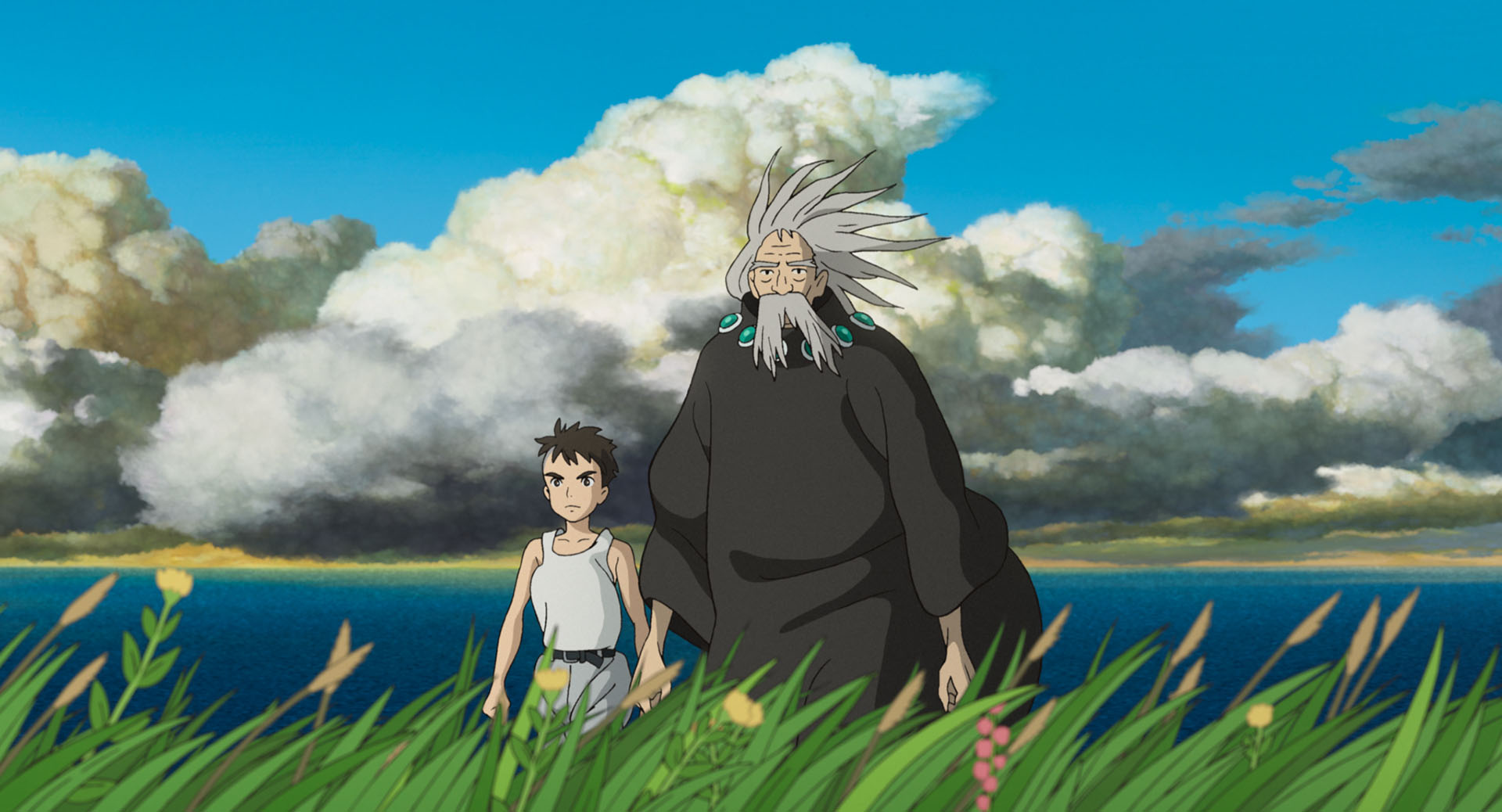
Spoiler-free overview
The film begins with loss rather than wonder. Mahito’s mother dies in a Tokyo hospital fire, and the images of him running toward the blaze establish a memory he cannot escape. His father, Shoichi, later marries Natsuko, his late wife’s younger sister, and moves the family to her rural estate. Natsuko is pregnant, the war continues in the background and Mahito is expected to accept a new household before he has made sense of the old one.
A Grey Heron circles the estate and behaves with unsettling intelligence. It invades Mahito’s room, speaks in a rough human voice and claims his mother is alive. The bird leads him toward a mysterious tower built by a vanished granduncle. When Natsuko disappears, Mahito enters the tower with Kiriko, one of the estate’s elderly attendants, and crosses into a world whose rules are emotional before they are logical.
This is not a literal adaptation of Genzaburō Yoshino’s 1937 novel How Do You Live?, despite sharing its Japanese title. The book appears inside the film as a gift associated with Mahito’s mother, but Miyazaki’s plot is original. The connection is a question: faced with grief, violence and a damaged inheritance, how will this particular child choose to live?
Viewers expecting every symbol to resolve like a puzzle may find the film slippery. Its rooms and creatures work more like dream associations. Mothers appear at different ages. Birds can be comic, threatening or tragic. Doors cross time. A tower can represent refuge, artistic creation and control at once. The film becomes clearer when treated as Mahito’s moral journey rather than a fantasy map that needs complete technical rules.
Full story and ending explained
This section contains complete plot and ending spoilers.
During the Pacific War, Mahito Maki wakes to news that the hospital where his mother Hisako works is burning. He runs through a terrified Tokyo crowd but cannot reach her. The fire becomes the central image of his grief: bright, chaotic and impossible to reverse.
About a year later, Mahito and his father Shoichi move away from Tokyo. Shoichi runs an aircraft-parts factory and has married Natsuko, Hisako’s younger sister. The resemblance between the sisters makes the new family especially difficult for Mahito. Natsuko welcomes him and asks him to touch her pregnant belly, but he responds with formal politeness rather than affection.
At the estate, a Grey Heron follows Mahito aggressively. The grounds also contain a tower constructed by Natsuko’s granduncle, an eccentric, wealthy reader who vanished. The tower was later sealed, but the Heron repeatedly draws Mahito back to it. At school, Mahito is isolated and gets into a fight. On the walk home, he deliberately strikes his own head with a stone, creating a wound that lets him leave school while also externalising the injury he cannot explain.
Natsuko goes missing after walking toward the forest. Mahito sees her departure but initially says nothing. He prepares a bow and arrow using one of the Heron’s feathers, then follows the bird into the tower. Kiriko joins him. Inside, the Heron is revealed as a strange bird-man, unreliable but not simply evil. Mahito’s arrow pierces its beak, forcing it to act as his guide.
The tower opens into an ocean world. Mahito meets a younger, stronger version of Kiriko who hunts giant fish and protects small white spirits called warawara. The warawara rise toward another life, but pelicans attack them because the world has trapped the birds without enough food. Himi, a young woman with command over fire, drives the pelicans away. One dying pelican explains that its kind did not choose this cruel system, complicating Mahito’s first assumption that every predator is simply wicked.
Mahito and the Heron continue searching for Natsuko. They encounter a kingdom of human-sized parakeets ruled by the Parakeet King, comic in appearance but organised around appetite, hierarchy and force. The fantasy world is not a perfect refuge from wartime reality. It has scarcity, armies, vulnerable lives and rulers trying to control unstable conditions.
Himi helps Mahito reach Natsuko in a delivery room built around a taboo. Natsuko rejects him and calls him hateful, but the exchange allows both of them to voice anger hidden beneath duty. Mahito finally calls her “Mother” and insists on returning with her. Their reconciliation does not erase Hisako. Instead, it makes space for Mahito to accept a living relationship without betraying the mother he lost.
Mahito learns that Himi is Hisako as a girl. The tower’s doors connect different times, which is why the younger Kiriko and young Hisako can share his journey. Himi knows that returning through her own door will lead eventually to the life and death Mahito remembers. She chooses that life anyway because it includes becoming his mother.
At the centre of the tower, Mahito meets the granduncle. The old man maintains the realm by balancing a stack of stone blocks and wants Mahito, a blood descendant, to inherit the work. He offers untainted blocks and asks the boy to build a better world. The offer is seductive: Mahito could replace painful reality with a designed order.
Mahito refuses. He points to the scar on his head as evidence of his own malice because he inflicted it himself. He cannot claim the innocence needed to rule a flawless world, and he doubts the stones are untouched by the tower’s corruption. Instead, he chooses a reality where he can form friendships and live with other imperfect people.
The impatient Parakeet King tries to stack the stones himself and cuts them apart. The constructed world collapses. Mahito, Natsuko, the Heron and the estate’s elderly attendants escape through their proper door. Himi and the younger Kiriko return to their own time. Himi accepts what awaits her, telling Mahito that she is not afraid of fire.
Back in Japan, the Heron warns that memories of the other world will fade. Mahito has kept one small stone, suggesting that experience cannot be sealed away completely. Two years after the war, Shoichi announces that the family is returning to Tokyo. Mahito leaves his room when called. The ending is quiet because his victory is not defeating grief. It is choosing to re-enter life.
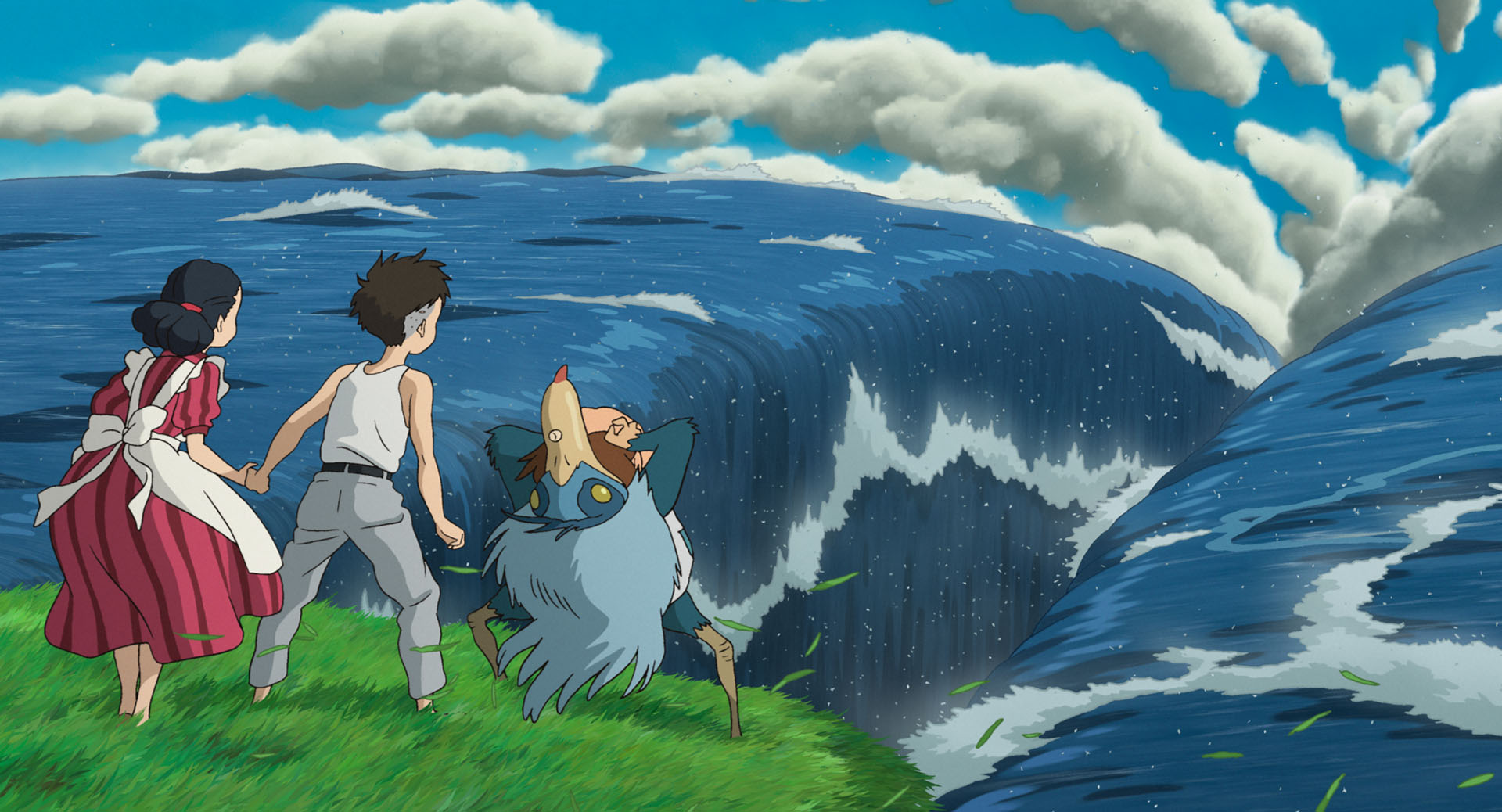
Main characters and relationships
Mahito Maki
Mahito is reserved, observant and wounded. His silence can look passive, but his choices drive the film: he withholds information, injures himself, studies the Heron and eventually enters the tower. His growth is not a sudden return to happiness. It is the harder decision to acknowledge his own capacity for harm, accept Natsuko and build relationships in reality.
The Grey Heron
The Heron begins as a tormentor, luring Mahito with a promise that exploits his grief. Its bird-man body turns an elegant wild creature into something awkward, greedy and comic. Once its beak is damaged, the Heron becomes an unwilling companion. The friendship matters because Mahito’s chosen imperfect world needs people who irritate, deceive and still help one another.
Natsuko
Natsuko is both Mahito’s aunt and new stepmother, a relationship shaped by family expectation as much as personal choice. Pregnancy, grief and pressure surround her. Her rejection in the delivery room is disturbing, but it gives form to feelings the household’s politeness has suppressed. Mahito’s decision to call her mother is acceptance, not substitution.
Himi and Hisako
Himi is the younger version of Mahito’s mother, encountered before she has lived the life he knows. Her fire destroys threatening creatures but also echoes the hospital blaze. By choosing her own door after learning enough about the future, she transforms fire from only a symbol of death into a sign of courage and a life freely accepted.
Kiriko
The elderly Kiriko crosses the tower with Mahito, while her younger counterpart survives confidently in the other world. She catches fish, feeds the warawara and teaches Mahito practical work. The two versions connect domestic care at the estate with the labour that sustains vulnerable life in the fantasy realm.
Shoichi
Mahito’s father is energetic, protective and emotionally blunt. His factory work ties the comfortable estate to the machinery of war. He loves his son, yet responds to the school injury by arriving in anger and offering donations rather than understanding why Mahito hurt himself. He represents an adult future built through action but limited in self-examination.
The granduncle and the Parakeet King
Both figures want order. The granduncle maintains a private universe through delicate creative control and hopes blood inheritance can preserve it. The Parakeet King wants decisive power and destroys what he cannot patiently understand. Together they show two dangers in world-building: withdrawing from reality to perfect it alone, and forcing a complex system into obedience.
Meaning, symbols and major themes
Grief is a world, not a single obstacle
Mahito does not “get over” Hisako. The tower lets him move through distorted versions of loss until he can choose how to carry it. Meeting Himi does not rescue his mother from history. It gives him a relationship to her choice and allows him to say goodbye without treating love as a reason to stop living.
How do you live in a flawed world?
The granduncle offers the fantasy of clean authorship: remove malice, arrange the blocks and construct something better. Mahito rejects the premise that a world can be purified by one inherited ruler. His answer to the Japanese title is modest. He will live among friends, admit his flaws and accept a reality no individual can completely design.
The tower as art and inheritance
The tower can be read as an artist’s private creation, a family inheritance or a studio built over decades. The granduncle wants a successor who will preserve his balanced world. Miyazaki refuses to turn that parallel into a simple statement about who should inherit Studio Ghibli. The more useful idea is that a created world cannot remain alive through control alone. New people must be free to leave, misunderstand it and make something else.
Birds and systems of appetite
The pelicans and parakeets are funny, frightening and trapped. Pelicans eat warawara because the realm gives them no other food. Parakeets build a military society around appetite. The Grey Heron lies but becomes a friend. Birds therefore resist one fixed meaning. They show how creatures adapt to broken systems and how moral judgement changes when Mahito understands their conditions.
War at the edge of fantasy
The film rarely explains the war directly, but it shapes everything: the hospital fire, rural evacuation, the aircraft factory, shortages and the damaged expectations of adults. Mahito’s fantasy journey does not escape history. It teaches him to return to a world where violence and beauty coexist.
Self-inflicted injury and acknowledged malice
Mahito’s scar is essential to the ending. By admitting he made it himself, he refuses the role of innocent saviour. The film does not define him by the act, but it takes the act seriously as evidence that pain can be turned inward and then hidden. His honesty makes friendship possible because it replaces purity with responsibility.
Age suitability and content guidance
The Boy and the Heron is animated, but it is not aimed at very young viewers. The United States release carries a PG-13 rating. Local classifications differ, so check the rating where you live.
The opening hospital fire is intense. The film deals directly with a parent’s death, wartime danger, remarriage, pregnancy, grief and a child deliberately injuring his own head with a stone. There is blood from that wound. Fantasy violence includes birds attacking and eating small spirits, giant fish being cut open, characters threatened with knives and a realm collapsing.
Some imagery is uncanny rather than graphic: the Heron’s human features, swarming frogs, crowded birds, ghosts, fire and a surreal delivery room. The emotional structure can also unsettle children who are sensitive to parental loss or confused by stories that do not explain every transition.
For many mature older children and teenagers, the film creates valuable conversations about grief, blended families, self-harm, war and accepting an imperfect life. It is best watched when there is time to talk afterwards. Younger viewers looking for a clearer or gentler entry should start with My Neighbor Totoro, Ponyo or Kiki’s Delivery Service.
Production, music and awards
The Boy and the Heron was Hayao Miyazaki’s first feature after The Wind Rises, released a decade earlier. Studio Ghibli presented it in Japan with unusually little advance marketing beyond a single poster. The finished film is an original hand-drawn work written and directed by Miyazaki and produced by Studio Ghibli co-founder Toshio Suzuki.
Joe Hisaishi composed the score, continuing one of animation’s defining director-composer partnerships. The music is often restrained around Mahito’s grief and expands with the other world. Kenshi Yonezu wrote and performed the theme song “Spinning Globe.”
The Japanese voice cast includes Soma Santoki as Mahito and Masaki Suda as the Grey Heron. The English-language cast includes Luca Padovan as Mahito and Robert Pattinson as the Heron, with Christian Bale, Florence Pugh, Gemma Chan, Willem Dafoe, Mark Hamill and others across the ensemble. A dub changes the voices, not the underlying animation, so choose Japanese audio with subtitles or the English version according to the viewer.
The film won the Academy Award for Best Animated Feature at the 96th Academy Awards, credited by the Academy to Hayao Miyazaki and Toshio Suzuki. It was Miyazaki’s second competitive win in the category after Spirited Away. The award is useful context, but the film is more rewarding as a personal, difficult work than as a prestige checklist item.
Where to watch legally
Availability changes by country. As checked in July 2026, HBO Max has an official United States streaming page for The Boy and the Heron. GKIDS also maintains the official US film page and links to authorised home-video or digital options. Viewers elsewhere should search the exact title inside their local licensed service because Studio Ghibli rights vary by territory.
Our Studio Ghibli streaming guide is a practical starting point. Physical Blu-ray or DVD releases are useful if you want reliable access to Japanese audio, subtitles and the English dub without depending on a changing catalogue.
Related Studio Ghibli films and guides
Watch Spirited Away for another child crossing into a spirit world, The Wind Rises for Miyazaki’s mature reflections on creation and war, and Princess Mononoke for a larger conflict between human systems and a world that refuses simple moral categories. The Studio Ghibli Oscar guide places the film within the studio’s awards history, while the release timeline shows where it sits in the complete catalogue.
Frequently asked questions
Is The Boy and the Heron based on the book How Do You Live?
No, not as a direct plot adaptation. It shares the Japanese title and the 1937 book appears inside the film, but Miyazaki created an original fantasy story.
What happened to Mahito’s mother?
His mother Hisako dies in a hospital fire during the war. Himi is Hisako as a younger girl, encountered through the tower’s connection between times.
Why does Himi return if she knows she will die?
Himi chooses the life waiting through her own door because it includes becoming Mahito’s mother. Her decision turns knowledge of mortality into an affirmation that the life and relationship are still worth having.
Is the Grey Heron evil?
No. It lies, taunts Mahito and serves the tower’s power, but becomes an ally. Like the pelicans and parakeets, it is a morally mixed creature shaped by the world it inhabits.
Why does Mahito refuse the granduncle’s blocks?
He recognises his own capacity for malice and doubts that the tower offers pure materials for a perfect world. He chooses reality, friendship and responsibility over inherited control.
What does Mahito’s scar mean?
The scar records a wound he inflicted on himself. By admitting its origin, Mahito rejects the fantasy that he is innocent enough to rule a flawless world and begins dealing honestly with his pain.
Who is Natsuko?
Natsuko is Hisako’s younger sister, Shoichi’s new wife and Mahito’s pregnant stepmother. Mahito’s acceptance of her does not replace Hisako; it lets a new family relationship exist beside his grief.
Is The Boy and the Heron suitable for children?
It is best for mature older children, teenagers and adults. It contains parental death, war, self-inflicted injury, blood, fantasy violence and a complex dream structure. In the US it is rated PG-13.
How long is The Boy and the Heron?
Studio Ghibli’s official works page lists a running time of approximately 124 minutes.
Did The Boy and the Heron win an Oscar?
Yes. It won Best Animated Feature at the 2024 Academy Awards, credited to Hayao Miyazaki and Toshio Suzuki.
Official film stills are credited to Studio Ghibli and used under its common-sense image-use notice.