Quick answer: My Neighbors the Yamadas centres on five members of one imperfect but affectionate household: distracted father Takashi, resourceful mother Matsuko, sharp-tongued grandmother Shige, teenage son Noboru and fearless young daughter Nonoko. Their personalities clash in short comic episodes, but the film’s real point is that a family does not need to be graceful or perfectly organised to remain loving and resilient.
Isao Takahata tells the story as a chain of vignettes rather than one continuous adventure. That makes the characters especially important. A forgotten shopping bag, an argument over the television or a disastrous family outing can reveal as much about them as a conventional plot twist. This guide explains who each Yamada is, how the family relationships work and why their ordinary frustrations feel so recognisable.
The Yamada family at a glance
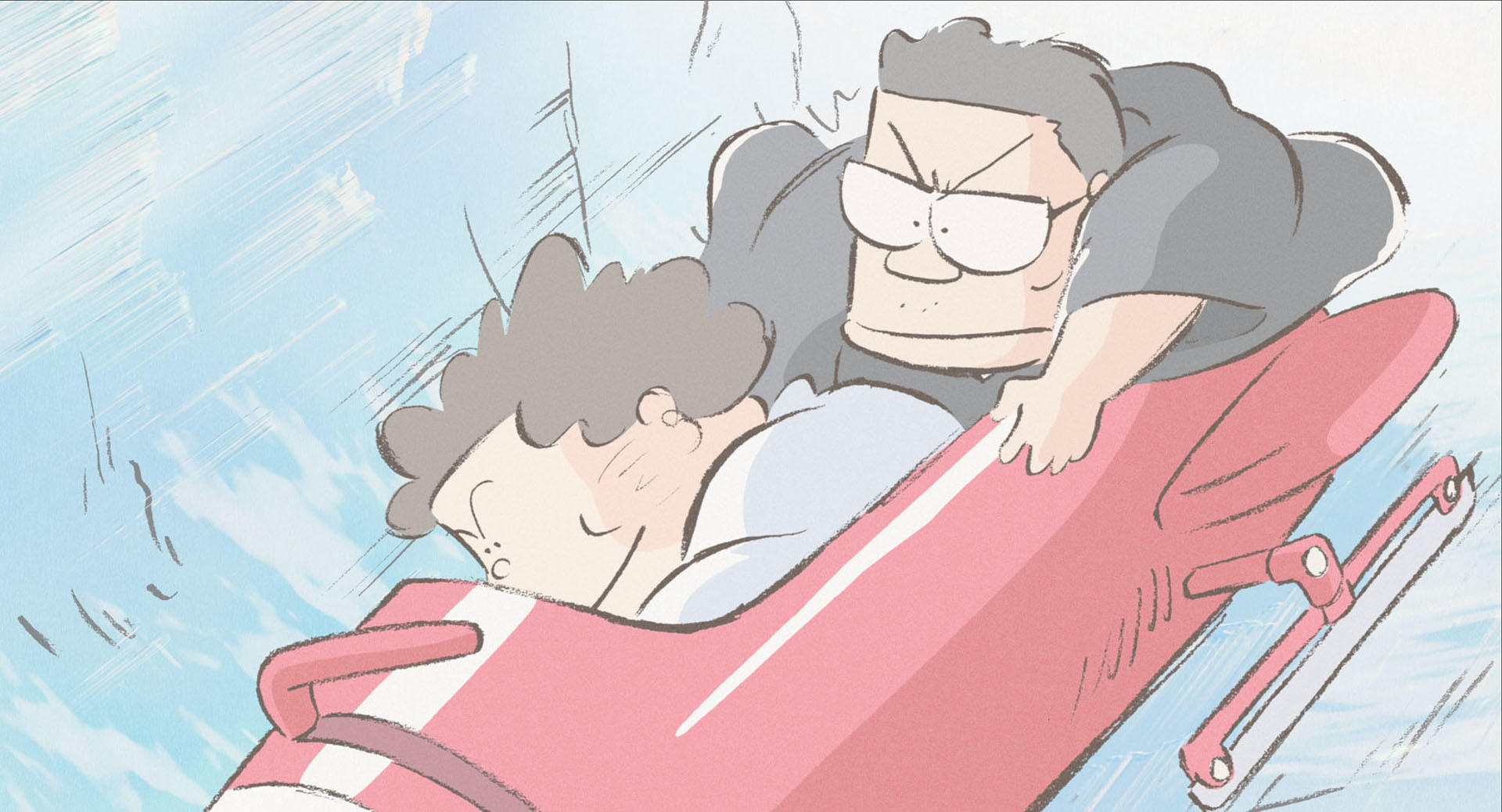
- Takashi Yamada: the father, a salaryman who wants respect but is often as muddled as everyone else.
- Matsuko Yamada: the mother, practical in bursts, cheerfully imperfect and central to the household’s daily rhythm.
- Shige Yamano: Matsuko’s mother, an outspoken grandmother with strong opinions and little patience for pretence.
- Noboru Yamada: the teenage son, caught between school pressure, embarrassment and reluctant affection for his family.
- Nonoko Yamada: the young daughter, observant, confident and often more composed than the adults.
- Pochi: the family dog, a quiet comic presence who reflects the household’s distracted routines.
Takashi Yamada: the father who is not really in control
Takashi fits the outward role of a conventional family patriarch. He goes to work, expects a degree of authority at home and sometimes imagines himself as the person steering the family through difficulty. The comedy repeatedly undermines that self-image. His speeches do not always land, practical situations defeat him and his attempts to take command can make an ordinary problem more complicated.
That does not make Takashi cruel or useless. He cares deeply, even when pride and habit make him awkward at showing it. The film treats him as a flawed participant rather than an all-knowing father. His most revealing moments occur when the family needs solidarity, because his grand language then gives way to a simpler determination to keep everyone together.
Matsuko Yamada: an imperfect mother rather than a domestic ideal
Matsuko is funny because the film refuses to turn motherhood into effortless competence. She can be forgetful, sleepy, stubborn and inventive when a task needs the least demanding solution. Meals, shopping and household organisation do not run with storybook precision. Takahata finds comedy in the gap between what a mother is supposedly expected to manage and the messier reality of daily life.
Yet Matsuko is also the household’s emotional centre. She absorbs arguments, adapts when plans fail and keeps family life moving without pretending to be a saint. Her ordinary limitations make her warmer, not less valuable. The film allows her to be a full comic character whose needs and bad moods matter alongside the care she gives everyone else.
Shige: the blunt grandmother who sees through everyone
Shige is Matsuko’s mother and the family’s sharpest voice. She is confident, direct and willing to say what other people avoid. Her age does not place her quietly in the background. She argues, comments, interferes and brings a longer perspective to the household’s newest crisis.
Her bluntness can create friction, particularly when family members would prefer sympathy to criticism. It also protects the film from becoming sentimental. Shige knows that relatives can love each other while finding one another ridiculous. She represents continuity between generations, but not a romantic version of tradition. She is as eccentric and fallible as the younger Yamadas.
Noboru Yamada: school pressure and teenage embarrassment
Noboru is old enough to recognise his family’s absurdity but not old enough to escape it. He worries about school, expectations and how the adults around him behave. Like many teenagers, he wants independence while still depending on the same home he finds embarrassing.
His frustration gives the film a different angle on family life. The adults can treat a problem as temporary comedy, while Noboru experiences it through the intensity of adolescence. He is not simply the grumpy son. His reactions show how young people begin judging the values and competence of their parents, then slowly discover that adulthood is no guarantee of certainty.
Nonoko Yamada: the youngest and sometimes the wisest
Nonoko is a small child with a remarkably steady sense of herself. She observes adults carefully and often responds to chaos with more clarity than they do. Her direct logic produces some of the film’s best jokes because she does not always accept the elaborate excuses or social rules that confuse everyone else.
A sequence in which she becomes separated from her family briefly introduces real anxiety. Even there, Nonoko’s confidence contrasts with the adults’ panic. The film does not suggest that children never need protection. Instead, it notices that a child can be capable in one moment while the supposedly responsible grown-ups lose all perspective.
How Takashi and Matsuko’s marriage works
Takashi and Matsuko bicker over small decisions, misunderstand one another and compete for comfort or authority. The film never presents their marriage as an idealised romance. It presents partnership as repetition: sharing meals, surviving inconvenience, irritating each other and continuing anyway.
Their differences create comedy, but there is affection beneath the friction. Neither spouse consistently wins. Takashi’s desire to lead is balanced by Matsuko’s practical influence, while her disorganisation meets his own vanity and confusion. They function less like opposites completing each other and more like two imperfect people who have learned to remain on the same side.
Why Shige matters to the family dynamic
Because Shige lives with the family, the household contains three generations rather than a simple parents-and-children unit. Her presence changes every disagreement. Matsuko is both a mother and someone’s daughter; Takashi is a father but also a son-in-law; Noboru and Nonoko have an adult ally who is not their parent.
This arrangement lets the film show that family roles overlap. The person giving advice in one scene may behave childishly in the next. Authority is always being negotiated, and experience does not eliminate pettiness. Shige’s place in the home makes the Yamadas feel like a continuing family history rather than an isolated nuclear unit.
Are the Yamadas meant to be a typical family?
They are specific characters, not a claim that every Japanese family behaves the same way. Their routines draw on recognisable pressures around work, school, marriage, parenting and multigenerational living. The comedy works internationally because the emotional pattern is broad: relatives know exactly how to annoy one another, yet they also know how to regroup when something genuinely matters.
The episodic structure strengthens that feeling. There is no single event that fixes their flaws. Takashi remains pompous, Matsuko remains inconsistent, Shige remains blunt, Noboru remains frustrated and Nonoko remains boldly observant. Family life continues because acceptance matters more than transformation.
Who is the main character in My Neighbors the Yamadas?
There is no single permanent lead. Some vignettes centre on Takashi and Matsuko’s marriage, others on Noboru’s school life, Nonoko’s perspective or Shige’s opinions. The family unit is the true protagonist. Viewers understand the Yamadas by seeing each member alternate between causing a problem, enduring it and helping to resolve it.
For a spoiler-light overview of the complete film, visit the My Neighbors the Yamadas movie guide. The family also fits into the site’s broader guide to Studio Ghibli movies about family and home.
Final character guide verdict
The Yamadas are memorable because none of them is exceptional in the usual animated-movie sense. They are not chosen heroes, warriors or magical beings. They are a father who overestimates his authority, a mother allowed to be imperfect, a grandmother who refuses to soften every opinion, a teenager testing his independence and a child who notices more than adults expect.
Together, they turn small domestic failures into a portrait of endurance. The family’s strength is not harmony. It is the ability to argue, improvise, laugh and still recognise themselves as a team.
FAQ
Who are the members of the Yamada family?
The central household consists of Takashi, Matsuko, their children Noboru and Nonoko, Matsuko’s mother Shige and the family dog Pochi.
Is Shige Matsuko’s mother?
Yes. Shige is Matsuko’s mother, making her Takashi’s mother-in-law and Noboru and Nonoko’s grandmother.
Is My Neighbors the Yamadas connected to My Neighbor Totoro?
No. The films have similar English titles but separate stories, characters and creative approaches.
Does the film have a villain?
No. Its conflicts come from ordinary mistakes, personality clashes, school pressure and family misunderstandings rather than a villain.
Image credit: Official stills from the My Neighbors the Yamadas page on ghibli.jp, used under Studio Ghibli’s common-sense image-use notice. This article is an independent fan guide and is not affiliated with Studio Ghibli.