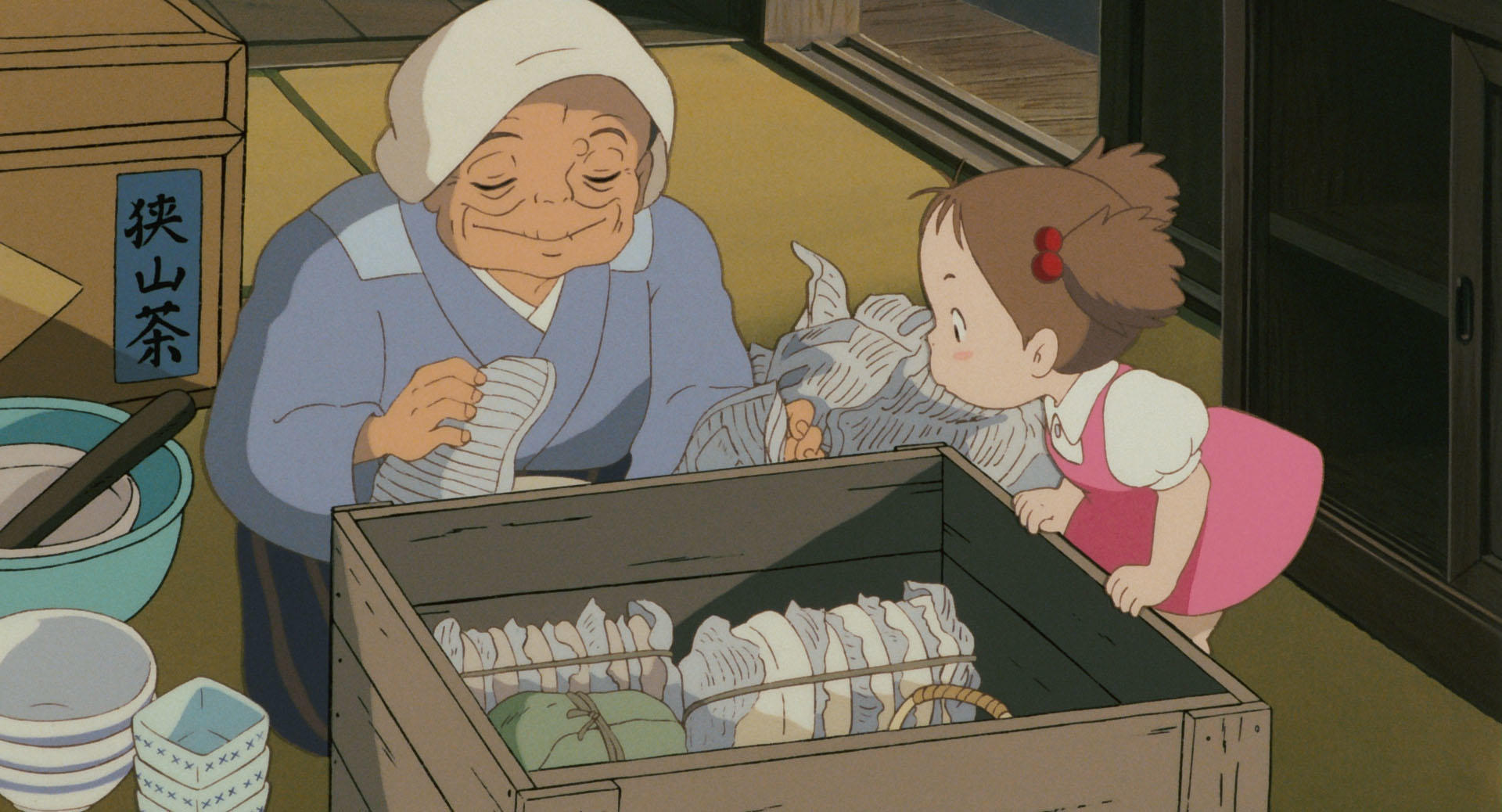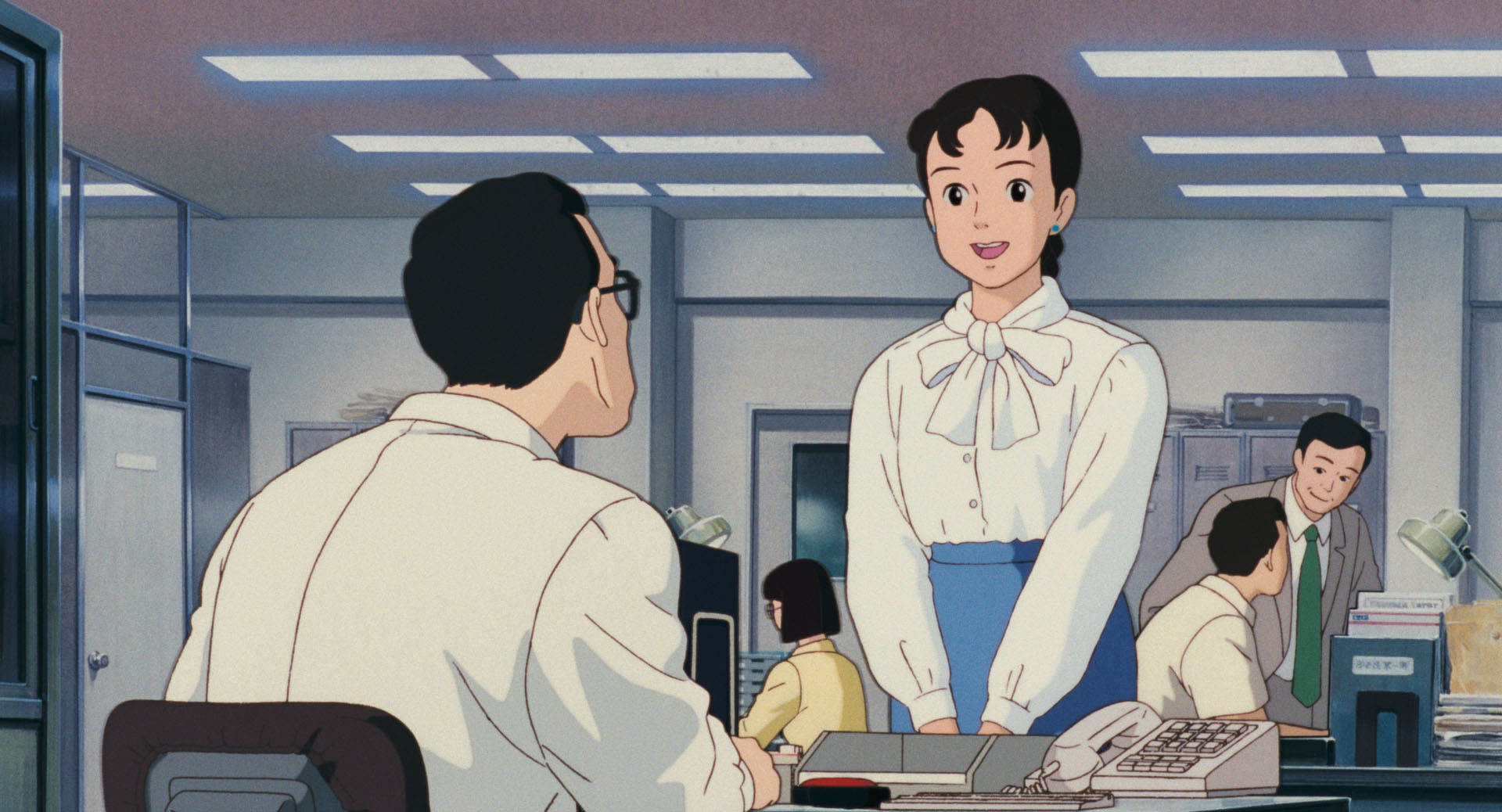
Quick answer: Only Yesterday is built around Taeko Okajima, a 27-year-old Tokyo office worker whose trip to rural Yamagata brings back vivid memories of herself at age ten. Toshio, a thoughtful young farmer, helps adult Taeko imagine a different future. Her parents, older sisters, classmates and childhood crush are not just background figures: each reveals how family expectations, embarrassment and small moments of kindness shaped the person she became.
Isao Takahata’s film moves between 1982 and Taeko’s school days in 1966. The two versions of Taeko are the same character, but they do not experience the world in the same way. Adult Taeko can interpret events that her younger self could only feel. This character guide explains that relationship, Toshio’s role, the Okajima family and the classmates who remain unusually powerful in Taeko’s memory.
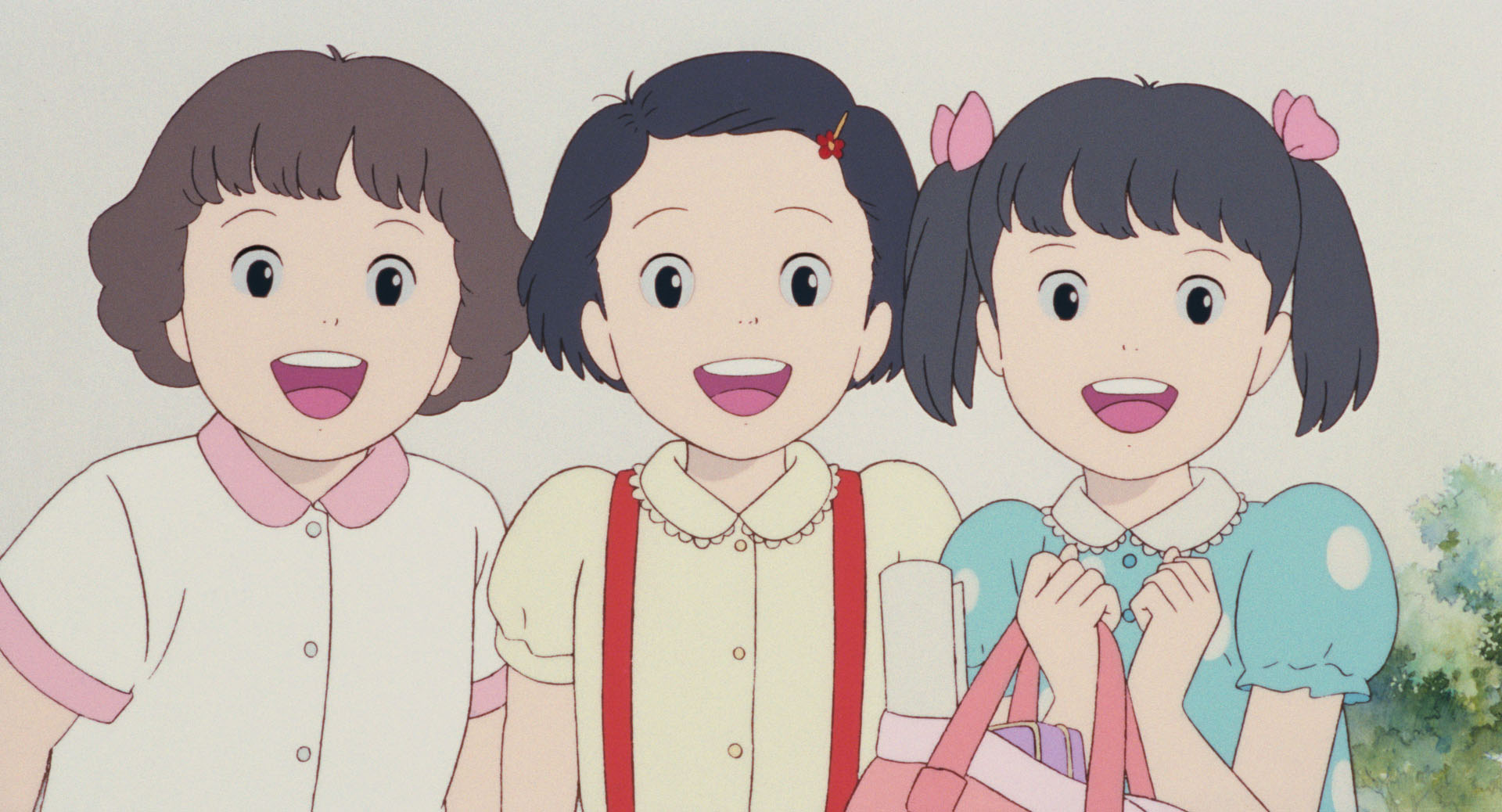
Only Yesterday characters at a glance
- Taeko Okajima: a 27-year-old office worker looking back at herself as a ten-year-old schoolgirl.
- Toshio: a Yamagata farmer whose values and curiosity give Taeko space to reconsider her life in Tokyo.
- Young Taeko: not a separate person, but the vivid childhood self whose disappointments and joys travel with adult Taeko.
- Taeko’s mother and father: caring but conventional parents whose reactions teach Taeko what behaviour is expected from her.
- Nanako and Yaeko: Taeko’s older sisters, who can be helpful, teasing or impatient from the youngest child’s point of view.
- Hirota: Taeko’s shy childhood crush, remembered through an awkward but exhilarating connection.
- Abe: a classmate associated with poverty, shame and one of Taeko’s most uncomfortable childhood memories.
Taeko Okajima: the adult at the centre of the film
Adult Taeko appears settled from the outside. She has a job in Tokyo, can travel independently and is capable of joining the demanding safflower harvest. Yet she is also aware that her current life may not fit her deepest interests. Her holiday in Yamagata is not simply an escape from work. It gives her a practical experience of rural labour and a chance to ask whether the life she has accepted is the life she wants.
Taeko is reflective without being completely self-aware. She tells stories from childhood with humour, but those stories also expose old hurts. She remembers being bad at fractions, feeling left behind by her more confident sisters, wanting a holiday in the countryside and being humiliated when adults did not understand her. The memories arrive because her present choice has made the past relevant.
Why ten-year-old Taeko feels like a second main character
The fifth-grade Taeko is energetic, imaginative and highly sensitive to how other people see her. She can be stubborn or theatrical, but the film never treats her emotions as trivial. A first pineapple, a school performance, a poor maths result or a rumour about a boy can become enormous because childhood offers so little control over the surrounding world.
Young Taeko is not presented as a puzzle that adult Taeko has solved. She is still present inside the adult. Her remembered embarrassment affects how Taeko judges herself, while moments of delight preserve desires that practical adulthood has pushed aside. The film’s most distinctive character idea is that growing up does not replace the child. It creates a person who carries that child forward.
Toshio: guide, listener and possible partner
Toshio works in farming and is committed to the countryside without romanticising it as an effortless refuge. He explains how people have shaped the rural landscape and talks seriously about agriculture. That matters because Taeko initially approaches country life partly as a visitor. Toshio respects her enthusiasm while helping her see the knowledge and labour behind the scenery.
More importantly, he listens. Taeko can share memories with him without being dismissed as childish. He does not rescue her from a villain or solve her past. He gives her a relationship in which curiosity flows both ways. Their attraction grows through conversation, shared work and compatible values rather than the dramatic declarations typical of a conventional romance.
Are Taeko and Toshio in love?
The film leaves room for viewers to decide how far their relationship has developed before the final choice. There is clear warmth and interest between them, and the farming family recognises the possibility of a match. Taeko’s hesitation is not proof that she feels nothing. It reflects the scale of what the relationship could mean: accepting Toshio may also mean changing where and how she lives.
That is why Toshio is more than a love interest. He represents a future that feels connected to Taeko’s neglected values. The important question is not whether a holiday romance sweeps her away. It is whether she can make an adult decision without letting fear, habit or other people’s expectations speak for her.
Taeko’s mother: care shaped by convention
Taeko’s mother manages the household and often responds to her youngest daughter through comparison with what a sensible child should do. She worries about school results, manners and appearances. Her reactions can make young Taeko feel foolish, particularly when Taeko’s imagination or confusion does not fit the family’s practical rhythm.
The character is not a simple cruel parent. Much of her behaviour comes from ordinary responsibility and the social standards of the period. That makes the effect on Taeko more believable. Childhood wounds do not always come from obvious malice. They can come from repeated moments in which a child’s inner life is treated as inconvenient.
Taeko’s father and the limits placed on her
Taeko’s father is quieter and more distant. His authority becomes especially visible when Taeko wants to perform. The possibility excites her, but the family’s decision closes it down. In another painful moment, he strikes her after she runs outside without shoes. The film does not turn the incident into melodrama, yet Taeko remembers it because it breaks her sense of safety and dignity.
His restraint shows how power can operate without constant shouting. Young Taeko knows that some decisions are not hers to make. As an adult, she faces another life-changing choice, but this time the film asks whether she can claim the authority that childhood denied her.
Nanako and Yaeko: Taeko’s older sisters
Taeko’s sisters are older, more experienced and often better equipped to meet family expectations. From Taeko’s perspective, they can seem sophisticated one moment and cutting the next. They explain things, tease her and join the family tendency to judge her school performance. Their presence makes Taeko feel like the inexperienced youngest child whose reactions are easy to dismiss.
They are also important because memory preserves family hierarchy. Adult Taeko may now understand why her sisters behaved as they did, but her ten-year-old self still feels the imbalance. The film does not require a dramatic reconciliation. It simply allows the adult viewer to recognise how ordinary sibling interactions can become part of a lasting self-image.
Hirota and Taeko’s childhood crush
Hirota is a talented baseball player whom classmates connect with Taeko through gossip. Their brief interaction is shy, awkward and emotionally huge. Neither child has the language for a mature romance. The power of the sequence comes from recognition: for a moment, Taeko feels that someone she likes may also see her as special.
The memory is joyful because it is unresolved. Taeko recalls the feeling of almost floating rather than building a fantasy about what Hirota might have become. He represents one of childhood’s private triumphs, a counterweight to memories of failure and shame.
Abe and the memory Taeko cannot make comfortable
Abe is a classmate from a poor family who is isolated by the other children. Taeko tries to behave kindly, but the situation is tangled with the class’s prejudice and her own uncertainty. When Abe rejects the gesture expected between them, Taeko is left hurt and confused. Adult Taeko revisits the incident because she can now sense pressures that her younger self did not understand.
The film does not use Abe merely to prove Taeko was good or bad. The memory forces her to confront the limits of childhood empathy. She wanted to do the right thing while still participating in a social environment that marked him as different. His anger has a life beyond her need to feel kind.
What the characters reveal about growing up
Only Yesterday rejects the idea that adulthood means leaving childhood behind. Taeko grows by changing her relationship to the girl she was. She can recognise her parents’ limitations without reducing them to villains, understand social shame without pretending she handled it perfectly and remember delight without dismissing it as childish.
For a broader spoiler-light overview, read the complete Only Yesterday movie guide. Viewers looking for more reflective films can also use the Studio Ghibli movies for adults guide or compare Takahata’s approach in the Studio Ghibli directors watch guide.
Final character guide verdict
Taeko is one of Studio Ghibli’s most psychologically detailed protagonists because the film lets her be two ages at once. Young Taeko supplies the feelings that adult Taeko has learned to manage but not erase. Toshio does not complete her; he helps create the conditions in which she can hear herself clearly.
The parents, sisters and classmates matter because no single dramatic event explains Taeko. She is formed by dozens of ordinary encounters. The film’s character story is ultimately about giving those encounters their proper weight, then choosing a future that is informed by the past rather than controlled by it.
FAQ
How old is Taeko in Only Yesterday?
Taeko is 27 in the film’s 1982 storyline and ten in the childhood memories set in 1966.
Is young Taeko a separate character?
No. She is Taeko’s remembered childhood self. The film presents her so vividly that the past often feels as immediate as the adult storyline.
Who is Toshio?
Toshio is a young farmer in Yamagata who works with the family Taeko visits. He becomes her closest listener and a possible romantic partner.
Do Taeko and Toshio end up together?
The final sequence strongly supports Taeko choosing to return and pursue a life connected with Toshio, although the film focuses on her decision rather than showing a detailed future relationship.
Image credit: Official stills from the Only Yesterday page on ghibli.jp, used under Studio Ghibli’s common-sense image-use notice. This article is an independent fan guide and is not affiliated with Studio Ghibli.