Quick answer: Princess Mononoke is easiest to understand when you see its characters as people caught between survival, nature, illness, pride, and fear. Ashitaka is the outsider trying to stop hatred from spreading. San fights for the forest because the wolves raised her. Lady Eboshi protects Iron Town while also damaging the forest. The film works because none of them are simple heroes or villains.
This guide explains the main Princess Mononoke characters in a spoiler-light way for new viewers, then adds extra context for fans rewatching the film. If you are building a Studio Ghibli watch list, pair this with the Studio Ghibli movies in order guide so you can place the film alongside Ghibli’s gentler coming-of-age stories and its darker mythic adventures.
Why the characters matter so much
Princess Mononoke is not built around a single villain to defeat. Hayao Miyazaki gives almost every major character a reason for what they do, even when their choices create real harm. That is why the movie still feels unusually adult for an animated fantasy. The conflict is not “humans bad, nature good” or the reverse. It is about what happens when communities, spirits, workers, animals, and rulers all believe they are protecting something essential.
The best way to follow the film is to track what each character is defending. Ashitaka defends life and balance. San defends the forest and her wolf family. Lady Eboshi defends Iron Town’s people and their independence. Moro defends the old forest order. Jigo defends opportunity, profit, and political advantage. Once you view the cast this way, the story becomes much clearer.
Ashitaka: the cursed outsider trying to see clearly
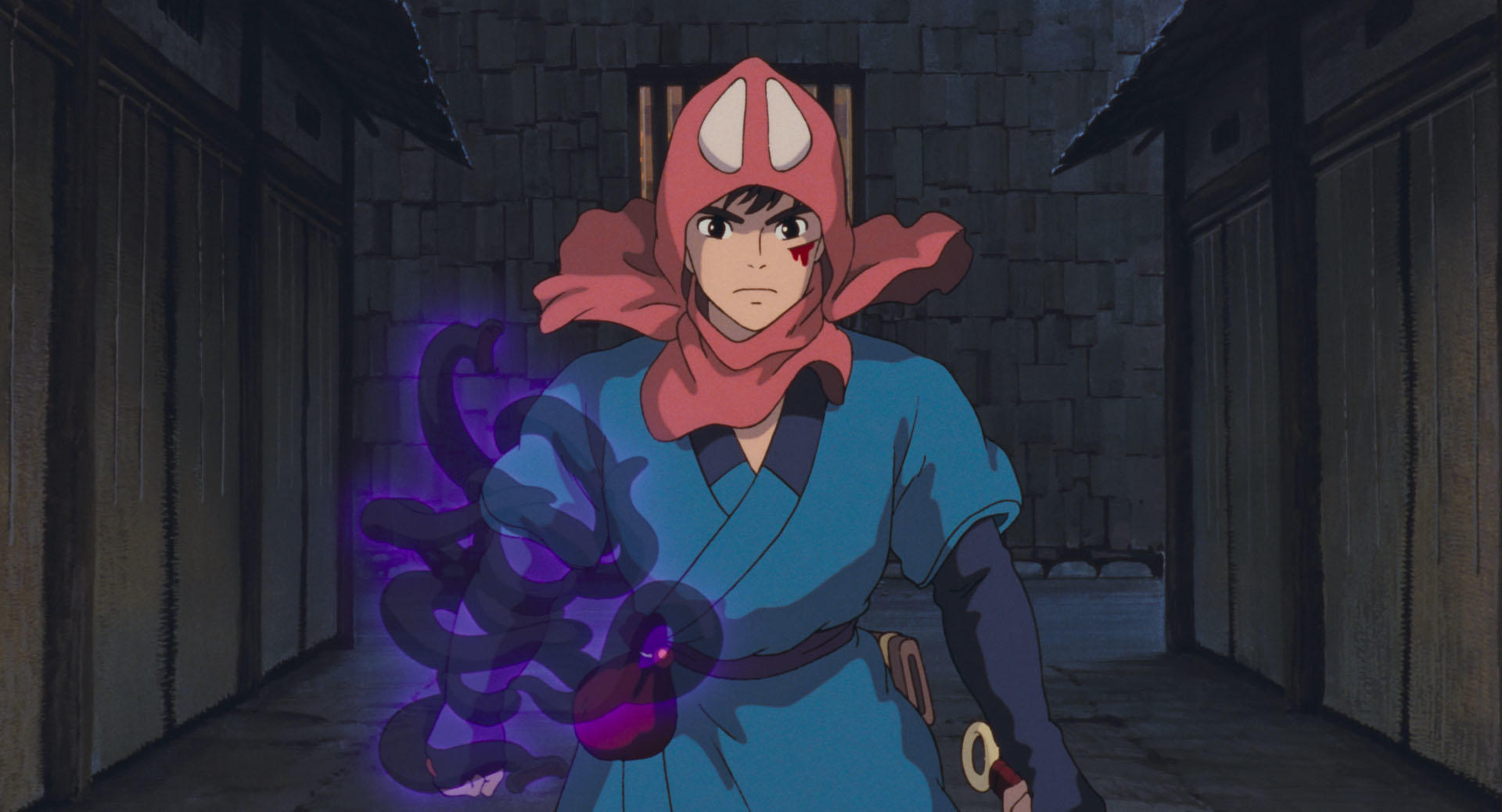
Ashitaka begins the story as a young Emishi prince who is forced away from home after a violent encounter with a corrupted boar god. His curse gives him terrifying strength, but it also marks him as someone living on borrowed time. That makes him different from many fantasy heroes. He is not chasing glory, a throne, or revenge. He is looking for the source of hatred before it consumes him and everyone else.
His most important trait is his attempt to “see with eyes unclouded by hate.” That line is the key to the whole film. Ashitaka does not always succeed, and he is not neutral in a lazy way. He acts when people are threatened. But he keeps refusing the easy comfort of choosing one side and dehumanising the other. For first-time viewers, he is the emotional guide through a world where every faction has a wound.
San: Princess Mononoke, raised by wolves
San is the character most people remember first. She is fierce, fast, and visually unforgettable, with her red mask, knife, fur cloak, and wolf family. But the title “Princess Mononoke” can be misunderstood. San is not a royal princess in the usual fairy-tale sense. She is a human girl raised by the wolf goddess Moro after being abandoned by humans. She sees herself as part of the forest, not human society.
San’s anger is not random. Iron Town’s expansion threatens the forest, kills animals, and disturbs the spirits. From her point of view, humans are invaders who take and burn and poison. Her relationship with Ashitaka matters because he does not ask her to stop loving the forest. He challenges the idea that hatred is the only way to protect it.
Lady Eboshi: protector, destroyer, and the film’s most complicated leader
Lady Eboshi is one of Studio Ghibli’s richest antagonistic figures because she is both admirable and dangerous. She leads Iron Town, builds firearms, clears forest, and wages war against the animal gods. Those actions make her a threat to San and the forest. At the same time, she gives shelter and work to people who have been discarded by the wider world, including former brothel workers and people with leprosy.
That contradiction is the point. Eboshi is not cruel for fun. She is a modernising leader who believes progress, labour, and human dignity are worth fighting for. The tragedy is that her vision depends on treating the forest as an obstacle rather than a living world. She is a reminder that good intentions can still cause destruction when power has no restraint.
Moro: the wolf goddess and San’s mother
Moro is ancient, bitter, intelligent, and tired. She loves San as her daughter, but she also knows San is human, which gives their bond a painful edge. Moro understands the decline of the old gods better than most characters. She knows the forest is losing ground, and she knows that rage alone may not save it.
Her conversations with Ashitaka are some of the film’s sharpest moments. Moro sees through sentimentality. She does not want comforting speeches about peace. She wants to know what humans will actually stop taking. That makes her more than a majestic animal companion. She is the voice of an older, wounded world that no longer trusts human promises.
Lady Eboshi’s people: why Iron Town is not just “the enemy”
Iron Town is full of memorable supporting characters, especially Toki, the women working the bellows, the guards, and the sick people Eboshi protects. These characters matter because they show what Eboshi’s leadership means on the ground. For them, Iron Town is not an abstract symbol of industry. It is safety, wages, food, dignity, and a future outside systems that treated them as disposable.
This is why the movie’s conflict hurts. If Iron Town were only greedy, the story would be simpler and weaker. Instead, Ghibli makes you understand why people would defend it. The forest is alive and sacred, but the humans are not faceless villains. They are frightened workers trying to survive.
Jigo: the opportunist who understands the human world
Jigo is sometimes funny, sometimes helpful, and often deeply slippery. He moves through the story as a monk-like agent with political connections and a practical appetite for reward. He is not driven by spiritual awe. He sees the forest and the gods as pieces in a larger human game of power, contracts, and advantage.
That makes him important. Jigo represents a world beyond Iron Town and the forest, a world of rulers and buyers who want results without paying the moral cost directly. He often sounds reasonable, which is exactly why he is dangerous. His presence reminds viewers that exploitation is not always loud. Sometimes it arrives smiling with paperwork.
The boar gods, the ape tribe, and the forest spirits
The animal factions show different responses to human pressure. The boars respond with pride and doomed force. The apes are frightened and desperate. The wolves are strategic but furious. The kodama, by contrast, are small, strange, and delicate signs that the forest is still spiritually alive. Each group gives the forest more texture than a simple green backdrop.
The Forest Spirit itself is the film’s biggest mystery. It is gentle and terrifying, life-giving and death-bringing, beautiful and unknowable. The design avoids a simple mascot version of nature. Ghibli’s point is that nature is not just cute, scenic, or useful. It is bigger than human categories.
Who is the real villain?
The honest answer is that Princess Mononoke does not have one clean villain. Hatred is closer to the villain than any one person. Fear, greed, revenge, and the refusal to recognise other lives all push the story toward disaster. Eboshi causes enormous harm, but she is not empty evil. San attacks humans, but she is defending a world being destroyed. Jigo manipulates events, but he thrives because larger systems reward that behaviour.
This is why the film stays with people. It asks viewers to care about more than one kind of suffering at once. That is harder than a simple good-versus-evil adventure, but it is also what makes the movie feel timeless.
Best character to watch on a rewatch
On a rewatch, pay close attention to Lady Eboshi. First-time viewers often focus on San and Ashitaka because they are the emotional and visual centre of the story. Eboshi becomes more interesting once you already know the plot. Notice how much loyalty she inspires, how calmly she makes brutal decisions, and how rarely she doubts her larger mission until the cost becomes impossible to ignore.
San is the most iconic character, Ashitaka is the moral centre, but Eboshi is the character who makes the film’s argument complicated.
FAQ
Is San actually a princess?
Not in the traditional royal sense. “Princess Mononoke” refers to San’s feared, spirit-like identity in connection with the wolf gods and forest, not a normal human title.
Is Lady Eboshi evil?
No. She is destructive and responsible for serious harm, but the film also shows her protecting vulnerable people. She is best understood as a complicated leader whose progress has a brutal cost.
Why is Ashitaka important?
Ashitaka gives the audience a way through the conflict without reducing either side to a cartoon enemy. His curse also makes the danger of hatred physical and visible.
Can children watch Princess Mononoke?
It is one of Ghibli’s more intense films, with violence, blood, frightening images, and heavy themes. Many older children and teens can handle it, but it is not as gentle as My Neighbor Totoro or Kiki’s Delivery Service.
Related Studio Ghibli guides
- Start with the complete Princess Mononoke movie guide for the spoiler-light story, themes, age guidance, production context, and official still gallery.
- Studio Ghibli movies in order
- Studio Ghibli movies in order: beginner-friendly watch guide
Image source: official Studio Ghibli still from ghibli.jp’s Princess Mononoke work page. Studio Ghibli’s official image pages include the usage note “※画像は常識の範囲でご自由にお使いください。”