Quick answer: Studio Ghibli food scenes feel comforting because they are rarely just about eating. They show care, recovery, trust, ordinary work, family rhythm, and the small rituals that help characters feel human. A bowl of noodles, a picnic, bread from a bakery, or a shared meal can do as much storytelling as a chase scene.
This guide looks at why Ghibli meals stay in your memory, which films use food especially well, and how to watch these scenes without reducing them to cosy internet screenshots. The food is beautiful, but the emotion around it is usually the real point.
Why food matters so much in Studio Ghibli
Food in Studio Ghibli films usually arrives when a character is tired, frightened, displaced, or trying to belong. That is why the scenes feel bigger than the plate. The meal tells us who has power, who is being cared for, who is pretending to be fine, and who is slowly becoming part of a new place.
In many animated films, food is a gag or a decorative detail. In Ghibli, it is often a pause that lets the audience breathe. Characters cook, unwrap, chew, pour, serve, clean up, and wait. Those actions slow the film down just enough for the emotional stakes to land.
The best Ghibli food scenes are about care
A comforting meal is one of the simplest ways a Ghibli character says, “you are safe for now.” That is true whether the setting is a bathhouse, a bakery, a cottage, a moving castle, or a family home. The food may look delicious, but the gesture behind it is what makes the scene feel warm.
This is especially clear in films where the main character is away from familiar support. Chihiro in Spirited Away, Kiki in Kiki’s Delivery Service, Sophie in Howl’s Moving Castle, and Sheeta in Castle in the Sky all move through unfamiliar worlds. Food becomes a way to show whether that world is hostile, transactional, generous, or beginning to soften.
Spirited Away: hunger, greed, and recovery
Spirited Away uses food in several different ways. At the start, eating without respect becomes a warning sign. Chihiro’s parents treat the mysterious food stall as something they can simply consume, and the film turns that appetite into danger. Later, food becomes restorative rather than greedy. When Chihiro is overwhelmed, small acts of feeding help bring her back to herself.
That contrast is why the film’s food imagery is so strong. Ghibli is not saying food is automatically cosy. It can represent appetite without responsibility, but it can also represent care, endurance, and the body’s need to recover after fear.
Kiki’s Delivery Service: bread, work, and belonging
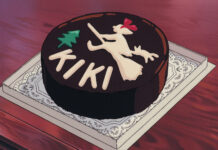
Kiki’s Delivery Service may be the best Ghibli film for showing food as everyday community. The bakery is not just a charming location. It gives Kiki shelter, work, routine, and a place to be useful. Bread becomes part of the film’s rhythm: ordinary, practical, warm, and tied to real labour.
That matters because Kiki is not on a grand quest to save a kingdom. She is trying to build confidence in a new city. The food around her helps make that story feel grounded. It reminds us that independence is not only dramatic bravery. Sometimes it is finding somewhere to sleep, earning trust, and helping with the shop.
Howl’s Moving Castle: breakfast as domestic magic
The breakfast scenes in Howl’s Moving Castle are memorable because they turn chaos into domestic order. The moving castle is strange, noisy, and unstable, but cooking gives the characters a shared centre. Sophie’s practical energy changes the space. Calcifer becomes part of the ritual. Howl’s glamour is pulled back into something more human.
That is one reason the film has such strong rewatch value. The magic is spectacular, but the homely moments make the fantasy emotionally usable. Viewers remember the eggs and bacon because the scene makes the impossible world feel lived in.
My Neighbor Totoro: simple food and family rhythm
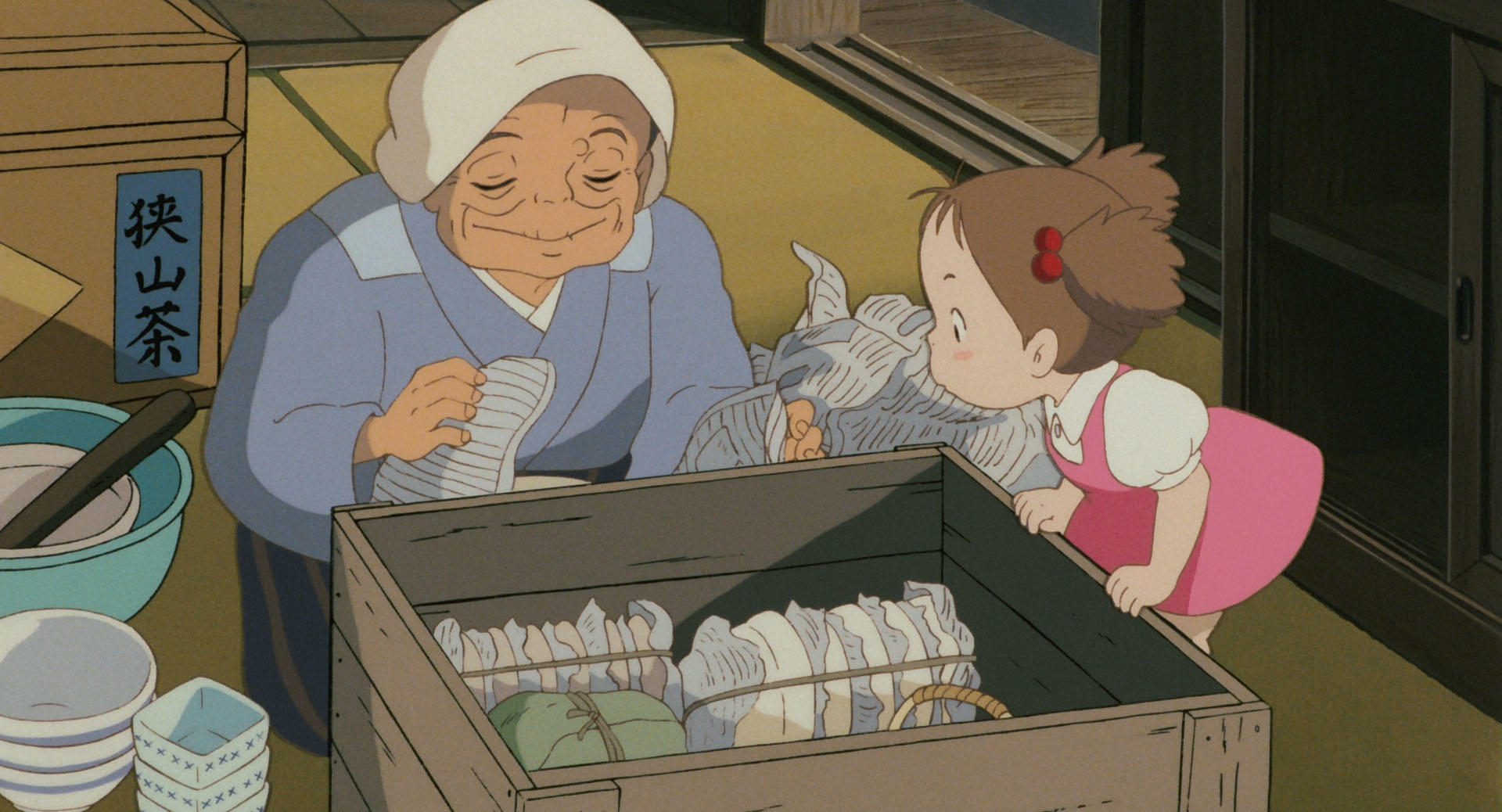
My Neighbor Totoro does not need elaborate fantasy meals to make food feel important. Lunches, vegetables, and family routines help establish the film’s gentle realism. The story has spirits and wonder, but the food keeps it connected to childhood, home, and the passing of ordinary days.
For younger viewers, these details make the world understandable. For adults, they can feel nostalgic without becoming forced. Ghibli trusts that a packed lunch or a freshly picked vegetable can carry emotional meaning if the film has paid attention to the people around it.
Why these scenes became so shareable
Ghibli food clips and screenshots travel well online because they are instantly readable. You do not need to know the entire plot to understand the pleasure of steam, crunch, colour, and careful hand movement. The animation gives the food weight. It looks cooked rather than merely drawn.
But the best way to appreciate those images is still inside the films. A screenshot can show the meal, while the scene shows the relationship. The comfort comes from the combination of animation, sound, timing, fatigue, kindness, and context.
Best Ghibli films to watch for food scenes
- Spirited Away, for food as temptation, greed, and recovery.
- Kiki’s Delivery Service, for bakery life, work, and everyday community.
- Howl’s Moving Castle, for breakfast, domestic magic, and found-family energy.
- My Neighbor Totoro, for simple family meals and rural warmth.
- Ponyo, for childlike comfort, noodles, and stormy-night coziness.
- Castle in the Sky, for adventure food that feels practical and generous.
Related guides
If you are planning a comfort-watch session, start with the best Studio Ghibli movies for anxious days, the cosy rewatch guide, or the beginner-friendly watch order. For character-led comfort, the Kiki beginner guide is a natural next read.
FAQ
Which Studio Ghibli movie has the best food scenes?
Spirited Away, Kiki’s Delivery Service, and Howl’s Moving Castle are the strongest starting points. Spirited Away has the most symbolic food scenes, while Kiki and Howl are warmer, more domestic choices.
Why does Ghibli food look so good?
It looks good because the animation focuses on texture, movement, timing, and physical process. Food is poured, cut, lifted, shared, and eaten in ways that feel observed from real life rather than added as decoration.
Are Ghibli food scenes only there for comfort?
No. Some are comforting, but others show greed, danger, exhaustion, responsibility, or social rules. That range is why they work so well. The films understand that food can mean many different things depending on who is eating and why.
Image note: The still used in this guide comes from Studio Ghibli’s official image materials at ghibli.jp, where official stills are provided for common-sense use. This site is an independent fan guide and is not affiliated with Studio Ghibli.