Quick answer: The Tale of the Princess Kaguya ends with Kaguya returning to the Moon because earthly life cannot keep her, even though the love, grief, mess, and beauty she found on Earth were real. The ending is not a simple punishment or a dream. It is a bittersweet farewell about freedom, social expectation, memory, and the ache of wanting a life that no one else can fully give you.
What happens at the end?
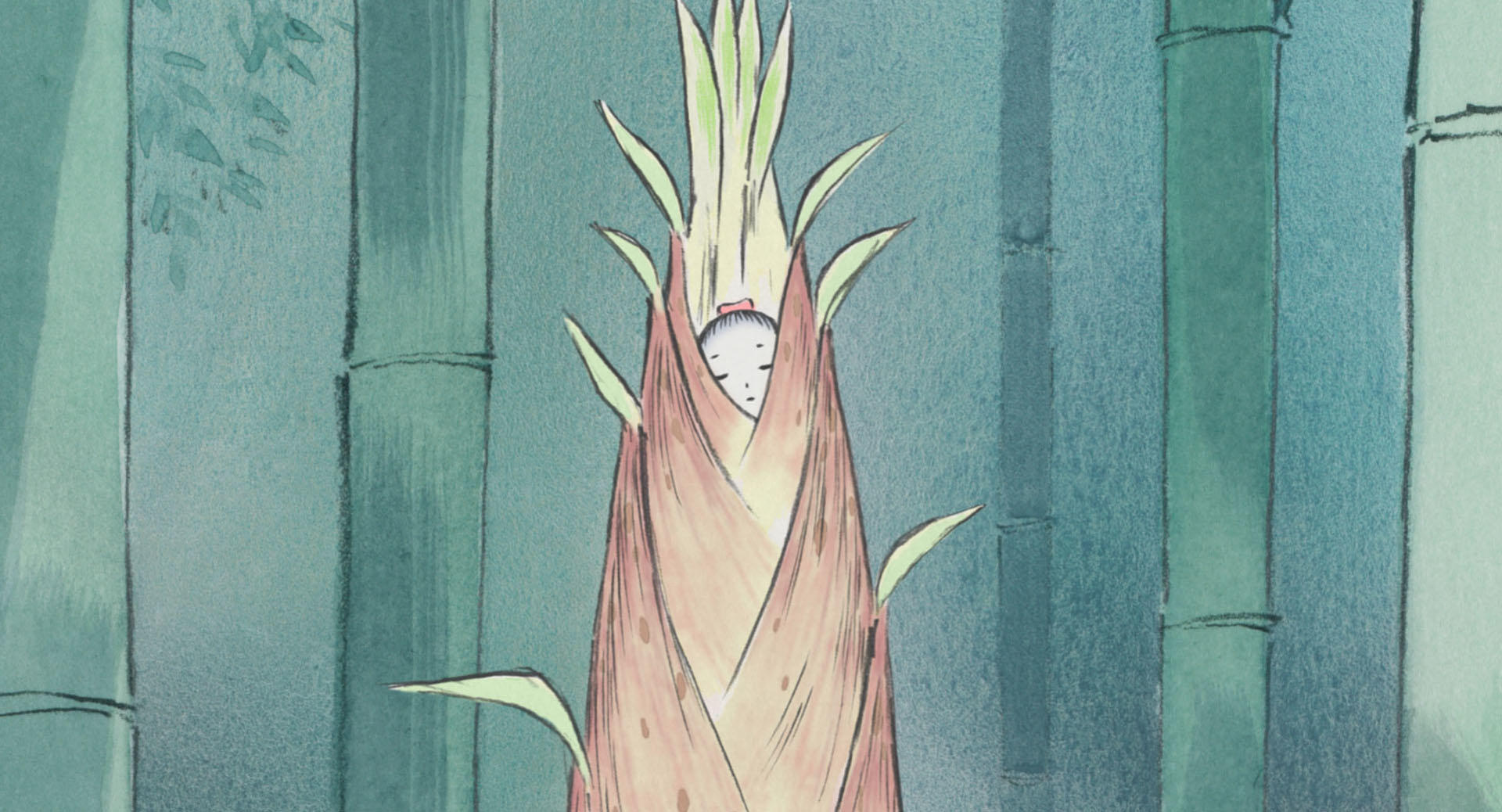
After being discovered inside a glowing bamboo shoot, Kaguya grows from a tiny princess into a young woman with impossible speed. Her adoptive father believes the treasure and fine cloth found in the bamboo mean she is destined for nobility, so he moves the family from the countryside to the capital. Kaguya is dressed, renamed, trained, displayed, and pushed toward aristocratic marriage, even though her happiest memories are rooted in fields, trees, friends, and ordinary play.
The ending brings the Moon procession to Earth. Kaguya remembers that she came from the Moon and that her longing, shame, and wish to escape the pressure of court life summoned her people back. When the celestial robe is placed on her shoulders, earthly sorrow and memory begin to fall away. She resists because she finally understands that pain is part of what made her human life meaningful, but the procession carries her away.
Why does Kaguya have to return to the Moon?
On the surface, Kaguya returns because she belongs to the Moon. In the older folktale, the Moon people arrive as a matter of destiny. Isao Takahata’s version makes that destiny feel more tragic and personal. Kaguya’s return is tied to her own desperate wish to escape a life that has become too controlled. She does not consciously ask to abandon everyone forever, but her longing for release calls the Moon back to claim her.
That is what makes the ending hurt. Kaguya’s wish is understandable. She is exhausted by performance, status, suitors, and rules. But the rescue offered by the Moon is not true freedom. It removes pain by removing the memory of love as well. The film asks whether a painless existence is worth losing the very experiences that made life beautiful.
Is the Moon heaven, home, or a prison?
The Moon is peaceful, bright, and almost emotionless. It can look like heaven, but the film frames it as something colder than that. Earth is noisy, muddy, unfair, and temporary, but it is also where Kaguya learns joy, affection, desire, embarrassment, anger, and regret. The Moon offers purity at the cost of feeling.
This is why the celestial music feels so unsettling. The procession is graceful, but it does not feel comforting. Its beauty has no room for the people crying below. In many Studio Ghibli films, flight suggests liberation. Here, the final upward movement is devastating because it pulls Kaguya away from the imperfect world she has finally chosen.
What the robe means
The robe placed on Kaguya is one of the most important symbols in the ending. Once she wears it, she begins to forget earthly attachments. That does not mean her life on Earth was fake. It means the Moon’s version of peace depends on detachment. The robe is mercy and erasure at the same time.
For her adoptive parents, this is unbearable. They cannot argue with a cosmic law, and they cannot hold on to her by force. Their grief proves the exact thing the Moon cannot understand: attachment hurts because it matters. Love creates loss, but without the possibility of loss, love becomes weightless.
Why Sutemaru matters
Sutemaru represents the life Kaguya might have had if she had remained close to the countryside. Their late dreamlike flight together is not a literal plan for a perfect future. It is a vision of possibility: running, laughing, choosing each other, and escaping the scripts written for them. The scene is beautiful because it gives Kaguya a taste of self-directed life, but it is also honest enough to show that time has moved on.
Sutemaru has a family. Kaguya has been changed by the capital. They cannot simply rewind childhood and live inside an untouched memory. The tragedy is not that one perfect romance fails. The tragedy is that Kaguya’s world gave her so few honest choices that even freedom arrives too late.
The film’s critique of status and performance
Much of the movie is about adults mistaking status for happiness. Kaguya’s father loves her, but he interprets love through ambition. He sees fine houses, titles, and wealthy suitors as proof that he is doing right by her. The capital teaches Kaguya how to sit, smile, hide her teeth, restrict her movement, and become an object of admiration.
The impossible tasks she gives the suitors are not just clever tests. They expose how shallow their claims are. Each man wants an idea of Kaguya more than Kaguya herself. Their failures show the absurdity of a marriage market built on display, conquest, and reputation.
Why the ending is so emotional
The ending works because it refuses to flatten Kaguya’s life into either misery or magic. Earth wounds her, but Earth also gives her everything worth remembering. Her adoptive parents are flawed, but their love is real. Sutemaru is not a simple soulmate solution, but he embodies a kind of aliveness she misses. The countryside is not perfect, but it holds the rhythm of her truest self.
That complexity is why the final image lingers. Kaguya looks back at Earth after the robe begins its work. Some part of her still knows that what she is leaving behind was precious. The film lets that glance carry more force than a long explanation could.
Why the sketch-like animation matters
The film’s loose charcoal and watercolour lines make Kaguya’s feelings seem as if they are being remembered while they disappear. During moments of panic or escape, the drawings become rougher and faster instead of merely showing a polished fantasy world. That visual instability strengthens the ending: the Moon procession is controlled and serene, while Kaguya’s earthly life was vivid precisely because it was imperfect, physical and temporary.
How it fits within Studio Ghibli
The Tale of the Princess Kaguya is one of Studio Ghibli’s most visually distinct films, but its emotional concerns connect strongly with the studio’s wider body of work. Like many Ghibli movie guides on this site explore, it cares about childhood, nature, social pressure, and the cost of growing up inside systems that do not understand the soul.
It also pairs well with quieter character-led stories such as When Marnie Was There and coming-of-age films such as Kiki’s Delivery Service. All three are interested in identity, but Kaguya is the most tragic because her world recognises her beauty before it recognises her personhood.
Ending explained in one sentence
Kaguya returns to the Moon because her wish to escape earthly suffering summons her celestial home, but the tragedy is that she only fully understands the value of Earth’s messy, painful, beautiful life as she is being taken away from it.
FAQ
Is Princess Kaguya from the Moon?
Yes. The story confirms that Kaguya belongs to the Moon, adapting the classic Japanese tale of the bamboo cutter while giving her inner conflict a stronger emotional focus.
Does Kaguya forget everyone?
The celestial robe begins to remove her earthly sorrow and memory. The final look back suggests resistance and lingering feeling, which is part of why the ending is so painful.
Is the ending happy or sad?
It is bittersweet but mostly tragic. Kaguya escapes the pressures of Earth, yet loses the relationships, memories, and imperfect human experiences that gave her life meaning.
Image source: official Studio Ghibli stills via ghibli.jp, used within the source page’s common-sense usage notice.