Quick answer: the main Kiki’s Delivery Service characters are Kiki, Jiji, Osono, Tombo, Ursula, Madame, and the people of Koriko who slowly teach Kiki what independence really means. This guide is a spoiler-light who’s who for new viewers, parents, and fans revisiting one of Studio Ghibli’s warmest coming-of-age films.
Kiki
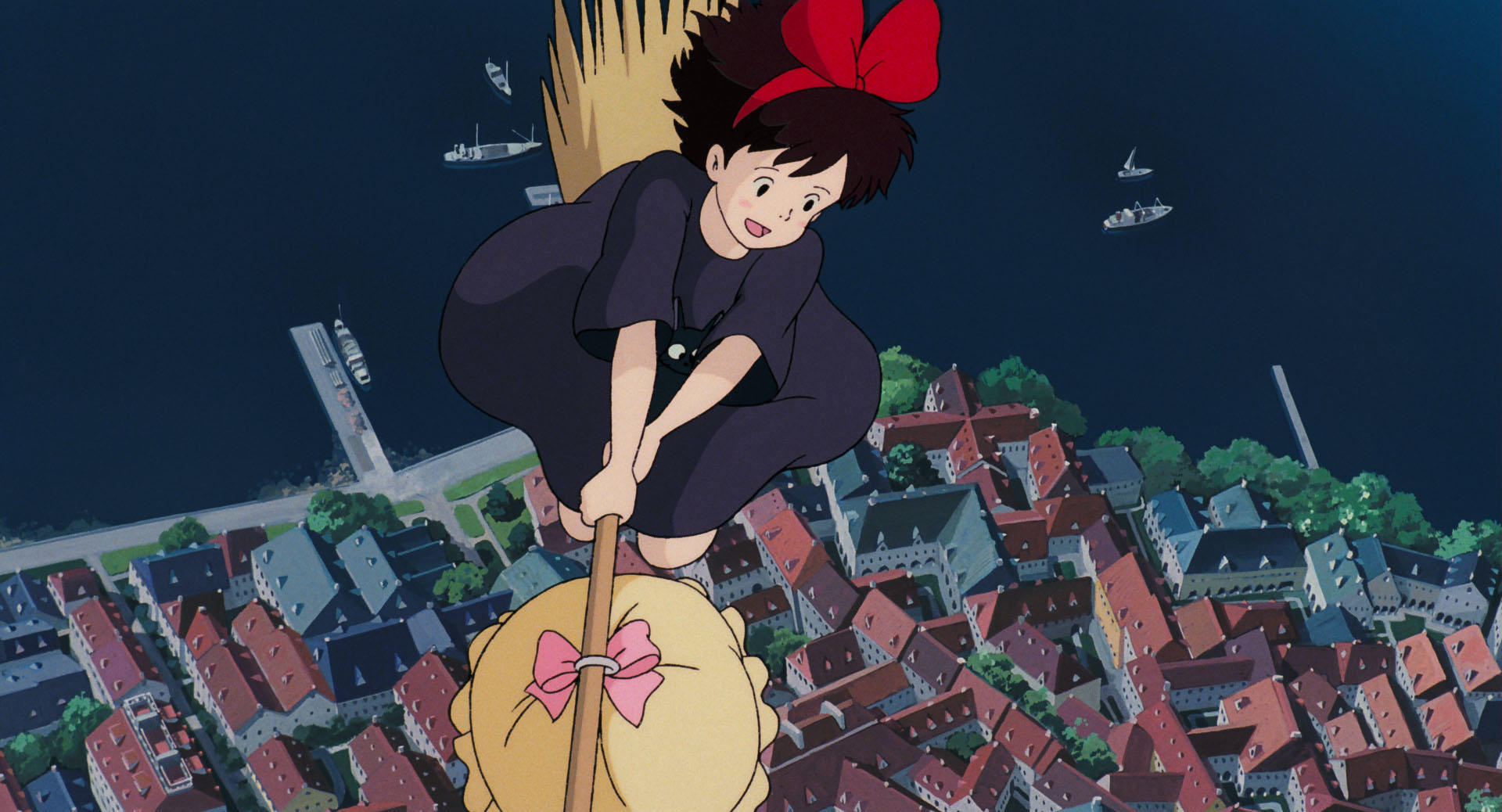
Kiki is a thirteen-year-old trainee witch who leaves home for her traditional year of independence. She can fly on a broom, but the film is not really about magical power. It is about confidence, work, burnout, friendship, and learning how to be useful without losing your sense of self. Kiki begins the story with a brave plan and a romantic idea of city life. Once she reaches Koriko, she discovers that being independent is less glamorous than it looked from home.
What makes Kiki memorable is how ordinary her struggle feels. She is not fighting a villain or trying to save a kingdom. She is trying to find customers, make rent, handle awkward social moments, and keep believing she has something to offer. That is why she remains one of Studio Ghibli’s most relatable leads. Her magic gives the story its sparkle, but her uncertainty gives it its emotional pull.
Jiji
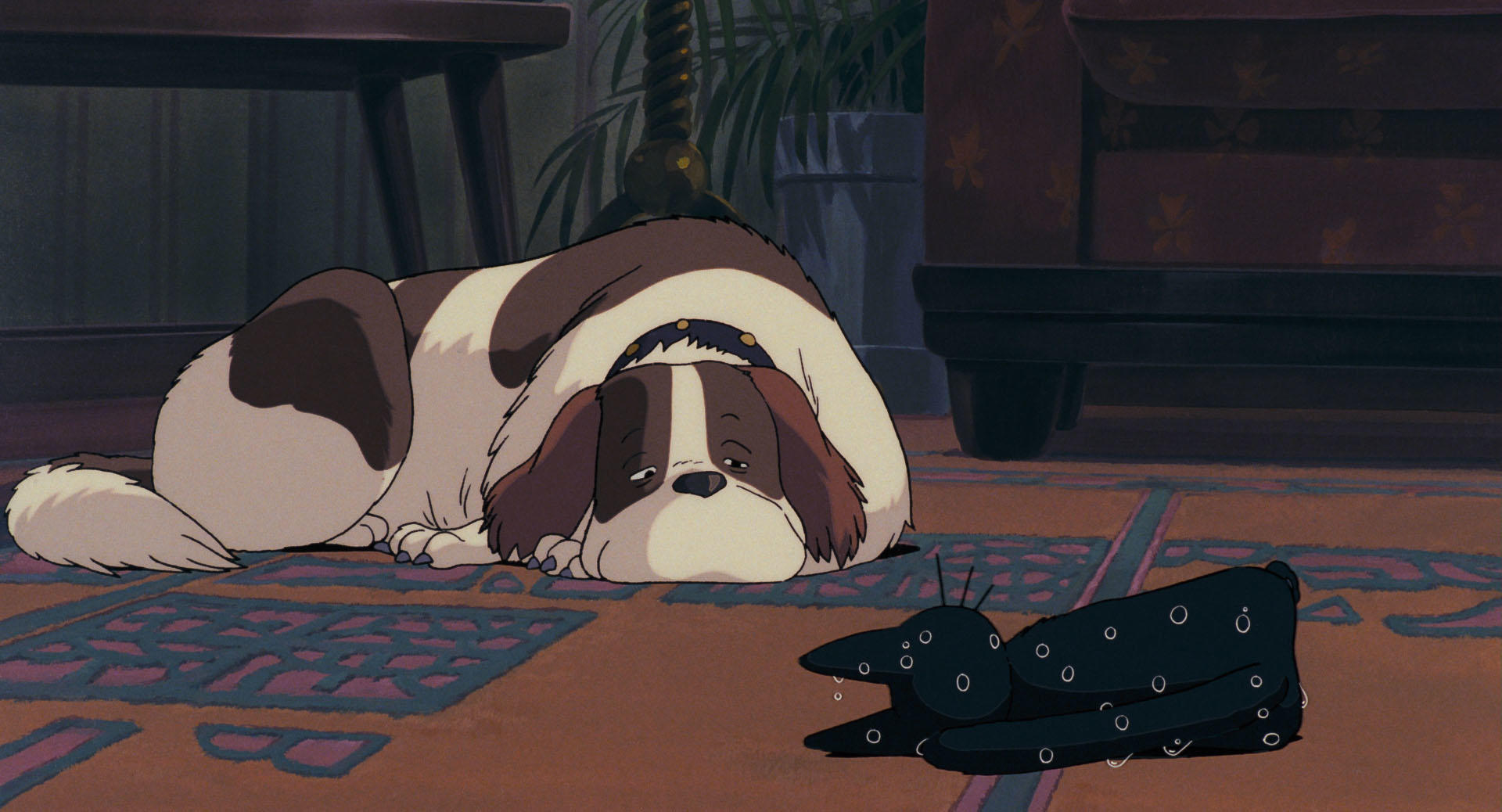
Jiji is Kiki’s black cat, companion, critic, and comic relief. Early in the film he works almost like Kiki’s inner voice, reacting to the city with suspicion and making dry comments when Kiki charges into a situation too quickly. He is loyal, but he is not simply cute decoration. Jiji shows how Kiki’s childhood world travels with her into the city.
As the story develops, Jiji’s role changes in a way that fans often debate. Without turning this into a heavy spoiler guide, his shift is tied to Kiki’s growth and to the film’s gentle idea that childhood forms of comfort can change as you mature. Jiji still matters, but Kiki must eventually trust herself without needing every feeling translated back to her.
Osono
Osono is the pregnant bakery owner who gives Kiki a room and a practical way to earn money. She is one of the film’s most important adults because she helps without smothering. Osono does not solve Kiki’s problems for her. Instead, she offers shelter, work, warmth, and a model of everyday generosity.
Her bakery turns the film’s city from a beautiful but intimidating place into a community Kiki can join. The delivery service is born from a small act of kindness: Kiki helps return a lost item, and Osono spots the seed of a business. That moment is pure Ghibli. A life direction appears not through a grand speech, but through paying attention to what someone can do well.
Tombo
Tombo is the aviation-obsessed boy who wants to understand Kiki’s flying. At first, he can seem pushy because he is fascinated by her powers before he fully understands her boundaries. The film uses that awkwardness honestly. Tombo is not a perfect romantic interest. He is a friendly, excitable teenager learning how to connect with someone who is under pressure and does not always want attention.
His importance grows because he represents curiosity without cynicism. Tombo loves flight as a craft, a dream, and a puzzle. Kiki flies because it is part of who she is, while Tombo studies flight because he longs for it. Their friendship works because each sees something in the other that they cannot quite access alone.
Ursula
Ursula, the artist who lives in the woods, is the film’s clearest guide to creative block. She understands that talent can disappear when you stare at it too hard. Her advice to Kiki is refreshingly non-magical: stop forcing it, rest, look around, and remember why the work mattered in the first place.
This is one reason Kiki’s Delivery Service connects so strongly with adults. Ursula’s scenes are not only about witchcraft. They are about anyone who has turned a gift into pressure. She helps Kiki see that losing confidence does not mean the gift was fake. It means the relationship to the gift needs care.
Madame and her housekeeper
Madame is one of Kiki’s elderly customers, and her storyline adds a tender layer to the film’s picture of work. She treats Kiki with respect, patience, and gratitude. Her housekeeper adds a little friction and humor, but the household ultimately shows Kiki that service work can carry emotion, memory, and dignity.
The delivery involving Madame’s pie is especially useful for understanding the movie. It contrasts sincere effort with social carelessness, and it shows Kiki encountering disappointment that cannot be fixed by flying faster. The scene is small, but it is one of the reasons the film feels truthful rather than sugary.
Kokiri and Okino
Kiki’s parents, Kokiri and Okino, appear mostly at the beginning, but they set the emotional foundation. Kokiri is a witch with knowledge, routine, and concern for her daughter. Okino is a gentle father who supports Kiki’s departure even while knowing he will miss her. Their goodbye gives the film its bittersweet launch.
They also establish that Kiki is entering a tradition bigger than herself. Leaving home is not rebellion. It is part of becoming a witch. That detail helps the story stay warm. Kiki is alone in Koriko, but she is not abandoned. She carries family love with her, even when the city feels cold.
Koriko as a character
The seaside city of Koriko almost behaves like a character in its own right. Its streets, bakeries, clock tower, traffic, customers, and changing weather shape Kiki’s mood. At first it is overwhelming, then practical, then lonely, then full of possibility. Studio Ghibli uses the city to show how independence feels before it explains it.
Koriko is also important because it is not instantly charmed by Kiki. Some people are kind, some are indifferent, and some are thoughtless. That balance keeps the film grounded. Kiki has to build belonging one errand, one conversation, and one act of courage at a time.
Why these characters work so well together
The cast of Kiki’s Delivery Service is not built around big plot twists. Each character reflects a pressure or support that Kiki needs to understand. Jiji is childhood closeness. Osono is practical community. Tombo is curiosity and peer friendship. Ursula is creative recovery. Madame is quiet kindness. Koriko is the wider world, beautiful and difficult at once.
Because the characters are so everyday, the film ages unusually well. Viewers can come back at different stages of life and identify with someone new. A child may focus on Kiki and Jiji. A teenager may notice Tombo or the fear of not fitting in. An adult may feel Ursula’s burnout advice or Osono’s grounded generosity more strongly.
Best characters for new viewers to watch closely
- Kiki: watch how her confidence changes from scene to scene, especially when work becomes pressure.
- Jiji: notice how his humor mirrors Kiki’s uncertainty early on.
- Osono: pay attention to how quietly she creates safety without taking over.
- Ursula: listen for the film’s clearest message about creativity and rest.
- Tombo: watch how his fascination with flight becomes part of Kiki’s wider support system.
FAQ
Who is the main character in Kiki’s Delivery Service?
Kiki is the main character. She is a young witch spending her first year away from home, learning how to support herself in a new city.
Is Jiji just comic relief?
No. Jiji is funny, but he also represents Kiki’s comfort zone, childhood perspective, and changing relationship with herself.
Why is Ursula important?
Ursula helps Kiki understand creative block. Her advice makes the film especially meaningful for artists, freelancers, students, and anyone who has felt disconnected from a skill they used to trust.
Is Tombo a love interest?
Tombo can be read as a light romantic interest, but the film keeps the focus on friendship, curiosity, and Kiki’s independence rather than making romance the main point.
Related Studio Ghibli guides
- Best Studio Ghibli Movies to Watch When You Need a Calm Reset
- Best Studio Ghibli Movies for Rainy Days: A Cozy Rewatch Guide
- Where to Start with Hayao Miyazaki Movies: A Beginner Friendly Route
- Spirited Away Characters Explained: Chihiro, Haku, No-Face and Yubaba
- Princess Mononoke Characters Guide: Who’s Who in the Forest War
Image credit: official Studio Ghibli stills from ghibli.jp, used in line with the official common-sense image notice on the Studio Ghibli works pages.