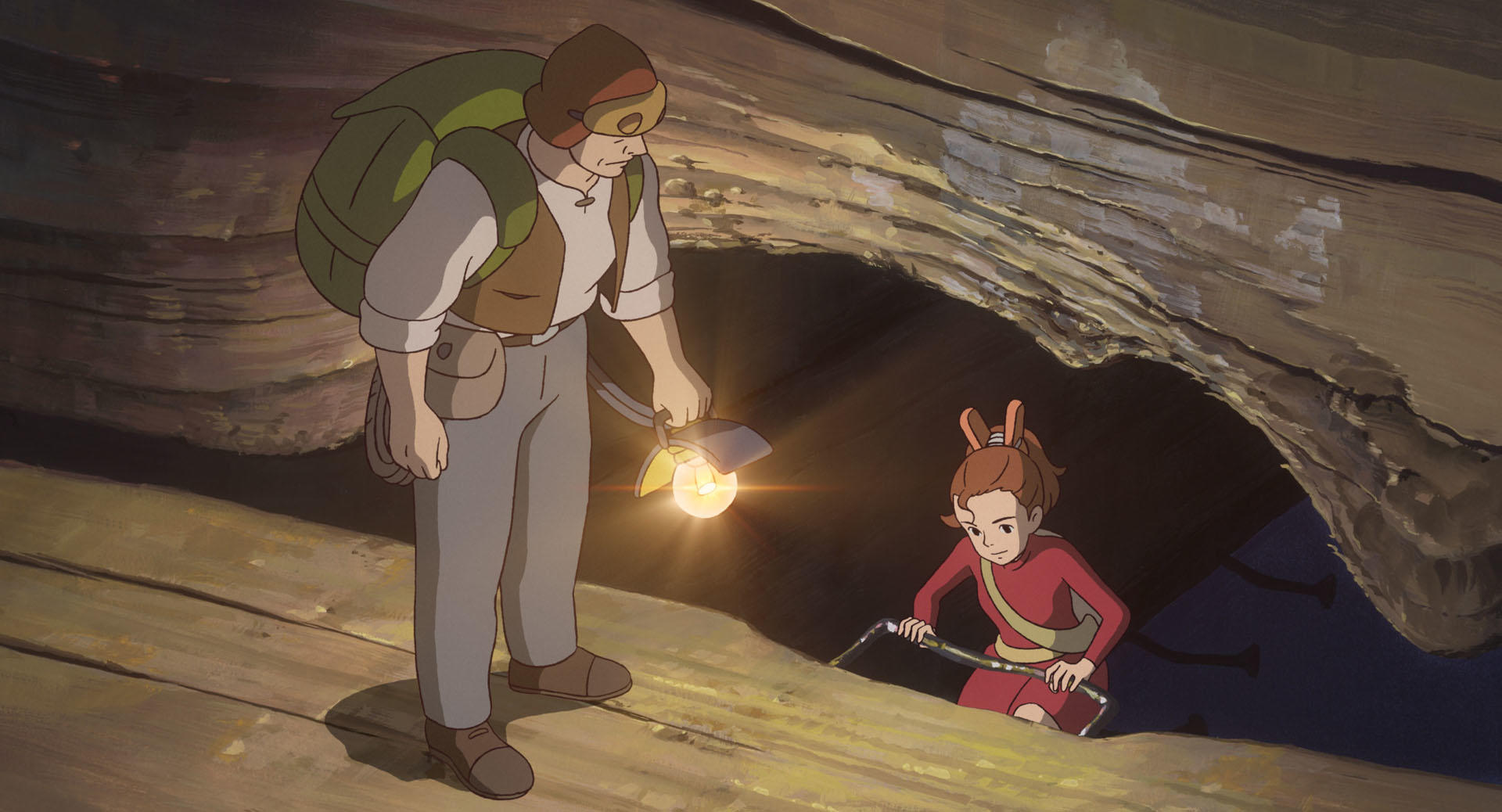
Arrietty is the tiny but fearless Borrower at the heart of The Secret World of Arrietty. She is memorable because her story turns a hidden life under the floorboards into a coming-of-age adventure about courage, trust, family, and the painful moment when childhood safety starts to feel too small.
Quick answer: who is Arrietty?
Arrietty is a young Borrower, one of the tiny people who secretly live alongside humans by taking only what they need. In Studio Ghibli’s adaptation of Mary Norton’s The Borrowers, she lives with her parents, Pod and Homily, beneath an old country house. Her first borrowing trip should be a careful family milestone. Instead, it becomes the start of a life-changing connection with Shō, a quiet human boy staying in the house because of his health.
What makes Arrietty work as a character is that she is not written as a magical mascot. She is brave, impatient, curious, protective, and sometimes reckless. She wants freedom, but she is still learning what freedom costs when your whole family survives by staying unseen.
Why Arrietty is such a strong Ghibli heroine
Arrietty belongs beside characters like Kiki, Chihiro, Nausicaä, and San because her courage is practical rather than showy. She does not save a kingdom or fight an army. Her bravery is climbing a table leg, crossing a kitchen, facing a human hand, and choosing honesty when fear would be easier.
The film understands that courage can look different when the world is built against you. For Arrietty, a pin can be a sword, a sugar cube can be treasure, and a house cat can feel like a monster. That shift in scale makes ordinary objects thrilling, but it also makes her emotional choices sharper. Every risk matters.
Arrietty and Shō: friendship across impossible distance
Arrietty’s bond with Shō is the emotional center of the movie. Shō is gentle, lonely, and physically fragile. Arrietty is energetic, guarded, and forced by her family’s rules to treat humans as threats. Their friendship works because neither character simply fixes the other. Instead, they help each other see a wider version of life.
Shō gives Arrietty recognition. He sees her as a person, not a secret or a curiosity. Arrietty gives Shō movement and possibility at a time when his own future feels uncertain. The most important part is that the film does not turn this into a simple rescue fantasy. Their friendship is real, but the difference between their worlds remains real too.
What Arrietty wants
At the start, Arrietty wants to prove she is ready. She wants to borrow with her father, explore beyond the safe spaces, and be treated as capable. Underneath that, she wants a life that is bigger than hiding. The tension is that her parents are not wrong to be cautious. Homily’s anxiety can seem comic, but the danger is genuine. Pod’s quiet discipline has kept the family alive.
That balance makes Arrietty’s growth more interesting. The movie does not say parents should never worry or children should never take risks. It says growing up means learning how to carry danger without letting it erase curiosity.
Arrietty’s relationship with her parents
Pod and Homily shape the two sides of Arrietty’s personality. From Pod, she inherits steadiness, problem-solving, and respect for the craft of borrowing. From Homily, she inherits the emotional awareness that home is fragile and worth protecting. Arrietty sometimes resists both lessons, but by the end she needs both.
One of the quiet strengths of The Secret World of Arrietty is that the family never feels like a prop. Their small home is full of handmade detail, routines, meals, lamps, jars, and tools. That makes the threat of leaving more painful. Arrietty is not just losing a hiding place. She is losing the first map of her life.
How the film uses scale to show character
Studio Ghibli makes Arrietty’s personality visible through scale. When she moves through the human house, she is tiny, but the camera often treats her with the seriousness of an explorer. Her physical world makes her brave by necessity. She cannot be casual about a staircase, a doorway, a tissue box, or a gust of air.
This is why the movie’s visual detail is more than decoration. The oversized textures, floor gaps, sugar cubes, leaves, and rain sounds help the viewer feel what Arrietty feels. Her confidence is not abstract. It is measured against the size of everything around her.
Is Arrietty reckless?
Yes, sometimes, but that is part of why she feels alive. Arrietty is not a flawless role model. She is young enough to underestimate consequences and brave enough to keep moving when she probably should pause. The film’s point is not that she should become less brave. It is that bravery without judgment can put other people at risk.
Her arc is learning that independence is not the same as acting alone. By the end, she is still courageous, but her courage has become more generous. She thinks about her family, Shō, and the fragile boundary between their worlds.
What Arrietty means in the wider Studio Ghibli world
Arrietty is one of Ghibli’s clearest characters about hidden lives. Like many Ghibli heroines, she is caught between safety and change. Kiki has to leave home to discover her work. Chihiro has to survive a strange spirit world to rediscover her name. Arrietty has to leave the only home she knows because being seen changes everything.
That makes the movie a gentle companion to Ghibli stories about growing up, moving on, and accepting that love does not always mean staying. If you are building a watch path through the studio’s quieter films, Arrietty pairs especially well with Kiki’s Delivery Service, My Neighbor Totoro, and When Marnie Was There.
Best Arrietty moments to rewatch
- The first borrowing trip: the cleanest showcase of the film’s scale, suspense, and family training.
- Arrietty meeting Shō: a quiet scene that changes the rules of both their lives.
- The dollhouse reveal: a beautiful example of kindness that still misunderstands what Arrietty needs.
- The escape: where the story turns from secret adventure into farewell and survival.
- The final goodbye: a small emotional exchange that gives the film its lingering tenderness.
FAQ
Is Arrietty a Studio Ghibli princess?
No. Arrietty is not royalty and the film does not frame her as a princess. She is a Borrower, which makes her story more grounded and domestic than a fairy tale about status or destiny.
How old is Arrietty?
She is generally presented as a young teenager. The exact number matters less than the life stage: she is old enough to want independence, but still young enough to need family guidance.
Does Arrietty love Shō?
The movie presents their relationship as tender, formative friendship rather than a conventional romance. There is affection, trust, and sadness, but the story keeps the emotional tone gentle and age-appropriate.
Why does Arrietty have to leave?
Borrowers survive by staying hidden. Once the family is discovered and the human world pushes too close, leaving becomes the safest choice. The ending is bittersweet because it is both a loss and a step toward maturity.
Final take
Arrietty is one of Studio Ghibli’s most quietly powerful young heroines. Her story is small only in physical scale. Emotionally, it is about the huge moment when a child begins to understand danger, love, independence, and goodbye at the same time. That is why The Secret World of Arrietty remains such a rewarding rewatch for viewers who like Ghibli’s gentler, more intimate side.
Image source: official Studio Ghibli still from ghibli.jp, used within the studio’s common-sense image guidance.