Quick answer: Castle in the Sky works because its characters are not just pieces in an adventure plot. Sheeta carries the story’s moral center, Pazu gives it courage and motion, Muska shows what power looks like without humility, Dola turns comic greed into rough loyalty, and the robot soldiers reveal the lost gentleness of Laputa itself.
If you are watching the film for the first time, this guide gives you a spoiler-light map of the main cast, why each character matters, and how they fit into Studio Ghibli’s wider love of flight, ruins, nature, machines, and ordinary bravery.
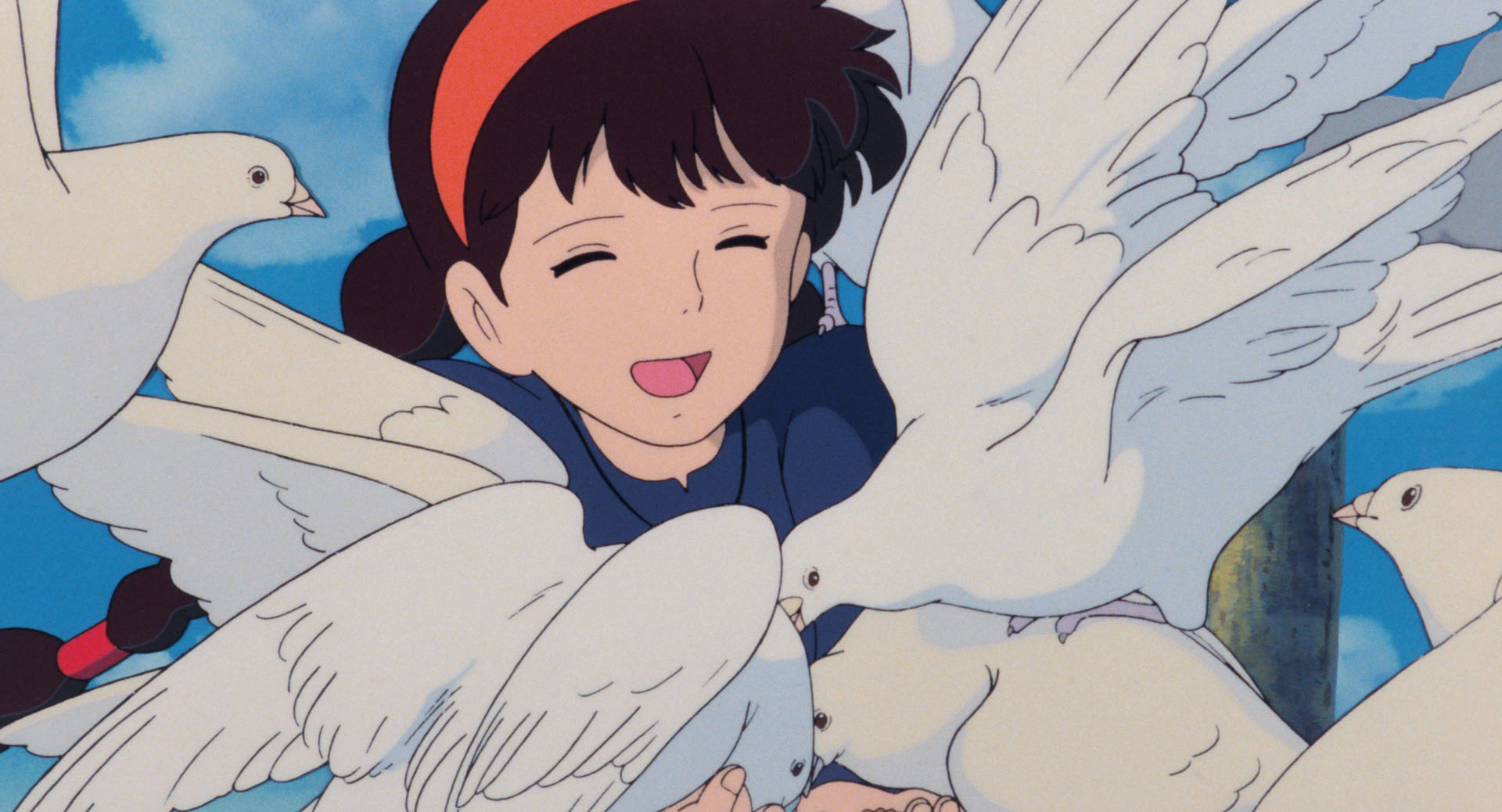
Image source: official Studio Ghibli still from ghibli.jp.
Sheeta: the quiet heart of the film
Sheeta is introduced as a girl being carried through a conflict that began long before she understood it. She has a mysterious crystal, a hidden royal connection to Laputa, and several powerful adults trying to use her. That could easily make her feel like an object in the plot. Instead, Ghibli makes her the emotional center of the movie.
Her strength is not loud. Sheeta is frightened, polite, practical, and deeply aware that power has consequences. She does not want Laputa because it could make her important. She fears what Laputa becomes when it is separated from land, work, animals, cooking, and human care. That is the key to reading her character: Sheeta is not rejecting wonder. She is rejecting wonder without responsibility.
This makes her one of Ghibli’s clearest examples of gentle courage. She asks for help when she needs it, protects others when she can, and slowly learns that her inheritance is not a prize. It is a choice.
Pazu: courage without entitlement
Pazu is the engine of the adventure. He is a miner’s apprentice, an orphaned dreamer, a trumpet player, a builder, and a boy who believes his father’s story about seeing Laputa. His belief could have made him arrogant, but the film keeps him grounded. Pazu wants to prove that his father was not a liar, yet he never treats Sheeta as proof to be claimed.
What makes Pazu memorable is the difference between fantasy and commitment. He dreams about flying, but he also fixes machines, cooks, works, and takes risks for another person. In that sense, Pazu is a very Ghibli hero. He is not chosen by destiny. He chooses to show up.
His relationship with Sheeta works because it is built on trust rather than romance-first storytelling. He believes her, helps her, argues for her safety, and follows her into danger because it is the right thing to do. For younger viewers, Pazu often reads as brave. For older viewers, he can read as something even better: dependable.
Muska: the danger of inheritance without humility
Colonel Muska is the film’s most direct villain, but he is more than a simple bad man chasing a magic object. He understands Laputa as a system of control. Where Sheeta sees memory, loss, and responsibility, Muska sees command. The same past that frightens Sheeta flatters him.
That contrast is why Muska works so well. He is not impressed by the beauty of Laputa, only by the weapons and authority it can give him. He treats history as ownership. He treats knowledge as leverage. He treats other people as obstacles, tools, or witnesses to his superiority.
Ghibli villains are often complex, but Muska is powerful because he is frighteningly clear. He represents what happens when human beings reach ancient technology before they have earned the wisdom to use it. His presence turns the floating island from a dream into a test.
Dola and the pirate family: greed with a human face
Dola begins as a threat. She and her sons chase Sheeta and Pazu because the crystal looks valuable. Yet the film gradually reframes her as one of its great comic and emotional surprises. She is greedy, bossy, loud, and opportunistic, but she is also observant, brave, and capable of affection.
The pirate family gives the film texture. They make the chase sequences fun, but they also provide a rough alternative to the military’s cold hierarchy. Dola’s airship is chaotic, noisy, domestic, and alive. There is food, arguing, laundry, work, and laughter. Compared with Muska’s polished cruelty, Dola’s selfishness feels human and changeable.
Her softening toward Sheeta is not a sudden moral makeover. It feels earned because Dola recognizes courage when she sees it. She may want treasure, but she is not dead inside. That distinction matters in a movie about what people do when they get close to power.
The robot soldiers: machines with memory
The robot soldiers are among the most haunting figures in Castle in the Sky. At first, they seem like weapons from a lost civilization. Then the film shows another side: patient guardians tending nature, moving gently among birds, flowers, and ruins. They are machines, but they feel like keepers of memory.
This is where the film becomes larger than a chase story. Laputa’s technology can destroy, but it can also protect. The problem is not machinery by itself. The problem is what kind of heart commands it. In Muska’s hands, the robots are proof of military power. In the quiet garden scenes, they become evidence that Laputa once held beauty, care, and restraint.
The robots also connect the movie to later Ghibli themes: old worlds outlasting human arrogance, nature reclaiming abandoned power, and silent figures expressing more tenderness than speeches ever could.
Why the cast works so well together
The main characters are built around competing answers to the same question: what should people do with a beautiful, dangerous inheritance? Sheeta wants to protect the world from it. Pazu wants to understand it without owning it. Muska wants to rule through it. Dola wants profit, then discovers loyalty matters more. The robots show what remains after human ambition has passed.
That structure keeps the film moving. Every chase, escape, flight sequence, and discovery is also a character test. Nobody is just traveling toward Laputa. They are revealing what Laputa means to them.
Who is the best character in Castle in the Sky?
For many viewers, Sheeta is the best character because she carries the film’s moral weight. Pazu is the easiest to cheer for, Dola may be the most entertaining, and the robot soldiers are the most visually unforgettable. The real answer depends on what you value most: courage, kindness, comedy, mystery, or moral clarity.
FAQ
Is Castle in the Sky good for beginners?
Yes. It is one of the easiest Studio Ghibli adventure films to recommend because the story is clear, the pace is lively, and the characters are immediately readable without needing prior anime knowledge.
Is Muska related to Sheeta?
The film links both characters to Laputa’s lost royal line, but they respond to that inheritance in opposite ways. Sheeta treats it as a burden. Muska treats it as permission.
Why are the robot soldiers so important?
They show that Laputa is not simply evil technology. Its power depends on who uses it, and the robots’ quiet garden scenes reveal the island’s lost gentleness.
What should I watch after Castle in the Sky?
Try the Castle in the Sky movie guide, then compare it with Ghibli’s best fantasy movies or the broader Studio Ghibli movies in order guide.
Image note: the still used in this article comes from Studio Ghibli’s official Castle in the Sky image materials.