Quick answer: Chihiro matters because she learns courage without becoming a different person: she stays polite, observant, stubborn, and compassionate while the spirit world forces her to act.
This guide answers the search intent directly, then gives a spoiler-aware reading for viewers who want more than a recap. It uses official Studio Ghibli imagery from ghibli.jp and links into related guides so the site keeps building a useful fan-guide structure.
At a glance
- Best for: new or returning viewers who want a clear explanation.
- Core topic: Chihiro
- Suggested next step: follow the film and character tags after reading.
Who is Chihiro in Spirited Away?
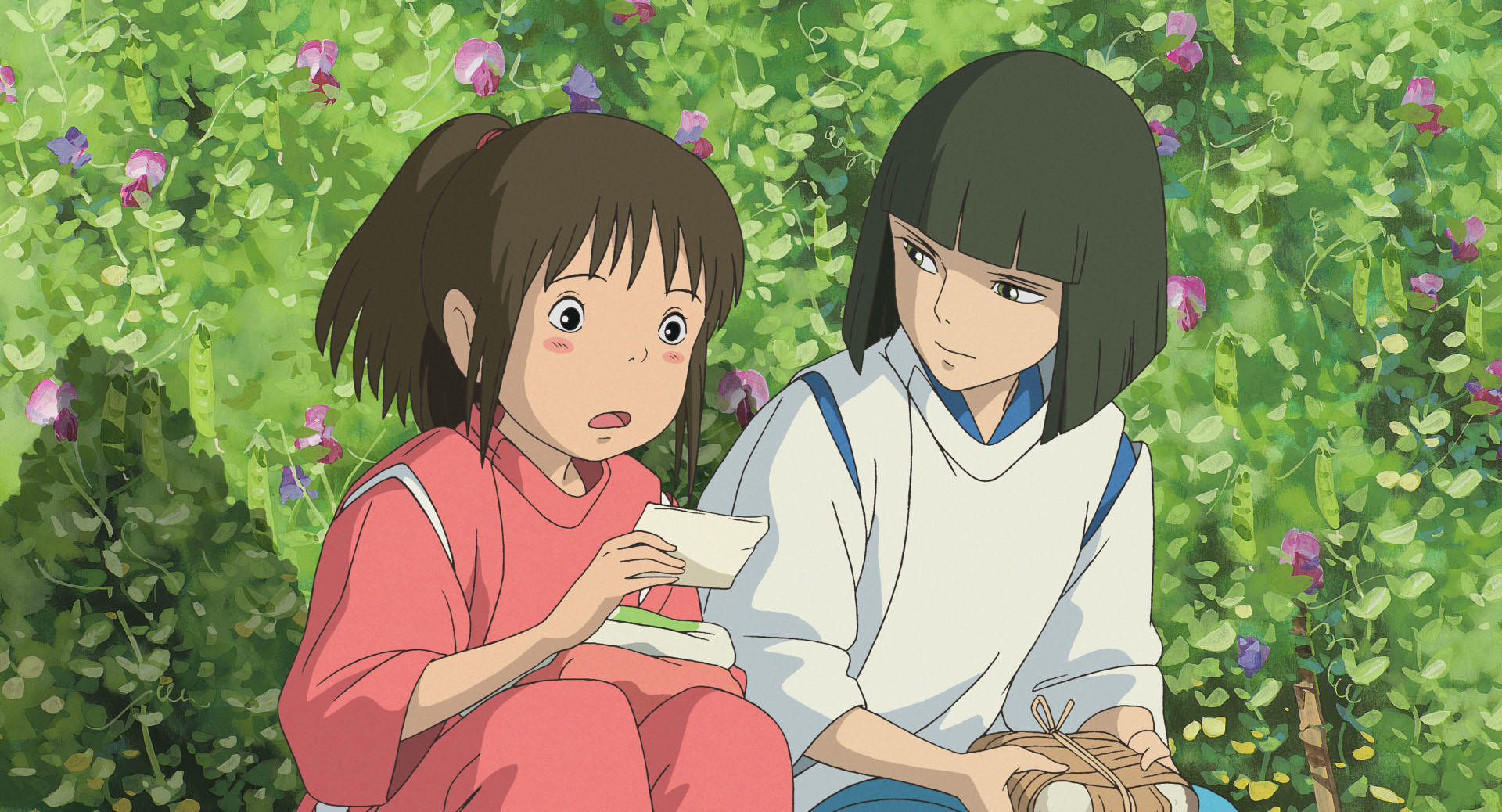
Chihiro begins as a recognisably ordinary child: anxious in the car, irritated about moving, and uncertain when her parents push deeper into the abandoned theme-park entrance. That ordinariness is the point. Miyazaki does not introduce her as a chosen one with hidden powers; he introduces her as a girl who has to pay attention. Once her parents are transformed and her name is taken, Chihiro survives by noticing rules, asking for help, and refusing to become cruel just because the bathhouse is cruel.
That detail matters because Ghibli stories rarely separate plot from behaviour. A name, meal, journey, silence, act of work, or moment of restraint often tells the viewer what a character values before the dialogue says it aloud. Reading the film this way keeps the explanation grounded in what is actually on screen rather than forcing every image into a neat fan theory.
How Chihiro changes
Her growth is practical before it is symbolic. She learns to work, remembers names, follows through on promises, and sees through greed. The film does not reward her with a magical upgrade. It rewards her with steadiness. By the ending, Chihiro still feels like the same person, but she has learned that fear is not an instruction to freeze.
That detail matters because Ghibli stories rarely separate plot from behaviour. A name, meal, journey, silence, act of work, or moment of restraint often tells the viewer what a character values before the dialogue says it aloud. Reading the film this way keeps the explanation grounded in what is actually on screen rather than forcing every image into a neat fan theory.
Key relationships
Haku teaches Chihiro the first survival rule: remember who you are. Lin gives her rough-edged workplace protection. No-Face reflects what the bathhouse wants from people. Yubaba tries to reduce her to labour and a shortened name. Each relationship tests a different part of Chihiro: memory, courage, gratitude, boundaries, and trust.
That detail matters because Ghibli stories rarely separate plot from behaviour. A name, meal, journey, silence, act of work, or moment of restraint often tells the viewer what a character values before the dialogue says it aloud. Reading the film this way keeps the explanation grounded in what is actually on screen rather than forcing every image into a neat fan theory.
Spoiler-light takeaway
Chihiro’s arc is one of Studio Ghibli’s cleanest coming-of-age stories because it refuses easy triumph. She does not defeat the spirit world. She learns how to move through it without surrendering her name, empathy, or judgement.
That detail matters because Ghibli stories rarely separate plot from behaviour. A name, meal, journey, silence, act of work, or moment of restraint often tells the viewer what a character values before the dialogue says it aloud. Reading the film this way keeps the explanation grounded in what is actually on screen rather than forcing every image into a neat fan theory.
How this connects to the wider Ghibli world
For a broader path through the catalogue, use our best Studio Ghibli movies to watch first guide, the movies-in-order watch guide, and the connected Ghibli movies explainer. These links help readers move from one question to the next instead of landing on an isolated article.
Frequently asked questions
Is this article spoiler-free?
It is spoiler-aware rather than fully spoiler-free. Character and ending explainers need some plot detail, but the opening answer is designed to help readers quickly decide whether to continue.
Is there one official interpretation?
Not always. Studio Ghibli films often leave room for emotion, memory, and myth. This guide separates clear story evidence from reasonable interpretation.
What should I watch next?
If the film appealed to you, follow the linked tags for related characters and themes, then use the watch-order guide to choose a nearby title with a similar mood or contrast.
Rewatch notes
On a rewatch, look for small repeated actions: who gives food, who withholds a name, who listens before acting, who treats nature as alive, and who changes their mind. Ghibli’s best scenes often carry their meaning in those quiet choices, which is why the films stay rewarding after the first viewing.
Image note: Featured imagery for this article uses official Studio Ghibli stills sourced from ghibli.jp. Studio Ghibli’s official image pages include the common-sense usage notice: ※画像は常識の範囲でご自由にお使いください。
What Chihiro teaches returning viewers
Chihiro is especially rewarding on a rewatch because her growth is quieter than a typical fantasy hero arc. She does not become powerful by collecting weapons, mastering spells, or defeating the bathhouse through force. She improves because she keeps noticing what is real: which names matter, who is lonely, who is trapped by greed, and when a frightening figure still deserves basic kindness.
That is why the character works for children and adults at the same time. Younger viewers can follow the surface lesson that Chihiro becomes braver. Adults can see something sharper: she learns to stay herself in a place that constantly tries to rename, distract, feed, or employ her into forgetting. Her courage is practical. She cleans, listens, remembers, apologises, and keeps moving when nobody gives her a perfect explanation.
Why Chihiro still feels modern
The reason Chihiro has lasted as one of Ghibli’s most loved characters is that she is not written as a fantasy ideal. At the start she is sulky, frightened, and overwhelmed. By the end she is still recognisably a child, but she has learned how to act inside uncertainty. That makes her more useful than a flawless protagonist. She shows that growing up is often less about becoming fearless and more about doing the next necessary thing while fear is still present.
For readers comparing Ghibli heroines, Chihiro sits beside Kiki, San, Sophie, and Sheeta as one of the studio’s clearest examples of inner strength. Her story is also a strong companion to our broader Studio Ghibli watch guide because it shows why release order and mood-based viewing can both change how a character lands.
Image source note: article images use official Studio Ghibli stills from ghibli.jp’s Spirited Away work page, where the posted usage notice says images may be used within common-sense bounds: ※画像は常識の範囲でご自由にお使いください。