Quick answer: Umi and Shun are not brother and sister. Shun’s biological father was Hiroshi Tachibana, a close friend of Umi’s father, Yuichiro Sawamura. After Tachibana and his wife died, Yuichiro registered the baby as his own so that Shun would not be sent to an orphanage. Shun was then raised by the Kazama family. The confusing family record reflects an act of care after the war, not a blood relationship between the teenagers.
The final visit to Captain Yoshio Onodera confirms the story. He recognises both young people, identifies the men in the old photograph and explains how their families became connected. That answer clears the obstacle to Umi and Shun’s romance, but the ending matters for more than a plot twist. It connects their private uncertainty to a generation shaped by death, displacement and improvised families.
Why Umi and Shun think they might be related
Umi and Shun become close while campaigning to save the Latin Quarter, their school’s crowded old clubhouse. Their growing attraction is interrupted when Shun sees a photograph of three young sailors. Umi knows one of the men as her late father, Yuichiro. Shun has a copy of the same image and discovers that his official family record names Yuichiro as his father too.
For Shun, the document appears decisive. If Yuichiro fathered both of them, he and Umi would share a parent. He withdraws because he believes continuing the romance would be wrong. Umi is hurt but does not dismiss the evidence simply because she wants a different answer. Their restraint gives the misunderstanding emotional weight without turning it into sensational melodrama.
Who is Shun’s real father?
Shun’s biological father is Hiroshi Tachibana, one of Yuichiro’s closest friends and one of the three men in the photograph. Tachibana’s wife died after giving birth, and Tachibana also died, leaving the baby without parents. The film presents this history as part of the wider human cost surrounding the war and its aftermath.
Yuichiro had a newborn child of his own and could not simply add another baby to his household. Even so, he acted to stop Shun from entering an orphanage. He registered the child under his own name, then entrusted him to the Kazama family, who raised him. The official paperwork therefore preserves Yuichiro’s protective decision but hides the biological truth that Umi and Shun need.
Why does Shun’s record name Umi’s father?
The registration was a practical rescue. Yuichiro used the authority available to him to give an orphaned baby a legal family connection. In a stable setting, an inaccurate record would look irresponsible. In the film’s postwar context, it is shown as an emergency response to loss and a strained care system.
This distinction is central to the ending. The document is not false because somebody wanted to deceive Umi and Shun years later. It is incomplete because adults were solving an immediate crisis. The young people inherit a mystery created by compassion under pressure, not by betrayal. Their task is to recover the human story behind the official line.
Who are the three men in the photograph?
The photograph links Yuichiro Sawamura, Hiroshi Tachibana and Yoshio Onodera. Yuichiro is the man Umi remembers as her father. Tachibana is Shun’s biological father. Onodera is the surviving friend who can finally explain what happened.
The image first seems to prove an impossible relationship. By the end, it does the opposite: it leads Umi and Shun to the one witness who can separate legal registration from biology. The photograph also represents memory shared across families. It belongs to neither teenager alone, because their parents’ lives were connected before either of them understood that history.
What does Captain Onodera confirm?
Umi and Shun rush to meet Captain Onodera aboard his ship before it leaves port. He recognises them through their parents and confirms that Shun is Tachibana’s son. His account explains why Yuichiro’s name appeared in the family register and why the Kazamas raised Shun.
Onodera’s confirmation is trustworthy because he knew the three men and remembers the circumstances directly. The film does not solve the mystery through a convenient newly discovered letter. It brings the teenagers face to face with a living keeper of the past. That choice fits a story about preserving places and memories before they disappear.
Are Umi and Shun free to be together?
Yes. The revelation removes the belief that they share a biological father. The ending does not stage a large romantic declaration or jump forward to show their adult future, but it restores the possibility of their relationship. Their affection no longer carries the barrier that made Shun pull away.
The understated resolution suits both characters. They have already acknowledged what they feel, endured the uncertainty and chosen to seek the truth together. The important change is not a kiss or promise. It is that they can return from the ship knowing that their connection is real and ethically possible.
Why the ending is tied to the Latin Quarter
The family mystery and the campaign to save the Latin Quarter tell the same kind of story at different scales. In both, the past initially appears to be an obstacle. The old clubhouse is dirty, chaotic and threatened with demolition in the name of modernisation. The inherited family record is confusing and seems to block Umi and Shun’s future.
The answer is not to worship everything old or reject change. The students clean and repair the clubhouse, making its value visible in the present. Umi and Shun investigate their family history, separating a meaningful act of care from a misleading document. Preservation becomes active work: clean, question, verify and decide what deserves to continue.
What the film says about postwar memory
From Up on Poppy Hill takes place in 1963 as Japan prepares for the Tokyo Olympics and looks toward a modern future. New roads, buildings and ambitions create excitement, but the film asks what can be lost when progress becomes a reason to erase inconvenient history.
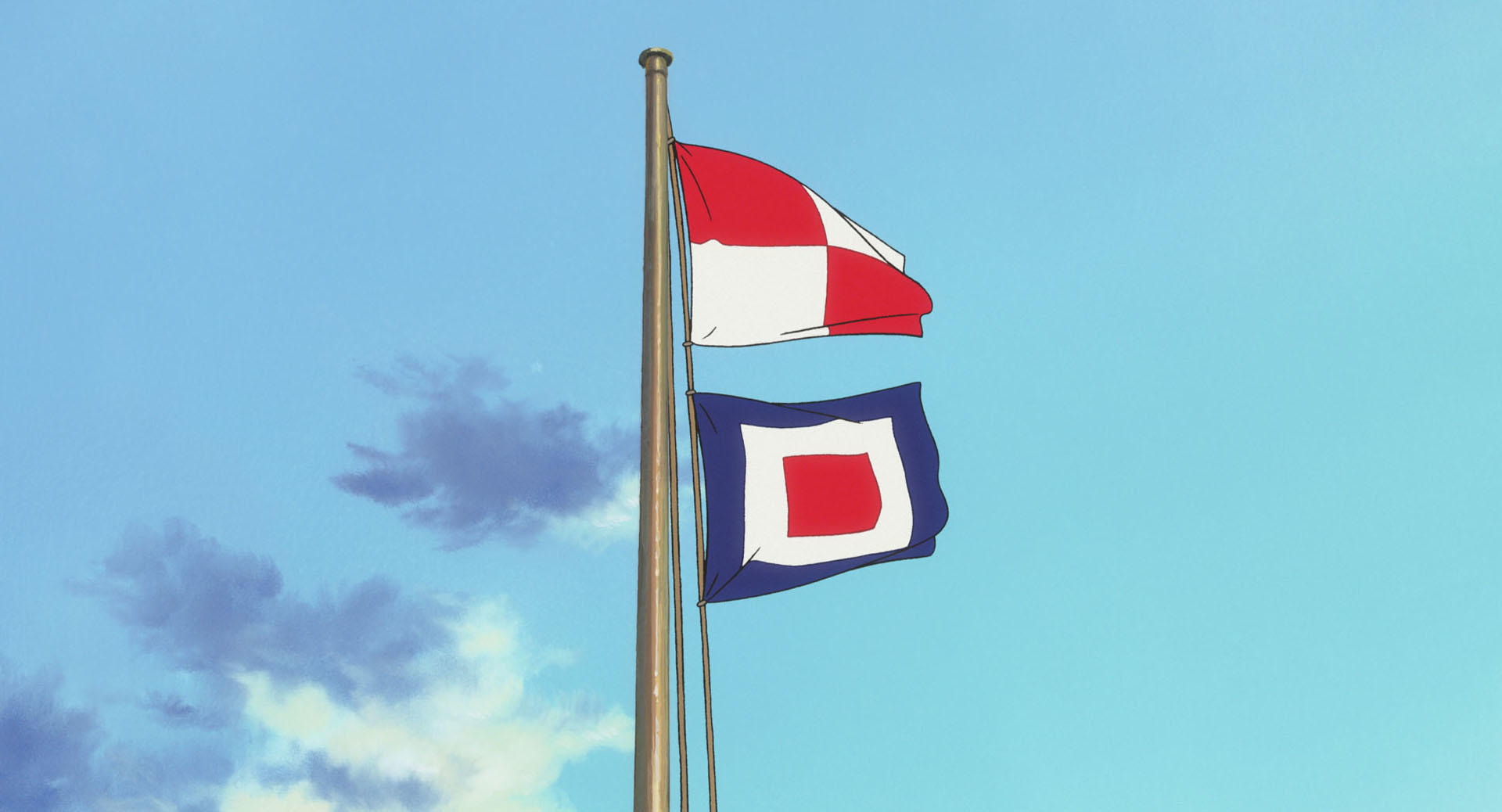
Umi’s daily signal flags keep faith with her father, even though he will not return. Shun’s identity depends on understanding why several adults made unusual choices after losing friends and family. The Latin Quarter contains the untidy culture of previous student generations. None of these memories should trap the young characters, but each gives them a fuller foundation from which to move forward.
Why Umi keeps raising the flags
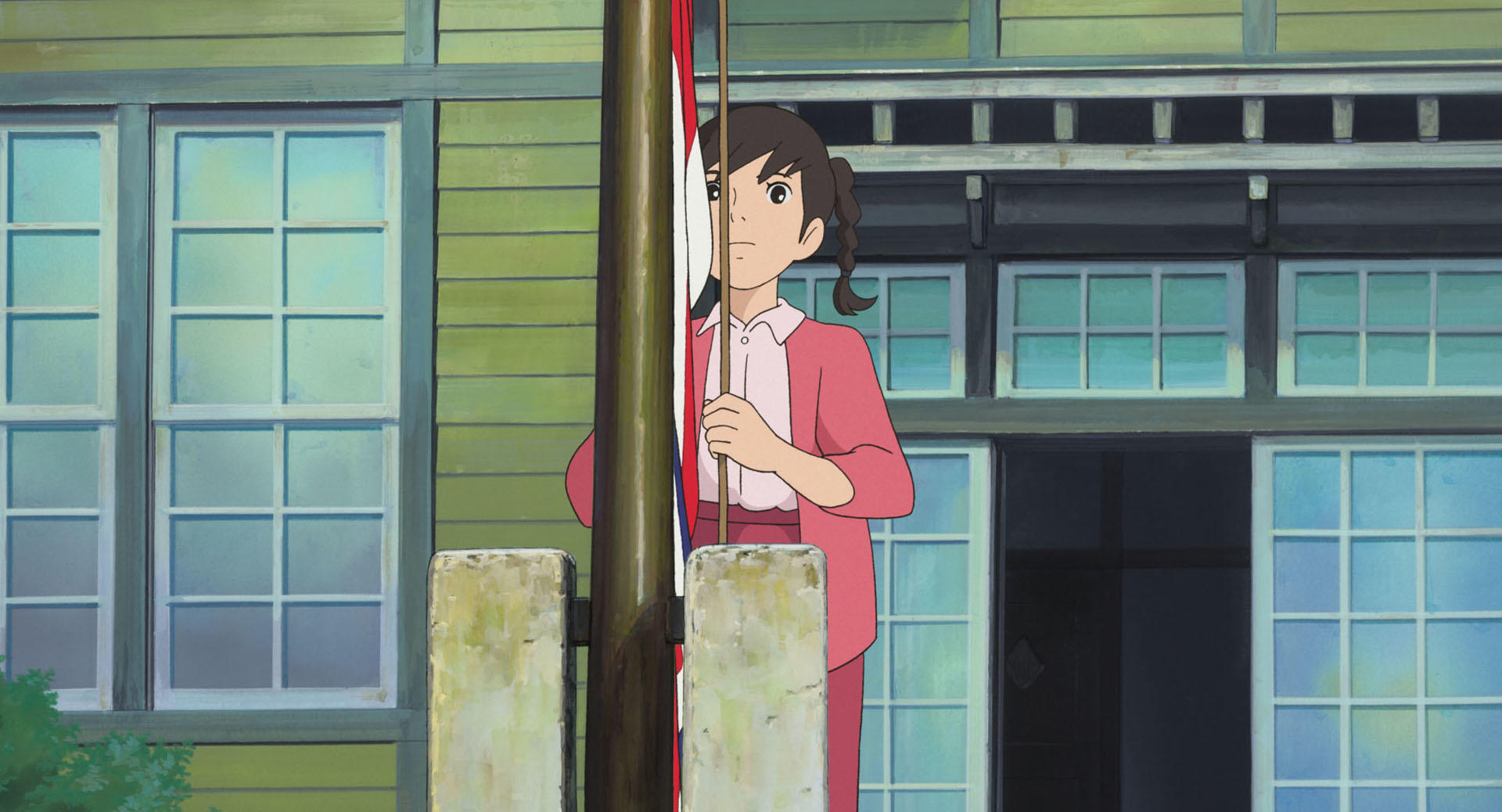
Umi raises maritime signal flags each morning in memory of her father, who died at sea. The ritual holds grief, discipline and hope at once. It is not based on a realistic expectation that his ship will appear. It is a way of keeping a bond visible while continuing with school, household work and family responsibilities.
Shun notices the flags from the harbour, which helps connect them before they understand their parents’ shared history. By the ending, the ritual no longer belongs only to Umi’s private grief. It has led indirectly toward another person shaped by the same circle of friendship and loss.
Does the ending change who Shun’s family is?
Learning that Tachibana was his biological father does not erase the Kazamas, who raised him. The film distinguishes ancestry, legal records and lived family without insisting that one must cancel the others. Yuichiro protected him, Tachibana gave him his biological lineage, and the Kazama family gave him a home.
That layered answer is more meaningful than simply replacing one father’s name with another. Shun’s identity comes from several acts of care, including choices made before he could remember them. The truth gives him history, not a reason to reject the family he knows.
The ending’s final meaning
The ending says that the past should be understood rather than blindly obeyed or casually demolished. A document can preserve a fact while obscuring its meaning. An old building can look disposable until people reveal the life inside it. A ritual can appear quaint while carrying love and grief that still shape the present.
Umi and Shun earn their hopeful resolution by looking closely. They do not deny the record, but they do not let one line of paperwork become the whole story. Their search uncovers friendship, sacrifice and an improvised rescue. Like the restored Latin Quarter, their relationship becomes possible when inherited history is examined with care rather than erased.
For a spoiler-light overview of the characters, setting and age suitability, read the complete From Up on Poppy Hill guide. If you are choosing where it fits in a first journey through the studio’s films, use the beginner-friendly Studio Ghibli watch guide.
FAQ
Do Umi and Shun have the same father?
No. Umi’s father was Yuichiro Sawamura. Shun’s biological father was Hiroshi Tachibana. Yuichiro’s name appears in Shun’s record because he registered the orphaned baby to protect him.
Why did Shun stop seeing Umi?
He believed the family register meant they shared a biological father. He withdrew because he did not want to continue a romantic relationship if they were siblings.
Who tells Umi and Shun the truth?
Captain Yoshio Onodera, the surviving third man in the old photograph, confirms the identities of their fathers and explains Shun’s registration.
Does the Latin Quarter survive?
Yes. The students’ restoration and advocacy persuade the chairman to reconsider the demolition. Its survival reinforces the film’s argument that progress and preservation do not have to be enemies.
Image credit: Official stills from the From Up on Poppy Hill page on ghibli.jp, used under Studio Ghibli’s common-sense image-use notice. This article is an independent fan guide and is not affiliated with Studio Ghibli.