Quick answer: the Toxic Jungle in Nausicaä of the Valley of the Wind is not simply an evil forest spreading poison. It is a vast ecological response to a world contaminated by an earlier civilisation. Its plants draw pollution from the earth, while the giant Ohmu help defend the ecosystem from further human damage. The apparent threat is also part of the planet’s recovery.
That reversal is the film’s central ecological idea. People see toxic spores, giant insects and ruined land, so they assume survival requires destroying the jungle. Nausicaä looks more carefully. She learns that fear has made the remaining kingdoms misunderstand the system keeping their world alive, and that violence against it produces even greater violence in return.
What is the Toxic Jungle?
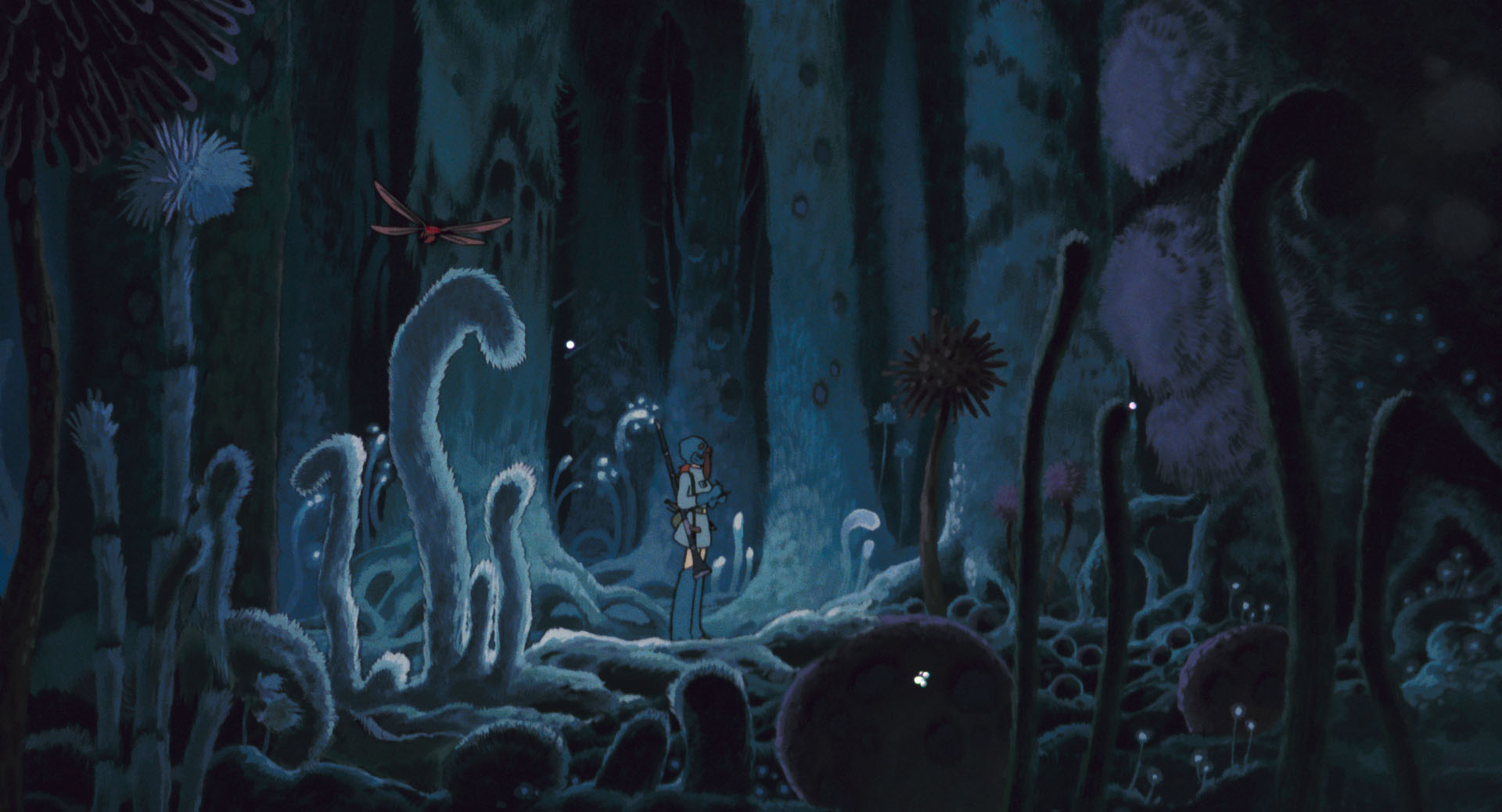
The Toxic Jungle, sometimes called the Sea of Decay, is an expanding forest of enormous fungi and unfamiliar plants. Its spores are dangerous to people without protective masks, and giant insects patrol its depths. Communities such as the Valley of the Wind survive partly because steady sea winds keep the spores away from their crops and homes.
From a human viewpoint, the jungle appears to be consuming the habitable world. That makes plans to burn it understandable, even when they are disastrous. The film does not mock ordinary people for being afraid. Poisoned air, failed farmland and insect attacks are immediate dangers. Its criticism is aimed at leaders who turn fear into conquest and at societies that act before understanding the living system around them.
Why is the jungle poisonous?
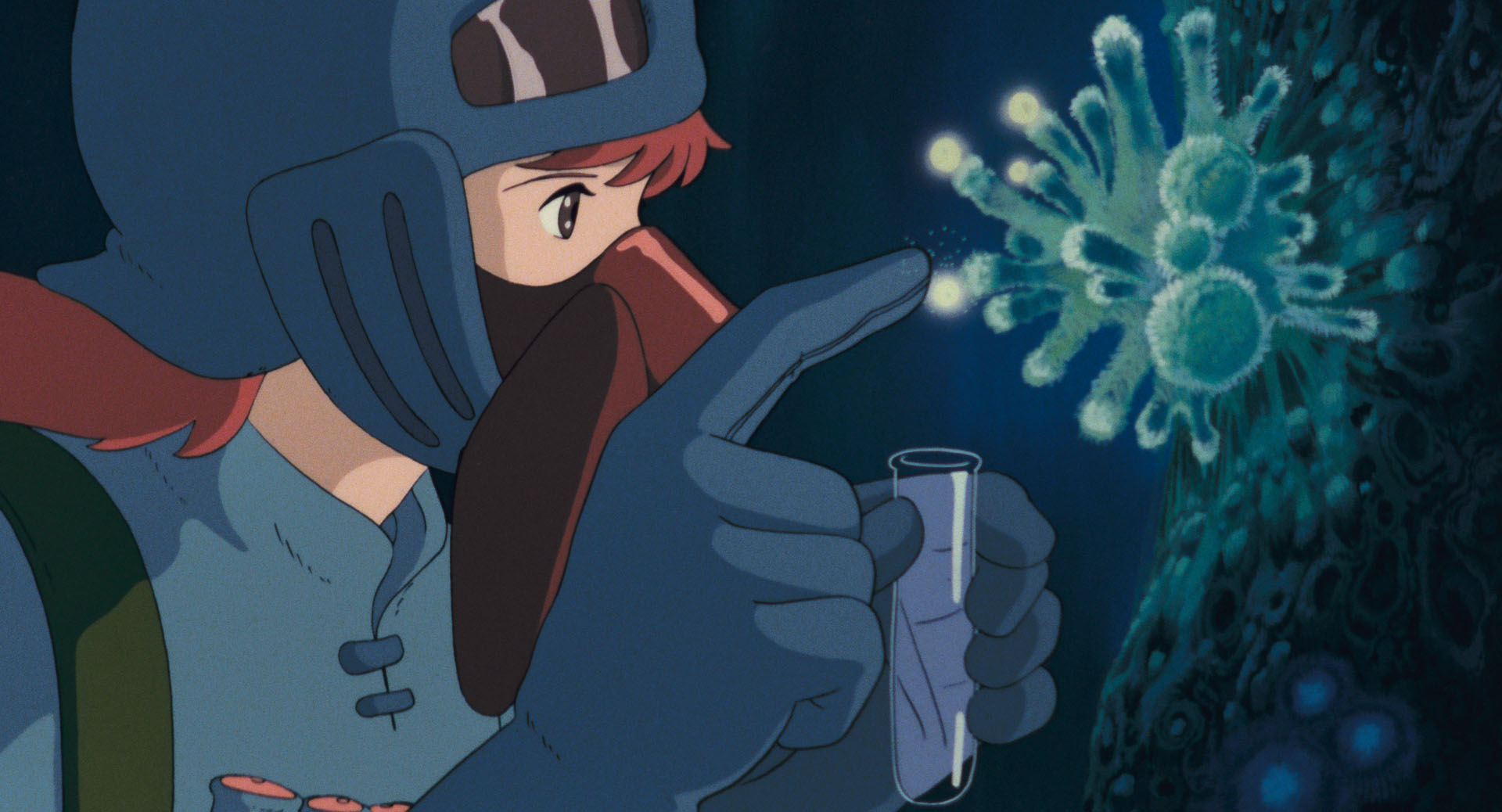
Nausicaä’s experiments reveal that the plants are not poisonous by nature. When she grows jungle specimens with clean water and soil, they do not release toxic spores. The poison comes from contamination absorbed from the earth. This changes the problem completely: the forest is not creating the ruined world’s pollution but processing what humanity left behind.
Below the jungle lies a calm, purified space. Sand formed from the remains of the forest filters water, and the air is clean. The revelation does not mean the surface is suddenly safe. It means the ecosystem is working on a timescale much longer than one human life. What looks like decay is also cleansing, and the frightening forest has a role that no surviving kingdom could reproduce by force.
What are the Ohmu?
The Ohmu are enormous, many-eyed creatures closely connected to the jungle. Their scale and armoured bodies make them intimidating, but they are not mindless monsters. They communicate, remember harm and respond collectively when members of their world are threatened. Their eye colour provides an emotional signal: calm blue can turn to furious red when violence pushes them into a stampede.
The Ohmu function as guardians, warning system and moral test. Humans repeatedly try to manipulate their anger as a weapon. That choice reveals the real danger in the story. The insects are powerful, but people knowingly create catastrophe by injuring living beings and exploiting the predictable response. The stampede is not random evil. It is an ecological backlash triggered by cruelty.
Why do the Ohmu stampede?
An Ohmu stampede happens when the creatures are driven into extreme distress. In the film’s climax, a young Ohmu is captured and wounded so that its cries will lure the herd toward the Valley. The plan treats a living creature as bait and assumes the resulting destruction can be directed for political advantage.
Nausicaä refuses that logic. She rescues the young Ohmu and places herself between the herd and the people in its path. Her response is not based on defeating the insects. It is based on recognising their pain, returning what was taken and accepting personal risk instead of transferring it to others. The sequence turns compassion into practical action rather than a vague belief.
What does the Giant Warrior represent?
The Giant Warrior is a surviving weapon from the ancient catastrophe known as the Seven Days of Fire. The Tolmekians hope to revive it and use its overwhelming power to burn the jungle. In military terms, the plan promises a shortcut: destroy the feared ecosystem before it can spread any farther.
But the weapon is incomplete and unstable. Its body breaks down even as it fires. The image is a blunt contrast with the jungle. The forest appears diseased but is slowly repairing the world; the gleaming promise of technological control is literally rotting while it destroys. The film is not arguing that every machine is bad. Nausicaä herself flies, studies plants and values skilled tools. It warns against technology separated from patience, responsibility and knowledge.
Why Nausicaä understands what others miss
Nausicaä is brave, but her defining skill is attention. She studies spores rather than merely fearing them, listens to the movement of insects, and tests her ideas in a hidden garden. She can act decisively in danger, yet her greatest discoveries come from observation and care.
This does not make her passive or perfectly serene. She feels rage and is capable of violence when grief overwhelms her. That matters because the film does not divide humanity into peaceful heroes and violent villains. Nausicaä understands the temptation to strike back. Her achievement is returning to empathy after seeing what hatred can do. For a closer look at her choices, read the Nausicaä character guide.
Is the Toxic Jungle good or bad?
It is better understood as necessary than as simply good. The spores can kill people, settlements can be lost, and insects can cause devastating damage. The film does not erase those facts after revealing the forest’s cleansing role. Instead, it asks viewers to hold two truths together: the jungle is dangerous to individual humans, and destroying it would damage the wider recovery on which future life depends.
That tension gives the story more force than a simple message about protecting pretty landscapes. The ecosystem is strange, inconvenient and frightening. Coexistence requires knowledge, boundaries and humility, not sentimental admiration from a safe distance. The Valley’s wind, masks and careful habits show adaptation in practice.
Pollution, war and the same cycle of control
The ecological crisis and the political conflict are not separate storylines. Kingdoms compete for weapons and territory because habitable land is scarce. Their wars create fresh destruction, which makes survival harder and encourages another search for decisive force. The more people try to dominate a damaged world, the more damage they produce.
This is why the film’s environmental warning remains relevant without mapping neatly onto one modern issue. It is about polluted land, but also about how crisis narrows political imagination. Leaders promise safety through control, enemies are reduced to obstacles, and complex systems are treated as targets. The broader pattern also appears across the site’s guide to Studio Ghibli’s environmental themes.
What happens at the end?
When Nausicaä is struck down in front of the charging herd, the Ohmu stop. They lift her with golden feelers and restore her, creating the image associated with an old Valley prophecy. The moment does not magically remove the Toxic Jungle or settle every human conflict. It interrupts the immediate cycle of pain and retaliation.
The ending is hopeful because communication proves possible. The Ohmu recognise Nausicaä’s attempt to return the injured young creature, and the people witness intelligence and mercy where they expected only rage. A small green shoot later appears in clean sand beneath the jungle, reinforcing the discovery that renewal is already happening beyond human sight.
Does the ending say Nausicaä is a chosen saviour?
The prophecy imagery makes Nausicaä look like a promised figure, but the film grounds that image in choices she has made throughout the story. She earns trust by studying the jungle, protecting creatures others fear and refusing to use suffering as a weapon. The ending can feel mythic without reducing her to someone who succeeds only because fate selected her.
It is also important that one extraordinary act does not finish the work. The world still needs patient recovery and political change. Hope comes from a new relationship with the ecosystem, not from returning instantly to an untouched past. That makes the conclusion uplifting without pretending environmental repair is easy.
Final meaning
The Toxic Jungle is a lesson in the danger of judging a system only by the harm visible in the present. Its poison is real, but its deeper function is repair. The Ohmu are dangerous, but their most destructive behaviour is repeatedly provoked and exploited by humans. The Giant Warrior looks like a solution, but it repeats the civilisation-ending faith in overwhelming force.
Nausicaä offers a different form of strength: investigate before acting, recognise life beyond immediate human usefulness, and break retaliation by addressing the injury that caused it. The world is not saved because nature is gentle. It has a chance because one person learns to respect a harsh, complex ecology instead of demanding that it become simple.
FAQ
Is the Toxic Jungle cleaning the earth?
Yes. The film reveals that its plants absorb pollutants from contaminated soil. Over time, the forest’s remains help create clean sand and purified water below the toxic surface.
Are the Ohmu insects?
They are presented as giant insect-like creatures within the jungle ecosystem. More important than a precise biological label is their intelligence, collective behaviour and role as protectors of the forest.
Why do the Ohmu save Nausicaä?
They recognise that she returned the injured young Ohmu and tried to stop the violence. Their response completes the film’s pattern of communication, memory and compassion crossing the boundary between species.
Is Nausicaä of the Valley of the Wind a Studio Ghibli film?
It was released in 1984 before Studio Ghibli was formally founded, and the official works page notes that Topcraft produced it. It is nevertheless closely associated with the Ghibli catalogue because of its creators and its importance to the studio’s formation. Read the full Nausicaä movie guide for story, characters and viewing advice.
Image credit: Official stills from the Nausicaä of the Valley of the Wind page on ghibli.jp, used under Studio Ghibli’s common-sense image-use notice. This article is an independent fan guide and is not affiliated with Studio Ghibli.