Quick answer: Kiki’s Delivery Service is one of the best Studio Ghibli starting points for viewers who want something warm, funny, low-stress, and emotionally honest. It follows a young witch who leaves home for her training year, starts a delivery business in a seaside city, and learns that confidence is not something you either have or lose forever. It is ideal for first-time Ghibli viewers, families with older children, cozy rewatch nights, and anyone who likes coming-of-age stories with a gentle magical setting.
What is Kiki’s Delivery Service about?
Kiki’s Delivery Service is a coming-of-age fantasy about Kiki, a thirteen-year-old witch who must leave home and live independently for a year as part of her training. She takes her black cat Jiji, finds a busy coastal city, and gradually turns her flying ability into a small delivery service. The story is simple on the surface, but that simplicity is the point. This is not a movie about defeating a villain. It is about earning trust, feeling useful, making mistakes, recovering from embarrassment, and discovering that growing up can be exciting and lonely at the same time.
The film works because it treats ordinary worries with real respect. Kiki is brave enough to leave home, but she is not magically immune to self-doubt. She wants to be independent, yet still needs kindness from other people. She is proud of her work, but sometimes gets exhausted by it. That makes the film especially easy to recommend to viewers who are new to Studio Ghibli and want to understand why the studio is loved for quiet emotional detail as much as spectacle.
Who should watch it first?
This is a strong first Ghibli movie for families, animation newcomers, and adults who prefer character-driven stories over heavy lore. The magical premise is easy to grasp: Kiki can fly, she has a talking cat companion, and witches traditionally train away from home. After that, the movie becomes a beautifully observed story about work, friendship, confidence, and belonging. If someone has only seen louder adventure animation, this is a good bridge into Ghibli’s softer style.
It is also a good pick for viewers who like cozy settings. The city feels sunlit and lived-in, with bakeries, rooftops, sea air, market streets, and small apartments. The atmosphere makes the film comforting, but the emotional stakes keep it from feeling weightless. Kiki’s bad days matter because they are recognizable.
Main characters to know
Kiki
Kiki is energetic, polite, stubborn, and more vulnerable than she first appears. Her arc is not about becoming a completely different person. It is about learning how to keep going when the first rush of independence wears off. She is easy to root for because her problems are ordinary even when her broomstick is not.
Jiji
Jiji is Kiki’s black cat and one of Ghibli’s most memorable animal companions. He provides comic timing, nervous commentary, and a useful contrast to Kiki’s optimism. Fans often remember Jiji because he feels like both a friend and a mirror for Kiki’s inner voice.
Osono
Osono, the baker who gives Kiki a place to stay, is one of the film’s quiet heroes. She shows that independence does not mean doing everything alone. Her practical kindness helps Kiki build a life without making the story feel overly sentimental.
Tombo
Tombo is curious, awkward, and fascinated by flight. His role is important because he sees Kiki’s gift with wonder at a time when she starts to experience it as pressure. Their friendship gives the film some of its funniest and most human moments.
Key themes
Independence is exciting, then uncomfortable
Kiki leaves home with confidence, but the film is honest about what happens after the brave opening decision. She has to find work, manage rejection, introduce herself to strangers, and handle the feeling of being alone in a place that does not yet feel like hers. That makes the movie useful for younger viewers approaching a new school, job, home, or stage of life.
Burnout and confidence
One reason the film still feels modern is its treatment of burnout. Kiki’s gift is real, but it is tied to her sense of self. When she becomes tired and discouraged, flying stops feeling effortless. The movie does not turn that into a lecture. It simply shows how creativity and confidence can become harder when someone is isolated, overworked, or too harsh on themselves.
Community matters
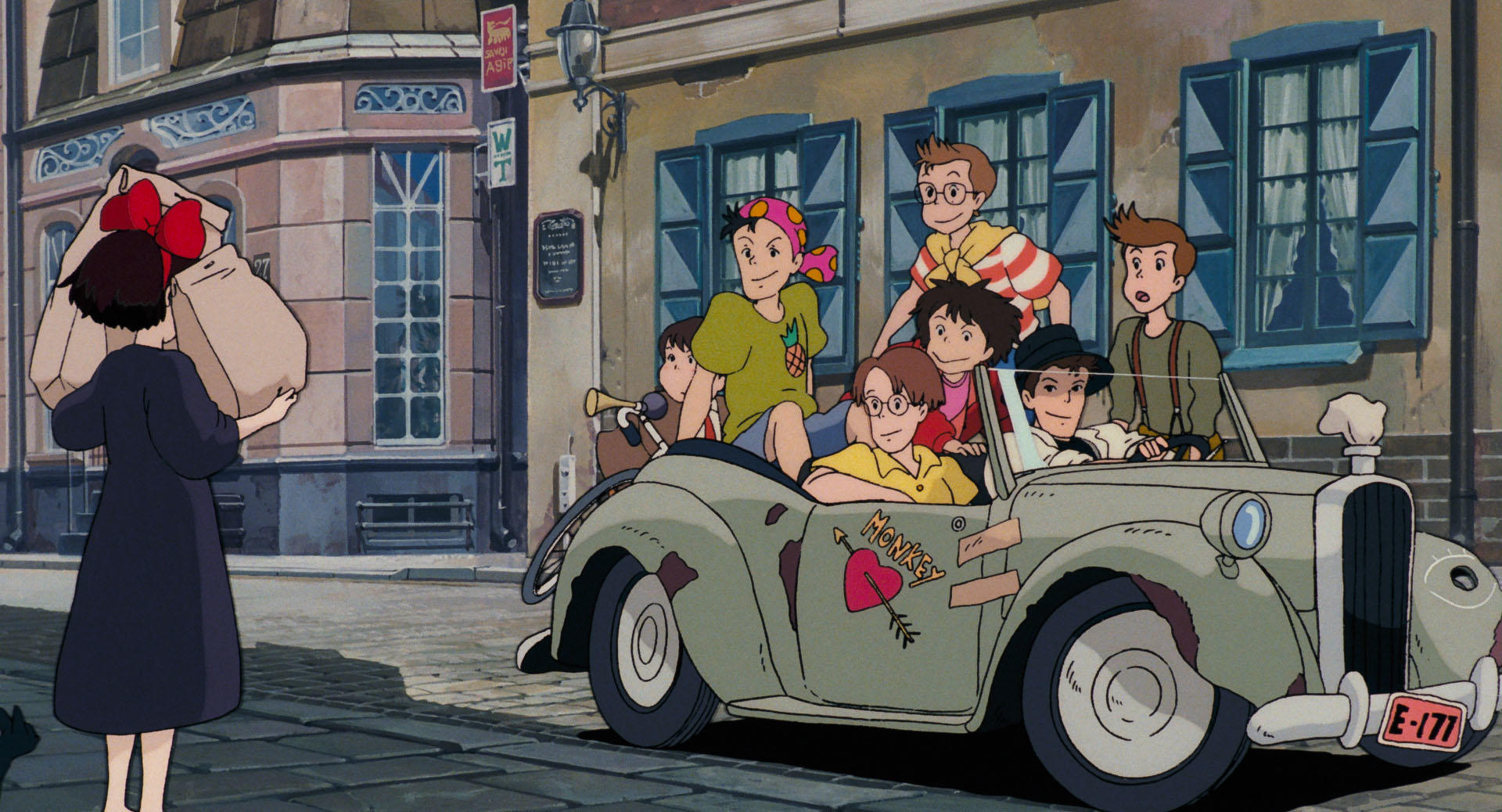
The film’s kindest idea is that growing up is not a solo performance. Kiki becomes more independent because people make room for her: Osono gives her shelter, customers trust her, Ursula offers perspective, and Tombo keeps reaching out. The city becomes less intimidating as those small relationships accumulate.
Is Kiki’s Delivery Service suitable for children?
For most families, yes. The film is gentle compared with darker Ghibli titles, with no graphic violence and very little frightening material. Younger children may simply enjoy the flying, Jiji, and city setting. Older children and adults are more likely to connect with the worries about fitting in, working hard, and losing confidence. As with any film, parents should use their own judgement, but this is one of the easier Studio Ghibli recommendations for family viewing.
Where it fits in a Studio Ghibli watch order
If you are building a beginner watch path, place Kiki’s Delivery Service near the start. It pairs well with the beginner-friendly Studio Ghibli movies in order guide because it shows the studio’s gentle everyday magic before moving into heavier fantasy or historical stories. A simple beginner sequence could be My Neighbor Totoro, Kiki’s Delivery Service, Spirited Away, then Howl’s Moving Castle. That route gradually moves from cozy childhood wonder into stranger and more dramatic fantasy.
For mood-based viewing, Kiki also sits close to the site’s cozy and seasonal guides, including the spring Ghibli movie guide and the date night recommendations. It is romantic in atmosphere rather than plot-heavy romance, which makes it a safe shared-watch choice.
Why fans remember it
Fans often return to Kiki’s Delivery Service because it feels encouraging without pretending life is always easy. The movie says that losing momentum is not the end of the story. It also understands that work can be meaningful and draining at once. Kiki’s delivery business gives her purpose, but she still needs rest, friendship, and perspective. That balance is why the film speaks to children, teenagers, creative adults, freelancers, and anyone who has had to rebuild confidence after a difficult patch.
FAQ
Do I need to watch any other Ghibli movie first?
No. Kiki’s Delivery Service stands alone completely. You can watch it before or after other Studio Ghibli films without missing story context.
Is it more fantasy or slice-of-life?
It is both, but the slice-of-life side is stronger. The witchcraft gives the story charm and movement, while the emotional core is about daily work, friendship, and growing up.
Is Jiji important to the story?
Yes. Jiji is more than a mascot. He helps express Kiki’s worries, adds humor, and makes her first steps away from home feel less lonely.
What should I watch after Kiki’s Delivery Service?
For another gentle film, try My Neighbor Totoro. For a bigger fantasy leap, try Spirited Away or Howl’s Moving Castle. For another story about work, self-reliance, and identity, Whisper of the Heart is a natural follow-up.
Image source: official Studio Ghibli still from ghibli.jp, used under Studio Ghibli’s published common-sense image-use notice.