Studio Ghibli animal companions are not just cute side characters. The best ones change how a scene feels, reveal something about the hero, and make the world feel older, stranger, or kinder than the human characters can explain on their own. From Jiji in Kiki’s Delivery Service to the Catbus in My Neighbor Totoro, Ghibli creatures often work like emotional shortcuts: one look at them tells you whether a story is playful, lonely, dangerous, or quietly magical.
Quick answer: why Ghibli animal companions matter
Ghibli’s animal and creature characters usually do three jobs at once. They make the film more immediately charming, they help the audience understand the main character’s inner life, and they connect everyday human problems to a larger natural or magical world. That is why Jiji is not only a talking cat, why Moro is not only a wolf, and why Ponyo is not only a fish-girl. Each companion makes the human story feel bigger.
Jiji: the voice of doubt in Kiki’s Delivery Service
Jiji is one of Ghibli’s clearest examples of an animal companion who reflects the hero’s confidence. Early in Kiki’s Delivery Service, he is witty, nervous, sarcastic, and practical. He says many of the things Kiki is too proud or too excited to admit. When Kiki is trying to become independent, Jiji gives the movie a second emotional channel: he worries, complains, and reacts while she pushes forward.
That is why the shift in their communication matters so much. Whether a viewer reads it as growing up, losing childhood magic, or becoming less dependent on a familiar voice, Jiji’s role is tied to Kiki’s confidence. He is not there only for jokes. He marks the distance between childhood comfort and adult self-trust.
The Catbus: childhood logic made visible
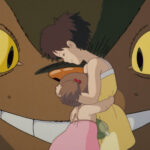
The Catbus from My Neighbor Totoro works because it follows dream logic without needing an explanation. It is a cat, a bus, a grin, a rescue vehicle, and a little bit of chaos. In a different film, that combination might feel random. In Totoro, it makes perfect sense because the story is built around how children experience fear and wonder at the same time.
When the Catbus arrives, the film does not stop to explain the rules. It simply lets Satsuki and Mei accept the impossible. That acceptance is important. Ghibli often trusts children as viewers more than adults, and the Catbus is one of the best examples. It says: if the emotional truth is clear, the magical mechanics can stay mysterious.
Moro and the wolves: nature as a character, not a backdrop
In Princess Mononoke, the wolf goddess Moro is not a pet, mascot, or simple protector. She is proud, angry, intelligent, and wounded by what humans are doing to the forest. Her relationship with San makes the film’s conflict personal. San’s identity is caught between human origin and wolf upbringing, and Moro gives that conflict power.
The wolves also show how different Princess Mononoke is from a simple environmental fable. Nature is not portrayed as soft or automatically safe. It has teeth. It fights back. It can be beautiful and terrifying in the same scene. That makes Moro one of Ghibli’s strongest creature characters because she refuses to become a comforting symbol.
Ponyo: a companion who becomes the story
Ponyo begins as a magical fish-like creature, but she quickly becomes the engine of the whole film. Her bond with Sosuke is simple on the surface: he cares for her, names her, and wants to protect her. Underneath that, the movie is about trust, promises, and the wild force of wanting to become part of another world.
What makes Ponyo different from a normal sidekick is that she does not simply support Sosuke’s journey. Her desire changes the balance of the sea and the human world. She is cute, funny, and chaotic, but the film never treats her magic as small. Ghibli lets childlike emotion have mythic consequences.
Fox squirrels, soot sprites, and small creatures
Some of Ghibli’s most memorable creatures are small. The fox squirrel in Castle in the Sky, the soot sprites in My Neighbor Totoro and Spirited Away, and the tiny background animals across the studio’s films make scenes feel lived-in. They are rarely explained in detail, which is part of the appeal. They suggest that every corner of the world has its own hidden life.
These small creatures also soften heavy stories without undercutting them. A soot sprite can make a room feel strange, funny, and alive in seconds. A tiny animal reaction can make a giant flying castle or forest spirit feel less like a special effect and more like a real place with ordinary residents.
Why Ghibli avoids simple mascot characters
Many animated films use animals as comic relief. Ghibli sometimes does that too, but the studio usually gives its creatures a stronger emotional purpose. The animal companion is often connected to independence, grief, courage, environmental balance, or childhood imagination. Even when a creature is adorable, it is rarely empty decoration.
This is one reason Ghibli characters stay memorable. The design catches your attention first, then the story gives the creature a reason to matter. Jiji’s humour means more because Kiki is lonely. The Catbus is funnier because Mei is missing. Moro is frightening because San’s identity is at stake. Ponyo is joyful because her love disrupts everything around her.
Best films to watch for Ghibli creature characters
- My Neighbor Totoro for Totoro, Catbus, and soot sprites.
- Kiki’s Delivery Service for Jiji and the everyday loneliness behind independence.
- Princess Mononoke for Moro, the wolves, kodama, and a harsher view of nature.
- Ponyo for sea magic, transformation, and childlike chaos.
- Castle in the Sky for small creatures against a grand adventure backdrop.
How this connects to the wider Ghibli watch order
If you are new to Studio Ghibli, animal companions are a useful way into the catalogue. Start gentle with My Neighbor Totoro or Kiki’s Delivery Service, then move toward the more intense forest mythology of Princess Mononoke. For a broader route, use the Studio Ghibli movies in order guide and mix cozy films with bigger fantasy adventures.
FAQ
Who is the most famous Studio Ghibli animal companion?
Jiji and the Catbus are probably the most widely recognised animal companions, while Totoro is the studio’s most famous creature overall. Totoro is not exactly a pet or sidekick, which is why the Catbus and Jiji often fit the “companion” idea more directly.
Are Ghibli animal characters only for children?
No. They are designed to be immediately appealing to children, but their story roles often speak to adult themes: growing up, losing certainty, protecting nature, and learning to trust other people.
Which Ghibli movie has the best creature world?
My Neighbor Totoro is the best cozy creature film, while Princess Mononoke has the richest and most serious creature mythology. Spirited Away is the best choice if you want a dense spirit-world full of strange beings rather than animal companions specifically.
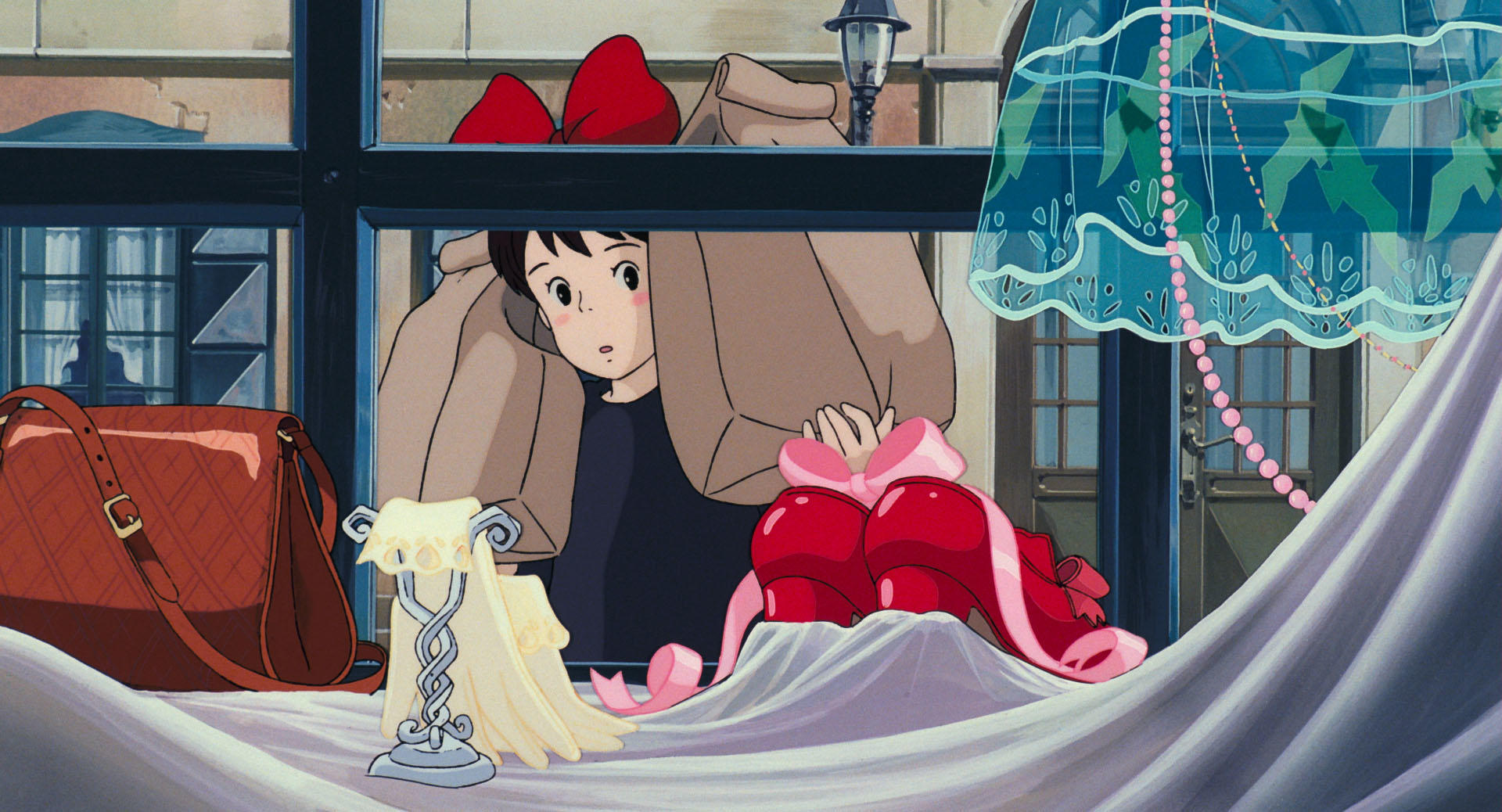
Image note: this article uses an official Studio Ghibli still sourced from ghibli.jp, where Studio Ghibli provides stills with a common-sense usage notice.