Grave of the Fireflies quick facts
- Original Japanese title: Hotaru no Haka
- Japanese release: 16 April 1988
- Writer and director: Isao Takahata
- Based on: Akiyuki Nosaka’s semi-autobiographical short story
- Music: Michio Mamiya
- Studio: Studio Ghibli
- Original Japanese distributor: Toho
- Running time: about 88 minutes
- Best for: mature teenagers and adults prepared for an unsparing civilian war tragedy
Spoiler-free answer: Grave of the Fireflies follows teenage Seita and his young sister Setsuko as they try to survive the final months of the Second World War in Japan after an air raid destroys their home. It is not a gentle family animation or a conventional adventure. It is an intimate tragedy about hunger, grief, pride and what happens when the systems meant to protect children collapse.
Spoiler-free overview
The film is devastating partly because it refuses to turn war into spectacle. Aircraft appear overhead and cities burn, but Takahata keeps returning to ordinary objects and routines: a tin of fruit drops, a meal stretched too far, a bath, a borrowed room, a child waiting for an adult to make things safe. The animation makes those details vivid enough to feel lived rather than symbolic.
Viewers should know that the story reveals its tragic destination at the beginning. The tension does not come from wondering whether everything will be all right. It comes from watching preventable losses accumulate and recognising how affection, fear, shame and stubbornness interact with forces far larger than two siblings. That structure keeps the film from treating suffering as a surprise twist.
This is often grouped with Studio Ghibli’s family films because of the studio name, but it should be approached as a serious historical drama. It includes death, severe hunger, injured civilians and prolonged distress involving a very young child. Its tenderness is real, particularly in the siblings’ private games and moments of care, but that tenderness makes the consequences harder rather than easier to watch.
Storyline and ending: what happens in Grave of the Fireflies?
This section contains full spoilers. The film opens at Sannomiya Station in Kobe on 21 September 1945. Seita, weak from starvation, dies among other displaced people. A cleaner finds the fruit-drop tin he carried and throws it into a field. Setsuko’s spirit appears, and the story moves back to the months before their deaths.
During an American incendiary air raid, Seita and Setsuko shelter separately from their mother. Their neighbourhood is burned, and Seita later finds their mother gravely injured at a temporary clinic. He initially tries to protect Setsuko from the truth, but their mother dies. Their father is serving in the Imperial Japanese Navy, leaving the children without immediate parental care.
The siblings move in with an aunt. At first the arrangement offers food and shelter, but scarcity makes every contribution visible. Their aunt sells their mother’s clothing for rice and increasingly criticises Seita for not working or supporting the household. Seita resents the way she speaks to them and begins cooking separately. The conflict is not presented as a simple contest between a cruel adult and innocent children. The aunt can be harsh, but food is genuinely scarce, and Seita’s wounded pride narrows the choices available to him.
Seita takes Setsuko to live in an abandoned air-raid shelter. For a short time it feels like freedom. They release fireflies for light, swim, play house and create a private world away from adult judgement. By morning, the fireflies have died. Setsuko buries them and connects their small graves to their mother’s death, which Seita had tried to hide. The scene turns the title into more than a beautiful image. Bright lives disappear quickly, and a child is left to make sense of death with almost no help.
The shelter cannot provide reliable food or sanitation. Seita trades possessions and withdraws money, but rations disappear and Setsuko becomes malnourished. He steals crops and is beaten by a farmer, then takes food from empty homes during air raids. The film shows his desperation without pretending these actions can repair the wider failure around them.
After Japan surrenders, Seita learns that the naval fleet has been destroyed and understands that his father is probably dead. A doctor identifies Setsuko’s malnutrition but offers no practical rescue. Seita finally buys food, yet he returns too late. Setsuko, confused by hunger, has been making pretend food from mud and marbles. She dies after eating a little watermelon. Seita cremates her body, places some ashes in the fruit-drop tin and eventually reaches the station where the opening took place.
The final image shows the siblings together as spirits, overlooking the modern city. It does not cancel their deaths or turn them into a sentimental lesson. The city’s survival and prosperity sit beside lives that disappeared from public view. The ending asks the audience to remember the civilian cost that national narratives can compress into dates and statistics.
Main characters
Seita
Seita is loving, resourceful, grieving and dangerously proud. He entertains Setsuko, finds shelter and tries to preserve a sense of family. He also rejects the aunt’s household without a workable plan and waits too long to seek another form of help. Reading him only as heroic misses the tragedy. Reading him only as foolish ignores that he is a traumatised teenager placed in an impossible adult role.
Setsuko
Setsuko is very young, observant and emotionally direct. Her games do not make her unaware of what is happening. She notices her mother’s absence, the dead fireflies and Seita’s increasingly desperate behaviour. The film protects her dignity by giving her humour, irritation and imagination rather than reducing her to a symbol of innocence.
The aunt
The aunt represents both a possible refuge and the erosion of generosity under scarcity. Her contempt wounds Seita and helps drive the siblings away, yet she also expects a nearly grown boy to contribute during a national emergency. The film leaves enough complexity to ask whether reconciliation was possible without making her treatment of the children comfortable.
The absent parents and adult world
The mother’s death and father’s absence remove the siblings’ immediate protection. Beyond them, doctors, neighbours, police and ration systems appear only in fragments. No single adult deliberately designs the children’s fate. That is the point: a series of limited responses can become abandonment when nobody accepts full responsibility.
Themes and interpretation
War destroys domestic life before it becomes history
The film pays attention to what military language leaves out. Defeat is experienced as burned houses, missing relatives, rationed grain, untreated illness and children learning where bodies go. By concentrating on a tiny family unit, Takahata prevents civilian suffering from becoming an abstract backdrop to strategy.
Pride can preserve dignity and block survival
Seita’s independence initially protects the siblings from humiliation. In the shelter, he can feed Setsuko without hearing that they are a burden. The same independence becomes dangerous when returning, apologising or asking more directly for help feels unbearable. The film does not say pride alone killed them. It shows pride interacting with grief, immaturity, scarcity and social failure.
Beauty and death occupy the same frame
The fireflies are beautiful because they transform the dark shelter, and tragic because their light is brief. The film repeatedly places natural beauty beside destruction without claiming beauty redeems it. Summer fields, the sea and children’s play continue while bodies weaken. That contrast makes the loss feel less theatrical and more real.
Memory is a form of responsibility
By announcing the deaths immediately, the movie changes the viewer’s task from suspense to witness. We cannot save Seita and Setsuko by hoping for a different ending. We can only pay attention to the decisions, institutions and ordinary needs that shaped it. The modern skyline at the end makes remembering part of the present rather than a sealed historical exercise.
Age suitability and content guidance
This film includes the death of a mother after severe burn injuries, the deaths of two children, air raids, burning neighbourhoods, dead and injured civilians, starvation, illness, vomiting, a cremation and an extended portrayal of a young child deteriorating from malnutrition. Some injuries are shown directly. The emotional intensity is sustained, and the ending is tragic.
It is not suitable as a casual choice for young children simply because it is animated. Mature teenagers may find it valuable with historical context and time to discuss the characters’ options, wartime Japan and civilian vulnerability. Adults should also choose the moment carefully. Viewers dealing with bereavement, disordered eating, war trauma or anxiety about children may prefer to postpone it.
Age classifications vary by country and edition, so check the current local rating. The more useful question is whether the viewer is prepared for realistic child death and prolonged suffering with very little emotional relief.
Production, adaptation and release context
Isao Takahata wrote and directed the film from Akiyuki Nosaka’s semi-autobiographical story. Studio Ghibli’s official works page lists the original Japanese release as 16 April 1988, a running time of approximately 88 minutes, music by Michio Mamiya and distribution by Toho. The film was released as a double feature with Hayao Miyazaki’s My Neighbor Totoro, an extraordinary pairing of two films centred on children but built around radically different experiences of uncertainty.
Nosaka’s source drew on his wartime experiences and the death of his younger sister. Takahata had also lived through wartime air raids as a child. Those connections matter, but the film should not be treated as a literal documentary or a transcript of one life. It is a carefully constructed adaptation whose framing, recurring objects and ghostly perspective shape how the audience experiences memory.
The restrained score and detailed everyday animation are central to the effect. Silence, insect sounds and small movements often carry more weight than speeches. The film avoids turning its children into patriotic symbols. Their suffering is specific, domestic and difficult to use as a simple argument for national innocence.
Where to watch legally
Availability varies by country and can change. Netflix currently maintains a title page for Grave of the Fireflies, but a visible page does not guarantee the film is playable in every region. Check the title inside your local Netflix account and use the site’s current Studio Ghibli streaming guide for alternatives. Licensed physical editions or digital rental and purchase listings may differ from the rest of the Ghibli catalogue because this film’s rights history is unusual.
About the image on this guide
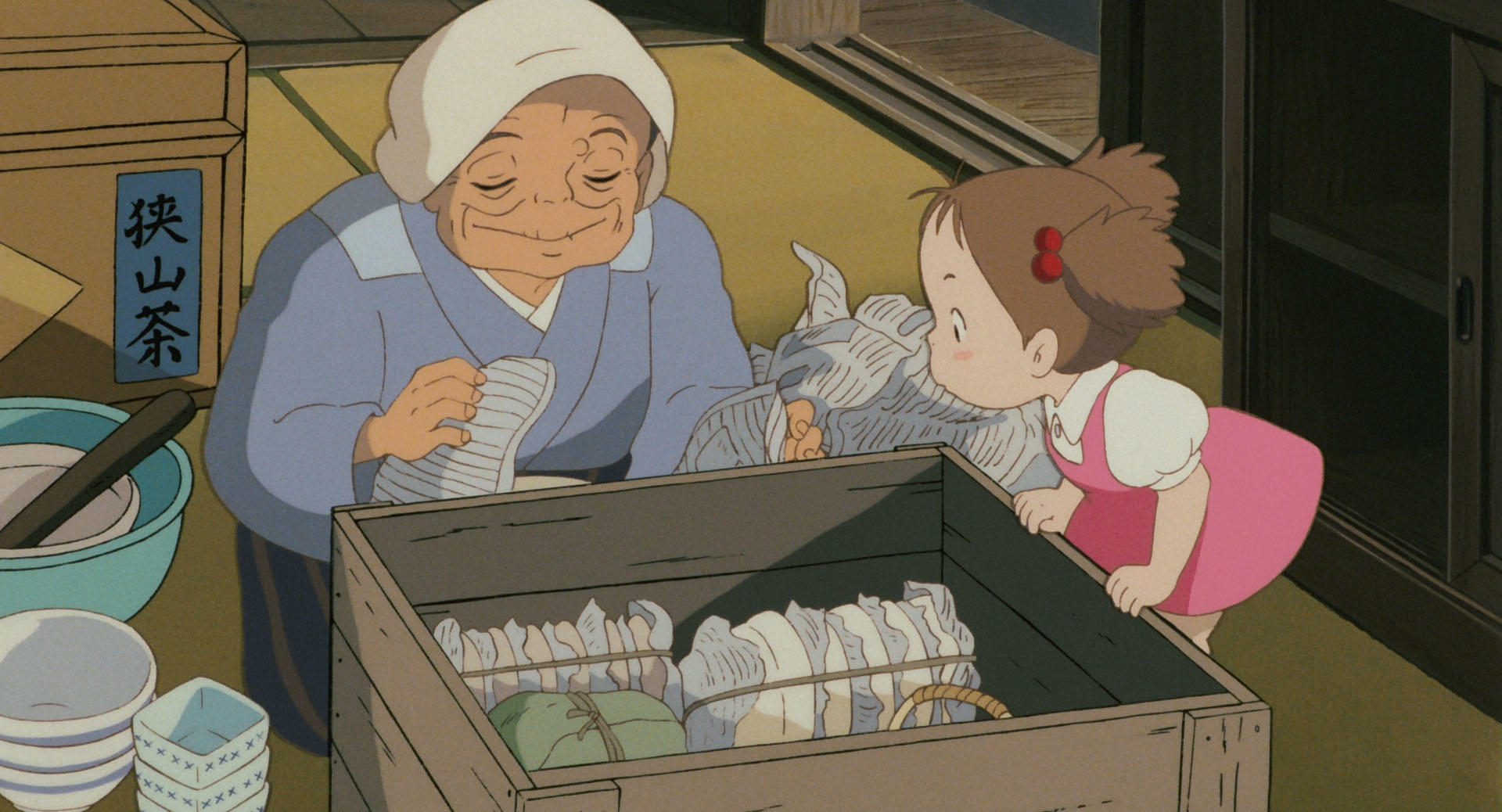
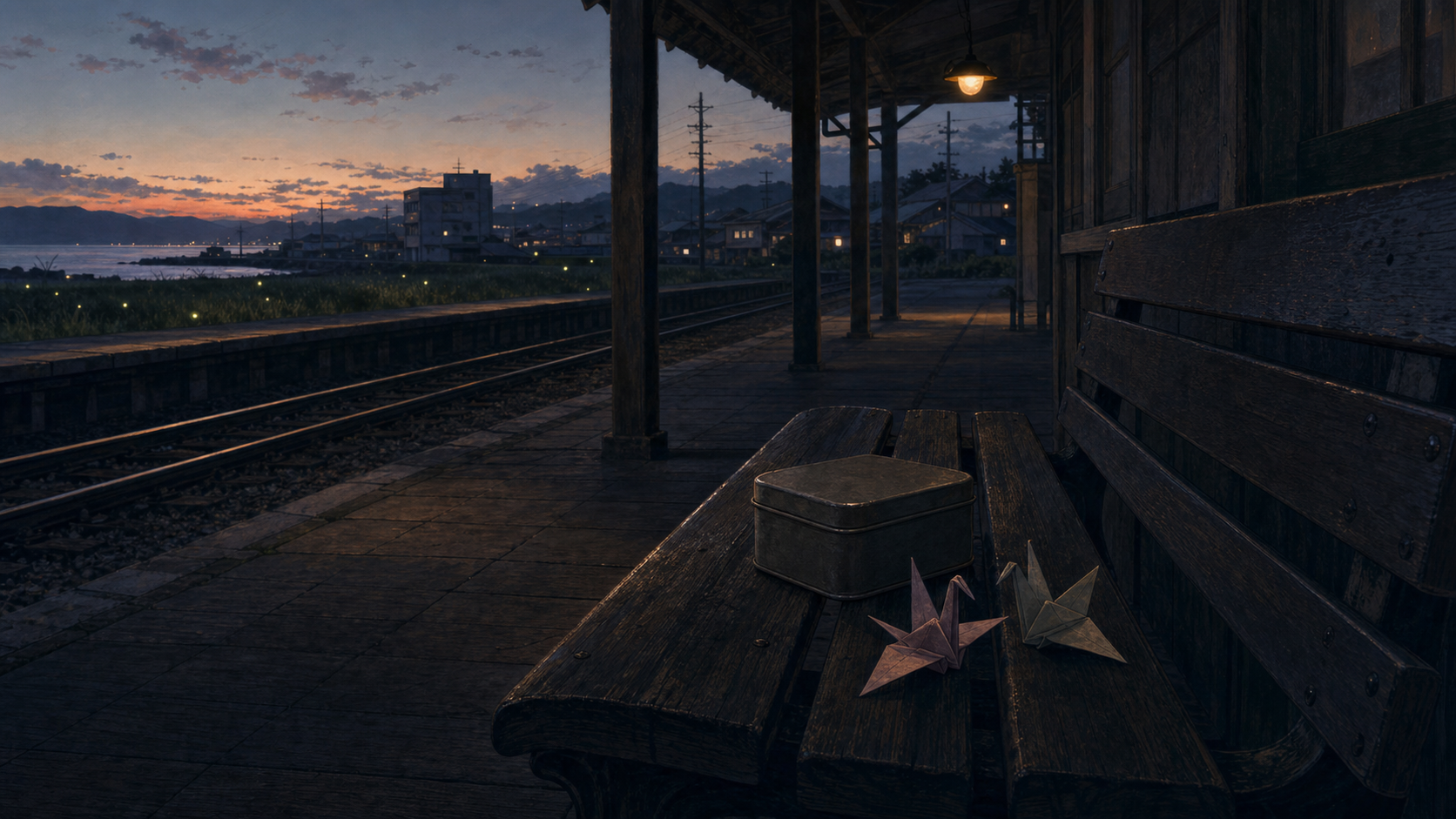
The landscape image above is an original editorial illustration generated specifically for this page. It is not a frame from the movie, is not official Studio Ghibli artwork and does not depict Seita or Setsuko. This transparent fallback was used because no suitable reusable landscape still was available in the approved official image packs.
Related films
Watch My Neighbor Totoro to explore a very different 1988 Ghibli story about children living beside parental illness, Nausicaä of the Valley of the Wind for an anti-war fantasy led by compassion, or The Tale of the Princess Kaguya for another Takahata film about beauty, freedom and irreversible loss.
Frequently asked questions
Is Grave of the Fireflies based on a true story?
It is based on Akiyuki Nosaka’s semi-autobiographical short story and reflects real wartime experiences, but the animated film is a dramatic adaptation rather than a documentary.
Why does the film reveal the ending first?
Knowing the siblings die removes conventional suspense. The audience must focus on how their situation deteriorates, which choices mattered and how social systems failed them.
Is the aunt the villain?
She is harsh and contributes to the siblings leaving, but the film does not build a simple villain. Scarcity, war, grief, pride and adult indifference combine to create the tragedy.
What do the fireflies represent?
Their brief light connects beauty, childhood and lives extinguished too soon. They also give Setsuko a concrete way to understand burial and her mother’s death.
Is Grave of the Fireflies anti-war?
It is widely understood as a powerful war tragedy because it shows civilian destruction without heroic spectacle. Takahata’s focus is also critical of isolation and failed social responsibility, so the film resists being reduced to one slogan.
Why was it paired with My Neighbor Totoro?
Both were released in Japan on 16 April 1988 as a double feature. The pairing brought together Takahata’s wartime tragedy and Miyazaki’s gentle rural fantasy, two very different films about children facing uncertainty.
The page artwork is an original GPT Image editorial illustration, clearly labelled in its caption. It is not an official Studio Ghibli still.